For clearing expansive yards or stubborn, wet debris without waiting on battery recharges, high-displacement gas units provide unmatched volume and velocity, but their heavier physical weight and routine 2-cycle engine upkeep represent real trade-offs for residential operators. Matching engine displacement, harness ergonomics, and airflow specifications to your property size ensures you do not overpay for commercial bulk or struggle with an underpowered budget machine.
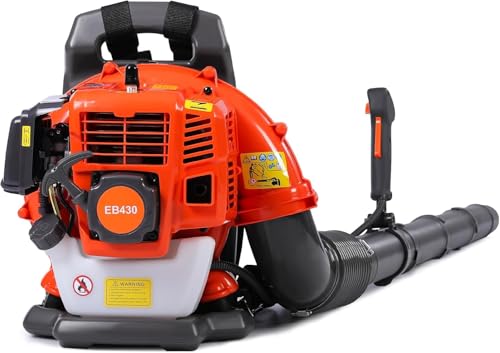
Pros
- Delivers up to 550 CFM and 230 MPH for moving wet yard debris
- Lightweight 17-pound backpack design with cushioned straps
- Thumb throttle includes cruise control for steady blowing
- 33.8 fl oz fuel tank yields up to 45 minutes of run time
- Operating temperature range spans 14°F to 104°F
Cons
- Requires 2-cycle fuel mixing and engine maintenance
- 550 CFM is modest for a backpack-class gas blower
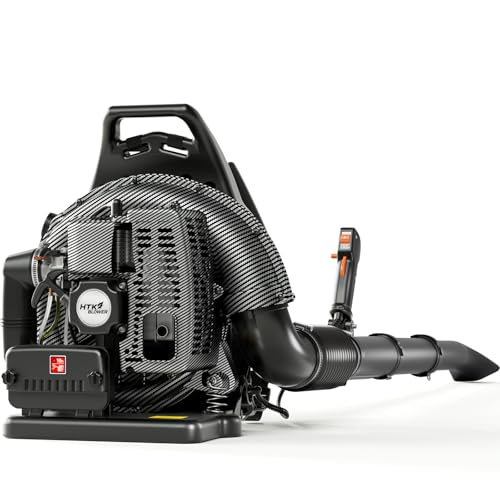
Pros
- 63CC 2-stroke engine provides up to 665 CFM and 205 MPH
- Fully padded ergonomic backpack harness
- Variable-speed throttle with built-in cruise control
- Generous 1.7 L fuel tank for extended yard sessions
Cons
- Requires 2-stroke fuel mixing and gas engine maintenance
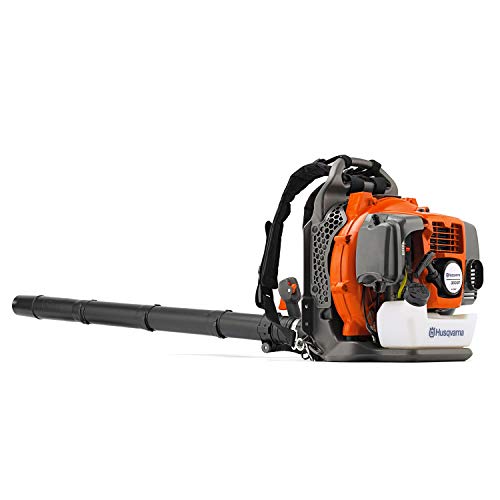
Pros
- 50.2-cc 2.1-HP X-Torq engine
- Rated blowing force of 692 CFM and 180 MPH
- LowVib technology dampens machine vibrations
- Air purge primer simplifies engine starts
- Ergonomic harness with offset control handle
Cons
- Weighs 22 pounds before fuel is added
- Requires ongoing two-stroke fuel mixing

Pros
- 63cc 2-cycle engine produces 665 CFM and 205 MPH
- 1.7-liter fuel tank enables extended sessions between refills
- Cruise control locks in throttle to reduce hand strain
- Padded harness and vibration reduction improve carry comfort
- Tool-free access simplifies two-stage air filter maintenance
Cons
- Substantial 21-pound dry weight requires physical stamina
- Requires ongoing 2-stroke oil and gasoline mixing

Pros
- 2.7kW 63cc two-stroke engine delivers up to 6,800 RPM
- Multi-directional air outlet adjusts vertically and horizontally
- 0.47-gallon fuel tank enables long runs between top-offs
- Constant speed switch holds chosen throttle effortlessly
- Backpack harness features heat-insulating back padding
Cons
- Substantial 22-pound dry weight adds strain on long sessions
- Requires manual two-stroke oil and gasoline mixing

Pros
- 65cc engine delivers a high-volume 850 CFM at 205 MPH
- Includes both fan and concentrator nozzle attachments
- 1.7-liter fuel tank reduces frequent stopping for refills
- Backpack harness features ventilated backrest for comfort
- Variable throttle with cruise control simplifies steady operation
Cons
- Requires 2-stroke fuel mixing and routine engine upkeep
- At 70.8 inches long assembled, storage requires ample space
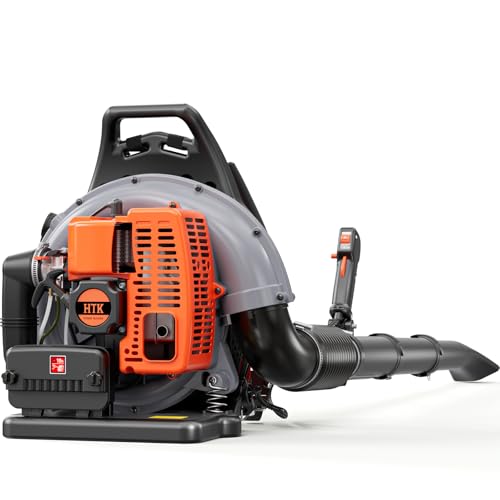
Pros
- 63cc 2-stroke engine delivers 665 CFM and 205 MPH airspeed
- Padded ergonomic backpack harness balances weight across shoulders
- Cruise control locks throttle to relieve trigger finger strain
- Generous 1.7L fuel tank supports extended property maintenance
- Manufacturer-rated sound level of 71 dB for quieter operation
Cons
- Requires ongoing two-cycle oil-to-gasoline fuel mixing
- Bulkier footprint demands sufficient garage or shed storage

Pros
- Delivers up to 230 MPH airspeed and 920 CFM air volume
- Powered by a 63.3 cc, 3.7 HP 2-stroke gas engine
- Large 65 oz (1.9L) fuel tank reduces frequent refills
- Padded shoulder harness and back support enhance user comfort
- Weighs 19.5 pounds for manageable backpack handling
Cons
- Requires 2-stroke gas-and-oil fuel mixing
- Heavier and louder than comparable cordless electric alternatives
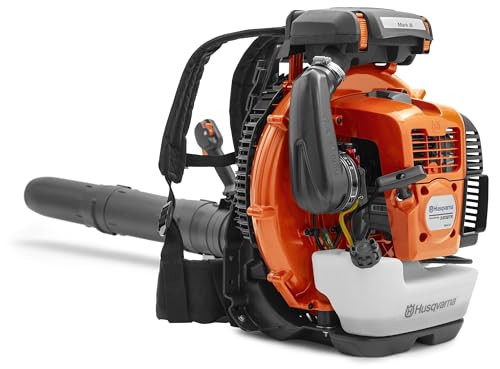
Pros
- Strong rated output of 1000 CFM, 220 MPH, and 47 N blow force
- Ventilated ergonomic harness with load-distributing hip belt
- Two-stage intake air filtration protects engine in dusty jobs
- Intuitive tube-mounted throttle control
Cons
- Substantial 34-pound weight can lead to operator fatigue
- Requires ongoing 2-cycle fuel mixing and maintenance

Pros
- Claims up to 1,110 CFM airflow and 220 MPH air speed
- Generous 1.89-liter fuel tank allows 50 to 60 minutes of runtime
- Padded harness and shock-absorption system reduce vibration
- Cruise control locks throttle for continuous operation
- Includes earmuffs, maintenance tools, and fuel mixing bottle
Cons
- Heavy 26.46-pound total weight can fatigue operators
- Requires mixing 2-cycle gas and oil fuel
Airflow Volume vs. Airspeed: How CFM and MPH Impact Leaf Clearing
Air volume (measured in CFM) determines how wide of a debris swath you can push across open turf, while air speed (measured in MPH) dictates the scouring force needed to break up wet, matted leaves and stubborn driveway dirt. High airspeed dislodges stuck material, but high CFM is what actually sweeps large volumes into manageable piles quickly.
Among the verified models, manufacturer-advertised specs range from entry-level utility up to heavy commercial capacity. For example, the Thalorus 52cc Gas Backpack Leaf Blower, 550 CFM advertises 550 CFM at 230 MPH, delivering high velocity to peel debris off hardscape, though its lower CFM means a narrower sweeping path. Stepping up to mid-range options, the Getell 63CC Gas Backpack Leaf Blower and HTK Gas Backpack Leaf Blower, 63CC 2-Stroke both list 665 CFM at 205 MPH. At the commercial peak, the Husqvarna 580BTS Gas Backpack Leaf Blower advertises 1000 CFM with 47 N of blowing force at 220 MPH, while the VEVOR 63CC Gas Backpack Leaf Blower claims an impressive 1110 CFM. While high-CFM platforms dramatically accelerate yard work, their intense blowing force can easily scatter mulch from flowerbeds or blow loose gravel onto lawns if operated without careful throttle modulation. For operators weighing gas performance against cleaner electric alternatives, evaluating cordless battery leaf blowers highlights how much raw airflow gas engines still provide.
Harness Support and Machine Weight: Balancing Power Against Physical Strain
A gas backpack blower’s practical clearing time is dictated as much by harness ergonomics and dry weight as it is by engine displacement. Without balanced load distribution, the strain on your back and shoulders can quickly force you to stop long before the fuel tank runs dry. Before finalizing equipment decisions, refer to our comprehensive small rechargeable leaf blower comparison.
Bare machine weights vary noticeably across this category. Lightweight models like the Thalorus 52cc (17 lb) and Getell 65CC Backpack Leaf Blower, Gas Powered (17.5 lb) minimize initial strain and are easier to lift onto your shoulders. In contrast, heavier platforms such as the Getell 63CC (21 lb) and HASANEN Backpack Gas Powered Leaf Blower (19.7 lb) place greater demands on your core. To counter heavy commercial hardware, premium units incorporate superior ergonomic systems. The Husqvarna 580BTS features an ergonomic, ventilated harness paired with a padded hip belt that transfers the bulk of the machine’s load away from the shoulders and onto the pelvis. The Husqvarna 350BT Gas Leaf Blower incorporates LowVib technology to reduce engine vibration transferred through the frame, along with an offset handle that prevents downward arm pull. Budget models like the HASANEN rely primarily on basic padded straps and backrest cushioning, making them better suited for shorter residential sweeps rather than multi-hour property cleanups.
Commercial Heavyweights vs. Budget Models: Husqvarna 580BTS vs. Schröder SR-6400L
While budget and mid-tier models offer high manufacturer-advertised CFM figures at competitive price points, dedicated commercial platforms justify their premium cost through heavy-duty engine filtration, reinforced suspension, and sustained durability under dusty conditions. For broader ecosystem context, read through our operational guide on blower para soplar hojas.
A direct comparison illustrates this balance: the Schröder Backpack Leaf Blower – Backpack Blower lists for $379.00, powered by an advertised 63.3-cc 3.7 HP engine delivering 920 CFM and 230 MPH at a dry weight of 19.5 pounds. The Husqvarna 580BTS lists at $649.00, packing a larger 75.6-cc 4.59 HP X-Torq engine rated at 1000 CFM and 47 N of blow force. While the Schröder provides formidable advertised output and a large 1.9-liter fuel tank for over $250 less, the Husqvarna includes commercial-grade multi-stage air filtration designed specifically to prevent fine particulate ingestion during continuous, dusty sweeping. For commercial landscapers and large-acreage owners, robust intake filtering and brand service networks safeguard the equipment over years of heavy use. If you are deciding whether your acreage justifies premium industrial hardware, reviewing general high-powered leaf blowers helps clarify when heavy commercial displacement is genuinely necessary.
Fuel Tank Sizing and Engine Displacement for Large Properties
Fuel tank volume directly determines operational momentum, allowing 45 to 60 minutes of continuous sweeping, but larger fuel loads add liquid weight that changes how the machine feels on your back.
Displacement across these blowers ranges from 50.2cc to 75.6cc, with fuel tanks sized between 33.8 fluid ounces (roughly 1.0 liter) and 1.9 liters (65 ounces). The Thalorus 52cc features a 33.8 fl oz tank with an advertised runtime of up to 45 minutes, keeping total wet weight manageable for standard residential suburban lots. On larger parcels, models like the VEVOR 63CC (1.89-liter tank) and Schröder SR-6400L (1.9-liter tank) are designed for 50 to 60 minutes of uninterrupted work. However, gasoline weighs roughly 6 pounds per gallon, meaning a full 1.9-liter reservoir adds approximately 3 pounds of shifting liquid weight to the chassis. Buyers should assess whether avoiding refill stops at the garage outweighs the physical penalty of carrying extra fuel across rolling terrain. For troubleshooting and reliability insights, consult our in-depth blower at lowes report.
Frequently Asked Questions About Gas Backpack Leaf Blowers
How much CFM and airspeed do I need to clear wet leaves?
Moving wet, matted leaves requires a balance of at least 200 MPH airspeed to lift debris off the turf and 650 CFM or higher to sweep bulk piles forward. Blowers like the Getell 63CC or Schröder SR-6400L offer the velocity and volume needed for damp debris, whereas lighter 550 CFM units may require multiple passes.
What fuel mixture is required for a 2-stroke backpack blower?
Most 2-cycle gas backpack blowers run on a mixture of unleaded gasoline and 2-stroke engine oil, typically mixed at a 50:1 ratio. Because some specific engines may specify different ratios such as 25:1 or 40:1 during break-in, always verify the ratio in the manufacturer's manual and use ethanol-free fuel when possible.
How much weight does a full fuel tank add to a backpack leaf blower?
Gasoline weighs about 6 pounds per gallon. For backpack blowers equipped with 1.7-liter to 1.9-liter tanks (roughly 0.45 to 0.5 gallon), a full tank adds approximately 2.5 to 3 pounds of liquid weight to the machine's advertised dry weight.
How to Select the Right Gas Backpack Blower for Your Property
Selecting the right gas backpack leaf blower requires matching the volume and wetness of your seasonal yard debris to an engine displacement and harness configuration you can comfortably operate. Buying more power than your property requires results in unnecessary fatigue and maintenance, while an undersized unit leads to frustrating, repetitive passes over stubborn debris.
For large rural acreage, heavily wooded lots, or commercial landscaping where maximum blowing force is non-negotiable, the Husqvarna 580BTS Gas Backpack Leaf Blower is the top recommendation due to its advertised 1000 CFM output, commercial 2-stage filtration, and load-bearing hip harness. Its primary trade-offs are a substantial $649.00 price tag and the physical bulk of its 75.6-cc engine. For suburban homeowners seeking a lightweight, cost-effective alternative for routine driveway and lawn maintenance, the Thalorus 52cc Gas Backpack Leaf Blower, 550 CFM provides a much more accessible 17-pound footprint at a budget-friendly price point without overwhelming the operator.
Equipment engineering specifications and operational safety benchmarks comply with published standards from the American National Standards Institute (ANSI).