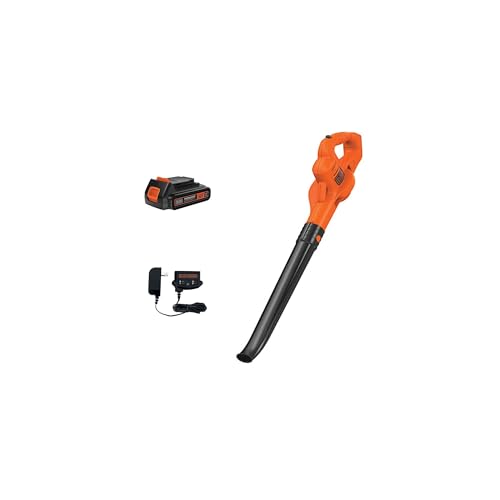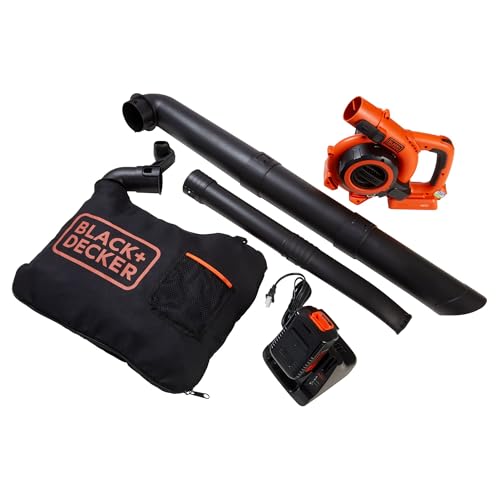
If you need a lightweight tool for clearing dry debris from porches, car interiors, and walkways, a handheld battery blower offers unmatched convenience, but compact designs inevitably sacrifice wide-area clearing power compared to full-sized equipment.

Pros
- Includes two 4.0Ah batteries and a fast charger
- Stepless variable-speed trigger with safety lock
- Comes with two detachable nozzle tubes and a shoulder strap
- Stated wind speed capability reaching up to 65 m/s
- Includes storage toolbox and protective earplugs
Cons
- Claimed 30-minute runtime per battery is limited to low speed
- Conflicting weight figures listed between specs and description

Pros
- 4-in-1 capability functions as blower, vacuum, inflator, and deflator
- Weighs only 2.2 pounds for easy one-handed operation
- Panel control offers 3 speed settings up to a rated 190 MPH
- Includes 2.0Ah battery, charger, collection bag, and 3 nozzle adapters
Cons
- Modest suction power of 2,000 Pa is limited to light debris
- Single 2.0Ah battery may require frequent recharging on large jobs

Pros
- Multi-function design blows, vacuums, inflates, and deflates
- Includes battery, fast charger, and 3 inflation adapter nozzles
- Compatible with third-party Makita 18V batteries
- Lightweight 2-pound build with battery level indicator
Cons
- Stated runtime is limited to approximately 10 minutes on high speed
- Low airflow rating of 64 CFM restricts use to small, light debris
Pros
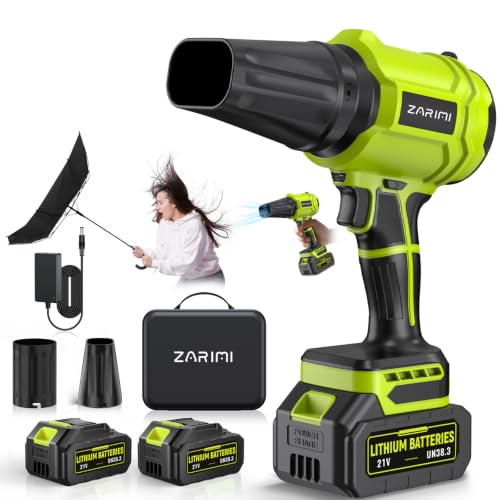
- Extremely lightweight at only 2.8 pounds for low-fatigue use
- Reaches stated air speeds over 50 m/s (110+ MPH)
- Comes with two batteries and charger for alternating use
- Includes a concentrated narrow nozzle for detailed edging
- Compact footprint stores easily in tight spaces or vehicle trunks
Cons
- Limited runtime of only about 13 minutes per battery
- Not designed for moving heavy or deep piles of wet leaves

Pros
- Includes two 21V 4.0Ah batteries for extended runtime
- Delivers up to 420 CFM airflow and 150 MPH air speed
- Lightweight design weighs under 3 lbs bare tool for low fatigue
- Comes with both round and flat interchangeable nozzles
- Two adjustable speed settings for varying cleanup tasks
Cons
- Limited to two preset airflow speeds
- Best suited for dry leaves and light debris rather than heavy wet waste

Pros
- Includes two 2.0Ah lithium-ion batteries and a fast charger
- Lightweight build weighs only 3.4 pounds with battery attached
- Modular two-section tube adjusts for different clearing heights
- Rated for up to 350 CFM and 150 MPH air performance
Cons
- Estimated runtime reaches up to 25 minutes at high speed
- Batteries must cool down before recharging

Pros
- Compact design weighing just 2.6 pounds
- Reaches air speeds up to 200 MPH
- Includes two 2.0Ah batteries and a UL-certified fast charger
- Equipped with 3 short nozzles and 1 extension tube
- Three speed settings for varied cleaning tasks
Cons
- Modest 130 CFM airflow limits heavy-duty yard clearing
- High-speed runtime is limited to approximately 20 minutes

Pros
- Ultralight 1.8 lb bare tool weight
- Delivers up to 200 MPH air velocity
- Includes two 2.0Ah batteries and a fast charger
- Features 3 adjustable speed modes
- Comes with 3 specialized nozzle attachments
Cons
- Max airflow of 130 CFM is best for light debris
- High-speed runtime is limited to about 26 minutes

Pros
- Weighs only 2.2 pounds for easy one-handed use
- Functions as a blower, vacuum, inflator, and deflator
- Includes two 20V 2.0Ah batteries and a fast charger
- Three speed modes reaching up to 190 MPH
- Comes with three multifunction inflation nozzles
Cons
- Not built for heavy outdoor leaf cleanup
Battery Capacity: Why 4.0Ah Packs Outlast 2.0Ah Bundles
Choosing a tool with larger amp-hour packs directly determines how much area you can clear before stopping to recharge. Units equipped with 4.0Ah batteries, such as the Leaf Blower Cordless Handheld Blower with 2×4.0Ah and the Electric Leaf Blower Cordless with Battery, provide noticeably more reserve capacity than entry-level 2.0Ah models. The manufacturer of the laapee blower advertises up to 30 minutes of runtime per battery on low speed, and including two packs allows continuous operation while one charges.
In contrast, ultra-compact packages like the SEYVUM Leaf Blower 20V Cordless and EWORK 20V Small Cordless Leaf Blower with 2 x bundle two 2.0Ah batteries. While lighter to handle, smaller batteries require frequent swapping during extended yard work. If you plan to clear driveways or stubborn debris that demands continuous high speed, prioritizing dual 4.0Ah packs is essential, even if they add slight bulk to the handle.
Airspeed vs. Air Volume: What Specs Matter for Small Blowers?
Understanding the difference between air velocity (MPH) and air volume (CFM) dictates whether a mini blower can handle your specific yard tasks. Airspeed determines the tool’s ability to dislodge stuck or heavy debris, while CFM measures the volume of air moved to sweep broad piles away. For instance, the Electric Leaf Blower Cordless with Battery advertises a balance of 420 CFM and 150 MPH, making it better suited for sweeping larger residential walkways.
Conversely, units like the EWORK 20V Small Cordless Leaf Blower with 2 x advertise speeds up to 200 MPH but produce a tighter 130 CFM stream. This high-speed, narrow-stream approach excels at blasting dust from workshop tools, vehicle crevices, or patio seams. However, moving wide carpets of autumn leaves will take significantly longer due to the limited air volume. When evaluating your yard, remember that advertised figures are manufacturer ratings rather than standardized third-party benchmarks. For larger sweeping tasks, you may want to consult our guide on finding a leaf blower for driveway maintenance.
Multi-Function Mini Blowers: Inflation and Vacuum Trade-Offs
Multi-use tools offer impressive utility for workshops and camping, though they rarely match dedicated single-purpose blowers for pure lawn maintenance. The KIMO Leaf Blower Cordless with Battery and the NEWONE Small Leaf Blower Cordless Compatible provide 3-in-1 or 4-in-1 capability, operating as blowers, light vacuums, and air pump inflators/deflators using specialized nozzle adapters.
The primary trade-off is collection capacity. When converted to vacuum mode, these compact units rely on small collection bags designed for sawdust, light grass clippings, or pet hair. Trying to vacuum damp yard waste can easily clog the narrow impeller housing. If you need a versatile tool for camp mattresses, vehicle detailing, and garage cleanup, these convertible designs are handy, but buyers needing dedicated garden cleanup should stick to standard blower configurations.
Single-Hand Handling: Weight and Ergonomic Balance
Physical weight and control layout heavily influence user fatigue, especially when working on overhead gutters or extended edging jobs. The laapee blower lists a bare weight of just 1.12 pounds and includes a shoulder strap, minimizing arm strain. Similarly, the YUQUESEN Cordless Leaf Blower advertises a compact 2.8-pound profile designed for one-handed operation in tight corners.
Grip controls also alter the user experience. The KIMO Leaf Blower Cordless with Battery uses an electronic panel with automatic speed locking so you do not need to depress a trigger continuously. Meanwhile, models like the laapee offer stepless trigger adjustment where wind speed responds directly to finger pressure. While stepless triggers offer precision around delicate garden beds, continuous squeezing can fatigue your hand faster during lengthy perimeter sweeps.
Frequently Asked Questions About Mini Leaf Blower Batteries
Can I use power tool batteries I already own?
Most compact blowers rely on proprietary battery slots, though specific models like the NEWONE mini blower explicitly state compatibility with Makita 18V batteries. Always verify terminal configurations before assuming cross-brand compatibility.
Are mini battery blowers powerful enough for wet lawn leaves?
Mini blowers excel at clearing hard surfaces like porches, decks, and walkways. While units boasting 150 to 200 MPH advertise the ability to shift damp debris, their narrower tubes and lower CFM volume mean clearing an entire waterlogged lawn will be substantially slower than using a full-sized yard blower.
Choosing the Right Mini Leaf Blower for Your Yard
Matching the tool to your property size ensures you do not end up stranded by a dead battery mid-job. If your priority is routine outdoor maintenance with adequate air volume, a high-CFM dual-battery unit provides the most dependable coverage without sudden drop-offs. If your tasks are confined to a car interior or small wooden deck, a compact 2.0Ah multi-function tool saves money and storage space. You can review additional compact cordless options in our roundup of small rechargeable leaf blower models, or consult general advice on what leaf blower is the best.
For most homeowners seeking a reliable balance of runtime and debris-clearing capacity, the Leaf Blower Cordless Handheld Blower with 2×4.0Ah is the practical choice due to its dual high-capacity battery pack and variable speed trigger. Its primary limitation is a narrow nozzle focus that requires multiple passes over broad grass lawns. If you prioritize budget and multi-purpose shop tasks over raw outdoor sweeping power, consider the KIMO Leaf Blower Cordless with Battery instead for its integrated vacuum and inflation adapters.