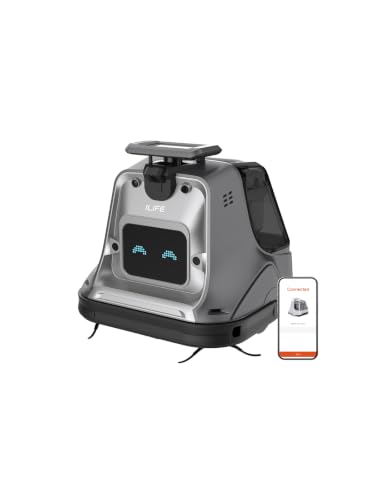
Quick Answer: Choosing the Best Blower
For homeowners tackling heavy, wet yard debris across expansive lawns, the EGO POWER+ Cordless Electric Leaf Blower, 765 CFM delivers exceptional clearing power, though its higher cost and heavier battery demand a greater investment. If you have a smaller lot and prefer budget-friendly, continuous power without battery downtime, the BLACK+DECKER Electric Leaf Blower provides reliable performance as long as you are willing to manage an extension cord.

Pros
- 66-inch clearing width (manufacturer-stated)
- Honda 22 HP engine included with the unit
- Designed for UTV use according to the listing
- Listed as EPA compliant
Cons
- Few product details such as weight and mounting specs
- No customer reviews available to evaluate

Pros
- True modularity allows quick switches between lawn mowing and leaf blowing tasks on a single robot base
- Autonomous features including obstacle avoidance enable hands-free operation for large yards
- Weather-resistant design with IPX5 rating supports use in varied outdoor conditions
- Expandable system supports additional modules for snow and other seasonal duties
Cons
- Full dual functionality requires separate module purchases beyond the base unit
- Advanced robotic setup may present a learning curve for first-time users
- Sparse independent long-term feedback limits insight into durability over multiple seasons
The YARBO Robot Lawn Mower and Leaf Blower is a multi-purpose smart yard robot built around a modular core body that pairs with detachable attachments. Its primary design focuses on automation and versatility for outdoor maintenance, giving an immediate impression of a high-tech solution aimed at simplifying large-property care rather than a traditional single-function tool.
Performance and Key Features: In real-world use the system functions as both a lawn mower and leaf blower by simply swapping modules on the same base. It operates autonomously with advanced obstacle avoidance and all-terrain capability, while features such as IPX5 waterproofing and wireless auto-recharging support continuous seasonal work without constant oversight. This modular approach turns one robot into a complete yard solution for mowing grass and clearing leaves efficiently.
Drawbacks and Considerations: Buyers should note that achieving full dual functionality typically involves acquiring the specific modules separately, and the sophisticated robotics can require an initial learning period for mapping and setup. With limited long-term user reports available, prospective owners may want to evaluate coverage needs and module costs carefully before committing.
Verdict: This product delivers the most value to tech-oriented homeowners managing sizable yards who want a single expandable robot for mowing and leaf blowing instead of multiple machines. It is especially suited for those prioritizing hands-free operation and future module upgrades for year-round use.

Pros
- Fully autonomous operation powered by AI vision and RTK GPS navigation for genuine hands-free use.
- High-output 2000W motor that clears heavy and wet debris more effectively than typical handheld models.
- Modular design that supports conversion between leaf blowing, mowing, and snow blowing functions.
- Comprehensive app control with scheduling, no-go zones, and multi-area mapping capabilities.
- Strong performance on steep slopes up to 70 percent for versatile terrain handling.
Cons
- Lawn mower and snow blower modules are sold separately and not included with the leaf blower unit.
- 70-minute runtime may require recharging or multiple sessions for very large properties.
- Full functionality depends on initial app-based mapping and setup of the intelligent control system.
The YARBO Robot Leaf Blower is a fully autonomous cordless electric leaf blower that uses AI vision and RTK GPS for navigation. Its modular design and cordless freedom create an immediate impression of advanced innovation aimed at reducing manual yard work for modern homeowners.
Performance and key features center on the 2000W variable-speed motor that generates strong airflow to clear thick leaf piles and wet debris far more effectively than average handheld units. Real-world utility is enhanced by the 70-minute runtime, ability to handle 70 percent steep slopes, and app-based controls that let users set schedules, define no-go zones, and map up to 100 areas for precise autonomous operation.
Drawbacks and considerations include the fact that lawn mower and snow blower modules must be purchased separately for multi-season use. The 70-minute runtime may also prove limiting on expansive properties, and optimal results rely on careful initial mapping and app setup.
Verdict: This robot leaf blower delivers the most value to tech-oriented homeowners with medium to large yards who want hands-free leaf management and the option to expand into other seasonal tasks. Those seeking a single modular base for year-round care will appreciate its autonomy and power, provided they budget for additional modules as needed.

Pros
- Fully autonomous 24/7 operation with auto-mapping AI vision and RTK GPS for precise day and night navigation.
- 2-stage design with powerful motor effectively handles heavy wet dense and hard-packed snow.
- Wide 24-inch clearing path and 12-inch depth cover large areas efficiently in one pass.
- Durable high-strength Q355 steel frame and components engineered for severe weather reliability.
- OTA continuous upgrades keep the system improving with new features and performance enhancements.
Cons
- Heavy approximately 220 lb unit requires 2-3 adults for assembly and careful handling.
- Shipped in 4 separate boxes which can complicate initial setup and requires watching the installation video.
- Remote control is not included and must be purchased separately for optional manual use.
The YARBO Snow Blower Robot is a modular cordless 2-stage autonomous robotic snowblower built around high-strength Q355 steel for durability in complex winter conditions. It includes snow tracks for stability a docking station battery and related accessories delivering a premium immediate impression as a complete hands-free snow clearing system.
In real-world performance the robot clears a 24-inch path up to 12-inch depth while throwing snow 6-40 feet. AI vision RTK GPS and auto-mapping enable reliable navigation and smart scheduling that activates at the first snowfall for continuous 24/7 operation. The 2-stage system with upgraded motor efficiently manages heavy wet and hard-packed snow across large driveways sidewalks and parking lots.
Key considerations include the roughly 220 lb weight that requires 2-3 adults for assembly plus shipment in 4 boxes. Users need a 120 degree unobstructed sky view for the data center set and should watch the installation video first. The remote control is sold separately.
This product offers strong value for homeowners with expansive outdoor areas who want to eliminate manual snow shoveling through autonomous technology durable construction and ongoing OTA improvements.

Pros
- Commercial-grade GX390 OHV engine, per listing
- Electric key start, listed for cold-weather starts
- Dual track drive with sure-gripping cleats
- Hydrostatic self-propelled drive, no shifting
- Auger height control with variable positions
Cons
- Listed weight is missing; dimensions read 0 x 0 x 0 inches
Pros
- Manufacturer-stated commercial-grade Honda GX390 OHV engine
- Automotive-style DC electric key start for easier starting
- Dual rubber tracks with cleats for traction on inclines and ice
- Hydrostatic self-propelled drive with no shifting required
- Manufacturer-stated 3-year residential warranty
Cons
- No customer reviews or independent performance data are supplied
- Requires pre-use oil and fuel checks and manual-based maintenance
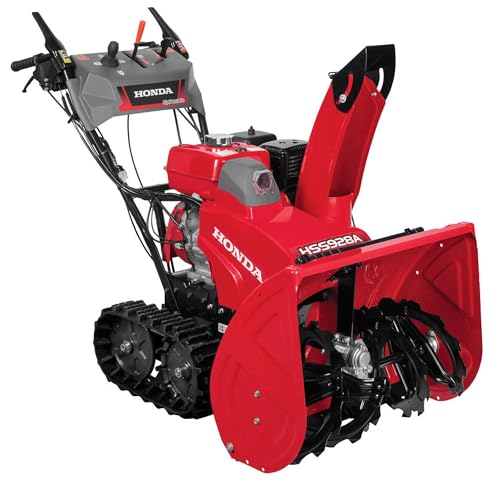
Pros
- Electric key start with commercial-grade GX270 engine
- Dual track drive with cleats for traction, per listing
- Hydrostatic self-propelled drive with no shifting
- Auger height control lever with variable positions
- 3-year residential warranty, per listing
Cons
- Listed weight is 358 pounds
- Listed dimensions read 0 x 0 x 0 inches, so size is unverified

Pros
- Commercial-grade GX390 OHV engine, per listing
- Dual track drive with sure-gripping cleats
- Hydrostatic self-propelled drive, no shifting
- Auger height control with variable positions
- Ready to use out of box, no assembly, per listing
Cons
- Specs list only product group; no weight or dimensions
High CFM vs. Airspeed: What Moves Heavy Debris Faster?
Cubic feet per minute (CFM) measures the overall volume of air emitted, which dictates how wide a swath of leaves you can sweep, while miles per hour (MPH) measures air velocity, which dislodges stuck or damp debris. Blowers engineered with high air volume, such as a dedicated high-powered leaf blower, move substantial leaf piles across open turf in fewer passes.
For example, the EGO POWER+ Cordless Electric Leaf Blower, 765 CFM combines an advertised 765 CFM with speeds up to 200 MPH in turbo mode, allowing it to blast through wet foliage and gravel. In contrast, the BLACK+DECKER Electric Leaf Blower advertises a brisk 180 MPH speed but only 180 CFM. The trade-off is clear: high velocity with low volume can clear tight crevices or sweep dry sidewalks, but sweeping large yards or matted lawns requires higher CFM to prevent having to make multiple passes.
Cordless Battery Platforms vs. Unlimited Corded Power
Corded blowers provide continuous, fade-free power for as long as needed without stopping for a recharge, but they physically tether you to an electrical outlet. Cordless battery platforms offer complete perimeter mobility, though work sessions are strictly limited by pack capacity. For complementary field maintenance guidelines, examine our breakdown of small rechargeable leaf blower.
The corded BLACK+DECKER Electric Leaf Blower weighs just 4.4 pounds and features a 7-Amp motor with built-in cord retention, eliminating battery degradation concerns at an accessible $42.00 entry price. However, it does not include an extension cord, and managing cables around landscaping beds can prove tedious. Transitioning to a cordless battery leaf blower like the EGO POWER+ Cordless Electric Leaf Blower, 615 CFM eliminates cords entirely, but you must monitor recharge intervals and purchase into a specific battery platform.
Battery Voltage and Advertised Run Time Trade-Offs
Higher-voltage systems deliver stronger peak output and better motor efficiency under load, whereas lower-voltage multi-battery configurations focus on extending light-duty duration through battery swapping. In all cases, manufacturer-rated runtimes represent baseline operation on lower speeds rather than sustained turbo performance.
The Greenworks 40V Electric Leaf Blower, 550 CFM uses a 40V brushless architecture with an advertised 20-minute continuous runtime on its included 4.0Ah battery, while operating at a manufacturer-rated 78 dB sound level. By comparison, models such as the Leaf Blower Cordless, 650CFM Electric Leaf Blowers provide two 20V 5.2Ah batteries, advertising up to 150 minutes of cumulative runtime across its low-speed settings. The compromise involves output consistency: high-draw tasks like clearing wet leaves deplete smaller batteries rapidly, making dual packs essential if you do not use higher-voltage 40V or 56V platforms. To evaluate matched hardware tolerances, consult our detailed overview of blower para soplar hojas.
Ergonomics, Unit Weight, and Operator Fatigue
Handheld blower comfort depends heavily on total weight distribution and the presence of ergonomic assists like shoulder straps or cruise-control dials. Operating a heavy blower with only a standard pistol grip quickly strains the forearm and wrist during seasonal cleanups.
Ultra-compact models like the wanvzo Cordless Leaf Blower (advertised at 2.28 pounds) and the YUQUESEN Cordless Leaf Blower (2.8 pounds) prioritize fatigue-free, single-handed maneuverability for quick clearing of decks, steps, and car roofs. Conversely, higher-volume machines like the Leaf Blower Cordless 650CFM with 2×4.0Ah Battery include an adjustable shoulder strap to redistribute motor and battery weight across the upper body. While ultralight models spare your arm, they generally lack the concentrated force and wide nozzles found on larger handheld tools. When planning workspace deployment, consider the engineering criteria outlined in our blower at lowes guide.
Frequently Asked Questions About Choosing the Best Blower
How do CFM and MPH ratings affect outdoor cleanup?
Cubic feet per minute (CFM) measures the overall volume of air moving through the tube, which dictates how wide an area of leaves you can push at once. Miles per hour (MPH) measures air velocity, which helps loosen heavy, damp, or compacted debris from hard surfaces.
Do advertised battery runtimes hold up at maximum blowing power?
Manufacturer runtime figures are generally recorded using the lowest continuous speed setting. Engaging turbo buttons or running a blower continuously at peak throttle significantly increases power draw, reducing operational time well below the advertised upper limits.
How to Choose the Best Blower for Your Property
Selecting the best blower requires balancing property size, storage space, and the specific debris you clear most often. Small hardscapes and suburban patios require minimal CFM, whereas expansive lawns with mature deciduous trees demand high air volume and extended battery reserves.
For demanding residential properties, our primary recommendation is the EGO POWER+ Cordless Electric Leaf Blower, 765 CFM, which suits homeowners needing gas-rivaling clearing power and high CFM to shift heavy, wet leaves. Its main limitation is its premium $299.00 price tag and heavier physical profile. If your yard work is confined to a modest deck or townhouse patio on a budget, the BLACK+DECKER Electric Leaf Blower serves as an affordable alternative that provides unlimited runtime without the upkeep of lithium-ion batteries.
Overview of Blower Safety
Blowers of every type share a few basic risks, including flying debris and noise exposure over long sessions. Readers wanting a general safety overview of outdoor power equipment may look to American National Standards Institute (ANSI). Simple habits such as wearing eye protection and keeping others clear apply to most units.