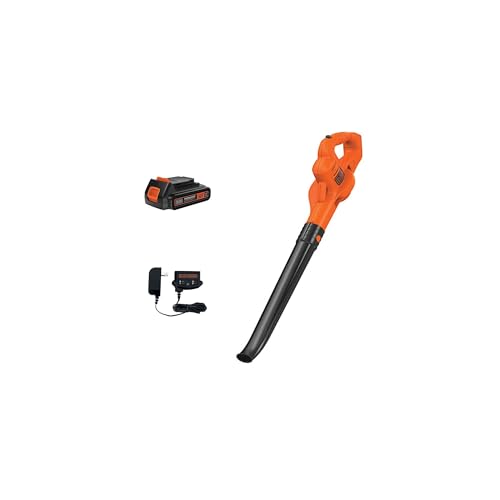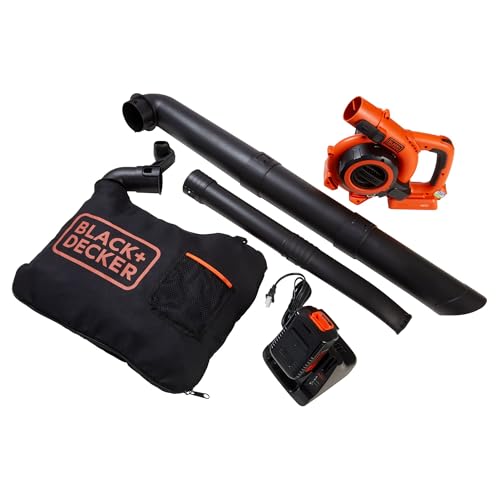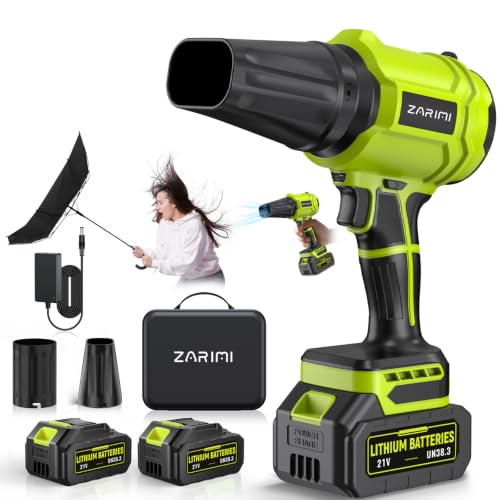
If you are clearing expansive acreage or heavy fall leaf piles, a heavy-duty walk-behind gas blower offers the massive air volume of commercial equipment without the extreme price tag of dedicated commercial ride-on machinery, though it still requires manual pushing across your turf.

Pros
- Produces up to 515 CFM and 130 MPH
- Efficient brushless motor with turbo mode boost
- Variable speed trigger includes cruise control
- Lightweight bare tool weight of approximately 4.2 lbs
- Quiet operation rated at 61 dB
Cons
- Battery and charger are not included
- Requires Greenworks 24V battery platform
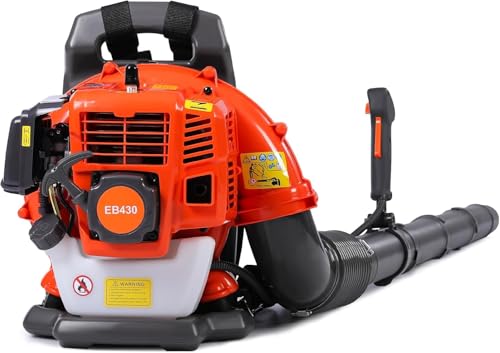
Pros
- Delivers up to 550 CFM and 230 MPH for moving wet yard debris
- Lightweight 17-pound backpack design with cushioned straps
- Thumb throttle includes cruise control for steady blowing
- 33.8 fl oz fuel tank yields up to 45 minutes of run time
- Operating temperature range spans 14°F to 104°F
Cons
- Requires 2-cycle fuel mixing and engine maintenance
- 550 CFM is modest for a backpack-class gas blower
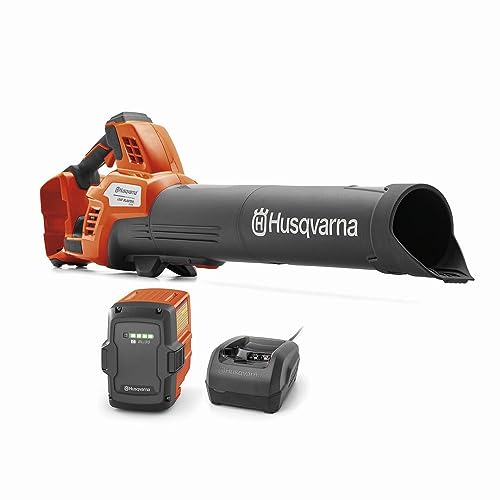
Pros
- Brushless motor provides strong 200-MPH and 800-CFM performance for efficient debris removal
- 15 percent lighter weight design reduces user fatigue during extended operation
- Quiet zero-emission operation suitable for eco-conscious residential use
- Includes full 40V 7.5 Ah battery and charger kit for out-of-box readiness
- Compatible 40V battery system works across Husqvarna handheld tools
Cons
- Battery-powered design requires recharging and offers finite runtime unlike gas alternatives
- Handheld form may still cause fatigue on very large properties despite the lighter build
- Battery appearance may vary from images as noted in the product details
The Husqvarna Leaf Blaster 350iB is a battery-powered cordless leaf blower that arrives as a complete kit with a 40V lithium-ion 7.5 Ah battery and charger. Its brushless motor construction and focus on reduced weight create an immediate impression of a modern, user-friendly tool built for regular lawn maintenance and outdoor cleanup tasks.
In performance, this model generates wind speeds up to 200 MPH with 800 CFM airflow to move leaves and debris effectively while remaining quiet and producing zero emissions. Simple keypad controls allow instant starts, cruise control supports hands-free convenience, and the power boost mode adds 20 percent more power along with a built-in debris scraper for wet or sticky material. The shared 40V battery further increases value by working with other Husqvarna handheld tools.
Considerations include the inherent limits of cordless operation, which depends on battery charge and requires recharging between uses. Even with the 15 percent lighter design, the handheld style can lead to arm fatigue over very large areas, and battery appearance may vary from promotional images.
Overall, the Husqvarna Leaf Blaster 350iB delivers excellent value for homeowners, fathers, or outdoor workers seeking a powerful yet quieter alternative to traditional blowers, particularly those who appreciate the convenience of a full battery kit and ecosystem compatibility.

Pros
- Powerful 7HP 212cc 4-stroke OHV gas engine
- Heavy-duty 13.5-inch metal impeller
- 360° front swivel wheel and 10-inch rear wheels
- 90° adjustable airflow output angle
- Rust-resistant powder-coated steel frame
Cons
- Engine oil is not included upon unboxing
- Manual push operation requires physical effort
- Gasoline and oil maintenance required

Pros
- Lightweight design at only 4.4 pounds
- 7-Amp motor rated up to 180 MPH and 180 CFM
- Built-in cord retention prevents unplugging
- Zero emissions with instant push-button start
- Simple, low-maintenance corded design
Cons
- Extension cord is not included
- Operating range is limited by cord reach
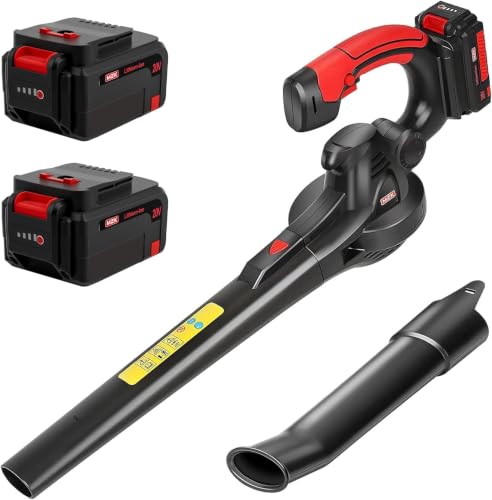
Pros
- Weighs only 3.9 pounds for light handling
- Rated airflow up to 450 CFM
- Cordless design allows unrestricted mobility
- Convenient one-hand trigger operation
- No gas mixing or cord management required
Cons
- Runtime varies significantly by power output
- Battery charging intervals required

Pros
- High-performance brushless motor rated up to 700 CFM and 170 MPH
- Includes an 80V 2.5Ah battery and compatible charger
- Cruise control and variable-speed trigger for effortless pacing
- Rated at 74 dB for quieter operation than comparable gas units
Cons
- Operating continuously on turbo mode quickly depletes the 2.5Ah battery
- Weighs 5.84 pounds before factoring in user movement

Pros
- Delivers up to 230 MPH airspeed and 920 CFM air volume
- Powered by a 63.3 cc, 3.7 HP 2-stroke gas engine
- Large 65 oz (1.9L) fuel tank reduces frequent refills
- Padded shoulder harness and back support enhance user comfort
- Weighs 19.5 pounds for manageable backpack handling
Cons
- Requires 2-stroke gas-and-oil fuel mixing
- Heavier and louder than comparable cordless electric alternatives

Pros
- Includes two 20V 2.0Ah batteries and a fast charger
- Extremely lightweight design at just 3.4 pounds
- Two selectable speed modes match light and heavier tasks
- Ergonomic non-slip grip allows comfortable one-handed use
- Comes with an extension nozzle for targeted airflow
Cons
- Runtime decreases significantly at the higher speed setting
- Best suited for light residential cleanup rather than dense debris

Pros
- 212cc 4-stroke engine delivers up to 1200 CFM
- Durable 13-inch steel impeller with welded blades
- Adjustable airflow: level, 15° up, or 15° down
- Includes front air deflector and engine oil
- 8-inch 360° swivel wheel with 12-inch rear wheels
Cons
- Manual-push machine weighing 88 pounds
- Requires ongoing 4-stroke engine maintenance
- Large footprint takes up significant garage space
Why Walk-Behind Blowers Serve as the Primary Alternative to Ride-On Units
While true ride-on leaf blowers are primarily commercial multi-thousand-dollar turf machines or custom mower attachments, wheeled walk-behind gas blowers provide the closest equivalent in raw air displacement for residential acreage. Models like the Landworks Leaf Blower Wheeled Walk Behind Jet and the BILT HARD 212cc Gas Walk Behind Leaf Blower utilize independent 212cc four-stroke engines to churn out immense air velocity, relieving you of the physical burden of carrying heavy tools across a vast property.
The primary compromise with wheeled blowers is the need to manually push them. While they rest entirely on ground wheels—including swivel casters for directional control—rough, sloping, or heavily rutted turf still demands physical effort to guide the frame compared to riding behind a tractor steering wheel.
Air Volume and Engine Output: Comparing Heavy-Duty Gas Blowers
When clearing deep leaf cover over large open areas, total cubic feet per minute (CFM) dictates how quickly you can move debris into manageable rows. The Landworks Leaf Blower Wheeled Walk Behind Jet features a 7HP (212cc) 4-stroke OHV engine paired with a 13.5-inch metal impeller, advertised to produce 150 to 200 MPH wind speed and 1,270 to 2,000 CFM at 3,600 RPM. This substantial flow sweeps wide swaths of turf in a single pass.
In comparison, the BILT HARD 212cc Gas Walk Behind Leaf Blower delivers an advertised 1,200 CFM and 150 MPH via its 13-inch four-welded-blade steel impeller. While slightly lower in peak volume than the Landworks, the BILT HARD unit includes precise directional flexibility with a three-position airflow selector (level, 15 degrees upward, and 15 degrees downward) along with a front air deflector for straight-ahead clearing. Both units offer the power needed for commercial-scale leaf removal, but operators must factor in engine maintenance, fuel management, and storage space for these heavy steel-frame machines.
Backpack vs. Wheeled Blowers: Managing Weight and Maneuverability
For uneven terrain, sloped banks, or heavily planted garden beds where wheeled machines cannot easily roll, high-output backpack blowers serve as a versatile intermediate choice. The Schröder Backpack Leaf Blower – Backpack Blower features a 63.3cc 2-stroke engine that delivers an advertised 920 CFM and 230 MPH, supported by a 19.5-pound harness and a generous 65-ounce fuel tank. It delivers commercial-grade wind volume while giving the operator full mobility across rocky or steep areas.
If budget is your primary constraint, the Thalorus 52cc Gas Backpack Leaf Blower, 550 CFM provides a lighter 17-pound footprint and up to 550 CFM at 230 MPH. The trade-off between wheeled units and backpacks comes down to personal ergonomics: wheeled blowers leave zero weight on your spine but require open rolling ground, whereas backpack blowers offer total terrain freedom at the expense of carrying the engine on your back for the duration of the job.
Battery Handheld Options for Quick Cleanups and Smaller Clearances
For buyers maintaining standard residential yards or seeking quick cleanups around outbuildings, oversized gas blowers are often more cumbersome than practical. Handheld battery blowers eliminate oil changes, gasoline mixing, and pull cords entirely, allowing for immediate cleanup on driveways, patios, and around vehicles.
The Husqvarna Leaf Blaster 350iB Battery Powered pushes the boundaries of handheld output with an advertised 800 CFM and 200 MPH using its 40V 7.5 Ah battery system, giving property owners high blowing force without fumes or noise pollution. Similarly, the Greenworks 80V Electric Leaf Blower, 700 CFM provides 700 CFM and 170 MPH using an 80V commercial-grade brushless platform. While these cordless units eliminate mechanical engine upkeep, their high-speed runtime is governed by battery capacity, making them supplementary tools rather than primary solutions for sweeping multi-acre tree canopies.
Frequently Asked Questions About Ride-On and Heavy-Duty Blowers
Can I attach a walk-behind blower to a riding lawn mower?
The walk-behind blowers in this guide, such as the Landworks and BILT HARD models, are designed strictly for manual push operation. They feature their own dedicated wheels, handles, and manual throttles, and the manufacturer specifications do not support direct mounting or towing behind a lawn tractor.
How much engine maintenance do 4-stroke gas blowers require?
Four-stroke engines like the 212cc motors on the Landworks and BILT HARD units run on standard unleaded fuel and require regular engine oil additions, spark plug maintenance, and seasonal storage prep, unlike battery models which require zero engine upkeep.
When is a backpack blower better than a wheeled walk-behind blower?
A backpack blower like the Schröder SR-6400L is better suited for uneven, heavily wooded, or sloped terrain where pushing a heavy steel frame on wheels is difficult. Wheeled blowers excel on large flat lawns, driveways, and open acreage.
Selecting the Right High-Capacity Blower for Your Property
Choosing the best high-capacity leaf mover comes down to the acreage of your property, your physical preferences, and the specific terrain you must navigate. If you have flat, wide-open ground and want maximum leaf-moving volume without carrying any weight, the Landworks Leaf Blower Wheeled Walk Behind Jet is the top recommendation for its powerful 7HP motor and expansive CFM output. The primary limitation is its manual push design, which can prove tiring on steep hills or heavily uneven pastures.
If your property features steep slopes, tight garden borders, or rocky ditches where a wheeled cart cannot roll, consider the Schröder Backpack Leaf Blower – Backpack Blower as a nimble, high-output alternative. For those who prioritize effortless push-button operation and zero engine maintenance on suburban lots, an electric solution like the Husqvarna Leaf Blaster 350iB Battery Powered delivers robust handheld clearing without gas-engine complexity.