For everyday suburban patios and sidewalks, a high-volume corded unit provides unlimited runtime at an affordable cost, though your range remains tethered to an electrical outlet. If you have open acreage or distant fence lines, battery-powered and walk-behind models grant full mobility, but require managing battery charges or engine maintenance.

Pros
- Lightweight design at approximately 4.5 lbs
- Motor delivers up to 155 MPH and 350 CFM
- Includes both flat and round nozzle attachments
- Simple push-button instant electric start
Cons
- Requires an extension cord for outdoor range
- Single-speed operation lacks variable control

Pros
- Lightweight design at only 4.4 pounds
- 7-Amp motor rated up to 180 MPH and 180 CFM
- Built-in cord retention prevents unplugging
- Zero emissions with instant push-button start
- Simple, low-maintenance corded design
Cons
- Extension cord is not included
- Operating range is limited by cord reach

Pros
- Delivers up to 600 CFM and 110 MPH airflow
- Continuous corded power eliminates recharging and gas mixing
- Variable-speed control adjusts airflow to the task
- Lightweight design weighs just 6.4 pounds
Cons
- Operating range is tethered to an electrical outlet

Pros
- Airflow reaches up to 450 CFM and 140 MPH
- Built-in scraper helps loosen wet, stuck debris
- Two-speed switch allows quick airflow adjustment
- Cord retention hook helps prevent accidental unplugging
- Compact axial fan design weighs approximately 7 pounds
Cons
- Tethered by an electrical cord, limiting reach
- Requires a suitable outdoor extension cord (not included)
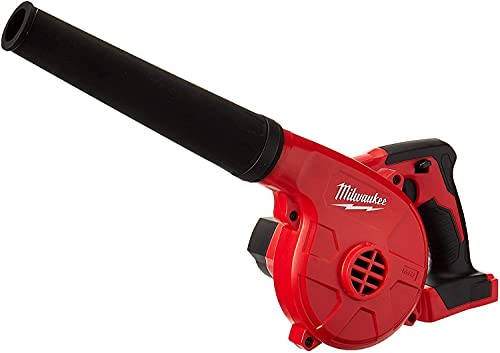
Pros
- Lightweight 4-pound build reduces user fatigue
- Compact dimensions allow for easy maneuvering and storage
- Runs on the widespread Milwaukee M18 battery platform
- Durable plastic housing engineered for regular outdoor use
Cons
- Bare tool only; M18 battery and charger not included
- Manufacturer does not specify CFM or MPH performance ratings

Pros
- Produces up to 1270 CFM airflow and 150 MPH wind speed
- Runs on standard unleaded 87-octane gasoline with no oil mixing
- 360-degree front swivel wheel and 12-inch rear wheels for steering
- 90-degree adjustable flow angle directs debris where needed
- Convenient handle-mounted controls for speed adjustment
Cons
- Manual push design requires physical effort on uneven ground
- Bulky footprint requires dedicated garage or shed storage

Pros
- Lightweight 4.6-pound frame for one-handed use
- Airflow rated up to 155 MPH and 350 CFM
- Adjustable blowpipe with included extension nozzle
- Built-in cord holder prevents accidental disconnection
Cons
- Extension cord is not included
- Restricted to tethered outlet access
Pros
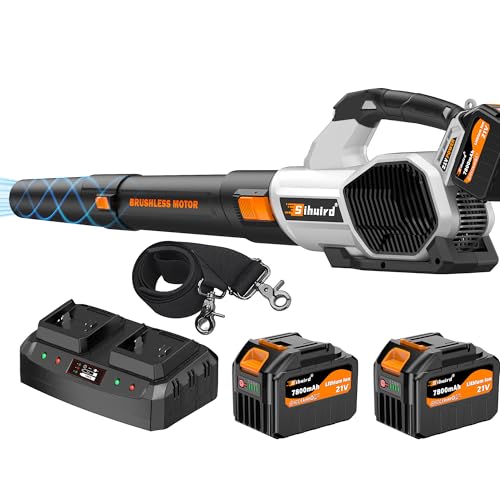
- Claimed output up to 765 CFM and 290 MPH with Turbo mode
- Includes two 7.8Ah high-capacity batteries and a dual fast charger
- Brushless motor paired with an axial fan design
- Built-in LED lighting aids cleanup in low-light conditions
- Three wind speeds with automatic speed locking
Cons
- Turbo mode automatically shuts off after 15 seconds per press
- Bulkier footprint compared to smaller handheld models

Pros
- High-power output rated up to 700 CFM and 200 MPH
- Lightweight 4.2 lb build enables easy one-hand use
- Includes two 20V Max 4.0Ah batteries and fast charger
- Two-speed switch for gentle dusting or heavy clearing
Cons
- High-speed runtime is limited to approximately 30 minutes
- Only two speed settings available

Pros
- Includes two 20V 3000mAh rechargeable batteries
- Motor reaches up to 24,000 RPM for spot tasks
- Air velocity up to 55 MPH safely blows off vehicle water
- Compact handheld build reduces arm fatigue
- Round nozzle concentrates airflow into tight spaces
Cons
- Rated top speed of 55 MPH is limited for heavy yard work
- Brushed DC motor rather than brushless design
Corded vs. Cordless: Choosing the Right Power Source
Choosing between corded electric and battery power depends primarily on the perimeter of your yard and access to outdoor outlets. Corded blowers, such as the WORX 12 Amp Turbine Electric Leaf Blower for Daily and BLACK+DECKER Electric Leaf Blower, eliminate downtime entirely because they never run out of charge. However, dragging an outdoor-rated extension cord around landscaping, trees, and corners introduces friction and limits your reach to around 100 to 150 feet from an outlet.
In contrast, cordless models offer complete freedom of movement. Handheld tools like the Milwaukee 0884-20 M18 18 Volt Cordless and the EWORK 700 CFM Cordless Electric Leaf Blower allow you to clear remote driveways and garden sheds without cord tangles. The trade-off is finite runtime; clearing extensive yards often requires swapping multiple battery packs mid-job or waiting for recharges, making corded units simpler for compact properties. For more shopping venues, check out our guide on where can I buy A leaf blower.
Comparing High-Airflow Handhelds: WORX WG520 vs. EWORK 700 CFM
When heavy leaf piles require maximum airflow, the corded WORX 12 Amp Turbine and the battery-powered EWORK 700 CFM represent two distinct approaches to moving high volumes of yard waste.
The WORX WG520 delivers up to 600 CFM and an advertised 110 MPH airspeed using a 12-amp turbine motor. Because it is corded, it can maintain that peak output indefinitely, making it a reliable workhorse for deep piles along suburban property lines. It weighs 6.4 pounds and features variable-speed control to throttle back near delicate mulch beds.
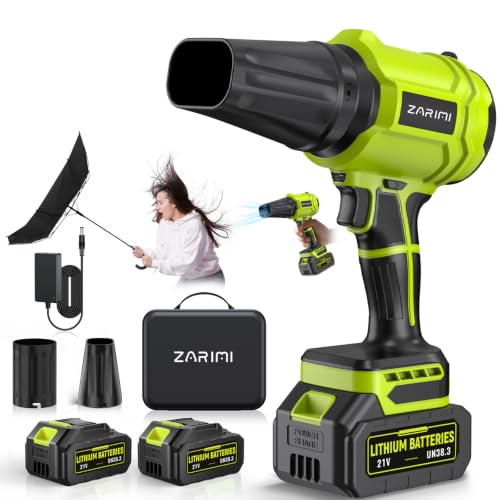
Conversely, the EWORK cordless model pushes an advertised 700 CFM and up to 200 MPH while weighing just 4.2 pounds. It includes two 20V 4.0Ah batteries and a charger, advertised to offer up to 60 minutes on low or 30 minutes on high speed. While the EWORK offers higher peak specs and unmatched portability, continuous operation is limited by its battery cycle. Choosing between them comes down to whether you prefer the limitless endurance of the WORX or the lightweight agility of the EWORK.
When a Walk-Behind Gas Blower Outperforms Handheld Models
Handheld blowers excel at clearing steps, patios, and light driveway dust, but massive seasonal yard clearings require a substantial increase in output. The SuperHandy Walk Behind Leaf Blower occupies an entirely different performance tier compared to handheld tools.
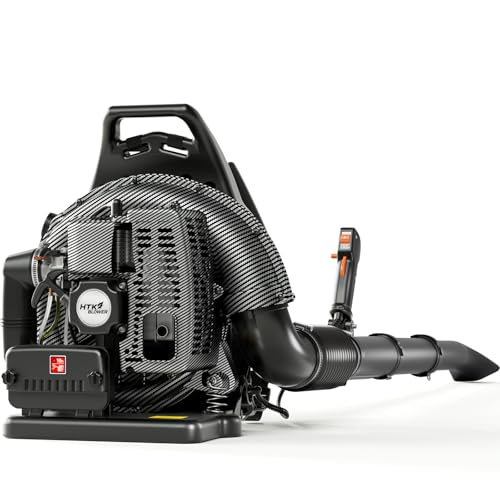
Driven by a 7HP 209cc 4-stroke engine, this wheeled unit generates an advertised 1270 CFM airflow and 150 MPH wind speeds. It is built on a heavy steel frame with 12-inch rear wheels and an 8-inch front swivel wheel, rolling the tool across turf rather than forcing the operator to bear its weight. It also features a 90-degree adjustable air deflector to control debris direction. The trade-off is physical bulk, storage footprint, and regular gas maintenance—including fueling with 87-octane unleaded gasoline and checking oil. For modest yards, a handheld remains far easier to store and maneuver.
Budget Electric Cleaners Under $50 for Patios and Sidewalks
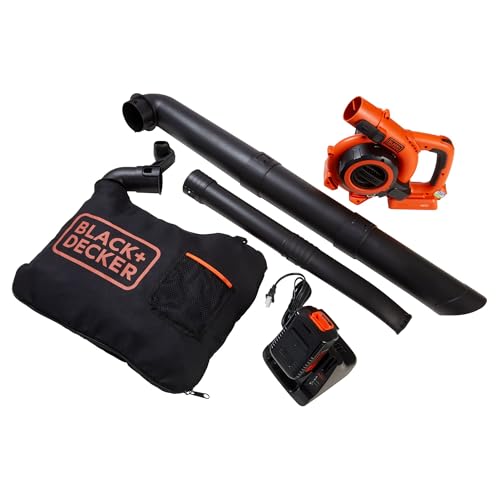
For simple hardscape sweeping where extreme CFM is unnecessary, lightweight electric blowers priced under $50 offer practical clearing power without unnecessary complexity. Models such as the MAXLANDER 7-Amp Electric Leaf Blower, the Electric Leaf Blower Corded, and the BLACK+DECKER Electric Leaf Blower weigh between 4 and 4.6 pounds, making them operable with one hand.
Both the MAXLANDER and the ZEGJAW corded blowers feature 7-amp motors advertising 350 CFM and 155 MPH. These numbers provide sufficient force to sweep dry leaves, grass clippings, and garage dust. The BLACK+DECKER LB700 trades total volume for speed, pushing an advertised 180 MPH at 180 CFM. The primary compromise with these entry-level tools is utility: they lack variable speed dials, produce narrower air streams, and require you to supply your own grounded extension cord. If your goal is primarily maintaining paved surfaces, explore dedicated options in our leaf blower for driveway breakdown.
Air Volume (CFM) vs. Airspeed (MPH): Which Spec Cleans Faster?
Evaluating blower specifications requires understanding how cubic feet per minute (CFM) and miles per hour (MPH) work together on lawn debris.
Airspeed (MPH) indicates how fast the air exits the nozzle. High velocity, such as the 180 MPH produced by the BLACK+DECKER LB700 or the 290 MPH claimed by the Sihuird Leaf Blower Cordless, helps break loose wet, matted leaves stuck to paved surfaces. However, high speed with a narrow volume can scatter debris rather than gathering it into controlled piles.
Air volume (CFM) measures the total quantity of air displaced per minute. A higher CFM rating, like the 600 CFM on the WORX WG520 or the 700 CFM on the EWORK unit, moves larger broad piles across open grass. For broad lawn care, prioritizing CFM provides faster accumulation, whereas tight hardscapes benefit from higher MPH. Tools that balance both, such as the BLACK + DECKER Electric Leaf Blower (BEBL750) with 450 CFM and 140 MPH, provide a versatile middle ground for general residential use.
Frequently Asked Questions About Leaf Blowers
What is the primary difference between corded electric and battery-powered blowers?
Corded models offer continuous, uninterrupted power without battery degradation, but require an extension cord and restrict your working radius. Battery blowers provide complete mobility for large or distant properties, but their working time is strictly bounded by battery capacity and require recharging.
Do corded electric blowers include an extension cord in the box?
Typically, corded handheld models such as the BLACK+DECKER LB700 or ZEGJAW do not include an outdoor extension cord. They feature built-in cord retention hooks, but you must supply a suitable grounded outdoor cord rated for the tool's amperage.
When should you choose a gas walk-behind blower over a handheld electric unit?
Walk-behind blowers like the SuperHandy model are designed for large properties and heavy, wet debris accumulation where extreme output—such as 1270 CFM—is required. Handheld electric models are better suited for routine deck, garage, and suburban yard maintenance without the maintenance demands of a gas engine.
Making the Right Blower Selection for Your Property
Selecting the ideal blower depends on balancing property layout, debris volume, and storage space. While shopping homedepot blowers or comparable yard equipment, matching tool capacity to the surface you clean most often prevents both overspending and cleanup fatigue.
For most typical residential properties with standard outdoor electrical access, the WORX 12 Amp Turbine Electric Leaf Blower for Daily is our recommended choice. Its 600 CFM motor provides substantial air volume to herd broad leaf piles across lawns, while the continuous corded connection eliminates battery anxiety. The main limitation is its reliance on an extension cord, which restricts working distance. For homeowners managing expansive lots or properties with distant fence lines, the EWORK 700 CFM Cordless Electric Leaf Blower serves as a capable alternative, trading infinite runtime for complete battery-powered freedom.