For clearing massive parking lots and open properties, the walk-behind Landworks Leaf Blower Wheeled Walk Behind Jet delivers unmatched volume with an advertised output up to 2000 CFM, though its bulky wheeled frame cannot navigate tight borders or rugged terrain. If you need portable maneuverability across uneven turf, the commercial-grade PRORUN PBB3000 Gas Backpack Leaf Blower generates a potent 1125 CFM and 250 MPH, but requires carrying gas-engine weight and mixing 2-cycle fuel.
Pros
- Delivers up to 550 CFM and 230 MPH for moving wet yard debris
- Lightweight 17-pound backpack design with cushioned straps
- Thumb throttle includes cruise control for steady blowing
- 33.8 fl oz fuel tank yields up to 45 minutes of run time
- Operating temperature range spans 14°F to 104°F
Cons
- Requires 2-cycle fuel mixing and engine maintenance
- 550 CFM is modest for a backpack-class gas blower
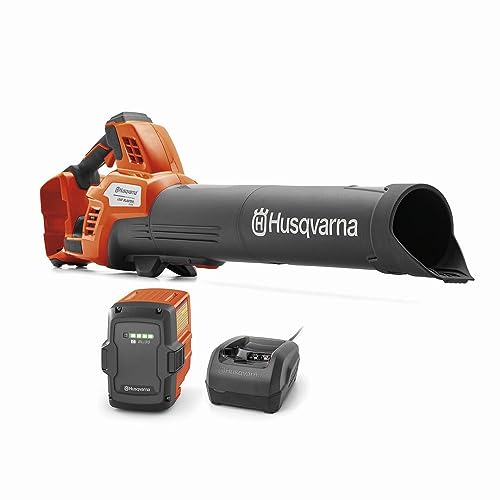
Pros
- Brushless motor provides strong 200-MPH and 800-CFM performance for efficient debris removal
- 15 percent lighter weight design reduces user fatigue during extended operation
- Quiet zero-emission operation suitable for eco-conscious residential use
- Includes full 40V 7.5 Ah battery and charger kit for out-of-box readiness
- Compatible 40V battery system works across Husqvarna handheld tools
Cons
- Battery-powered design requires recharging and offers finite runtime unlike gas alternatives
- Handheld form may still cause fatigue on very large properties despite the lighter build
- Battery appearance may vary from images as noted in the product details
The Husqvarna Leaf Blaster 350iB is a battery-powered cordless leaf blower that arrives as a complete kit with a 40V lithium-ion 7.5 Ah battery and charger. Its brushless motor construction and focus on reduced weight create an immediate impression of a modern, user-friendly tool built for regular lawn maintenance and outdoor cleanup tasks.
In performance, this model generates wind speeds up to 200 MPH with 800 CFM airflow to move leaves and debris effectively while remaining quiet and producing zero emissions. Simple keypad controls allow instant starts, cruise control supports hands-free convenience, and the power boost mode adds 20 percent more power along with a built-in debris scraper for wet or sticky material. The shared 40V battery further increases value by working with other Husqvarna handheld tools.
Considerations include the inherent limits of cordless operation, which depends on battery charge and requires recharging between uses. Even with the 15 percent lighter design, the handheld style can lead to arm fatigue over very large areas, and battery appearance may vary from promotional images.
Overall, the Husqvarna Leaf Blaster 350iB delivers excellent value for homeowners, fathers, or outdoor workers seeking a powerful yet quieter alternative to traditional blowers, particularly those who appreciate the convenience of a full battery kit and ecosystem compatibility.

Pros
- Powerful 7HP 212cc 4-stroke OHV gas engine
- Heavy-duty 13.5-inch metal impeller
- 360° front swivel wheel and 10-inch rear wheels
- 90° adjustable airflow output angle
- Rust-resistant powder-coated steel frame
Cons
- Engine oil is not included upon unboxing
- Manual push operation requires physical effort
- Gasoline and oil maintenance required

Pros
- Lightweight design at only 4.4 pounds
- 7-Amp motor rated up to 180 MPH and 180 CFM
- Built-in cord retention prevents unplugging
- Zero emissions with instant push-button start
- Simple, low-maintenance corded design
Cons
- Extension cord is not included
- Operating range is limited by cord reach
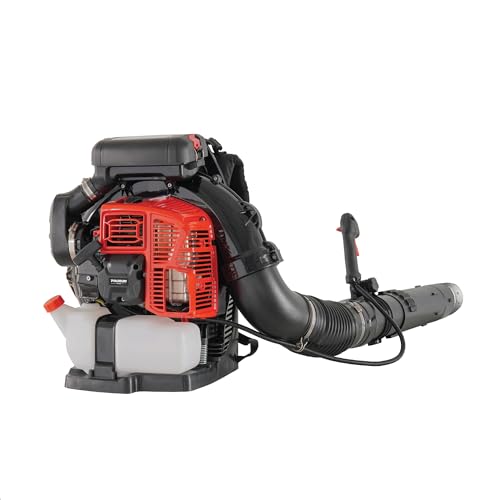
Pros
- High rated output of 1125 CFM, 250 MPH, and 50N blow force
- Fan-powered back ventilation enhances user comfort
- Spring-assisted starter reduces pulling effort by a stated 40%
- Dual-stage tool-less air filtration for dusty conditions
- Up to 90 minutes of claimed runtime at full throttle
Cons
- Heavy 33-pound weight can cause fatigue during long sessions
- Requires 2-cycle gas and oil fuel mixing
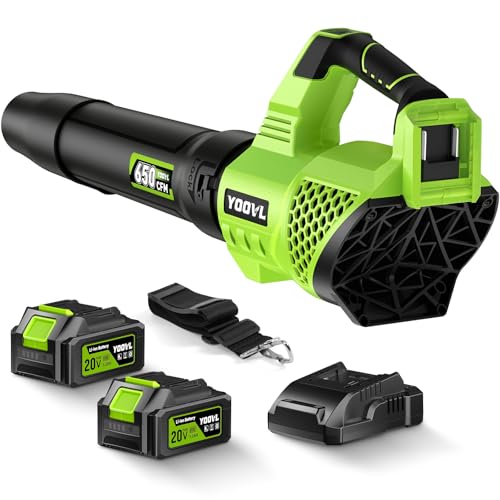
Pros
- Airflow rated up to 650 CFM using advanced turbo technology
- Comes with two high-capacity 20V 5.2Ah batteries and fast charger
- Three selectable speed modes for delicate to heavy-duty jobs
- Includes an adjustable shoulder strap to reduce arm fatigue
- Includes blower tube and extension nozzle attachments
Cons
- Maximum 150-minute runtime applies only to low-speed mode
- Heavier battery packs may add weight during prolonged handheld use

Pros
- Airflow reaches up to 450 CFM and 140 MPH
- Built-in scraper helps loosen wet, stuck debris
- Two-speed switch allows quick airflow adjustment
- Cord retention hook helps prevent accidental unplugging
- Compact axial fan design weighs approximately 7 pounds
Cons
- Tethered by an electrical cord, limiting reach
- Requires a suitable outdoor extension cord (not included)

Pros
- 65cc engine delivers a high-volume 850 CFM at 205 MPH
- Includes both fan and concentrator nozzle attachments
- 1.7-liter fuel tank reduces frequent stopping for refills
- Backpack harness features ventilated backrest for comfort
- Variable throttle with cruise control simplifies steady operation
Cons
- Requires 2-stroke fuel mixing and routine engine upkeep
- At 70.8 inches long assembled, storage requires ample space
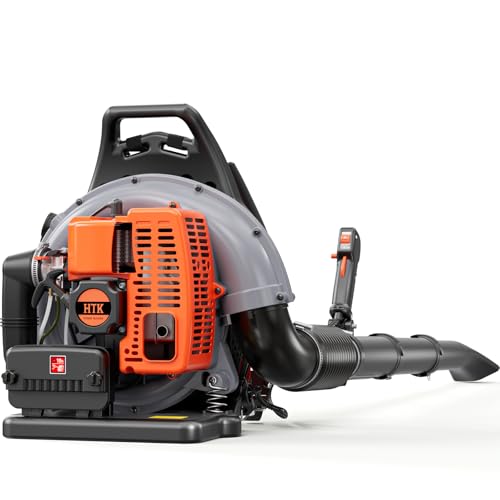
Pros
- 63cc 2-stroke engine delivers 665 CFM and 205 MPH airspeed
- Padded ergonomic backpack harness balances weight across shoulders
- Cruise control locks throttle to relieve trigger finger strain
- Generous 1.7L fuel tank supports extended property maintenance
- Manufacturer-rated sound level of 71 dB for quieter operation
Cons
- Requires ongoing two-cycle oil-to-gasoline fuel mixing
- Bulkier footprint demands sufficient garage or shed storage

Pros
- Delivers up to 230 MPH airspeed and 920 CFM air volume
- Powered by a 63.3 cc, 3.7 HP 2-stroke gas engine
- Large 65 oz (1.9L) fuel tank reduces frequent refills
- Padded shoulder harness and back support enhance user comfort
- Weighs 19.5 pounds for manageable backpack handling
Cons
- Requires 2-stroke gas-and-oil fuel mixing
- Heavier and louder than comparable cordless electric alternatives
Walk-Behind vs. Backpack: Choosing the Right Format for Acreage
Choosing between a walk-behind unit and a backpack blower depends on property layout, terrain, and clearing volume. Push blowers like the Landworks Leaf Blower Wheeled Walk Behind Jet are purpose-built for expansive, flat spaces such as commercial lots and extended driveways. Powered by a 212cc 4-stroke engine with a 13.5-inch metal impeller, it generates an advertised airflow of 1270 to 2000 CFM at speeds up to 200 MPH. However, because it relies on two 10-inch rear wheels and an 8-inch front swivel caster, pushing it over steep slopes, thick ditch grass, or through narrow garden gates is impractical.
Backpack blowers trade sheer ground clearing width for mobility and access. The PRORUN PBB3000 Gas Backpack Leaf Blower and Schröder Backpack Leaf Blower – Backpack Blower mount directly to the operator, allowing you to walk fence lines, traverse hills, and clean between parked machinery. While backpack blowers avoid the ground clearance limitations of wheeled carts, they place the engine load—such as the Schröder’s 19.5-pound dry weight—directly onto your shoulders and back for the duration of the job.
Understanding Air Volume vs. Airspeed: CFM and MPH Demands
High air speed (MPH) dislodges stuck material, while high air volume (CFM) pushes large piles forward across open ground. An industrial leaf blower requires a careful balance of both metrics to handle stubborn, wet debris without stalling progress. The PRORUN PBB3000 pairs an advertised 250 MPH velocity with 1125 CFM, producing 50 Newtons of blowing force designed to scour wet turf and lift compacted leaves in one pass.
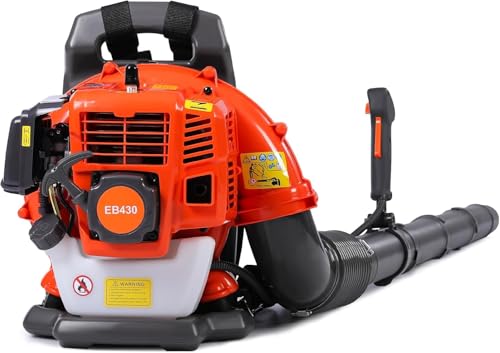
In contrast, models with lower volume struggle once a debris pile accumulates. The Thalorus 52cc Gas Backpack Leaf Blower, 550 CFM provides a brisk 230 MPH to break loose twigs and pine needles, but its 550 CFM rating limits the mass of debris it can roll forward at once. Buyers managing wet seasonal leaf falls will see faster cleanups from high-CFM alternatives like the Getell 65CC Backpack Leaf Blower, Gas Powered (advertised at 850 CFM) or the Schröder SR-6400L (920 CFM), even though higher-volume blowers consume fuel more rapidly.
Commercial Engine Power: 2-Cycle Gas Backpacks vs. 4-Stroke Push Blowers
Engine design determines not only power delivery but also daily maintenance routines on the job site. The Landworks walk-behind incorporates a 7 HP 212cc 4-stroke OHV engine. It runs on standard unleaded 87+ octane gasoline without two-stroke oil mixing, and its 0.7-gallon tank supports extended runtime. The trade-off is mechanical bulk; 4-stroke engines require separate oil reservoirs and upright storage to prevent fluid leaks.
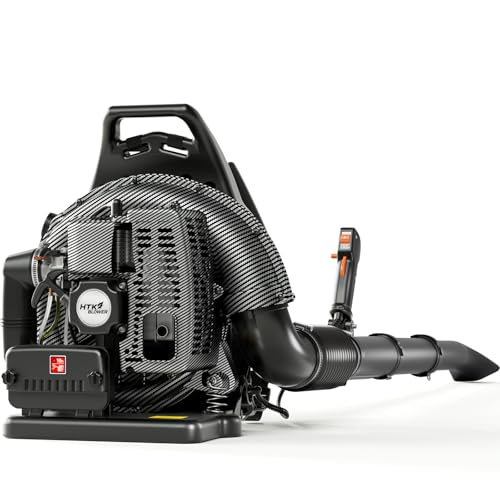
Conversely, high-output backpacks such as the PRORUN PBB3000 (79.9cc), HTK Gas Backpack Leaf Blower, 63CC 2-Stroke, and Getell 65CC rely on 2-cycle engines. These motors deliver higher power-to-weight ratios, enabling high-RPM operation in a wearable chassis. The compromise is logistical: operators must strictly prepare precise gas-oil fuel mixtures, tolerate higher operational vibration, and manage routine exhaust spark arrestor and air filter cleanings in dusty environments.
Cordless and Electric Utility in Commercial Yard Cleanup
Electric blowers provide instant starting, zero direct emissions, and significantly lower operating noise, making them valuable around schools, hospitals, and residential complexes with strict decibel rules. Handheld battery models like the Husqvarna Leaf Blaster 350iB Battery Powered produce an advertised 800 CFM and 200 MPH using a 40V 7.5 Ah lithium-ion battery. The Husqvarna includes cruise control, a boost mode, and an integrated scraper for stuck debris, matching the air specs of mid-range gas backpacks without exhaust fumes.
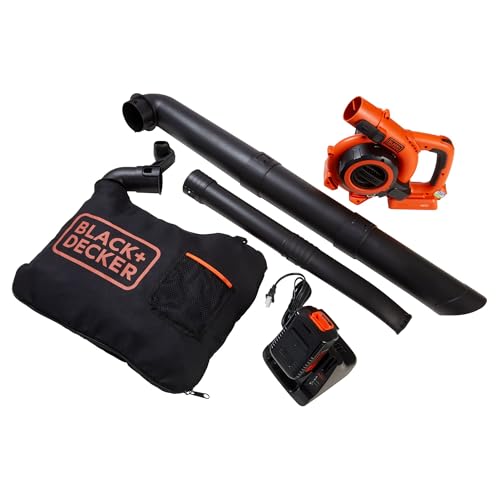
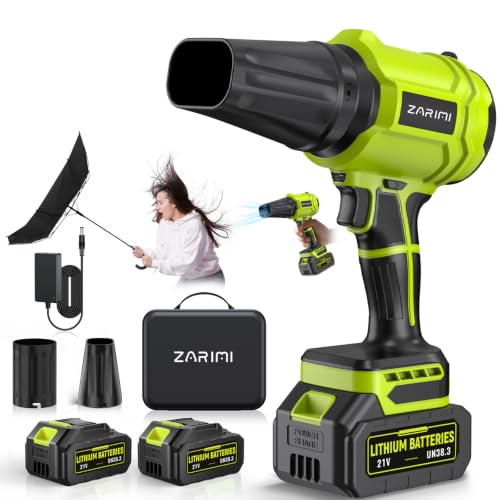
However, electric tools face distinct operational boundaries compared to heavy-duty fuel equipment. While cordless units like the Husqvarna or the dual-battery Leaf Blower Cordless, 650CFM Electric Leaf Blowers eliminate pull cords, their continuous high-speed clearing is tethered to battery life and charging cycles. Similarly, corded options like the BLACK+DECKER Electric Leaf Blower offer constant power for maintenance touch-ups around small staging areas, but an extension cord makes them unsuitable for industrial-scale acreage. For continuous commercial-grade work, explore our guide on selecting a high-powered leaf blower.
Frequently Asked Questions About Industrial Leaf Blowers
What is the difference between CFM and MPH when choosing a commercial blower?
MPH measures air speed, which provides the initial force to dislodge damp, compacted leaves or heavy debris from the ground. CFM measures the total volume of air pushed through the nozzle, which determines how much material you can move forward across open distances in a single pass. Commercial jobs benefit from high ratings in both metrics.
Do walk-behind leaf blowers require mixed fuel?
Most walk-behind blowers, such as the Landworks 212cc model, feature 4-stroke engines that run on standard unleaded pump gasoline and have a separate oil reservoir. Unlike 2-cycle backpack models, you do not mix 2-stroke oil into the gas tank, though you must check and change the engine oil regularly.
Can battery-powered blowers handle commercial cleanup tasks?
High-end cordless blowers like the Husqvarna 350iB reach up to 800 CFM, rivaling mid-tier gas units while operating quietly with zero emissions. However, battery runtimes depend heavily on power settings and boost mode usage, so running multiple large-capacity batteries is necessary to avoid downtime on larger commercial jobs.
Which Industrial Leaf Blower Fits Your Workload?
Selecting the best tool requires aligning the blower’s chassis, engine type, and airflow output with your property layout and physical endurance. Wheeled gas sweepers eliminate carrying fatigue and move massive rows of autumn debris across flat asphalt or manicured sod. Heavy backpack blowers offer the maneuverability required for uneven properties, ditches, and landscaping beds, while battery-powered blowers fill sensitive daytime niches where noise and emissions cannot be tolerated.
For professionals and property owners tackling wide, open acreage with heavy leaf fall, the recommended choice is the Landworks Leaf Blower Wheeled Walk Behind Jet, which delivers unmatched 1270–2000 CFM output and 4-stroke reliability without physical carrying fatigue. Its principal limitation is poor maneuverability in confined spaces, steps, or steep terrain. If your cleanup route includes slopes, narrow side yards, and obstacle-filled grounds, opt instead for the PRORUN PBB3000 Gas Backpack Leaf Blower, which pairs 1125 CFM commercial force with full backpack mobility.