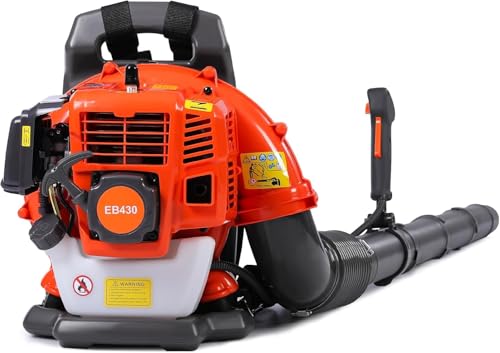
If you want to clear yard debris without the chore of mixing oil and gas, a four-stroke backpack leaf blower like the VEVOR 75.6CC 4-Stroke Backpack Leaf Blower Gas delivers straight-gas refueling and lower emissions, though it yields less maximum clearing force than comparable commercial two-stroke engines.
Pros
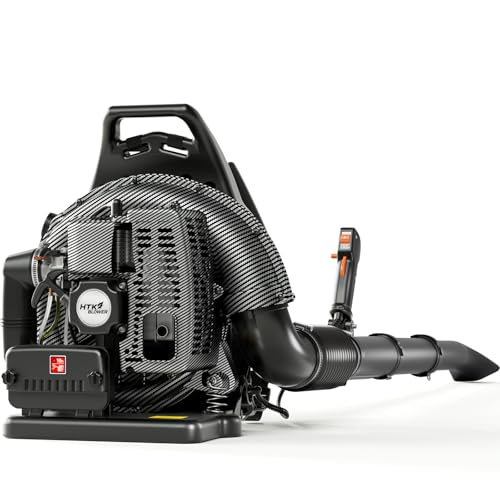
- 63CC 2-stroke engine provides up to 665 CFM and 205 MPH
- Fully padded ergonomic backpack harness
- Variable-speed throttle with built-in cruise control
- Generous 1.7 L fuel tank for extended yard sessions
Cons
- Requires 2-stroke fuel mixing and gas engine maintenance
Pros
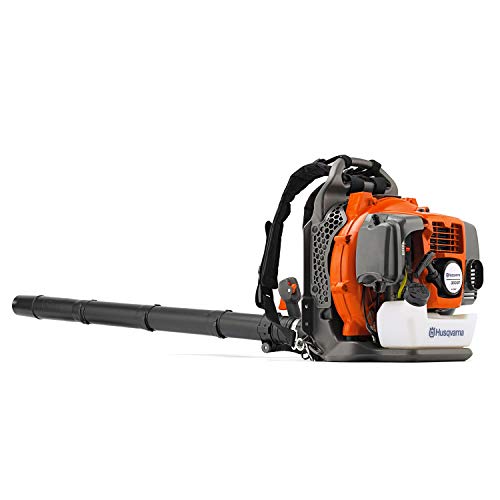
- 50.2-cc 2.1-HP X-Torq engine
- Rated blowing force of 692 CFM and 180 MPH
- LowVib technology dampens machine vibrations
- Air purge primer simplifies engine starts
- Ergonomic harness with offset control handle
Cons
- Weighs 22 pounds before fuel is added
- Requires ongoing two-stroke fuel mixing

Pros
- 75.6cc 4-stroke engine requires no oil mixing
- Delivers up to 615 CFM and 179 MPH airflow
- Large 1.8-liter fuel tank for longer runs
- Padded backpack harness dampens vibration
- Simple 4-step engine starting process
Cons
- Heavy bare machine weight at 28.44 pounds
- Large footprint requires substantial storage
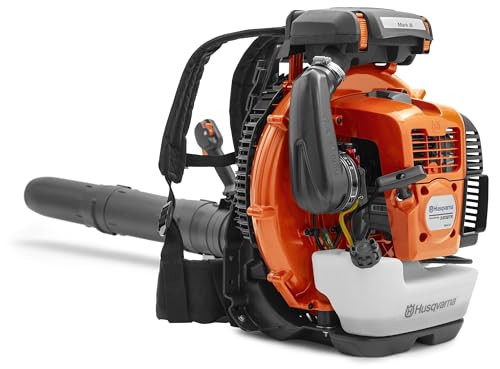
Pros
- Strong rated output of 1000 CFM, 220 MPH, and 47 N blow force
- Ventilated ergonomic harness with load-distributing hip belt
- Two-stage intake air filtration protects engine in dusty jobs
- Intuitive tube-mounted throttle control
Cons
- Substantial 34-pound weight can lead to operator fatigue
- Requires ongoing 2-cycle fuel mixing and maintenance

Pros
- 51cc 2-cycle engine produces up to 765 CFM and 270 MPH
- Padded harness and hip belt provide balanced load distribution
- Air purge system removes fuel line air for easier starting
- Variable speed throttle includes cruise control functionality
- Proven X-Torq engine technology maintains high clearing force
Cons
- Heavier 22-pound build can cause fatigue on extended jobs
- Requires routine 2-cycle gas and oil fuel maintenance
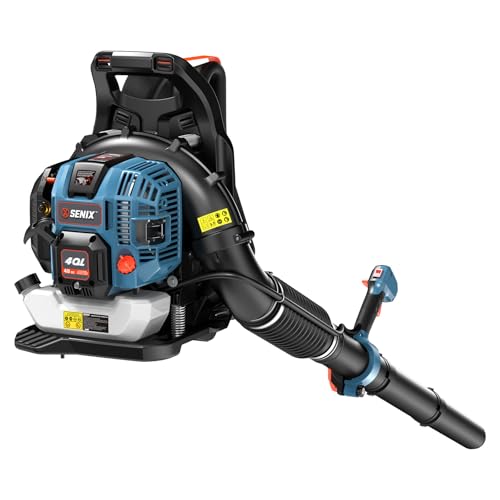
Pros
- 4-cycle engine eliminates the need to mix oil and gas
- Produces lower emissions than typical 2-cycle models
- Variable-speed throttle with convenient cruise control
- Lightweight backpack build at just 18.2 pounds
Cons
- Lower output at 425 CFM and 195 MPH than larger blowers

Pros
- 65.6 cc, 3.81 HP 2-cycle X-Torq engine for high output
- Ventilated, load-reducing harness with wide shoulder straps
- LowVib technology helps minimize operating vibrations
- Air purge system allows for simpler, trouble-free starting
- Cruise control feature maintains steady throttle during use
Cons
- Weighs 23.2 pounds before adding gasoline
- Requires two-cycle fuel mixing and routine gas engine upkeep

Pros
- Delivers up to a rated 880 CFM and 320 MPH air velocity
- Ergonomic backpack harness with padded straps and anti-vibration build
- Large 1.8-liter fuel tank supports up to 180 minutes of runtime
- Cruise-control throttle lock for steady, continuous operation
Cons
- Heavier design at approximately 25 pounds before fueling
- Requires 2-cycle gas and oil mixing
Why Choose a Four-Stroke Engine Over Traditional Two-Stroke Blowers?
Four-stroke leaf blowers eliminate the need to pre-mix 2-cycle oil with gasoline and generally emit fewer exhaust fumes, but they often carry extra mechanical complexity and lower blowing output per engine displacement size.
In the verified lineup, the VEVOR 75.6CC 4-Stroke Backpack Leaf Blower Gas highlights that no fuel mixing is required—you simply fill the tank with regular unleaded gasoline and follow its 4-step starting sequence. Similarly, the SENIX 49CC 4-Cycle Gas Powered Backpack Leaf advertises cleaner operation and lower emissions than standard 2-cycle blowers. This provides real convenience for residential homeowners who dislike keeping dedicated pre-mixed gas cans in the garage or risk ruining an engine with improper fuel ratios. However, two-stroke engines fire on every revolution, which historically delivers higher engine response and greater air volume from a lighter block. If you are exploring broader options across our leaf blowers guide, deciding whether you truly require no-mix fuel is your initial filter.
Displacement and Airflow: Comparing VEVOR 75.6cc and SENIX 49cc Four-Cycle Models
For wide properties or wet debris, the 75.6cc VEVOR blower provides significantly greater air volume at 615 CFM, whereas the 49cc SENIX blower focuses on lighter 1/2- to 1-acre maintenance with 425 CFM and a focused 195 MPH airspeed.
When evaluating the two dedicated four-cycle options in this group, engine displacement dictates their practical capability. The VEVOR 75.6CC 4-Stroke Backpack Leaf Blower Gas utilizes its 75.6 cc displacement to generate 615 CFM at 179 MPH, making it suitable for large lawns, long driveways, and light snow removal according to the manufacturer. On the other hand, the SENIX 49CC 4-Cycle Gas Powered Backpack Leaf targets properties between 0.5 and 1 acre, delivering 425 CFM alongside a higher 195 MPH velocity. The SENIX provides enough targeted speed for sweeping dry leaves from walkways and patio pavers, but its 425 CFM air volume will struggle more than VEVOR’s 615 CFM when pushing massive wet leaf piles across thick turf. The trade-off comes down to clearing scope: VEVOR moves broader piles, while SENIX offers a more compact package for routine suburban upkeep.
Airflow Reality Check: Four-Stroke Convenience Versus Two-Stroke Clearing Force
If absolute blowing force is your priority, commercial two-stroke blowers vastly outperform four-stroke options of identical displacement, even though they require manual oil mixing.
A direct comparison reveals this performance gap clearly. The VEVOR 75.6CC 4-Stroke Backpack Leaf Blower Gas delivers an advertised 615 CFM and 179 MPH from its 75.6 cc four-stroke engine. In contrast, the Husqvarna 580BTS Gas Backpack Leaf Blower also features a 75.6 cc displacement, but its 2-cycle X-Torq engine produces an immense 1000 CFM, 220 MPH, and 47 N of blow force. Even smaller 50–51cc 2-cycle units like the Husqvarna 350BT Gas Leaf Blower (692 CFM, 180 MPH) and Husqvarna 150BT Gas Backpack Leaf Blower (765 CFM, 270 MPH) exceed the 75.6cc four-stroke in pure air volume. Buyers questioning what leaf blower is the best must weigh the physical ease of straight-gas fueling against the raw clearing productivity that professional-grade two-stroke machinery provides.
Harness Ergonomics and Fuel Tank Capacity for Large Properties
Extended cleanup jobs demand adequate fuel tank capacity and weight distribution, where 1.7 to 1.8-liter tanks minimize refueling stops but require well-padded suspension harnesses to prevent back strain.
The VEVOR 75.6CC 4-Stroke Backpack Leaf Blower Gas includes a 1.8-liter fuel tank alongside thickened back padding and anti-vibration dampening to support prolonged clearing sessions. Similarly, the budget 2-cycle HTK Gas Backpack Leaf Blower, 63CC 2-Stroke offers a 1.7 L fuel tank, cruise control, and a stated 71 dB operating level. However, higher-end units such as the Husqvarna 580BTS Gas Backpack Leaf Blower emphasize advanced load-reducing ventilated harnesses with integrated padded hip belts to transfer weight off the shoulders. If you are clearing wide paved surfaces—like selecting a dedicated leaf blower for driveway duty—having throttle cruise control and supportive back straps reduces wrist and upper body fatigue during multi-hour jobs.
Frequently Asked Questions About Four-Stroke Backpack Leaf Blowers
Do four-stroke backpack leaf blowers require mixing oil with gasoline?
No. A primary benefit of four-stroke (or four-cycle) leaf blowers like the VEVOR 75.6cc and SENIX 49cc models is that they take standard unleaded gasoline directly into the fuel tank, keeping engine oil in a separate crankcase reservoir.
Why do four-stroke blowers produce less CFM than similarly sized two-stroke blowers?
Four-stroke engines deliver a power stroke once every two crankshaft rotations, whereas two-stroke engines fire on every revolution. This fundamental design allows two-stroke engines to generate higher RPMs and move more air volume (CFM) from the same engine displacement.
Can a four-stroke backpack blower handle wet leaves and light snow?
Yes. Higher-displacement four-stroke blowers, such as the 75.6cc VEVOR model with 615 CFM and 179 MPH, produce sufficient force to move damp yard debris and clear light snow from walkways and driveways.
Which Backpack Leaf Blower Matches Your Yard Care Needs?
Choosing the right backpack blower hinges on whether you value simple straight-gas refueling or maximum clearing power for heavy, wet leaf fall.
If your priority is avoiding two-cycle gas cans, measuring oil ratios, and smelling harsh exhaust fumes, four-cycle engineering gives you straightforward operation. When planning your purchase and considering where can I buy A leaf blower, make sure to confirm whether the specific unit requires mixed fuel or straight gasoline before ordering seasonal supplies.
For homeowners seeking a no-mix gas solution with sufficient power for expansive residential properties, we recommend the VEVOR 75.6CC 4-Stroke Backpack Leaf Blower Gas. Its primary limitation is that its 615 CFM clearing capacity falls short of commercial-grade two-stroke models with equivalent engine displacement. If your property faces relentless, heavy wet debris and demands maximum air output regardless of fuel-mixing requirements, the Husqvarna 580BTS Gas Backpack Leaf Blower serves as a powerful heavy-duty alternative with its advertised 1000 CFM and 47 N blow force.