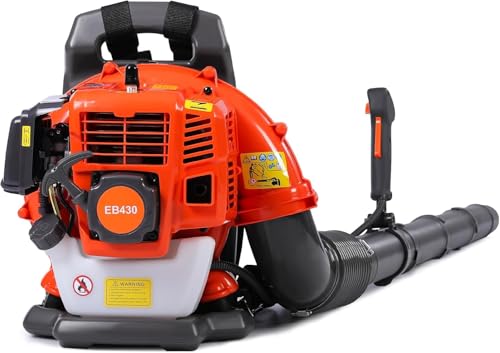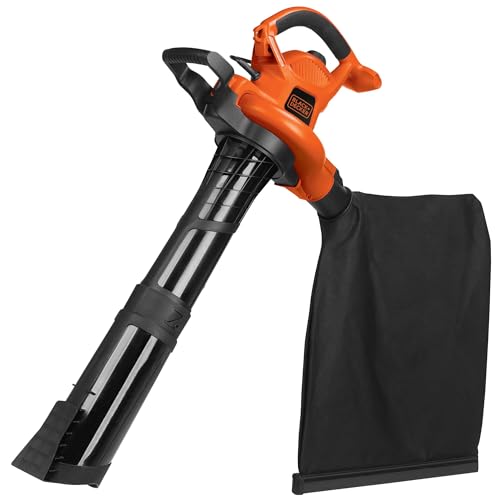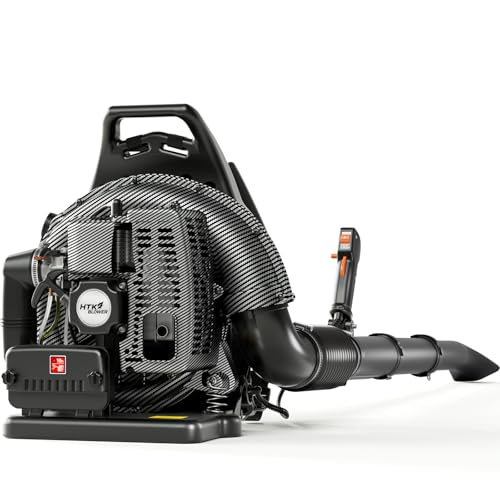
For homeowners with large yards needing relentless suction and blowing power without battery limits, the Husqvarna 125BVx Gas Leaf Blower offers strong clearing capability, though it requires routine 2-stroke fuel mixing and engine maintenance. Buyers with tighter budgets or smaller spaces must weigh that maintenance burden against the lower initial cost of entry-level options.

Pros
- 2-stroke engine rated at 0.7kW output
- Delivers up to 424 CFM airflow
- Includes blowing, vacuuming, and mulching modes
- Supplied with straight and curved blow pipes
- Comes with a 30L leaf collection bag
Cons
- Requires 2-stroke gas and oil fuel mixing
- Gas engine demands regular maintenance
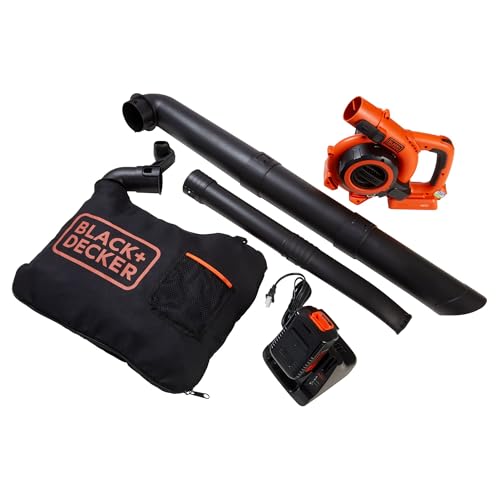
Pros
- Lightweight design at 5.4 lbs in blow mode and 6.9 lbs in vac mode
- 40V MAX battery with built-in state of charge indicator
- Mulching fan shreds up to 6 bags of leaves down to 1 bag
- Built-in scraper on the tube helps loosen stuck debris
- 6-speed Powercommand dial tailors airflow to the task
Cons
- Modest 120 mph maximum air velocity intended for hard surfaces
- Lower mulching ratio compared to larger yard units

Pros
- Tool-free conversion among blow, vac, and mulch modes
- Air speeds up to 230 mph with 2-speed settings
- Vortex impeller grinds up to 10 bags down to 1
- Built-in cord retainer helps prevent accidental unplugging
- Includes concentrator, blow/vacuum tubes, and bag
Cons
- Requires constant extension cord tether
- Two fixed speeds offer less fine-tuned control

Pros
- 3-in-1 functionality for blowing, vacuuming, and mulching
- Delivers up to 180 MPH air speed and 450 CFM airflow
- Lightweight 9.9 lb handheld design
- Includes 5-piece tube set and shoulder strap
- Primer-assisted recoil start with CDI ignition
Cons
- Requires 25:1 gas-and-oil fuel mixing
- 0.5L fuel tank requires regular refilling

Pros
- 28-cc 2-cycle engine rated at 470 CFM and 170 MPH
- Includes vac kit with mulching knives and bag
- Cruise control feature simplifies extended use
- Auto-return stop switch automatically resets to on
Cons
- Weighs 9.6 pounds before fuel and collected debris
- Requires 2-cycle gas and oil fuel mixing

Pros
- 25.4cc 2-stroke gas engine
- Delivers up to 165 mph and 391 cfm
- Includes powerhead, pipes, and collection bag
- Variable speed throttle control
- Rated for relatively quiet 70 dBA operation
Cons
- Requires manual 2-stroke fuel mixing
- Weighs 11 pounds before fuel addition

Pros
- Instant switch between blow and vacuum modes
- High 18:1 mulch ratio maximizes bag capacity
- Rated up to 350 CFM and 210 MPH air output
- Variable-speed control for different debris types
- Includes 42L debris collection bag
Cons
- Corded design limits overall yard reach
- Weighs 9.3 pounds before debris accumulates

Pros
- Brushless motor delivers rated airflow up to 505 CFM
- Variable speed dial with on-demand turbo boost button
- Includes a 40V 5.0Ah lithium-ion battery and charger
- Works with over 75 tools in the Greenworks 40V platform
Cons
- Heavy overall build weighing 13.42 pounds
- Mulch collection bag details are unspecified in data

Pros
- Powerful 12-amp motor generating up to 260 MPH and 450 CFM
- Hands-free 55-liter backpack collection bag for easy carrying
- Tool-free conversion between blower, vacuum, and mulcher
- Wide-mouth bag opening enables quick emptying
Cons
- Requires an extension cord for power, limiting yard reach
- Weighs 11.27 pounds without debris in the collection bag

Pros
- Cordless 2-cycle gas engine for unrestricted range
- 3-in-1 functionality blows, vacuums, and mulches
- High 18:1 mulch reduction ratio compacts yard waste
- Includes large 12-gallon debris collection bag
- Rated for up to 180 MPH and 432 CFM output
Cons
- Heavy 16-pound dry weight
- Requires mixing 2-cycle gas and oil fuel
Airflow and Engine Size: CFM vs. MPH in Gas Leaf Vacuums
Engine displacement directly influences CFM and airspeed, dictating whether a vacuum can lift damp, matted yard waste or merely skim dry leaves from pavement. Airflow measured in cubic feet per minute (CFM) determines the volume of leaves a vacuum can pull into its collection tube, while miles per hour (MPH) measures air velocity when blowing.
Among gas options, the Husqvarna 125BVx Gas Leaf Blower features a 28-cc engine delivering an advertised 470 CFM and 170 MPH, providing strong clearing performance for dense leaf piles. In comparison, the DTNESS 26cc Gas Leaf Blower Vacuum pairs its 26cc engine with a claimed 450 CFM and 180 MPH velocity, while the Echo ES-250 25.4cc Shred N Vac generates 391 CFM and 165 MPH. While higher CFM provides broader sweeping coverage comparable to a dedicated high-powered leaf blower, larger engines add overall tool weight that can cause fatigue during prolonged cleanup sessions.
Husqvarna 125BVx vs. Echo ES-250: Brand Engineering and Clearing Force
The Husqvarna 125BVx Gas Leaf Blower provides higher manufacturer-rated airflow for heavy yard waste, whereas the Echo ES-250 25.4cc Shred N Vac focuses on measured noise output and variable throttle control.
Husqvarna equips the 125BVx with a 28-cc engine producing 470 CFM and 1.1 horsepower, incorporating an auto-return stop switch and cruise control for continuous operation across large lawns. The Echo ES-250 utilizes a 25.4cc 2-stroke powerhead delivering 391 CFM, backed by a specified 70 dBA rating for operators concerned about neighbor disruptions. The trade-off lies in cost and clearing volume: the Echo commands a premium price of $319.00 with slightly lower airflow, whereas the Husqvarna is priced around $269.99 while pushing higher overall air volume.
Fuel Mixing and Maintenance Demands of 2-Stroke Motors
Gas-powered blower vacuums offer uninterrupted runtimes compared to cordless batteries, but they demand precise 2-cycle oil mixtures and periodic fuel system upkeep to avoid engine damage.
The DTNESS 26cc Gas Leaf Blower Vacuum requires a 25:1 gas-to-oil fuel blend for its 0.5-liter fuel tank, relying on a primer-assisted recoil start and CDI ignition. The Echo ES-250 features a 16.9-ounce fuel tank and includes 2-stroke oil in its retail packaging. Neglecting fuel stabilization or using incorrect ratios will foul spark plugs and degrade carburetors, a trade-off that buyers avoiding electric cords must accept. For properties with modest leaf fall, skipping fuel management entirely in favor of an electric corded model may save significant preparation time.
Bag Capacity, Mulch Ratios, and Collection Ergonomics
Mulch reduction ratios determine how frequently you must pause work to empty the collection bag, impacting overall cleanup efficiency.
The 3‑in‑1 25.4cc 2‑Cycle Gas Leaf Blower Vacuum advertises an 18:1 mulch reduction ratio that packs waste into a 12-gallon bag, reducing multiple leaf piles into manageable compost material. Similarly, the Leaf Vacuum Cordless with Bag includes a 30-liter collection bag paired with a 424 CFM 2-stroke engine. However, as vacuum bags fill with finely chopped debris, the added weight directly strains the operator’s arms and back. Tools like the DTNESS 26cc Gas Leaf Blower Vacuum weigh 9.9 pounds empty and include a dedicated shoulder strap to distribute this growing load, but operating any fully loaded gas vacuum on uneven turf remains physically demanding.
Gas Blower Vacuum Frequently Asked Questions
What kind of fuel does a 2-stroke gas blower vacuum require?
Most gas leaf blower vacuums use 2-cycle engines that run on a mixture of unleaded gasoline and 2-stroke engine oil. For example, the DTNESS 26cc requires a 25:1 fuel-to-oil ratio. Always check your specific model's manual before fueling to prevent engine damage.
Can a gas leaf vacuum pick up wet leaves and twigs?
While models with high CFM ratings like the Husqvarna 125BVx can pull in damp leaves, vacuuming large sticks or soaking wet clumps can jam the mulching impeller and tear collection bags. It is best to blow wet piles into open sunlight to dry slightly before vacuuming.
Choosing the Right Gas Blower Vacuum for Your Property
Selecting the right leaf collection tool comes down to balancing clearing power against physical weight, budget limits, and tolerance for 2-stroke maintenance.
For most homeowners managing medium to large lots with mature trees, the Husqvarna 125BVx Gas Leaf Blower is the recommended choice due to its balanced 470 CFM clearing power, mulching knives, and cruise-control capability. Its primary limitation is the ongoing maintenance required by its 28-cc 2-stroke engine and its higher price tag. If you need a more budget-friendly gas option for seasonal clearing, the DTNESS 26cc Gas Leaf Blower Vacuum serves as an accessible alternative with complete accessory tubes, while those with smaller townhome lawns might instead choose the corded BLACK+DECKER Corded Leaf Blower Leaf Vacuum to eliminate fuel mixing completely.