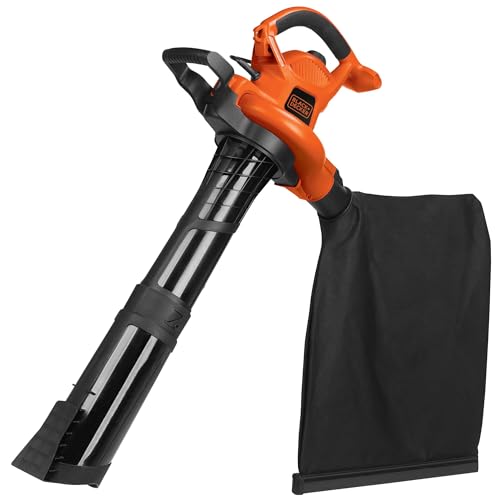
High-displacement backpack units clear wet leaves and large acreage quickly, whereas compact handheld blowers provide easier handling for quick driveway sweeps. The primary trade-off with high-output gas machines is managing heavier frames, louder engine operation, and ongoing fuel preparation.
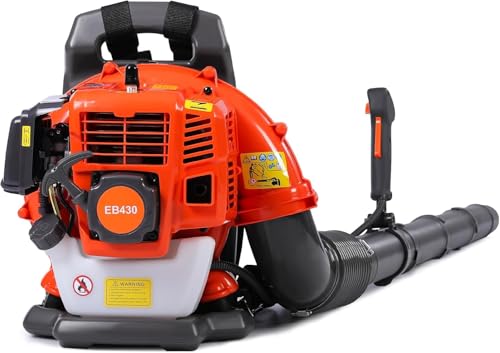
Pros
- Delivers up to 550 CFM and 230 MPH for moving wet yard debris
- Lightweight 17-pound backpack design with cushioned straps
- Thumb throttle includes cruise control for steady blowing
- 33.8 fl oz fuel tank yields up to 45 minutes of run time
- Operating temperature range spans 14°F to 104°F
Cons
- Requires 2-cycle fuel mixing and engine maintenance
- 550 CFM is modest for a backpack-class gas blower
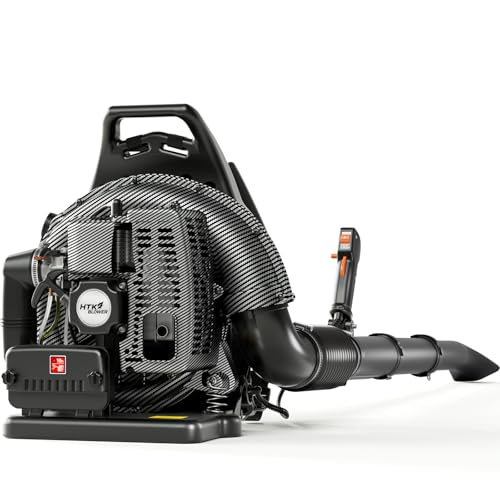
Pros
- 63CC 2-stroke engine provides up to 665 CFM and 205 MPH
- Fully padded ergonomic backpack harness
- Variable-speed throttle with built-in cruise control
- Generous 1.7 L fuel tank for extended yard sessions
Cons
- Requires 2-stroke fuel mixing and gas engine maintenance

Pros
- 4-cycle engine eliminates fuel and oil mixing
- Delivers up to 410 CFM and 125 MPH clearing power
- Automatic compression release for easier pull starts
- Lubricates in all directions without stalling or leaks
Cons
- Not available for purchase or delivery in California
- Requires routine gas engine maintenance and oil checks

Pros
- Lightweight design at only 4.4 pounds
- 7-Amp motor rated up to 180 MPH and 180 CFM
- Built-in cord retention prevents unplugging
- Zero emissions with instant push-button start
- Simple, low-maintenance corded design
Cons
- Extension cord is not included
- Operating range is limited by cord reach
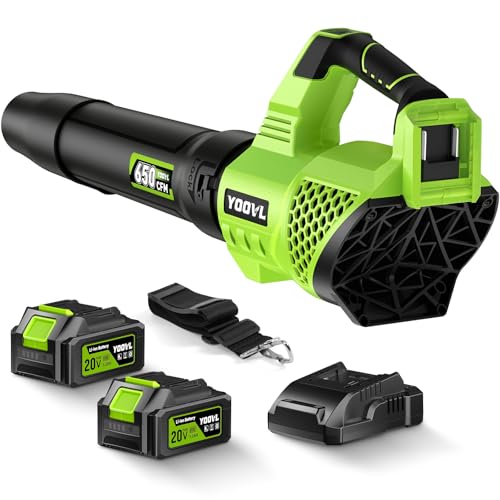
Pros
- Airflow rated up to 650 CFM using advanced turbo technology
- Comes with two high-capacity 20V 5.2Ah batteries and fast charger
- Three selectable speed modes for delicate to heavy-duty jobs
- Includes an adjustable shoulder strap to reduce arm fatigue
- Includes blower tube and extension nozzle attachments
Cons
- Maximum 150-minute runtime applies only to low-speed mode
- Heavier battery packs may add weight during prolonged handheld use

Pros
- Includes two 21V 4.0Ah batteries for extended runtime
- Delivers up to 420 CFM airflow and 150 MPH air speed
- Lightweight design weighs under 3 lbs bare tool for low fatigue
- Comes with both round and flat interchangeable nozzles
- Two adjustable speed settings for varying cleanup tasks
Cons
- Limited to two preset airflow speeds
- Best suited for dry leaves and light debris rather than heavy wet waste

Pros
- 2.7kW 63cc two-stroke engine delivers up to 6,800 RPM
- Multi-directional air outlet adjusts vertically and horizontally
- 0.47-gallon fuel tank enables long runs between top-offs
- Constant speed switch holds chosen throttle effortlessly
- Backpack harness features heat-insulating back padding
Cons
- Substantial 22-pound dry weight adds strain on long sessions
- Requires manual two-stroke oil and gasoline mixing

Pros
- 28cc 1.1-HP 2-stroke gas engine
- Rated up to 280 MPH and 490 CFM
- Quick-start ignition mechanism
- 0.65-liter translucent fuel tank
- Lightweight 9.5-pound bare tool weight
Cons
- Requires 2-cycle gas and oil mixing
- Produces engine noise and emissions
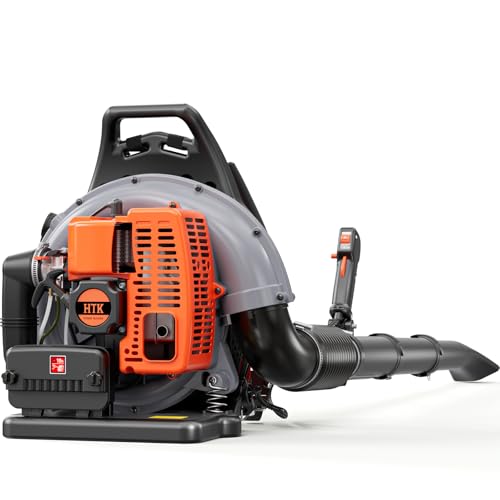
Pros
- 63cc 2-stroke engine delivers 665 CFM and 205 MPH airspeed
- Padded ergonomic backpack harness balances weight across shoulders
- Cruise control locks throttle to relieve trigger finger strain
- Generous 1.7L fuel tank supports extended property maintenance
- Manufacturer-rated sound level of 71 dB for quieter operation
Cons
- Requires ongoing two-cycle oil-to-gasoline fuel mixing
- Bulkier footprint demands sufficient garage or shed storage

Pros
- 51cc 2-cycle engine produces up to 765 CFM and 270 MPH
- Padded harness and hip belt provide balanced load distribution
- Air purge system removes fuel line air for easier starting
- Variable speed throttle includes cruise control functionality
- Proven X-Torq engine technology maintains high clearing force
Cons
- Heavier 22-pound build can cause fatigue on extended jobs
- Requires routine 2-cycle gas and oil fuel maintenance
Backpack vs. Handheld Gas Lawn Blowers: Balancing Clearing Force and Weight
Backpack blowers shift the substantial weight of larger engines to your shoulders and hips, enabling commercial-grade clearing power that handheld units cannot match without causing severe arm fatigue. For properties spanning half an acre or more, carrying an engine on your back is significantly more sustainable over long cleanup sessions.
Handheld gas blowers excel at quick, agile tasks. The Elementool 28 CC weighs a manageable 9.5 pounds while delivering a manufacturer-stated 490 CFM and 280 MPH, making it suitable for single-handed navigation around garden beds and porches. In contrast, backpack units carry significantly heavier footprints to support larger displacements. The Thalorus 52cc Gas Backpack Leaf Blower weighs 17 pounds, and the HASANEN 63CC model weighs 19.7 pounds. While the padded harnesses distribute that burden across the torso, taking on a backpack blower requires strapping in for dedicated yard work rather than grabbing a tool for a two-minute walkway dusting.
Two-Stroke vs. Four-Cycle Engines: Fuel Mixing and Maintenance
Two-stroke engines provide the highest power-to-weight ratio for demanding yard chores, but they require a precise mixture of gasoline and 2-cycle oil to operate without catastrophic engine damage. Four-cycle engines eliminate this mixing step entirely, though they often present lower maximum air volume outputs.
The SENIX 4QL 26.5cc blower is engineered with patented 4-cycle technology that accepts standard gasoline and keeps the motor lubricated without oil mixing or fuel-line clogs. It produces an advertised 410 CFM and 125 MPH, offering low-vibration operation that fits suburban maintenance. However, buyers should note that the SENIX 4QL cannot be shipped to California due to regional emissions restrictions. Two-stroke alternatives like the HTK 63CC and Husqvarna 150BT provide significantly higher clearing volume (665 CFM and 765 CFM respectively) but mandate disciplined fuel stabilization and exact fuel-to-oil ratios during every refill.
Airflow CFM vs. Airspeed MPH: Choosing the Right Output for Yard Debris
Cubic feet per minute (CFM) measures the overall volume of air moving through the blower tube, while miles per hour (MPH) indicates the velocity of the air stream exiting the nozzle. Selecting the right balance depends on whether you are shifting broad swathes of dry lawn clippings or lifting soaked, embedded debris.
A higher MPH rating breaks loose heavy, damp piles stuck to asphalt or turf, whereas high CFM moves large piles across open ground in fewer sweeps. Handheld tools often prioritize velocity through narrower nozzles; for example, the Elementool 28 CC advertises an airspeed of 280 MPH with a moderate 490 CFM. When dealing with broad acreage, higher volume becomes essential to sweep debris efficiently, which is why commercial-grade models like the Husqvarna 150BT focus on moving up to 765 CFM. For property owners evaluating clearing velocity across demanding landscapes, exploring dedicated high-powered leaf blower configurations highlights how tube diameter impacts both metrics.
High-Capacity Backpack Face-Off: Husqvarna 150BT vs. HTK 63CC
The Husqvarna 150BT pairs a commercial-tier 51cc X-Torq engine with a weight-leveling load harness, while the HTK 63CC provides a larger engine displacement and generous fuel capacity at a budget-friendly retail price.
Comparing these two heavy-duty blowers reveals distinct trade-offs in price and build focus:
- Air Output: Husqvarna rates the 150BT at 765 CFM and 270 MPH with 22 N of blowing force, whereas HTK advertises 665 CFM and 205 MPH for its 63cc platform.
- Fuel and Tank Size: The HTK features a 1.7-liter fuel tank built for extended property sweeping, compared to the standard tank layout on the Husqvarna.
- Ergonomics and Controls: Both include cruise control to lock throttle speeds. Husqvarna incorporates a weight-leveling harness with an integrated hip belt, while HTK utilizes an air-purge starting system and an advertised 71 dB low-noise profile.
- Cost Considerations: The Husqvarna 150BT retails around $399.00 backed by established commercial dealer support, while the HTK 63CC delivers high displacement for roughly $159.96.
While the HTK presents significant raw capacity for the cost, long-term durability and part availability historically favor commercial platforms like Husqvarna.
Finding the Right Gas Powered Lawn Blower for Your Yard
Selecting the ideal gas lawn blower requires matching the tool’s physical footprint and engine dynamics to your specific terrain. Tight residential lots with mostly hard surfaces need compact agility, while wide-open lawns surrounded by mature trees require maximum volume and harness support.
For extensive yards with heavy seasonal foliage, the Husqvarna 150BT Gas Backpack Leaf Blower is the best overall choice due to its high 765 CFM output, durable 2.16-HP engine, and weight-distributing hip harness. Its primary drawback is a premium price tag approaching $400 along with the routine chore of two-stroke fuel preparation. If you maintain a smaller yard, want to avoid carrying a backpack harness, and prefer never having to mix oil and gas, the SENIX 4QL 26.5cc 4-Cycle Handheld Gas Leaf Blower serves as an affordable, lightweight alternative.