

For property owners in areas where fuel-powered equipment remains lawful, the Husqvarna 350BT Gas Leaf Blower delivers commercial-level clearing alongside an advertised 60% reduction in emissions, though its $429.99 price tag represents a significant investment. Buyers seeking an economical handheld tool that avoids messy fuel mixing can opt for the SENIX 4QL 26.5cc 4-Cycle Handheld Gas Leaf Blower, but must note that manufacturer distribution explicitly excludes delivery to California.

Pros
- Lightweight 9.4-pound design offers easy handheld maneuvering
- Reduced-resistance recoil system eases engine pull starts
- Translucent fuel tank allows quick monitoring of gas levels
- Cushioned anti-vibration handle helps dampen arm strain
- Capable of up to 380 CFM and 180 MPH airflow
Cons
- Requires mixing 2-cycle gas and oil at a 50:1 ratio
- Modest 380 CFM output is best suited for lighter debris

Pros
- Delivers up to 550 CFM and 230 MPH for moving wet yard debris
- Lightweight 17-pound backpack design with cushioned straps
- Thumb throttle includes cruise control for steady blowing
- 33.8 fl oz fuel tank yields up to 45 minutes of run time
- Operating temperature range spans 14°F to 104°F
Cons
- Requires 2-cycle fuel mixing and engine maintenance
- 550 CFM is modest for a backpack-class gas blower
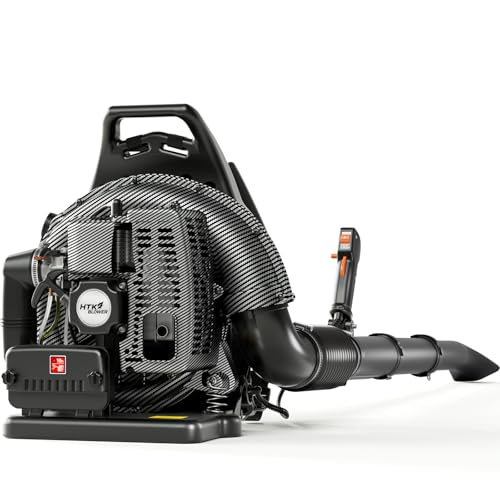
Pros
- 63CC 2-stroke engine provides up to 665 CFM and 205 MPH
- Fully padded ergonomic backpack harness
- Variable-speed throttle with built-in cruise control
- Generous 1.7 L fuel tank for extended yard sessions
Cons
- Requires 2-stroke fuel mixing and gas engine maintenance

Pros
- 50.2-cc 2.1-HP X-Torq engine
- Rated blowing force of 692 CFM and 180 MPH
- LowVib technology dampens machine vibrations
- Air purge primer simplifies engine starts
- Ergonomic harness with offset control handle
Cons
- Weighs 22 pounds before fuel is added
- Requires ongoing two-stroke fuel mixing

Pros
- 4-cycle engine eliminates fuel and oil mixing
- Delivers up to 410 CFM and 125 MPH clearing power
- Automatic compression release for easier pull starts
- Lubricates in all directions without stalling or leaks
Cons
- Not available for purchase or delivery in California
- Requires routine gas engine maintenance and oil checks

Pros
- 63cc 2-cycle engine produces 665 CFM and 205 MPH
- 1.7-liter fuel tank enables extended sessions between refills
- Cruise control locks in throttle to reduce hand strain
- Padded harness and vibration reduction improve carry comfort
- Tool-free access simplifies two-stage air filter maintenance
Cons
- Substantial 21-pound dry weight requires physical stamina
- Requires ongoing 2-stroke oil and gasoline mixing

Pros
- 28cc 1.1-HP 2-stroke gas engine
- Rated up to 280 MPH and 490 CFM
- Quick-start ignition mechanism
- 0.65-liter translucent fuel tank
- Lightweight 9.5-pound bare tool weight
Cons
- Requires 2-cycle gas and oil mixing
- Produces engine noise and emissions

Pros
- 65cc engine delivers a high-volume 850 CFM at 205 MPH
- Includes both fan and concentrator nozzle attachments
- 1.7-liter fuel tank reduces frequent stopping for refills
- Backpack harness features ventilated backrest for comfort
- Variable throttle with cruise control simplifies steady operation
Cons
- Requires 2-stroke fuel mixing and routine engine upkeep
- At 70.8 inches long assembled, storage requires ample space
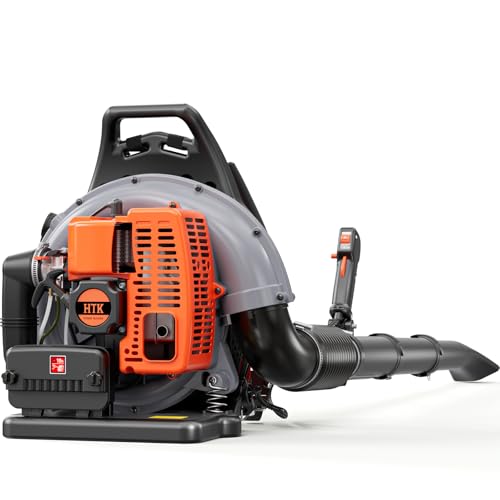
Pros
- 63cc 2-stroke engine delivers 665 CFM and 205 MPH airspeed
- Padded ergonomic backpack harness balances weight across shoulders
- Cruise control locks throttle to relieve trigger finger strain
- Generous 1.7L fuel tank supports extended property maintenance
- Manufacturer-rated sound level of 71 dB for quieter operation
Cons
- Requires ongoing two-cycle oil-to-gasoline fuel mixing
- Bulkier footprint demands sufficient garage or shed storage

Pros
- Claims up to 1,110 CFM airflow and 220 MPH air speed
- Generous 1.89-liter fuel tank allows 50 to 60 minutes of runtime
- Padded harness and shock-absorption system reduce vibration
- Cruise control locks throttle for continuous operation
- Includes earmuffs, maintenance tools, and fuel mixing bottle
Cons
- Heavy 26.46-pound total weight can fatigue operators
- Requires mixing 2-cycle gas and oil fuel
How Local Bans and Noise Ordinances Impact Gas Leaf Blowers
Local bans and municipal restrictions target gas leaf blowers primarily because of two-cycle exhaust emissions and neighborhood noise disruption, requiring buyers to verify local compliance before investing in new yard equipment. Across various jurisdictions, restrictions can range from total prohibitions on retail sales to specific operational decibel caps. For instance, the SENIX 4QL 26.5cc 4-Cycle Handheld Gas Leaf Blower carries an explicit manufacturer notice stating the unit is not available in California due to state environmental regulations.
Sound levels also dictate whether a blower can run during regular suburban hours. Backpack models like the HTK Gas Backpack Leaf Blower, 63CC 2-Stroke advertise a 71 dB operating sound level, while the Getell 65CC Backpack Leaf Blower, Gas Powered lists an operational rating of 75 dB. Even when a unit lists a reduced sound profile, it will not bypass zero-emission mandates that ban all small combustion engines. If you live in an area transitioning toward strict bans, researching alternative power platforms like a small blower cordless system can help you stay within local noise and pollution limits.
Comparing 4-Cycle and Reduced-Emission 2-Cycle Engines
The choice between a 4-cycle unit and an engineered 2-cycle engine determines fuel preparation routines, operating maintenance, and baseline exhaust cleanliness. Standard two-stroke blowers require a precise 50:1 gas-and-oil mixture to lubricate the crankshaft, which can create smoky exhaust when mixed improperly or run in cold conditions.
The SENIX 4QL 26.5cc 4-Cycle Handheld Gas Leaf Blower utilizes patented 4-cycle technology that runs on straight gasoline, eliminating the need to premix two-cycle oil while advertising reduced emissions and lower fuel consumption. In comparison, the Husqvarna 350BT Gas Leaf Blower uses a 50.2cc X-Torq two-stroke engine engineered to reduce emissions by up to 60% and improve fuel efficiency by up to 20% according to manufacturer specifications. While the 4-cycle SENIX avoids fuel blending entirely, it generates 410 CFM and 125 MPH, which trails the Husqvarna 350BT’s clearing power of 692 CFM and 180 MPH. Buyers gain lower noise and straight-gas simplicity with the 4-cycle, but sacrifice the sheer scouring force of a commercial-grade 2-cycle engine.
Handheld Agility Versus Backpack Power in Regulated Areas
Handheld blowers excel at quick, low-profile cleanups on patios and walkways, whereas backpack blowers supply the continuous output needed for heavy autumn leaves across large acreage. Choosing the right frame type directly influences how easily you can finish maintenance without drawing excessive neighborhood attention.
Lightweight options such as the 28 CC Gas Leaf Blower, 490 CFM 280 MPH weigh just 9.5 pounds, allowing easy single-handed maneuvering when clearing tight garden beds or sweeping off garage pads. The handheld Getell 26cc Gas Leaf Blower also offers compact utility with 380 CFM and 180 MPH, using an anti-vibration handle to reduce arm fatigue. However, for deep lawns piled with wet debris, handheld blowers demand prolonged running time, which can trigger neighborhood complaints. Larger backpack machines like the Thalorus 52cc Gas Backpack Leaf Blower, 550 CFM (17 pounds) and the VEVOR 63CC Gas Backpack Leaf Blower (advertising up to 1110 CFM) shift the engine weight onto your shoulders. The trade-off is their physical footprint: backpacks are bulky to store, heavier to manage for brief sweeps, and generate a more noticeable presence in residential developments. For targeted flat-work guidelines, check our recommendations for a leaf blower for driveway cleanup.
Heavy-Duty Cleanup: Husqvarna 350BT vs Getell 65CC Backpack
Pitting the Husqvarna 350BT against the Getell 65CC backpack highlights the difference between premium engineering focused on reduced emissions and high-displacement power offered at a budget price point. Both are designed to tackle stubborn yard waste across expansive properties where handheld units would take hours.
The Husqvarna 350BT Gas Leaf Blower is priced at $429.99 and provides 692 CFM, 180 MPH, and 21 N of blowing force. Its primary advantage lies in its X-Torq engine, which advertises up to 60% lower exhaust emissions, alongside LowVib dampers and an offset control handle that counteracts downward arm pull. In contrast, the Getell 65CC Backpack Leaf Blower, Gas Powered costs $149.99 and advertises an 850 CFM output at 205 MPH from its 65cc engine, supported by a 1.7 L fuel tank and a stated 75 dB sound rating. While the Getell delivers higher claimed airflow metrics for substantially less money, Husqvarna provides established durability, accessible dealer support, and verifiable emission-reduction technology. When assessing different purchasing channels, you can review where can I buy A leaf blower to compare reliable sellers.
Frequently Asked Questions About Gas Leaf Blower Bans
Why are gas leaf blowers being banned in certain cities and states?
Municipalities regulate or prohibit gas leaf blowers primarily because two-stroke engines emit unburned hydrocarbons and fine particulate matter, while also producing high operating decibels. In response, local ordinances establish noise ceilings or mandate low-emission equipment.
Can I still use a gas leaf blower if my city restricts them?
Usage depends on local legal specifics. Some ordinances prohibit operating gas blowers altogether or limit use to certain daytime hours, while others ban retail sales but allow existing models to run. Always verify your specific town or county code.
Do 4-cycle engines automatically bypass gas leaf blower bans?
No. While 4-cycle engines do not require mixing gas with oil and often produce fewer exhaust emissions than traditional two-stroke designs, many municipal bans restrict all small gasoline-powered utility engines regardless of cylinder stroke.
Choosing the Right Blower Before Municipal Restrictions Take Effect
Selecting a leaf blower when regulations are shifting requires balancing your immediate yard maintenance demands against future local environmental restrictions. If your city already enforces strict decibel cutoffs or emissions bans, purchasing an unregulated high-displacement two-stroke blower may result in fines or limited usage windows. In contrast, properties situated outside restricted zones can still benefit from the sustained runtime and uninhibited air velocity that combustion engines provide over battery alternatives.
For rural or suburban homeowners in permitted zones who need serious blowing power paired with cleaner exhaust technology, the Husqvarna 350BT Gas Leaf Blower is our recommended choice due to its advertised 60% emissions reduction and ergonomic harness. Its main drawbacks are its premium $429.99 cost and the need to mix 2-cycle oil with fuel. If you have a smaller yard and want to eliminate oil mixing while staying on a strict budget, the SENIX 4QL 26.5cc 4-Cycle Handheld Gas Leaf Blower is an effective alternative at $89.00, provided your shipping address is outside California.


