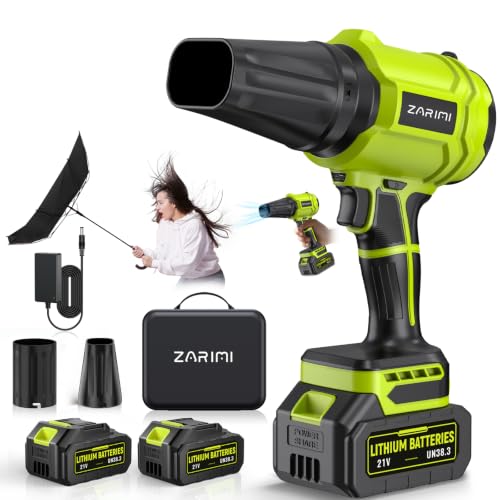
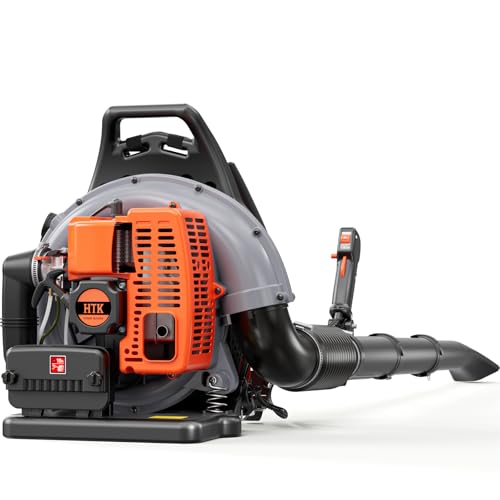
For clearing expansive acreage or wet, matted debris, a gas backpack model like the HTK Gas Backpack Leaf Blower delivers continuous output, though it requires mixing two-stroke fuel and managing considerable weight. If you maintain an average suburban lot, a cordless handheld model like the Cordless Leaf Blower, 680 CFM High Power Battery provides instant push-button starting and lightweight convenience, but runtime remains capped by battery reserves.

Pros
- Delivers up to 550 CFM and 230 MPH for moving wet yard debris
- Lightweight 17-pound backpack design with cushioned straps
- Thumb throttle includes cruise control for steady blowing
- 33.8 fl oz fuel tank yields up to 45 minutes of run time
- Operating temperature range spans 14°F to 104°F
Cons
- Requires 2-cycle fuel mixing and engine maintenance
- 550 CFM is modest for a backpack-class gas blower

Pros
- Turbo mode delivers up to 650 CFM and 200 MPH
- Includes 20V 4.0Ah battery and 1-hour fast charger
- Battery features integrated overheat protection
- Ergonomic handle with contoured, rubberized grip
Cons
- Weighs 8.69 pounds, which may feel heavy to some users
- Includes only one battery, leading to downtime between charges

Pros
- High-volume airflow rated up to 680 CFM
- Includes two 21V batteries and a charger
- 5-speed variable control for delicate or heavy debris
- Lightweight build at just 3.6 pounds
- Ergonomic handle with anti-slip grip
Cons
- Battery life drops faster at maximum speed
- Requires swapping and charging batteries

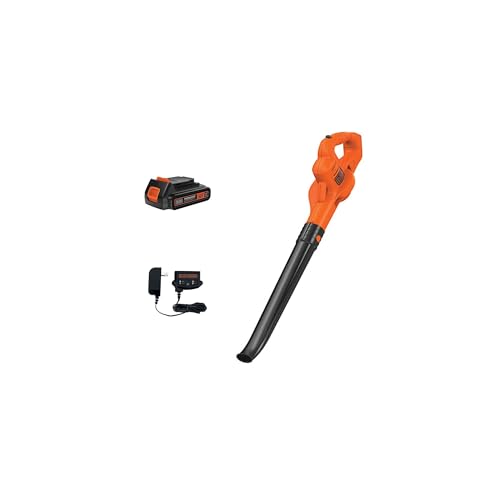
Pros
- Lightweight design at only 4.4 pounds
- 7-Amp motor rated up to 180 MPH and 180 CFM
- Built-in cord retention prevents unplugging
- Zero emissions with instant push-button start
- Simple, low-maintenance corded design
Cons
- Extension cord is not included
- Operating range is limited by cord reach
Pros
- Extremely lightweight at only 2.8 pounds for low-fatigue use
- Reaches stated air speeds over 50 m/s (110+ MPH)
- Comes with two batteries and charger for alternating use
- Includes a concentrated narrow nozzle for detailed edging
- Compact footprint stores easily in tight spaces or vehicle trunks
Cons
- Limited runtime of only about 13 minutes per battery
- Not designed for moving heavy or deep piles of wet leaves
Pros
- Airflow rated up to 650 CFM using advanced turbo technology
- Comes with two high-capacity 20V 5.2Ah batteries and fast charger
- Three selectable speed modes for delicate to heavy-duty jobs
- Includes an adjustable shoulder strap to reduce arm fatigue
- Includes blower tube and extension nozzle attachments
Cons
- Maximum 150-minute runtime applies only to low-speed mode
- Heavier battery packs may add weight during prolonged handheld use

Pros
- Includes two 21V 4.0Ah batteries for extended runtime
- Delivers up to 420 CFM airflow and 150 MPH air speed
- Lightweight design weighs under 3 lbs bare tool for low fatigue
- Comes with both round and flat interchangeable nozzles
- Two adjustable speed settings for varying cleanup tasks
Cons
- Limited to two preset airflow speeds
- Best suited for dry leaves and light debris rather than heavy wet waste

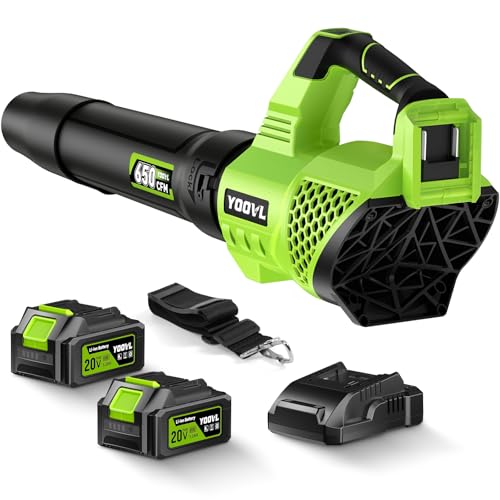
Pros
- Brushless motor delivers rated airflow up to 650 CFM and 180 MPH
- Includes two 20V 4.0Ah batteries and a fast charger
- Six adjustable speed settings ranging from 80 to 180 MPH
- Comes with an ergonomic shoulder strap and two detachable nozzles
- Includes a storage bag to keep components organized
Cons
- Stated 30-minute runtime is restricted to low-speed operation
- High-speed settings will deplete battery charge more rapidly
Pros
- 63cc 2-stroke engine delivers 665 CFM and 205 MPH airspeed
- Padded ergonomic backpack harness balances weight across shoulders
- Cruise control locks throttle to relieve trigger finger strain
- Generous 1.7L fuel tank supports extended property maintenance
- Manufacturer-rated sound level of 71 dB for quieter operation
Cons
- Requires ongoing two-cycle oil-to-gasoline fuel mixing
- Bulkier footprint demands sufficient garage or shed storage
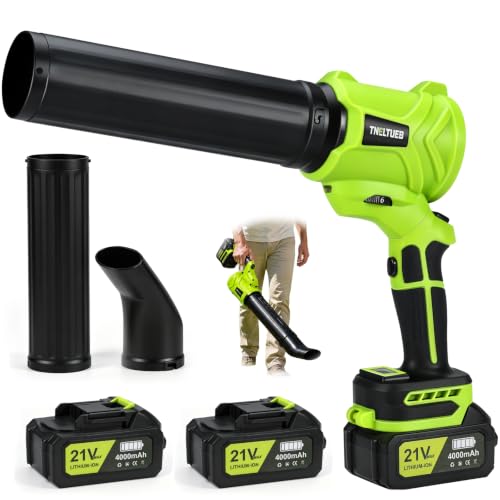
Pros
- Six selectable speed settings spanning 100 to 200 MPH
- 180-degree rotating handle facilitates versatile blowing angles
- Includes two 21V 4.0Ah rechargeable battery packs
- Comes equipped with two interchangeable nozzle attachments
- Ultralight 2-pound build allows easy one-handed maneuvering
Cons
- Battery runtime drops considerably when using higher speed modes
- Requires swapping batteries during large property cleanups
Gas Backpack vs. Cordless Handheld: Choosing the Right Power Source
Gas backpack blowers deliver higher sustained velocity and unrestricted operating duration for large properties, while cordless electric blowers provide low-maintenance, quiet operation for everyday suburban maintenance. Deciding between them depends on property footprint and how long you need to blow debris without pausing.
Gas-powered units such as the HTK Gas Backpack Leaf Blower, 63CC 2-Stroke and the Thalorus 52cc Gas Backpack Leaf Blower, 550 CFM run on two-stroke gasoline engines. This setup allows you to refill the tank and continue clearing large acreage immediately. However, gas engines demand regular fuel mixing, spark plug maintenance, and air filter cleaning, and they emit exhaust fumes during use. If you want more general advice on sourcing equipment, you can read our guide on where can I buy A leaf blower.
In contrast, cordless models such as the Garvee Leaf Blower Cordless 20V 4.0A 2 Speed 650 and the Cordless Leaf Blower, 680 CFM High Power Battery eliminate fuel mixing, pull-cords, and engine maintenance. They start instantly with the pull of a trigger. The trade-off is finite run duration; high-output settings deplete battery charges quickly, requiring either spare battery packs or waiting on a charger before finishing larger yards.
Air Volume (CFM) vs. Air Velocity (MPH) for Clearing Power
Cubic feet per minute (CFM) determines how wide an area of debris you can push at once, while miles per hour (MPH) measures the airspeed required to dislodge wet leaves and embedded dirt. Balancing both figures is critical when assessing a landscaping blower for seasonal cleanups.
For example, the HTK Gas Backpack Leaf Blower advertises 665 CFM alongside a maximum air velocity of 205 MPH. The manufacturer’s combination of high volume and high speed allows operators to push wet leaf piles and dense grass clippings over wider open ground. Similarly, the Thalorus 52cc Gas Backpack Leaf Blower lists 550 CFM and 230 MPH, offering strong directional scouring force for stubborn driveway debris.
Compact electric options emphasize speed or volume differently depending on fan design. The BLACK+DECKER Electric Leaf Blower relies on a 7-amp motor that pushes 180 MPH but only 180 CFM. This makes it effective for sweeping narrow sidewalks and dry patio dust, but slower across open grass. Meanwhile, cordless models like the Leaf Blower Cordless, 650CFM Electric Leaf Blowers advertise up to 650 CFM, prioritizing sweeping spread over raw scouring force. Note that these figures reflect manufacturer specifications rather than independent standardized laboratory tests.
Managing Tool Weight and Physical Fatigue During Yard Cleanups
Backpack harnesses distribute heavier engine weight across your torso, whereas handheld blowers place all the physical burden directly on your forearm and wrist. Your physical stamina and the duration of your yard sessions should dictate the form factor you choose.
Handheld blowers excel in rapid, grab-and-go jobs because they are remarkably light. The YUQUESEN Cordless Leaf Blower weighs an advertised 2.8 pounds, while the Electric Leaf Blower Cordless with Battery lists a bare-tool weight of 2.74 pounds. Even moderate battery units like the Cordless Leaf Blower, 680 CFM High Power Battery remain manageable at 3.6 pounds, allowing effortless single-handed maneuvering along deck stairs, porches, and flower beds without upper-body strain.
Once machines incorporate heavy engines, weight escalates. The Thalorus 52cc Gas Backpack Leaf Blower weighs 17 pounds. To offset this, backpack blowers use padded shoulder straps and back supports to shift the load away from the operator’s arms, leaving only the directional tube in hand. For intermediate cordless units that feel heavy after prolonged use—such as the 8.6-pound Garvee model—units like the Leaf Blower Cordless 650CFM with 2×4.0Ah Battery include a dedicated shoulder strap to prevent premature arm fatigue during half-hour jobs.
Fuel Capacity and Battery Limitations in Extended Tasks
Gas blowers provide predictable endurance governed by fuel tank size, whereas cordless blowers rely entirely on battery amp-hour ratings and variable-speed power management. Assessing runtime claims requires looking at the power settings used during operation.
The Thalorus 52cc gas blower features a 33.8 fluid-ounce fuel tank providing an advertised runtime of up to 45 minutes, while the HTK backpack incorporates a larger 1.7-liter fuel tank for extended acreage maintenance. Refueling takes minutes, making them well suited for uninterrupted property cleanup. Corded units like the BLACK+DECKER Electric Leaf Blower offer infinite runtime without gas or batteries, but you remain tethered to an outlet via an extension cord (which is not included in the box).
For cordless options, dual-battery bundles are common. The YUQUESEN Cordless Leaf Blower includes two batteries delivering a manufacturer-stated 13+ minutes each, totaling roughly 26 minutes of active sweeping. Other units, like the Leaf Blower Cordless 650CFM with 2×4.0Ah Battery, advertise up to 30 minutes on low speed per battery. When running cordless blowers at continuous maximum or turbo speeds, actual runtime drops significantly faster than low-speed ratings suggest, making the inclusion of a second battery essential for uninterrupted yard maintenance.
Frequently Asked Questions About Landscaping Blowers
Can battery-powered landscaping blowers handle wet leaves?
Battery blowers featuring turbo modes or high air velocity—such as models delivering 180 to 200 MPH—can move damp leaves, but doing so drains battery charges much faster than sweeping dry debris on low settings.
What maintenance do gas backpack blowers require compared to cordless tools?
Gas backpack blowers require an accurate 2-stroke oil and gasoline fuel mix, periodic spark plug inspections, and air filter cleanings. Cordless blowers require no engine maintenance beyond keeping battery contacts clean and recharging cells after use.
Does the BLACK+DECKER LB700 electric blower come with an extension cord?
No. The BLACK+DECKER LB700 includes the blower body, blow tube, and a built-in cord retention hook, but you must supply your own outdoor-rated extension cord.
Which Landscaping Blower Is Right for Your Property?
Choosing the right landscaping blower comes down to property scale, acceptable physical weight, and whether you prefer quick electrical convenience over the raw endurance of a combustion engine. Matching the tool to your cleanup conditions prevents buyer frustration and wasted effort.
If you have tight pathways, paved patios, or an attached garage, lightweight battery tools offer immediate cleanup without gasoline odor or tangled extension cords. Small properties benefit from compact tools that store easily on a wall hook. However, if your landscape features mature deciduous trees that drop heavy layers of leaves over large turf areas, handheld blowers will require multiple battery recharges and extra sweeping passes.
For homeowners managing extensive properties with dense fall foliage, the HTK Gas Backpack Leaf Blower, 63CC 2-Stroke is the recommended pick due to its combination of 665 CFM, 205 MPH airspeed, and large 1.7-liter fuel capacity. Its main limitation is the regular upkeep required by a 2-stroke gas engine, alongside the noise and physical bulk of a backpack rig. For buyers who want easy, push-button lawn cleanup without fuel mixing, the Cordless Leaf Blower, 680 CFM High Power Battery serves as a capable lightweight alternative with dual batteries and multi-speed airflow control.