For homeowners wanting reliable cordless clearing with expandable battery compatibility, EGO Power+ is the standout choice, though its higher cost and single included battery limit run time on large properties without spare packs. Buyers clearing expansive acreages with deep leaf piles will benefit more from Landworks’ wheeled gas power, despite its substantial weight, noise, and ongoing engine maintenance.

Pros
- Lightweight 4 lb build minimizes arm fatigue
- Delivers up to 390 CFM airflow and 210 MPH speed
- Continuous corded power eliminates recharging pauses
- Two-speed switch toggles between light and full force
- Nested two-piece tube design for full assembly
Cons
- Requires an extension cord and nearby wall outlet
- Tubes ship nested and must be pulled apart before use

Pros
- Powerful 7HP 212cc 4-stroke OHV gas engine
- Heavy-duty 13.5-inch metal impeller
- 360° front swivel wheel and 10-inch rear wheels
- 90° adjustable airflow output angle
- Rust-resistant powder-coated steel frame
Cons
- Engine oil is not included upon unboxing
- Manual push operation requires physical effort
- Gasoline and oil maintenance required

Pros
- Delivers up to 615 CFM and 170 MPH in turbo mode
- Variable speed dial with lock-on button from 200–480 CFM
- High-efficiency brushless motor reduces operating vibration
- Includes 56V 2.5Ah battery and standard 50-minute charger
- Fully compatible with all EGO 56V ARC Lithium batteries
Cons
- Turbo mode rapidly reduces the available battery runtime
- Weighs 7.5 pounds, which may feel heavy with larger batteries

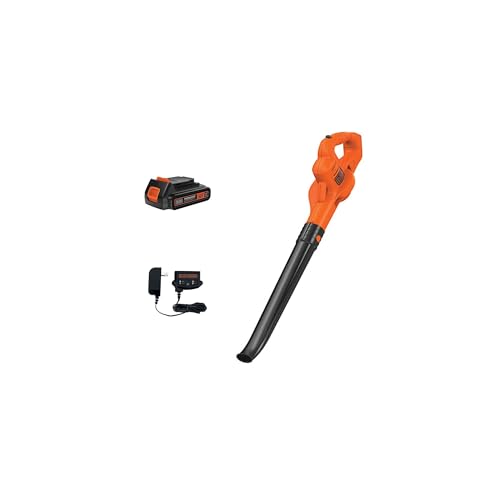
Pros
- Lightweight design at only 4.4 pounds
- 7-Amp motor rated up to 180 MPH and 180 CFM
- Built-in cord retention prevents unplugging
- Zero emissions with instant push-button start
- Simple, low-maintenance corded design
Cons
- Extension cord is not included
- Operating range is limited by cord reach
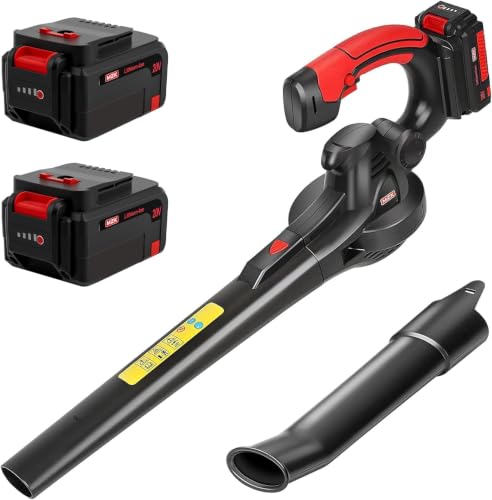
Pros
- Weighs only 3.9 pounds for light handling
- Rated airflow up to 450 CFM
- Cordless design allows unrestricted mobility
- Convenient one-hand trigger operation
- No gas mixing or cord management required
Cons
- Runtime varies significantly by power output
- Battery charging intervals required

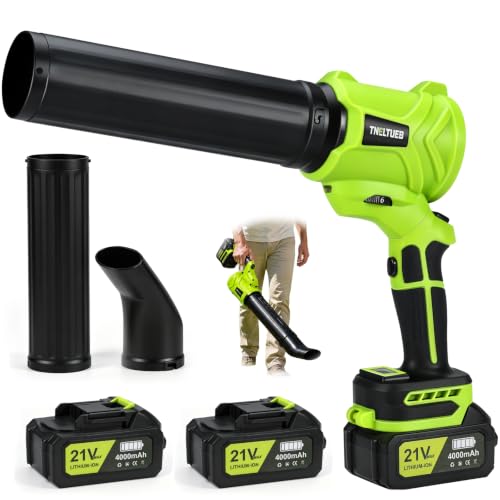
Pros
- Weighs only 2.28 lbs for easy one-handed operation
- Includes two 21V 4000mAh lithium batteries
- Variable speed trigger provides precise airflow control
- Comes with an extension tube and flat nozzle attachment
Cons
- Rated runtime tops out at roughly 30 minutes
- Not designed for large properties or heavy wet debris
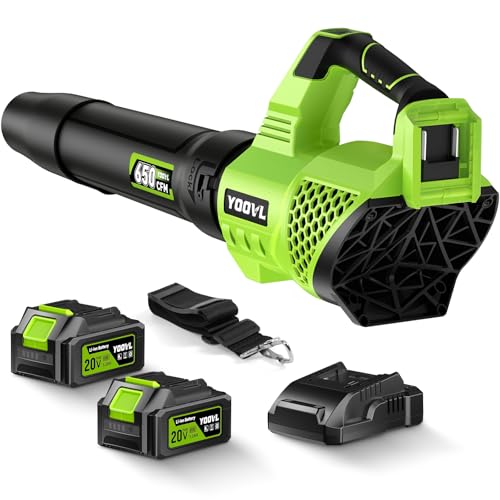
Pros
- Airflow rated up to 650 CFM using advanced turbo technology
- Comes with two high-capacity 20V 5.2Ah batteries and fast charger
- Three selectable speed modes for delicate to heavy-duty jobs
- Includes an adjustable shoulder strap to reduce arm fatigue
- Includes blower tube and extension nozzle attachments
Cons
- Maximum 150-minute runtime applies only to low-speed mode
- Heavier battery packs may add weight during prolonged handheld use

Pros
- Includes two 21V 4.0Ah batteries for extended runtime
- Delivers up to 420 CFM airflow and 150 MPH air speed
- Lightweight design weighs under 3 lbs bare tool for low fatigue
- Comes with both round and flat interchangeable nozzles
- Two adjustable speed settings for varying cleanup tasks
Cons
- Limited to two preset airflow speeds
- Best suited for dry leaves and light debris rather than heavy wet waste

Pros
- Brushless motor delivers rated airflow up to 650 CFM and 180 MPH
- Includes two 20V 4.0Ah batteries and a fast charger
- Six adjustable speed settings ranging from 80 to 180 MPH
- Comes with an ergonomic shoulder strap and two detachable nozzles
- Includes a storage bag to keep components organized
Cons
- Stated 30-minute runtime is restricted to low-speed operation
- High-speed settings will deplete battery charge more rapidly
Pros
- Six selectable speed settings spanning 100 to 200 MPH
- 180-degree rotating handle facilitates versatile blowing angles
- Includes two 21V 4.0Ah rechargeable battery packs
- Comes equipped with two interchangeable nozzle attachments
- Ultralight 2-pound build allows easy one-handed maneuvering
Cons
- Battery runtime drops considerably when using higher speed modes
- Requires swapping batteries during large property cleanups
Established Tool Brands vs. Emerging Value Manufacturers
Established tool manufacturers like EGO Power+ and BLACK+DECKER focus on broad battery ecosystems and proven mechanical standards, whereas emerging brands compete by offering high advertised numbers and bundled accessories at lower prices. When choosing between leaf blower companies, understanding this distinction prevents mismatched expectations regarding long-term reliability and component support.
EGO Power+ designs its equipment around a 56V ARC Lithium platform, meaning the battery included with the EGO POWER+ Cordless Electric Leaf Blower, 615 CFM is compatible with a wide line of outdoor power equipment. Similarly, BLACK+DECKER is a household name with decades of history in corded consumer tools. In contrast, brands such as wanvzo, YOOVL, and laapee focus on packaged value. For example, wanvzo bundles two batteries, a flat nozzle, an extension tube, and earplugs with its wanvzo Cordless Leaf Blower for $59.99. However, these independent brands typically use proprietary battery connections that do not integrate into wider multi-tool platforms.
Gas Walk-Behind Power for Large Acreage: The Landworks Trade-Off
Landworks caters specifically to property owners with extensive acreage and deep debris who need industrial-level airflow that handheld electric blowers cannot match. The trade-off is the physical bulk, fuel upkeep, and storage space required by a walk-behind machine.
The Landworks Leaf Blower Wheeled Walk Behind Jet is powered by a 7HP 212cc 4-stroke OHV gas engine with an all-metal 13.5-inch impeller. The manufacturer advertises an output of 1270 to 2000 CFM and air speeds between 150 and 200 MPH at 3600 RPM. Built with powder-coated rust-resistant steel, two 10-inch rear wheels, and an 8-inch 360-degree swivel front wheel, it eliminates arm strain entirely during long clearing sessions. However, at $469.98, it represents a substantial investment. It requires standard 87+ octane fuel, regular oil checks (oil must be added upon unboxing), and CARB/EPA compliance adherence, making it impractical for small suburban lawns or driveways where what leaf blower is the best comes down to lightweight handling.
Corded Cleaners for Unlimited Runtime on Tight Budgets
Corded electric blower manufacturers like BLACK+DECKER and GRASSTIGON serve property owners who want continuous power for driveways and patios without maintaining batteries or mixing fuel. The unavoidable constraint is that your clearing radius is tethered to an electrical outlet.
The BLACK+DECKER Electric Leaf Blower costs $42.00, weighs 4.4 pounds, and utilizes a 7-amp motor to push an advertised 180 CFM and 180 MPH. It includes built-in cord retention to avoid unexpected unplugging, though an extension cord must be purchased separately. The Grasstigon Electric Leaf Blower Corded, 7-Amp sells for $30.99 and advertises higher performance numbers—390 CFM and 210 MPH—along with two speed modes and a 4-pound total weight. Both models offer reliable, budget-friendly power for hard surfaces, making them practical for a leaf blower for driveway setup where an outlet is nearby.
Battery Platforms and Multi-Pack Kits for Everyday Yard Work
Cordless leaf blower manufacturers approach battery power in two distinct ways: high-capacity single-pack platforms or budget-friendly dual-battery packages. Buyers must decide between long-term platform versatility and immediate runtime out of the box.
EGO Power+ includes a single 2.5Ah battery that advertises up to 75 minutes of run time, utilizing a brushless motor and turbine fan design to deliver up to 615 CFM and 170 MPH in turbo mode. On the other hand, brands like YOOVL, VIBOGEN, and laapee prioritize uninterrupted cleanup by including two battery packs in the box. The Leaf Blower Cordless, 650CFM Electric Leaf Blowers from YOOVL comes with two 20V 5.2Ah batteries, an adjustable shoulder strap, and an advertised 650 CFM. Similarly, the Electric Leaf Blower Cordless with Battery from VIBOGEN includes two 21V 4.0Ah batteries and dual nozzles for $49.97, advertising 420 CFM and 150 MPH. While these multi-pack bundles ensure you have a charged backup ready, they lack the standardized build quality and cross-compatibility of established tool brands.
Leaf Blower Companies FAQ
Can batteries be swapped between different leaf blower companies?
Generally, no. Major manufacturers like EGO Power+ use proprietary battery platforms (such as the 56V ARC Lithium system) designed strictly for their own brand ecosystem. Emerging brands like YOOVL, MZK, and wanvzo also ship with proprietary 20V or 21V battery packs that are not interchangeable with other power tool lines.
When should I choose a walk-behind gas brand over a handheld electric model?
Walk-behind gas blowers from companies like Landworks are designed for large properties with heavy, wet debris requiring over 1,000 CFM. Handheld electric models are better suited for typical suburban yards, porches, and driveways where lightweight operation and push-button starts are prioritized over sheer air volume.
Choosing the Right Leaf Blower Brand for Your Yard
Selecting the right brand among leaf blower companies depends entirely on your yard size, physical handling preferences, and whether you value an established battery ecosystem over immediate multi-battery value. For quick patio dusting, sub-5-pound electric handhelds minimize fatigue, while heavy fall cleanups demand either high-voltage cordless turbines or walk-behind gas engines.
For most suburban homeowners seeking reliable performance and an expandable cordless system, the EGO POWER+ Cordless Electric Leaf Blower, 615 CFM is our primary recommendation. Its main trade-off is the $179.00 price tag and inclusion of only one battery pack. If you manage multiple acres of heavy, wet leaf fall that quickly drains batteries, the wheeled gas-powered Landworks Leaf Blower Wheeled Walk Behind Jet provides the necessary volume and continuous run capability.