A lightweight electric leaf blower suits homeowners seeking effortless hard-surface and seasonal cleanup without the strain of heavy equipment, though buyers must balance the unrestricted mobility of battery power against the continuous, fade-free runtime of a corded connection.

Pros
- Lightweight 4 lb build minimizes arm fatigue
- Delivers up to 390 CFM airflow and 210 MPH speed
- Continuous corded power eliminates recharging pauses
- Two-speed switch toggles between light and full force
- Nested two-piece tube design for full assembly
Cons
- Requires an extension cord and nearby wall outlet
- Tubes ship nested and must be pulled apart before use

Pros
- Lightweight design at only 4.4 pounds
- 7-Amp motor rated up to 180 MPH and 180 CFM
- Built-in cord retention prevents unplugging
- Zero emissions with instant push-button start
- Simple, low-maintenance corded design
Cons
- Extension cord is not included
- Operating range is limited by cord reach

Pros
- Delivers up to 600 CFM and 110 MPH airflow
- Continuous corded power eliminates recharging and gas mixing
- Variable-speed control adjusts airflow to the task
- Lightweight design weighs just 6.4 pounds
Cons
- Operating range is tethered to an electrical outlet
Pros
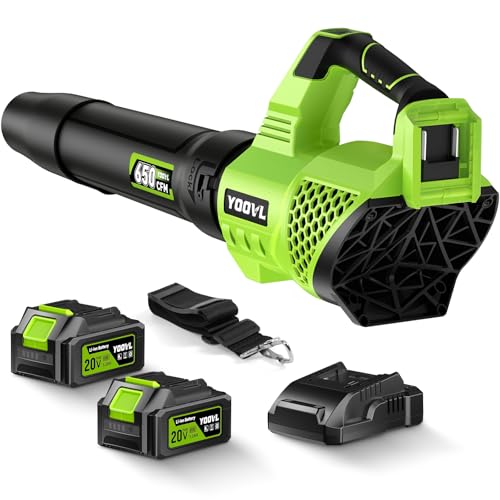
- Airflow rated up to 650 CFM using advanced turbo technology
- Comes with two high-capacity 20V 5.2Ah batteries and fast charger
- Three selectable speed modes for delicate to heavy-duty jobs
- Includes an adjustable shoulder strap to reduce arm fatigue
- Includes blower tube and extension nozzle attachments
Cons
- Maximum 150-minute runtime applies only to low-speed mode
- Heavier battery packs may add weight during prolonged handheld use

Pros
- Includes two 21V 4.0Ah batteries for extended runtime
- Delivers up to 420 CFM airflow and 150 MPH air speed
- Lightweight design weighs under 3 lbs bare tool for low fatigue
- Comes with both round and flat interchangeable nozzles
- Two adjustable speed settings for varying cleanup tasks
Cons
- Limited to two preset airflow speeds
- Best suited for dry leaves and light debris rather than heavy wet waste

Pros
- Airflow reaches up to 450 CFM and 140 MPH
- Built-in scraper helps loosen wet, stuck debris
- Two-speed switch allows quick airflow adjustment
- Cord retention hook helps prevent accidental unplugging
- Compact axial fan design weighs approximately 7 pounds
Cons
- Tethered by an electrical cord, limiting reach
- Requires a suitable outdoor extension cord (not included)

Pros
- Brushless motor delivers rated airflow up to 650 CFM and 180 MPH
- Includes two 20V 4.0Ah batteries and a fast charger
- Six adjustable speed settings ranging from 80 to 180 MPH
- Comes with an ergonomic shoulder strap and two detachable nozzles
- Includes a storage bag to keep components organized
Cons
- Stated 30-minute runtime is restricted to low-speed operation
- High-speed settings will deplete battery charge more rapidly

Pros
- Very lightweight frame at only 3.7 pounds
- Generates up to 260 CFM and 155 MPH
- Zero direct emissions and low operational vibration
- Backed by a 3-year limited warranty
Cons
- Requires an outdoor extension cord
- Moderate 260 CFM output is best for lighter debris

Pros
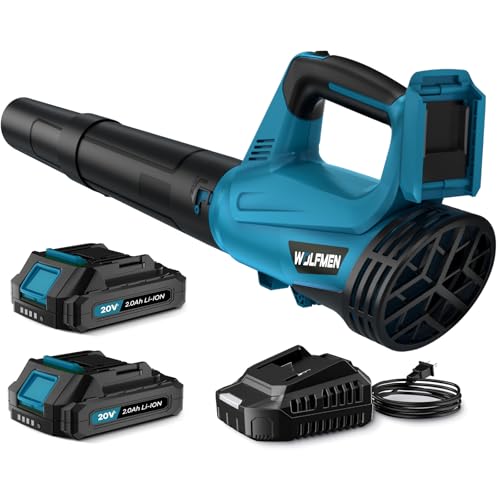
- Includes two 20V 2.0Ah batteries and a fast charger
- Extremely lightweight design at just 3.4 pounds
- Two selectable speed modes match light and heavier tasks
- Ergonomic non-slip grip allows comfortable one-handed use
- Comes with an extension nozzle for targeted airflow
Cons
- Runtime decreases significantly at the higher speed setting
- Best suited for light residential cleanup rather than dense debris

Pros
- Claims up to 450 CFM and 150 MPH for efficient debris clearing
- Lightweight 3.8-pound body reduces arm fatigue
- Includes two batteries and a charger for extended sessions
- Two selectable speed modes match different cleaning tasks
- Simple assembly requiring only nozzle and battery attachment
Cons
- Runtime reaches up to 30 minutes per battery only on low speed
- High-speed battery consumption significantly shortens run times
Corded vs. Cordless: Weighing Runtime Against Mobility
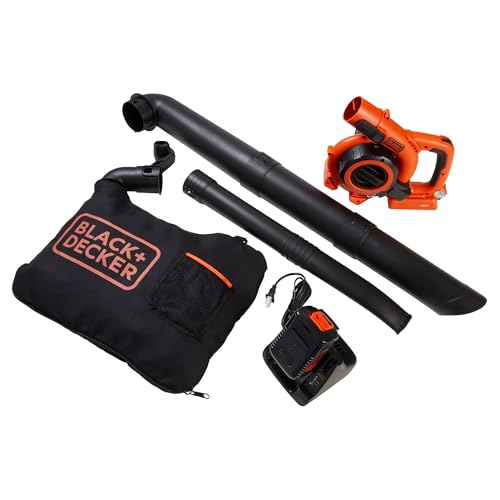
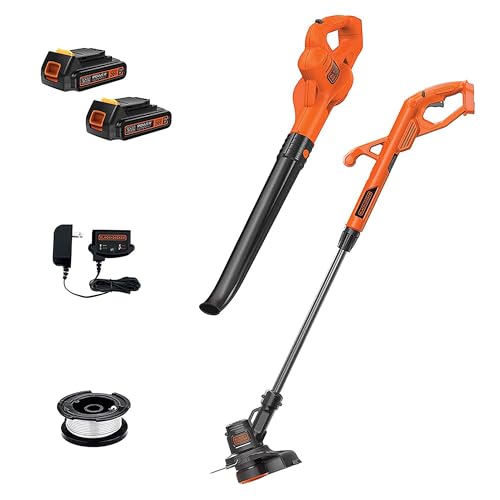
Choosing between corded and battery power depends primarily on the perimeter of your yard and the duration of your typical clearing routine. Corded electric blowers, such as the tools used for driveways and patios close to an exterior outlet, offer uninterrupted power without the anxiety of running out of juice mid-task. Models like the Grasstigon Electric Leaf Blower Corded, 7-Amp and the BLACK+DECKER Electric Leaf Blower pull power from a household outlet via an extension cord. However, buyers must remember that most corded units do not include an extension cord in the box, requiring you to purchase an appropriately rated outdoor cord separately. The cord itself creates a physical tether that can catch on shrubs, trees, and patio furniture.
Conversely, cordless models provide complete freedom of movement. Units such as the Electric Leaf Blower Cordless with Battery and the Leaf Blower Cordless 650CFM with 2×4.0Ah Battery rely on lithium-ion battery packs, often shipping with dual batteries so one can charge while the other is in use. The trade-off is runtime management: while manufacturers advertise operational runtimes of 30 to 60 minutes on lower settings, high-speed usage depletes cells quickly. If your property extends far beyond a standard 50-to-100-foot extension cord, cordless convenience easily outweighs the need to manage battery recharging.
Air Volume vs. Airspeed: What CFM and MPH Mean for Light Cleanups
Air volume (measured in cubic feet per minute, or CFM) determines how wide a swath of debris you can move at once, while airspeed (measured in miles per hour, or MPH) dictates the force required to dislodge stuck or wet material. A blower designed with high airspeed but low volume functions like a concentrated nozzle, effective for peeling damp leaves off concrete but slower across broad lawn spaces. For example, the BLACK+DECKER Electric Leaf Blower posts an advertised 180 MPH airspeed alongside an advertised 180 CFM airflow, tailoring it for targeted sweeping on decks rather than sweeping broad lawn areas.
In contrast, models featuring turbine designs prioritize sheer air volume. The WORX 12 Amp Turbine Electric Leaf Blower for Daily offers an advertised 600 CFM at 110 MPH, moving broad piles of dry leaves efficiently across open turf. However, wider turbine nozzles reduce the scouring pressure needed for wet, compacted debris compared to narrower, high-velocity tubes. Assessing whether your property mainly requires sweeping dry dust off walkways or lifting wet, stubborn leaves determines whether CFM or MPH should guide your selection.
Weight and Ergonomics: Minimizing Arm Fatigue on Patios and Walkways
Total tool weight directly impacts how long you can comfortably clean without wrist or forearm strain. Corded electric models tend to lead the lightweight category because they do not carry the mass of lithium-ion cells. The SENIX 6 AMP Corded Electric Leaf Blower and the Grasstigon Electric Leaf Blower Corded, 7-Amp weigh around 4 pounds, allowing easy single-handed maneuvering during quick cleanups.
Cordless blowers vary depending on bare-tool construction and battery size. The Electric Leaf Blower Cordless with Battery lists a bare-tool weight of 2.74 pounds before adding the battery pack, while the Leaf Blower, Electric Leaf Blower Cordless with 2 sits around 3.8 pounds assembled. When stepping up to heavier cordless or high-amp corded units, secondary support features become critical. The Leaf Blower Cordless, 650CFM Electric Leaf Blowers and the Leaf Blower Cordless 650CFM with 2×4.0Ah Battery include an adjustable shoulder strap to distribute the weight across your torso, mitigating arm fatigue during extended yard sessions.
Comparing Ultra-Light Picks: Grasstigon 7-Amp vs. VIBOGEN 21V Cordless
For buyers prioritizing the lowest possible strain, the corded Grasstigon Electric Leaf Blower Corded, 7-Amp and the battery-powered Electric Leaf Blower Cordless with Battery represent two distinct lightweight philosophies under 5 pounds.
The corded Grasstigon unit operates with a 7-amp motor that delivers an advertised 390 CFM and 210 MPH across two selectable speed modes. Weighing only 4 pounds, it provides continuous power for long driveway cleanings, eliminating battery degradation. However, it demands proximity to an outlet and requires managing an extension cord that is not included in the package.
By comparison, the VIBOGEN cordless unit provides unrestricted reach powered by dual 21V 4.0Ah batteries. It advertises 420 CFM and 150 MPH, along with both round and flat nozzle attachments. Its bare weight of 2.74 pounds makes it exceptionally easy to handle for quick garage sweeping, but overall continuous runtime remains bounded by battery capacity. Buyers deciding between these two tools must trade the unlimited runtime and lower initial cost of the corded Grasstigon for the tether-free convenience and included spare battery setup of the VIBOGEN.
Which Lightweight Electric Leaf Blower Fits Your Routine?
The right lightweight electric leaf blower balances physical handling comfort against the perimeter of your yard and the stubbornness of your seasonal debris. Homeowners who only need to sweep tight porches and modest decks near an electrical outlet can consult resources on what leaf blower suits their space before deciding whether a high-powered corded unit or a battery platform makes practical sense.
For buyers needing continuous power and an ultra-light carry weight, the Grasstigon Electric Leaf Blower Corded, 7-Amp is our recommended choice for routine yard and patio clearing, offering a manageable 4-pound build and high advertised 210 MPH airspeed, though it requires dealing with a power cord tether. For property owners who cannot be bound to an outlet and require full yard mobility, the Electric Leaf Blower Cordless with Battery provides a capable cordless alternative complete with two rechargeable battery packs.