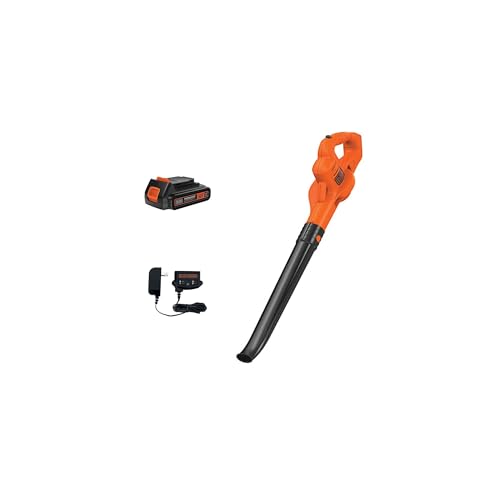
For property owners clearing dense, wet debris across sprawling acreage, the VEVOR 63CC Gas Backpack Leaf Blower delivers the highest advertised output with 1,110 CFM and 220 MPH, though its heavy chassis and multi-piece tube assembly demand far more storage space and setup effort than a compact handheld tool.

Pros
- Lightweight 9.4-pound design offers easy handheld maneuvering
- Reduced-resistance recoil system eases engine pull starts
- Translucent fuel tank allows quick monitoring of gas levels
- Cushioned anti-vibration handle helps dampen arm strain
- Capable of up to 380 CFM and 180 MPH airflow
Cons
- Requires mixing 2-cycle gas and oil at a 50:1 ratio
- Modest 380 CFM output is best suited for lighter debris

Pros
- Delivers up to 550 CFM and 230 MPH for moving wet yard debris
- Lightweight 17-pound backpack design with cushioned straps
- Thumb throttle includes cruise control for steady blowing
- 33.8 fl oz fuel tank yields up to 45 minutes of run time
- Operating temperature range spans 14°F to 104°F
Cons
- Requires 2-cycle fuel mixing and engine maintenance
- 550 CFM is modest for a backpack-class gas blower

Pros
- Engine rated at 63cc delivering up to 665 CFM and 205 MPH
- Generous 1.7-liter fuel tank extends running time between refills
- Cruise control and variable speed dial enable hands-free throttle
- Tool-free two-stage air filter simplifies routine maintenance
- Padded backpack harness evenly distributes weight during operation
Cons
- Weighs 22 pounds before adding fuel
- Requires mixing 2-cycle oil and gasoline
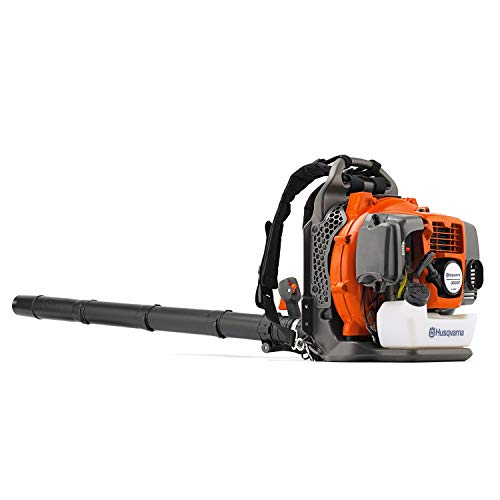
Pros
- 50.2-cc 2.1-HP X-Torq engine
- Rated blowing force of 692 CFM and 180 MPH
- LowVib technology dampens machine vibrations
- Air purge primer simplifies engine starts
- Ergonomic harness with offset control handle
Cons
- Weighs 22 pounds before fuel is added
- Requires ongoing two-stroke fuel mixing
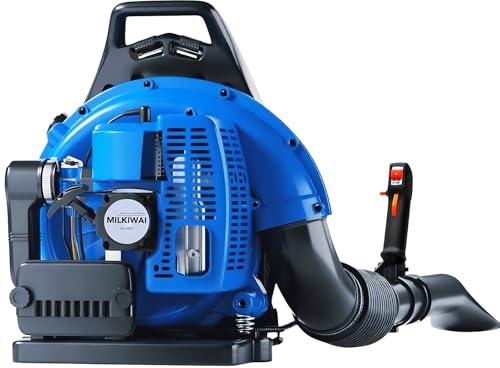
Pros
- Rated output reaches up to 665 CFM and 205 MPH wind speed
- Padded backpack harness with 3-point spring stabilization system
- Variable speed throttle includes cruise control for steady operation
- Manufacturer claims up to 50 minutes of runtime at full throttle
Cons
- Substantial 19-pound unit weight can tire users during prolonged work
- Requires manual 2-stroke gas and oil mixing for engine operation
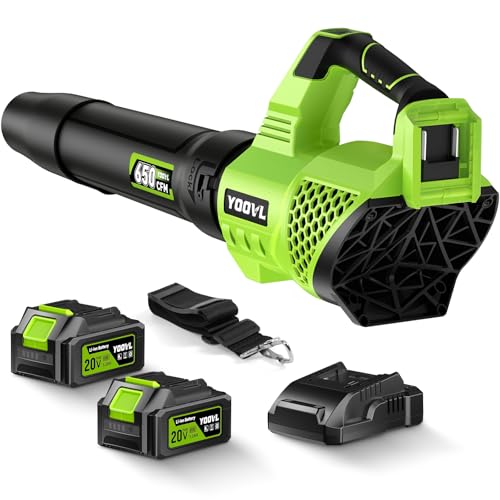
Pros
- Airflow rated up to 650 CFM using advanced turbo technology
- Comes with two high-capacity 20V 5.2Ah batteries and fast charger
- Three selectable speed modes for delicate to heavy-duty jobs
- Includes an adjustable shoulder strap to reduce arm fatigue
- Includes blower tube and extension nozzle attachments
Cons
- Maximum 150-minute runtime applies only to low-speed mode
- Heavier battery packs may add weight during prolonged handheld use

Pros
- 28cc 1.1-HP 2-stroke gas engine
- Rated up to 280 MPH and 490 CFM
- Quick-start ignition mechanism
- 0.65-liter translucent fuel tank
- Lightweight 9.5-pound bare tool weight
Cons
- Requires 2-cycle gas and oil mixing
- Produces engine noise and emissions

Pros
- 65cc engine delivers a high-volume 850 CFM at 205 MPH
- Includes both fan and concentrator nozzle attachments
- 1.7-liter fuel tank reduces frequent stopping for refills
- Backpack harness features ventilated backrest for comfort
- Variable throttle with cruise control simplifies steady operation
Cons
- Requires 2-stroke fuel mixing and routine engine upkeep
- At 70.8 inches long assembled, storage requires ample space
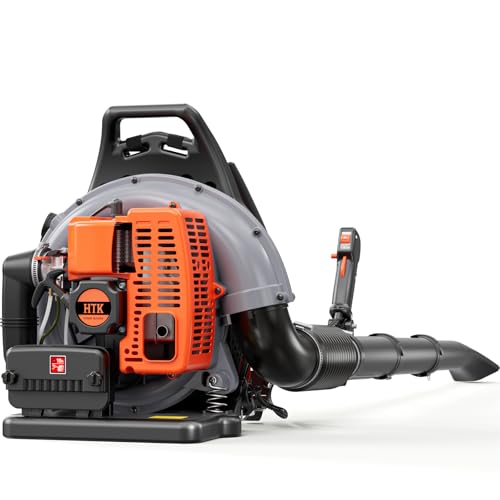
Pros
- 63cc 2-stroke engine delivers 665 CFM and 205 MPH airspeed
- Padded ergonomic backpack harness balances weight across shoulders
- Cruise control locks throttle to relieve trigger finger strain
- Generous 1.7L fuel tank supports extended property maintenance
- Manufacturer-rated sound level of 71 dB for quieter operation
Cons
- Requires ongoing two-cycle oil-to-gasoline fuel mixing
- Bulkier footprint demands sufficient garage or shed storage

Pros
- Claims up to 1,110 CFM airflow and 220 MPH air speed
- Generous 1.89-liter fuel tank allows 50 to 60 minutes of runtime
- Padded harness and shock-absorption system reduce vibration
- Cruise control locks throttle for continuous operation
- Includes earmuffs, maintenance tools, and fuel mixing bottle
Cons
- Heavy 26.46-pound total weight can fatigue operators
- Requires mixing 2-cycle gas and oil fuel
Which Gas Leaf Blower Delivers The Highest Airflow And Speed?
The VEVOR 63CC Gas Backpack Leaf Blower claims the top spot for raw clearing metrics in this group, backed by manufacturer-advertised specs of 1,110 CFM and a 220 MPH top air velocity. These figures give it the theoretical advantage for shifting matted, rain-soaked leaf layers that stall smaller machines.
Following closely behind in manufacturer-stated air volume is the Getell 65CC Backpack Leaf Blower, Gas Powered, which rates at 850 CFM and 205 MPH. Mid-tier backpack alternatives such as the Thalorus 63CC Backpack Leaf Blower, 665 CFM, the HTK Gas Backpack Leaf Blower, 63CC 2-Stroke, and the 63CC Gas Backpack Leaf Blower, 2-Stroke Engine all settle at an advertised 665 CFM and 205 MPH. While high volume speeds up wide-area clearing, these heavy-displacement engines generate higher noise profiles and fuel consumption, requiring owners to trade convenience for clearing capability.
How Husqvarna 350BT Compares In Efficiency And Vibration Control
While value-oriented brands post higher raw volume claims, the Husqvarna 350BT Gas Leaf Blower prioritizes engineered clearing force, certified dampening, and refined engine efficiency. It pairs a 50.2-cc, 2.1-HP X-Torq engine with an advertised 692 CFM, 180 MPH, and a measured 21 Newtons of blowing force.
The primary advantage of the Husqvarna 350BT lies in its ergonomic design and emissions technology. Husqvarna states its X-Torq engine cuts emissions by up to 60% and improves fuel efficiency by up to 20%, supported by integrated LowVib dampeners that reduce the vibration transferred to your shoulders. The decisive trade-off is the $429.99 retail price, which is nearly three times the cost of budget alternatives like the Thalorus 63CC ($159.99) or Milkiwai’s 63CC unit ($129.99). Buyers must decide whether brand-backed engine longevity and lower felt vibration justify the significant cost premium.
Handheld Versus Backpack Blowers For Maneuverability
Handheld gas leaf blowers prioritize fast deployment and tight-space maneuvering over the massive air volume provided by backpack units. If your cleaning focuses on hardscaping, porches, and narrow garden paths, a handheld unit prevents the fatigue of strapping on a full harness.
For example, the 28 CC Gas Leaf Blower, 490 CFM 280 MPH weighs an advertised 9.5 pounds, yet claims a high air velocity of 280 MPH to push gravel and stuck debris off walkways. Similarly, the Getell 26cc Gas Leaf Blower offers 380 CFM and 180 MPH in a lightweight package. However, handheld units deliver significantly less air volume (CFM) than 63cc backpack units, meaning you will need far more passes to push broad leaf piles across an open lawn. When evaluating what blower works best, choosing between handheld and backpack form factors hinges on whether your priority is zero-hassle mobility or pure broadscale force.
Essential Fuel Capacity And Harness Features For Long Cleanups
A leaf blower’s clearing power is only as useful as your ability to carry and run it comfortably without constant refueling stops. When operating high-displacement 2-stroke engines at full throttle, tank size and strap padding directly dictate your working pace.
The VEVOR 63CC unit features a generous 1.89-liter fuel tank intended to provide 50 to 60 minutes of uninterrupted clearing time. Models like the HTK Gas Backpack Leaf Blower and Getell 65CC incorporate 1.7-liter tanks, pairing their fuel supply with cruise control throttles that prevent hand cramping over long sessions. High-capacity tanks add noticeable weight when full, making padded, adjustable shoulder harnesses and ventilated backrests critical components rather than optional luxuries.
Frequently Asked Questions About Powerful Gas Leaf Blowers
What is the difference between CFM and MPH when evaluating a leaf blower?
CFM (cubic feet per minute) measures the total volume of air emitted, which determines the surface area and amount of debris moved per pass. MPH (miles per hour) measures the velocity of that air stream, dictating how easily the blower dislodges stuck, wet, or heavy materials.
Do high-powered gas leaf blowers require pre-mixed fuel?
Yes. Most commercial-style and high-displacement gas leaf blowers use 2-cycle (2-stroke) engines that require a precise mix of unleaded fuel and 2-cycle engine oil, commonly at a 50:1 ratio, to ensure proper internal engine lubrication.
Choosing The Best Gas Leaf Blower For Your Yard
Selecting the right high-power blower requires balancing your yard size against the physical demands of operating 2-stroke equipment. High-CFM backpack machines excel on large grassy footprints, while smaller handheld tools eliminate excess physical bulk on driveways and patios.
For rural or heavily wooded properties with relentless autumn debris, the recommended choice is the VEVOR 63CC Gas Backpack Leaf Blower, providing the highest advertised airflow of 1,110 CFM for demanding sweep jobs. Its main limitation is its physical size, heavy filled weight, and multi-component assembly. For homeowners maintaining smaller suburban lots who need swift one-handed control, the 28 CC Gas Leaf Blower, 490 CFM 280 MPH serves as a practical, lightweight alternative.