For vehicle owners who want to eliminate towel-induced micro-scratches and blast trapped water from mirrors and emblems, a high-velocity mini jet like the WOLFBOX MF400 provides unmatched detailing precision, though budget-focused drivers will sacrifice some compact control to gain dual-battery yard utility with kits like the Leaf Blower Cordless Handheld Blower with 2×4.0Ah.

Pros
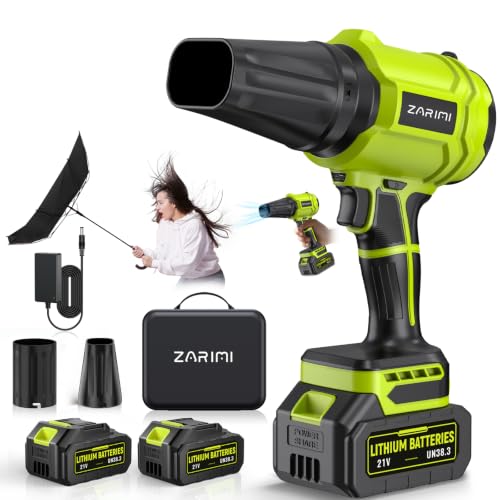
- Includes two 4.0Ah batteries and a fast charger
- Stepless variable-speed trigger with safety lock
- Comes with two detachable nozzle tubes and a shoulder strap
- Stated wind speed capability reaching up to 65 m/s
- Includes storage toolbox and protective earplugs
Cons
- Claimed 30-minute runtime per battery is limited to low speed
- Conflicting weight figures listed between specs and description
Pros
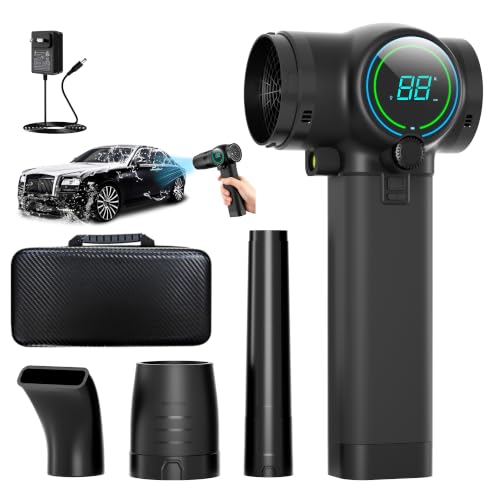
- Delivers up to 1.6 kg thrust with 750W brushless motor
- Infinitely variable speed trigger controls airflow output
- Integrated LED screen displays battery, voltage, and current
- Lightweight handheld design weighs approximately 848g
- Includes three interchangeable nozzles and a fast charger
Cons
- Turbo mode requires intermittent cooling pauses

Pros
- Lightweight design at approximately 2.7 pounds for easy one-handed use
- Brushless motor rated up to 600 CFM airflow and 150 MPH speed
- Includes a 21V 4.0Ah rechargeable battery and fast charger
- Quiet operation rated at 68 dB
Cons
- Manufacturer-stated runtime is limited to roughly 20 minutes
- Compact battery capacity may not cover large properties
Pros
- Extremely lightweight at only 2.8 pounds for low-fatigue use
- Reaches stated air speeds over 50 m/s (110+ MPH)
- Comes with two batteries and charger for alternating use
- Includes a concentrated narrow nozzle for detailed edging
- Compact footprint stores easily in tight spaces or vehicle trunks
Cons
- Limited runtime of only about 13 minutes per battery
- Not designed for moving heavy or deep piles of wet leaves

Pros
- Weighs only 2.28 lbs for easy one-handed operation
- Includes two 21V 4000mAh lithium batteries
- Variable speed trigger provides precise airflow control
- Comes with an extension tube and flat nozzle attachment
Cons
- Rated runtime tops out at roughly 30 minutes
- Not designed for large properties or heavy wet debris

Pros
- Dual blowing and suction vacuum capabilities
- Includes two 4.0Ah 21V rechargeable batteries
- Lightweight 1.63 lb body for easy handheld maneuvering
- Brushless motor rated up to 29,300 RPM
Cons
- Not intended for heavy-duty yard maintenance
- Batteries add roughly 1.11 lbs each to the working weight

Pros
- 453W brushless motor delivers up to 72 m/s rated airflow
- Includes three specialized nozzles with a twist-lock system
- Three power modes provide between 10 and 60 minutes of runtime
- Lightweight handheld design weighs roughly 1.84 pounds
- Ships with a rugged shockproof hard storage case
Cons
- Max Turbo mode runtime is limited to approximately 10 minutes
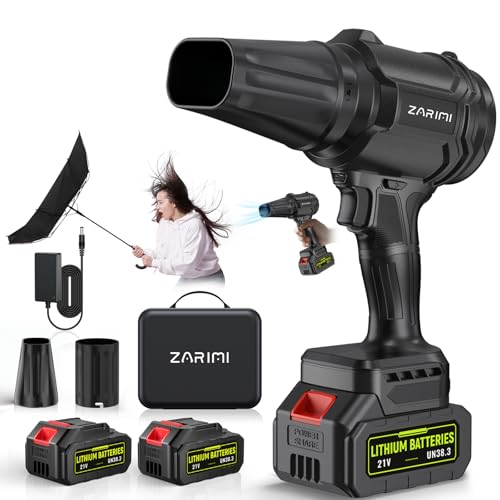
Pros
- Weighs only 2.8 lbs for fatigue-free one-handed use
- Includes two batteries and dedicated charger
- Rated air speeds over 50 m/s (110+ mph)
- Narrow nozzle included for concentrated airflow
- Compact footprint fits easily in car trunks or tight storage
Cons
- Each battery is rated for only 13+ minutes of continuous use
- Not suited for continuous, heavy large-property clearing
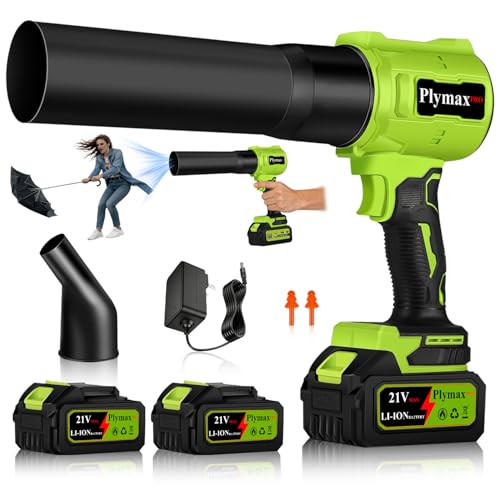
Pros
- Includes two 21V 4.0Ah lithium batteries and a charger
- Motor rated up to 800,000 RPM for focused air speeds
- Includes both a wide nozzle and a precision jet nozzle
- Suitable for outdoor patios, garage dusting, and car drying
- Compact, lightweight handheld design minimizes fatigue
Cons
- Compact frame less suited for expansive lawn leaf clearing
- Airflow volume specifications are not provided

Pros
- Motor rated up to 800,000 RPM for high-speed airflow
- Includes two 21V 4.0Ah lithium batteries and a charger
- Variable-speed trigger for precision airflow control
- Includes both wide-area and precision jet nozzles
- Lightweight, compact frame weighing just 2.64 pounds
Cons
- High-output blowing may drain batteries quickly during heavy cleanup
Airspeed vs. Air Volume: What Matters Most for Car Drying?
High air velocity (measured in MPH or m/s) is generally more important than sheer air volume (CFM) when dislodging water trapped in crevices, trim, and grille assemblies. A wide, low-pressure air stream may push standing water across a flat hood, but it often lacks the concentrated thrust required to blast droplets out of lug nut pockets and window gaskets.
Units like the compact handheld cordless blowers on the market balance these traits differently. For instance, the Tawugame Cordless Leaf Blower pairs an advertised 200 km/h air speed with 1.6 kg of thrust from a 750W brushless motor, creating sufficient pressure to drive water sheets off ceramic-coated panels. In contrast, the SEESE Turbo Cordless Leaf Blower advertises a high 600 CFM airflow alongside a 150 MPH rating, prioritizing bulk air movement over ultra-concentrated streams. If your car has intricate front grilles or deep wheel spokes, concentrated velocity should remain your primary metric.
WOLFBOX MF400 vs. SEESE Turbo: Precision Jet vs. High-Volume Blower
Choosing between the WOLFBOX MF400 and the SEESE Turbo Cordless Leaf Blower comes down to whether you need a dedicated detailing tool or a crossover tool for yard cleanup. The WOLFBOX MF400 operates as an electric air duster and car dryer, driven by a 453W brushless motor that claims an airspeed of 72 m/s. It includes a twist-lock nozzle design, a dedicated hard storage case, and three calibrated power modes suited for vehicle drying and small-item dusting.
The SEESE Turbo takes a traditional leaf blower approach at a much lower entry price of $49.99, compared to the $139.99 tag of the WOLFBOX. With an advertised 600 CFM flow rate, the SEESE is better equipped to clear wet leaves from a driveway after the car wash is finished. However, its wider tube profile is less maneuverable inside door jambs, engine bays, and tight wheel wells than the mini-barrel design of the WOLFBOX.
Why Dual-Battery Bundles Prevent Incomplete Drying Sessions
Running a cordless blower on its highest power setting drains battery packs rapidly, making dual-battery kits essential if you wash larger trucks or SUVs. While lower speeds are adequate for clearing electronics, drying surface water requires sustained high output, which increases thermal load and battery consumption.
Several models address this by including two battery packs in the box:
- Leaf Blower Cordless Handheld Blower with 2×4.0Ah: Includes two 4000mAh packs at a $59.99 price point, letting you rotate one on the charger while using the other.
- Turbo-Powered Jet Blower Small Leaf Vacuum: Supplies two 4.0Ah batteries with integrated battery level indicator lights, aiding workflow management.
- YUQUESEN Cordless Leaf Blower: Includes two batteries, though the manufacturer notes an estimated runtime of roughly 13 minutes per pack on high settings.
Single-battery units like the Tawugame Cordless Leaf Blower offer digital LED readouts for monitoring real-time voltage, but once that single 4000mAh pack is exhausted, drying stops until the 2.5-hour recharge cycle completes.
Nozzle Configurations and Protecting Vehicle Paintwork
Directing airflow requires tailored nozzle tips, but hard plastic attachments also introduce a risk of paint damage if they accidentally contact the car body. When moving quickly around mirrors and side panels, a broad, unwieldy blower tube increases the risk of bumping polished clear coat.
The Plymax Cordless Leaf Blower and VIBOGEN Turbo-Powered Jet Blower each include both round and flat nozzle attachments. A round nozzle focuses velocity into body seams and around badges, while a flat nozzle spreads the air into a wider blade to sweep water off windshields and roofs. When using non-rubberized plastic nozzles, maintain a steady hand and keep the tip several inches away from painted surfaces to prevent scuffs.
Weight, Ergonomics, and Clearing Hard-to-Reach Crevices
Holding a blower at arm’s length to dry the roof of a tall vehicle or bending down to clear rocker panels quickly causes wrist and forearm fatigue. Choosing an ultra-lightweight chassis ensures better control, allowing you to manipulate air angles smoothly across complex vehicle contours.
Chassis weights vary significantly across these models:
- Leaf Blower Cordless Handheld Blower with 2×4.0Ah: Advertised at just 1.12 pounds for the bare tool, minimizing arm strain during overhead passes.
- Turbo-Powered Jet Blower Small Leaf Vacuum: Features a bare tool body weight of roughly 1.63 pounds (combined with an 80g tube), while each battery adds approximately 1.11 pounds.
- wanvzo Cordless Leaf Blower: Lists a total weight of 2.28 pounds with an anti-vibration grip.
- YUQUESEN Cordless Leaf Blower: Weighs in at 2.8 pounds, offering a compact footprint designed for one-handed operation.
For drivers maintaining large vehicles or storing tools in a trunk, check out our guide on finding a small rechargeable leaf blower for compact storage dimensions.
Frequently Asked Questions About Car Drying Leaf Blowers
Is using a cordless leaf blower safe on vehicle paint?
Yes, touchless drying prevents the swirls and micro-marring caused by dragging physical towels across clear coat. However, you must maintain a safe distance and handle the unit carefully to avoid accidentally bumping the hard plastic nozzle against vehicle panels.
Should I focus more on airspeed (MPH/velocity) or airflow volume (CFM) for vehicle drying?
Airspeed is typically more critical for vehicle detailing. High-velocity streams dislodge pooled water trapped behind door handles, side mirrors, and emblems. High CFM helps sheet water off expansive flat surfaces like hoods and roofs, but concentrated speed breaks water surface tension faster.
How long will a cordless blower battery run when drying a car?
Runtime varies widely depending on speed settings and motor wattage. Full-power turbo modes place high loads on lithium packs and often deplete single batteries quickly. For full-vehicle drying, choosing a kit with two batteries or keeping a spare on a charger ensures you can finish without waiting.
How to Choose the Right Car Drying Blower for Your Garage
Deciding on the best leaf blower for drying car finishes depends on your budget, whether you already own a dedicated yard tool, and how much vehicle surface area you need to clear. If you already have full-sized outdoor lawn equipment, buying a mini automotive-focused jet blower avoids cluttering your garage with redundant tools. If you need one affordable device to clear your patio and dry your daily driver on weekends, high-CFM multi-purpose options provide the best value.
For dedicated car detailing, the WOLFBOX MF400 Electric Air Duster is our primary recommendation for enthusiasts seeking maximum concentrated velocity and safe, single-handed maneuverability in tight crevices, despite its higher upfront cost and lower CFM coverage for yard work. If you prefer an economical dual-battery setup that can transition directly from sweeping driveways to drying vehicles, consider the Leaf Blower Cordless Handheld Blower with 2×4.0Ah as an affordable, lightweight alternative.