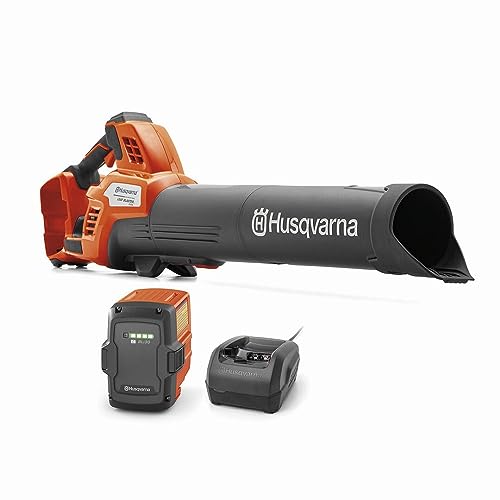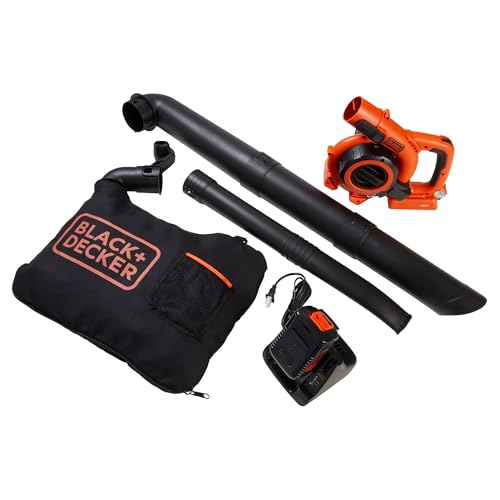
Finding the right blower for cleaning depends on whether you are blasting dust out of delicate electronics or clearing debris from a workshop floor. While compact electric dusters eliminate the recurring cost of canned air, they lack the broad air volume required for patios, just as full-sized leaf blowers generate far too much force for computer components.
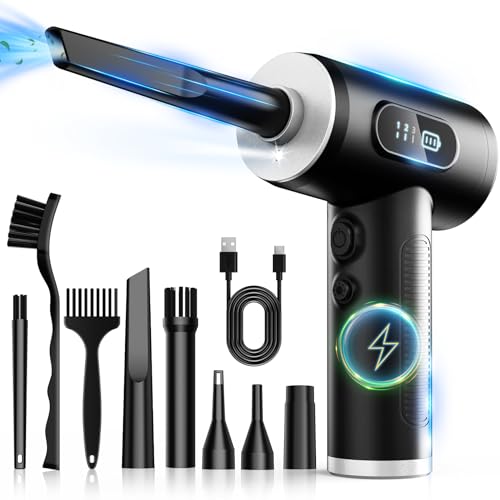
Pros
- Reusable design replaces disposable compressed air cans
- Three adjustable speed modes with up to 100,000 RPM motor
- Smart LED screen displays active speed and battery status
- Includes 5 interchangeable nozzles and 3 detailing brushes
- Built-in LED light helps illuminate dark crevices
Cons
- Not built for heavy-duty outdoor debris clearing
- Dimensions and runtime details are limited in manufacturer listing

Pros
- High-speed motor reaches up to 130,000 RPM
- Includes 5 interchangeable cleaning nozzles
- Built-in LED light for illuminating dark crevices
- Up to 240 minutes runtime on the lowest setting
Cons
- Maximum speed runtime is limited to 25 minutes
- Audible operation reaches up to 82.5 dB
- Requires a 10-minute cooldown period before charging

Pros
- Lightweight design at only 4.4 pounds
- 7-Amp motor rated up to 180 MPH and 180 CFM
- Built-in cord retention prevents unplugging
- Zero emissions with instant push-button start
- Simple, low-maintenance corded design
Cons
- Extension cord is not included
- Operating range is limited by cord reach

Pros
- Replaces single-use canned air for repeated use
- Brushless motor rated up to 170,000 RPM
- Four adjustable speed levels for delicate or stubborn dust
- Includes 4 nozzles, cleaning brush, bag, and lanyard
- Convenient cordless Type-C charging
Cons
- Runtime decreases at higher power settings
- Nozzle fit requires care to avoid misplacement

Pros
- Includes two 21V 4.0Ah batteries for extended runtime
- Delivers up to 420 CFM airflow and 150 MPH air speed
- Lightweight design weighs under 3 lbs bare tool for low fatigue
- Comes with both round and flat interchangeable nozzles
- Two adjustable speed settings for varying cleanup tasks
Cons
- Limited to two preset airflow speeds
- Best suited for dry leaves and light debris rather than heavy wet waste

Pros
- Includes two 20V 2.0Ah batteries and a fast charger
- Extremely lightweight design at just 3.4 pounds
- Two selectable speed modes match light and heavier tasks
- Ergonomic non-slip grip allows comfortable one-handed use
- Comes with an extension nozzle for targeted airflow
Cons
- Runtime decreases significantly at the higher speed setting
- Best suited for light residential cleanup rather than dense debris
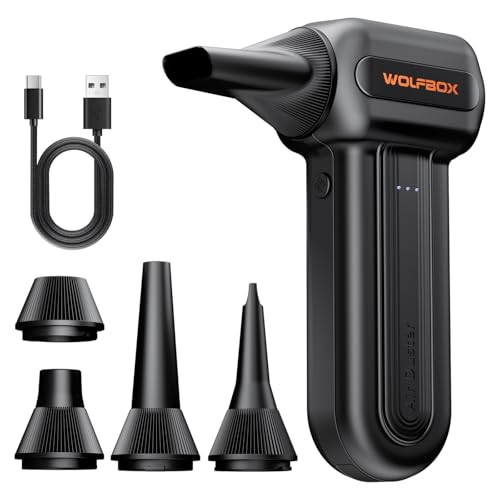
Pros
- Reaches up to 110,000 RPM on high gear
- Weighs just 0.5 lbs for portable everyday carry
- Includes 5 specialized nozzles for versatile tasks
- Dual 2500mAh batteries run up to 240 mins on low
Cons
- Requires up to 3.5 hours for a full charge
- Top speed runtime is considerably shorter than low gear
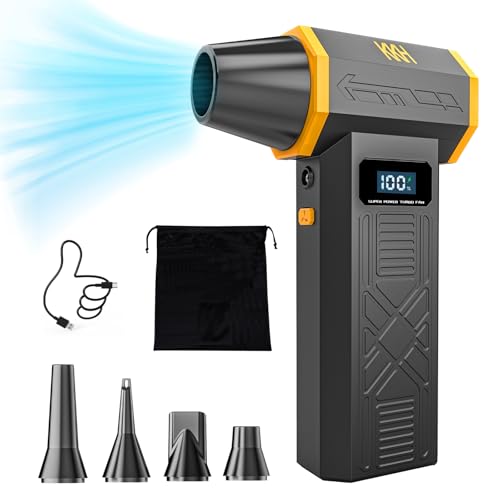
Pros
- Compact, pocket-sized build weighing around 0.5 pounds
- Four speed settings reaching up to a claimed 120,000 RPM
- Digital LED display shows battery level and current speed gear
- Comes with 5 nozzles and an integrated LED work light
Cons
- Small airflow footprint is not suited for broad outdoor clearing
High-RPM Micro Blowers vs. High-CFM Yard Blowers
Choosing between an electric micro duster and a traditional leaf blower comes down to the balance between pinpoint air velocity and overall air volume. Handheld micro dusters like the FAOGO Compressed Air Duster rely on high-speed brushless motors—reaching an advertised 170,000 RPM—to channel a concentrated blast through narrow nozzles. This concentrated stream dislodges crumbs, lint, and radiator grit from keyboards, camera bodies, and PC towers without physical contact.
In contrast, outdoor utility units like the Electric Leaf Blower Cordless with Battery focus on air volume, delivering an advertised 420 CFM and 150 MPH wind speeds. While a high-CFM tool quickly sweeps leaves, sawdust, and light debris across patios and garages, it lacks the precision needed for indoor electronics. Buyers managing both indoor tech and outdoor spaces need to evaluate whether their primary chore is precision dusting or bulk debris clearing, as neither style can perform the other’s job effectively. For more details on compact yard tools, explore our overview of small blower cordless options.
Cordless Battery Swapping vs. Unlimited Corded Power
Cordless battery blowers provide unrestricted mobility at the expense of finite runtimes, whereas corded electric blowers deliver steady, uninterrupted power but tether you to an electrical outlet. The BLACK+DECKER Electric Leaf Blower uses a 7-amp motor producing up to 180 CFM and 180 MPH. At 4.4 pounds, it handles continuous garage or walkway clearing without battery fade, though the manufacturer does not include an extension cord in the box, requiring you to supply a compatible outdoor cord.
On the battery-powered side, both the Electric Leaf Blower Cordless with Battery and the Leaf Blower Cordless, Leaf Blower with Battery address runtime limits by including two batteries in the box. The VIBOGEN model packages two 21V 4.0Ah batteries, while the RYAHT kit includes two 20V 2.0Ah packs with an advertised run time of up to 60 minutes on low speed. This dual-pack setup allows you to charge one pack while working with the other. If you frequently clean areas far from electrical outlets, a battery platform is practical, but corded reliability remains simpler for quick driveway sweeps adjacent to an outdoor receptacle. You can learn more about clearing hard surfaces in our guide on choosing a leaf blower for driveway cleaning.
Attachment Kits and Speed Controls for Delicate Tasks
Detailed cleaning demands adjustable speed controls and specialized nozzle tips to prevent component damage. High-velocity air can dislodge fragile fan blades or force dust deeper into sensitive optical housings if applied at maximum force without adjustment. The FRESMOL Compressed Air Duster features three adjustable speed settings and integrates a smart LED display to show current speed mode and battery levels, helping users avoid sudden power cutoffs mid-task. It also includes five distinct nozzles and three detail brushes for manual scrubbing.
Similarly, the WOLFBOX MF60 Compressed Air Duster provides three gear settings starting at an advertised 25,000 RPM for gentle work, scaling up to 110,000 RPM for heavy debris. Its attachment set includes narrow crevice nozzles for car air vents, wider nozzles for computer cases, and an inflation adapter for outdoor accessories. For budget-conscious desktop setups, the KKH Portable Electric Air Duster with Led Light offers four selectable airflow settings and five nozzle accessories in a lightweight 0.5-pound shell. Having multiple airflow tiers ensures you can lower the velocity around delicate keyboard membranes and raise it when blasting out car console seams.
Noise Output and Heat Management in Handheld Blowers
Ultra-compact blowers produce considerable acoustic noise and thermal buildup due to the high operational speeds of their miniature turbine motors. Manufacturers design these compact blowers for quick bursts of dusting rather than prolonged, heavy-duty operation. For example, the Compressed Air Duster,130000RPM Super Power generates noise levels ranging between an advertised 73.2 dB on low and 82.5 dB on high speed, topping out around 83 dB.
In addition to audible motor whine, heat buildup requires careful operational habits. The manufacturer of the CAGIWIRU blower explicitly notes that its battery protection circuit requires a 10-minute cool-down period after use before plugging it in to recharge via USB-C. Attempting to charge immediately following a high-speed cleaning run may trigger thermal safety cutoffs. If you plan to perform back-to-back cleanings of multiple computer towers or vehicle interiors, expect to work in measured intervals to let the motor and battery cells dissipate heat.
Frequently Asked Questions About Cleaning Blowers
Can a high-speed electric air duster fully replace disposable canned air?
Yes. Electric models such as the FRESMOL Compressed Air Duster and FAOGO Compressed Air Duster provide continuous airflow without the freezing temperatures or chemical propellant residue associated with disposable aerosol cans, though they require routine battery charging.
Why do compact electric air dusters need to cool down before charging?
Motors operating between 100,000 and 170,000 RPM draw heavy current, raising internal battery temperatures. Manufacturers like CAGIWIRU advise waiting roughly ten minutes after heavy use to let battery cells cool down, preventing protective shutoffs during USB-C charging.
Can an outdoor leaf blower be used to dust computer components?
No. Yard blowers like the BLACK+DECKER Electric Leaf Blower move air at 180 CFM through wide tubes, generating far too much volume and static risk for delicate circuit boards, loose keycaps, and internal cooling fans.
Choosing the Right Cleaning Blower for Your Space
Selecting the best blower comes down to the specific environment you need to clear. If your cleaning routine focuses on vehicle interiors, keyboards, desktop gaming towers, and delicate home electronics, a high-RPM electric air duster is the sensible choice. These units eliminate the recurring cost of single-use aerosol cans and provide fine nozzle attachments for narrow gaps. However, they are completely unsuited for outdoor groundskeeping or workshop floor sweeps.
Conversely, clearing leaves from sidewalks, patios, and garage bays demands the broader swept path and higher volume of an outdoor utility blower. For precision tech maintenance, we recommend the FRESMOL Compressed Air Duster for its balanced combination of three speed modes, five nozzle shapes, three brushes, and an informative LED battery display, though its narrow airflow cannot clean an outdoor workspace. If your main objective is clearing outdoor dirt, leaves, and garage floors, select the Electric Leaf Blower Cordless with Battery instead for its broad 420 CFM airflow and practical dual 4.0Ah battery system.