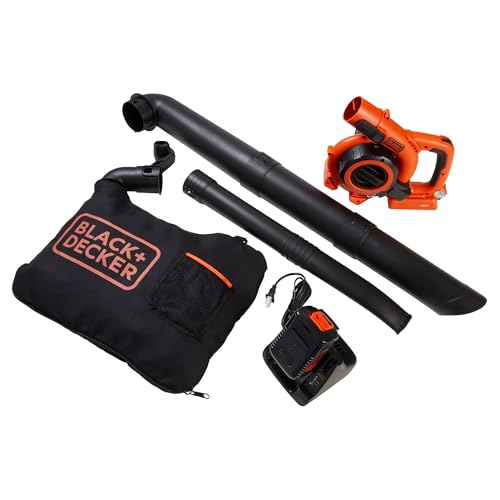
For homeowners with standard residential lots who need continuous suction without managing battery runtimes, a corded electric blower with vacuum provides uninterrupted power, though your working radius remains limited by an extension cord.

Pros
- Tool-free conversion among blow, vac, and mulch modes
- Air speeds up to 230 mph with 2-speed settings
- Vortex impeller grinds up to 10 bags down to 1
- Built-in cord retainer helps prevent accidental unplugging
- Includes concentrator, blow/vacuum tubes, and bag
Cons
- Requires constant extension cord tether
- Two fixed speeds offer less fine-tuned control

Pros
- Instant switch between blow and vacuum modes
- High 18:1 mulch ratio maximizes bag capacity
- Rated up to 350 CFM and 210 MPH air output
- Variable-speed control for different debris types
- Includes 42L debris collection bag
Cons
- Corded design limits overall yard reach
- Weighs 9.3 pounds before debris accumulates

Pros
- High-output airflow rated up to 600 CFM and 160 MPH
- Includes two 4.0Ah batteries for cordless runtime
- Efficient 15:1 mulching ratio reduces disposal volume
- Tool-free easy-clean access gate for clearing clogs
- Height-adjustable wheels and anti-static handle for user comfort
Cons
- Turbo Boost and top speeds will deplete battery runtimes quickly
- Weighs 10 pounds, which may tire some users during extended sessions
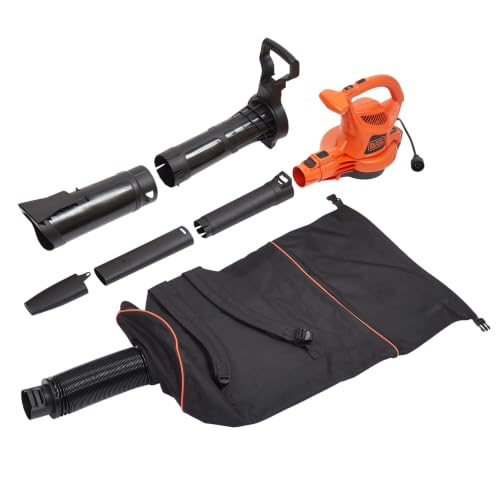
Pros
- High performance delivering up to 250 MPH and 400 CFM
- POWERBOOST button supplies extra power on demand
- Hands-free backpack collection bag doubles standard capacity
- Zipper-free bag design with wide opening for easy emptying
- Flexible tube improves maneuverability during vacuum mode
Cons
- Corded design requires an extension cord and limits total range
- Heavier build at 11.1 pounds before collecting leaves

Pros
- Powerful 12-amp motor generating up to 260 MPH and 450 CFM
- Hands-free 55-liter backpack collection bag for easy carrying
- Tool-free conversion between blower, vacuum, and mulcher
- Wide-mouth bag opening enables quick emptying
Cons
- Requires an extension cord for power, limiting yard reach
- Weighs 11.27 pounds without debris in the collection bag

Pros
- 2-in-1 blower and vacuum with quick-change switch
- Delivers up to 460 CFM and 167 MPH airflow
- Anti-jam internal suction tube and secure snap buckle
- Includes 40L collection bag with 15:1 mulch ratio
Cons
- Tethered cord limits working range
- Requires an outdoor extension cord (not included)

Pros
- Delivers up to 600 CFM of blowing output
- Tool-free switch between blow and vac modes
- 16:1 mulch ratio compacts collected leaves
- Large 50L collection bag included
- Variable-speed control for tailored airflow
Cons
- Requires an extension cord and nearby power source
- Weighs 9.1 pounds before filling collection bag

Pros
- 12-amp motor achieves up to 250 MPH and 400 CFM
- High-impact metal fan prevents clogs and offers 16:1 mulch ratio
- Includes a disposable tie-and-toss leaf bag system
- Two speed settings suited for delicate flower beds or stuck debris
- Built-in cord retainer keeps extension cords secured
Cons
- Corded design restricts cleaning area to cord length
- Disposable bags will require replacement purchases once used

Pros
- Rugged metal impeller for shredding leaves
- Variable speed delivers up to a rated 235 mph
- Built-in cord-lock system secures power cord
- Includes blower and vacuum tubes with collection bag
Cons
- Requires an extension cord for power
- Weighs 10 pounds, which may fatigue during long jobs
Corded Power vs. Cordless Mobility: Which Drive System Fits Your Yard?
Corded models provide constant, maximum electrical output for as long as you work, whereas battery-powered options deliver unrestricted movement at the expense of finite operational time. Choosing between them depends strictly on property size and power outlet availability.
Most corded units, such as the WORX Trivac 3-in-1 Electric Leaf Blower/Leaf and the CRAFTSMAN 3-in-1 Leaf Blower, Vacuum and Mulcher, run on standard 12-amp motors. These motors draw steady utility power, eliminating performance fade during demanding leaf collection. The trade-off is the physical cord, which requires an outdoor-rated extension lead and limits cleaning sessions to roughly 100 feet from a power receptacle. You also have to navigate around landscaping obstacles without catching or unplugging the wire.
By contrast, cordless units like the HEYWORK 40V Yard Blower Vacuum utilize two 4.0Ah batteries to deliver a manufacturer-rated 600 CFM airflow without tethering you to a wall. This provides complete freedom around fence lines, detached sheds, and long driveways. The downside is battery management: high-demand vacuum and turbo modes draw substantial energy, requiring planned recharging pauses unless you keep spare battery packs ready. For properties requiring broader navigation, exploring dedicated yard blower vac options helps clarify whether cord-free convenience outweighs battery limitations.
Mulch Ratios and Impeller Durability: Processing Yard Waste
Higher mulch ratios drastically cut down how often you empty collection bags, but shredding capability depends heavily on the internal impeller material and intake clearance. A higher ratio packs more debris into less space, though damp material can quickly challenge plastic components.
Manufacturer-advertised mulch ratios vary widely across models. The BLACK+DECKER Corded Leaf Blower Leaf Vacuum advertises a 10:1 reduction ratio, reducing 10 bags of raked leaves down to a single bag. In comparison, the WORX Trivac 3-in-1 Electric Leaf Blower/Leaf advertises an 18:1 ratio, while the WORX Trivac 3-in-1 Electric Leaf Blower/Leaf advertises a 16:1 ratio alongside 600 CFM of moving volume. Units like the MZK 2-in-1 Electric Leaf Blower Vacuum Mulcher and the HEYWORK 40V provide a 15:1 ratio.
Beyond reduction volume, the fan material dictates tool longevity when collecting debris. Standard budget tools often use composite vortex impellers, whereas units such as the BLACK+DECKER Leaf Blower Leaf Vacuum and Leaf feature a high-impact metal fan, and the Toro 51609 Ultra 12 amp Variable-Speed (up to 235) relies on a rugged metal impeller. Metal impellers resist damage from small pebbles and acorns that inadvertently enter the suction chute. However, even metal-bladed systems can jam if fed thick twigs or dense mats of wet mulch, requiring users to manually clear the intake gate.
Collection Bag Styles: Shoulder Slings vs. Backpack Carriers
Backpack collection bags shift debris weight directly onto your torso for better ergonomics, whereas traditional handheld sling bags offer faster detachment at the expense of uneven shoulder strain. The right design depends on how much physical weight you are comfortable managing during extended yard sessions.
Conventional models like the MZK 2-in-1 Electric Leaf Blower Vacuum Mulcher (40-liter capacity) and the WORX WG509 (42-liter capacity) utilize shoulder-strap bags that hang at your hip. While easy to zip open and dump onto a compost pile, these bags become heavy and unbalanced as damp, shredded leaves accumulate on one side of your body. Similarly, the WORX WG512 steps up capacity to 50 liters, which extends time between trips to the yard waste bin but adds noticeable carrying mass.
To reduce strain, units like the BLACK+DECKER Leaf Blower and the CRAFTSMAN 3-in-1 Leaf Blower, Vacuum and Mulcher incorporate backpack harness bags holding up to 55 liters. A flexible connection tube connects the vacuum housing to the pack, keeping the handheld tube lightweight and maneuverable. The trade-off is the extra effort required to take the harness on and off whenever you need to empty the wide-mouth opening into a disposal container. For general advice on yard tool maintenance and selection, browsing broad leaf blowers guides can help determine the ideal ergonomic configuration.
Electric Blower with Vacuum: Frequently Asked Questions
Can an electric blower with vacuum pick up wet leaves and twigs?
Electric blower vacuums are engineered primarily for dry or slightly damp leaves and loose debris. Wet, heavy leaves can stick to the intake tube walls and overload the shredding impeller, while large, rigid twigs can jam or chip the fan blades. Sticks and heavily matted debris should be raked manually.
What gauge extension cord is required for a 12-amp corded blower vacuum?
A 12-amp motor requires a properly rated, heavy-duty outdoor extension cord to prevent dangerous voltage drops and motor strain. Manufacturers typically recommend a 14-gauge cord for lengths up to 50 feet and a heavier 12-gauge cord for runs between 50 and 100 feet.
How do you switch between blower and vacuum modes on these tools?
Switching mechanisms differ by model. All-in-one designs like the WORX Trivac feature an integrated lever that redirects internal airflow instantly without changing parts. Other models require manually detaching the blower nozzle, snapping on a wider two-piece vacuum tube, and latching the collection bag into place.
Deciding on the Best Electric Blower with Vacuum for Your Yard
Selecting an electric blower with vacuum requires balancing raw motor throughput against weight distribution and the boundary of your electrical outlets. While maximum air velocity helps gather wet piles, internal shredding and bag ergonomics determine how pleasant the pickup process will be.
For most homeowners with small to mid-sized yards, the WORX Trivac 3-in-1 Electric Leaf Blower/Leaf represents the most well-rounded package thanks to its 12-amp motor, 18:1 mulch ratio, and single-tube tool-free switch that eliminates swapping physical tubes between modes. Its primary limitation is the corded design, which confines work to the range of an extension cord. If you need total cord-free mobility to reach distant corners or navigate around outbuildings, the dual-battery HEYWORK 40V Yard Blower Vacuum serves as a capable alternative, provided you account for managing battery charging cycles during peak cleanup season.