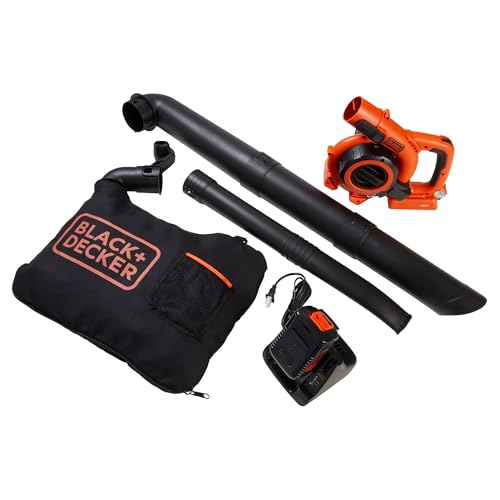
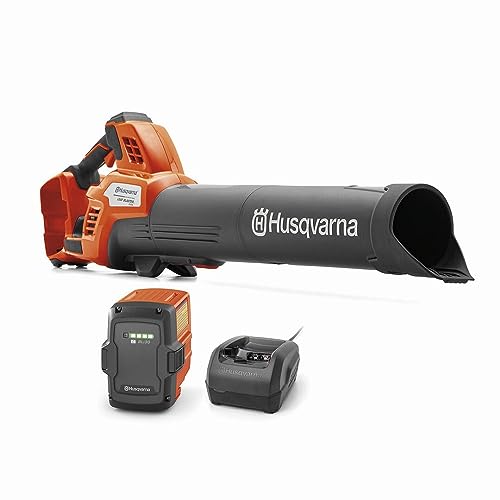
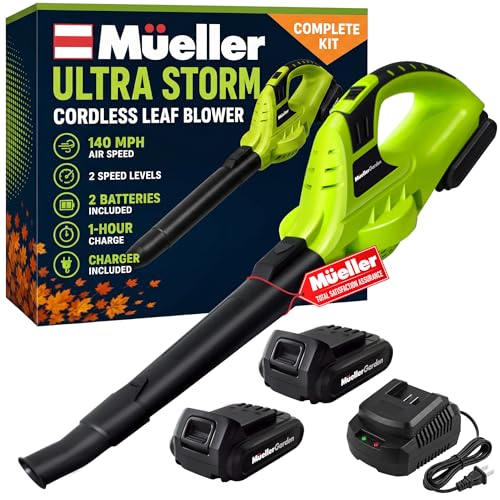
For property owners who want gas-clearing endurance without the strain of a pull cord, a true battery-assisted gas unit provides push-button ignition, though it requires routine fuel mixing. If you prefer to skip engine maintenance entirely, high-voltage battery blowers offer instant push-trigger starting with the limitation of finite battery runtime.

Pros
- Lightweight 4 lb build minimizes arm fatigue
- Delivers up to 390 CFM airflow and 210 MPH speed
- Continuous corded power eliminates recharging pauses
- Two-speed switch toggles between light and full force
- Nested two-piece tube design for full assembly
Cons
- Requires an extension cord and nearby wall outlet
- Tubes ship nested and must be pulled apart before use
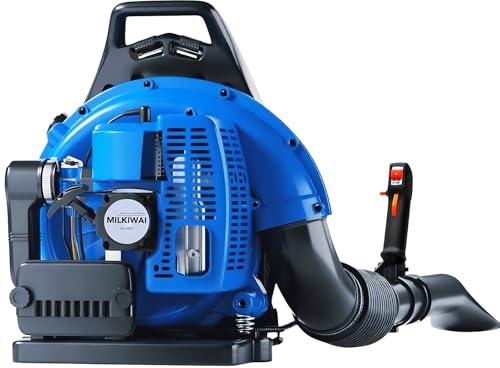
Pros
- Rated output reaches up to 665 CFM and 205 MPH wind speed
- Padded backpack harness with 3-point spring stabilization system
- Variable speed throttle includes cruise control for steady operation
- Manufacturer claims up to 50 minutes of runtime at full throttle
Cons
- Substantial 19-pound unit weight can tire users during prolonged work
- Requires manual 2-stroke gas and oil mixing for engine operation

Pros
- Push-button electric start eliminates pull cords
- Outputs up to 470 CFM and 175 MPH air performance
- Locking cruise control reduces hand fatigue
- Padded ventilated harness with anti-vibration mount
- Automatic choke for convenient engine starting
Cons
- Weighs 18.5 pounds
- Not available for purchase or shipping to California

Pros
- Delivers up to 615 CFM and 170 MPH in turbo mode
- Variable speed dial with lock-on button from 200–480 CFM
- High-efficiency brushless motor reduces operating vibration
- Includes 56V 2.5Ah battery and standard 50-minute charger
- Fully compatible with all EGO 56V ARC Lithium batteries
Cons
- Turbo mode rapidly reduces the available battery runtime
- Weighs 7.5 pounds, which may feel heavy with larger batteries

Pros
- Lightweight design at only 4.4 pounds
- 7-Amp motor rated up to 180 MPH and 180 CFM
- Built-in cord retention prevents unplugging
- Zero emissions with instant push-button start
- Simple, low-maintenance corded design
Cons
- Extension cord is not included
- Operating range is limited by cord reach

Pros
- Includes two 20V batteries and a charger
- Rated up to 550 CFM and 200 MPH
- 180-degree rotatable body for tight spots
- Features 6-speed settings with a display screen
- Lightweight 3.9 lb design with shoulder strap
Cons
- High-demand turbo setting drains battery in ~30 mins
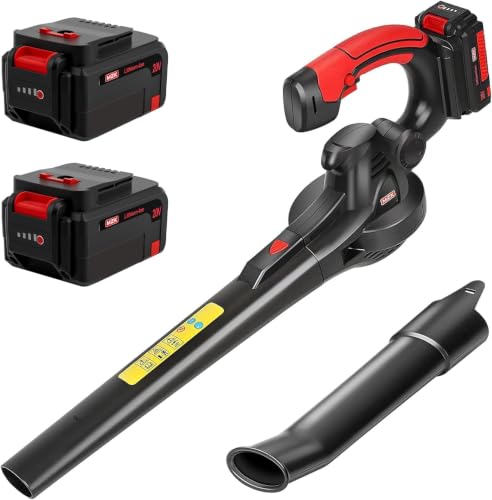
Pros
- Weighs only 3.9 pounds for light handling
- Rated airflow up to 450 CFM
- Cordless design allows unrestricted mobility
- Convenient one-hand trigger operation
- No gas mixing or cord management required
Cons
- Runtime varies significantly by power output
- Battery charging intervals required

Pros
- Delivers up to 600 CFM and 110 MPH airflow
- Continuous corded power eliminates recharging and gas mixing
- Variable-speed control adjusts airflow to the task
- Lightweight design weighs just 6.4 pounds
Cons
- Operating range is tethered to an electrical outlet
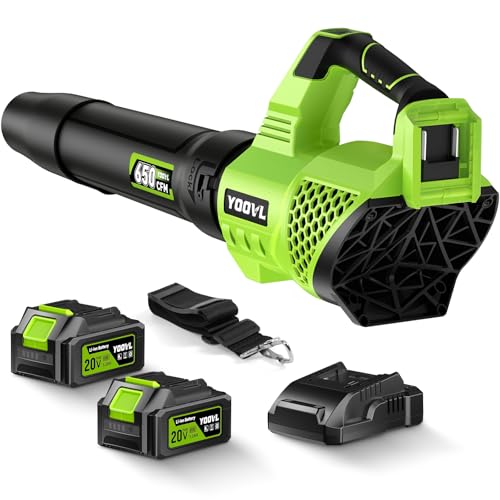
Pros
- Airflow rated up to 650 CFM using advanced turbo technology
- Comes with two high-capacity 20V 5.2Ah batteries and fast charger
- Three selectable speed modes for delicate to heavy-duty jobs
- Includes an adjustable shoulder strap to reduce arm fatigue
- Includes blower tube and extension nozzle attachments
Cons
- Maximum 150-minute runtime applies only to low-speed mode
- Heavier battery packs may add weight during prolonged handheld use

Pros
- Brushless motor delivers rated airflow up to 650 CFM and 180 MPH
- Includes two 20V 4.0Ah batteries and a fast charger
- Six adjustable speed settings ranging from 80 to 180 MPH
- Comes with an ergonomic shoulder strap and two detachable nozzles
- Includes a storage bag to keep components organized
Cons
- Stated 30-minute runtime is restricted to low-speed operation
- High-speed settings will deplete battery charge more rapidly
Gas vs. Cordless: What Does Electric Start Actually Mean?
An electric start design eliminates the physical effort of pulling a recoil starter rope by using battery power or direct current to initiate airflow. Depending on the design, this either means a gas engine that fires up via an onboard battery or an all-electric unit that activates instantly with the pull of a trigger.
For buyers focused on genuine gas power, the LawnMaster No-Pull Backpack Leaf Blower 31cc integrates an electric push-button start powered by an included 7.2V rechargeable battery. The manufacturer advertises up to 150 starts per charge, giving users standard 2-cycle engine operation without pulling a cord. The trade-off is the recurring maintenance required by gas tools, including mixing fuel and maintaining spark plugs. Furthermore, the manufacturer notes this unit is not available for sale in California.
Conversely, models like the EGO POWER+ Cordless Electric Leaf Blower, 615 CFM offer an electric start experience by design. Because it operates purely on a 56V ARC Lithium battery system, starting the unit requires only a trigger squeeze. While this eliminates fuel mixing, exhaust fumes, and engine maintenance entirely, your work window is constrained by battery capacity, advertised at up to 75 minutes on its included 2.5Ah pack under lower settings.
Comparing High-Airflow Push-Start Models
Selecting the right blower involves choosing between the raw clearing volume of high-output cordless blowers and the sustained clearing power of gas models. Both allow you to bypass manual pull starts, but they handle heavy yard debris differently.
The Leaf Blower Cordless, 650CFM Electric Leaf Blowers delivers an advertised maximum output of 650 CFM across 3 speed modes, powered by two included 20V 5.2Ah batteries. In comparison, the LawnMaster No-Pull Backpack Leaf Blower 31cc produces an advertised 470 CFM and 175 MPH from its 31cc engine. The cordless YOOVL unit advertises higher air volume for moving loose leaves across wide surfaces, but the LawnMaster provides continuous gas operation with a 950mL fuel tank without waiting on recharge cycles.
If maximum continuous velocity on a budget is the main requirement and an electrical outlet is accessible, corded electric options also deliver push-button convenience. The WORX 12 Amp Turbine Electric Leaf Blower for Daily provides up to 600 CFM and 110 MPH without batteries or gas engines. The trade-off is mobility, as it requires an extension cord that restricts working distance.
Balancing Weight, Power, and Clearing Capacity
Tool weight directly influences handling fatigue, especially when clearing large residential properties or seasonal leaf falls. Push-start gas units carry engine hardware and fuel weight on the back, whereas cordless blowers trade run duration for handheld maneuverability.
Handheld battery blowers such as the Leaf Blower Cordless with 2X 20V Battery Packs weigh just 3.9 pounds (with battery) and feature a 180-degree rotatable body. The manufacturer advertises performance up to 550 CFM and 200 MPH across 6 speed settings, driven by two included 20V packs. The lightweight build reduces arm fatigue, but turbo mode runtimes are limited, advertised at roughly 30 minutes on high output.
In contrast, backpack blowers move the bulk of the machine to the shoulders via padded harnesses. The LawnMaster unit incorporates anti-vibration mounts to dampen 2-cycle engine vibrations, making the unit comfortable for longer clearing sessions. However, it remains a heavier, bulkier piece of equipment to store and maneuver compared to sub-5-pound handheld blowers.
Frequently Asked Questions About Electric Start Blowers
How does an electric push-start work on a gas leaf blower?
A gas blower with an electric start uses a small onboard rechargeable battery, such as the 7.2V pack found on the LawnMaster NPTBL31AB, to turn the engine over at the push of a button. This eliminates the need to pull a manual recoil cord while still running on standard 2-cycle fuel.
What is the difference between CFM and MPH when selecting a leaf blower?
CFM (cubic feet per minute) measures the overall volume of air the blower pushes, which determines how much debris it can move at once. MPH (miles per hour) measures the speed of that air, which dictates the force available to dislodge wet leaves or heavy debris.
Are cordless electric blowers considered electric start?
Yes. Battery-powered cordless blowers start instantly with an electric switch or trigger squeeze, requiring no pull ropes, engine chokes, or starter fluids. However, overall runtime depends entirely on the capacity and charge of the attached battery pack.
Which Electric-Start Leaf Blower Fits Your Property?
Your ideal leaf blower depends on whether your priority is uninterrupted outdoor running time or lightweight, maintenance-free handling. Large yards with heavy leaf cover benefit from the continuous run capacity of a gas engine, while smaller yards, patios, and driveways are well suited to instant-start battery platforms.
For buyers needing continuous power without manual cord pulling, the LawnMaster No-Pull Backpack Leaf Blower 31cc is the recommended choice due to its integrated push-button electric ignition and 470 CFM clearing power. Its primary limitation is the need for routine 2-cycle fuel mixing and maintenance, along with regional shipping restrictions. If you prefer to avoid gas altogether and want zero engine upkeep, the EGO POWER+ Cordless Electric Leaf Blower, 615 CFM provides instant push-button operation and an advertised 615 CFM turbo mode, trading unlimited gas runtime for battery charging cycles.