For clearing large lawns and damp leaves, high-airflow cordless models provide the sweeping volume needed to finish quickly, though their larger motors add physical bulk. If your main tasks involve workshop cleanup or vehicle drying, a compact, lower-volume blower offers superior handling but lacks the thrust needed for heavy yard waste.

Pros
- High rated output up to 700 CFM and 200 MPH
- 1200W brushless motor provides strong airflow
- Includes two 5.2Ah batteries and a fast charger
- Three speed modes for delicate to heavy tasks
- Handheld design suited for year-round cleanup
Cons
- High-speed runtime is limited to about 40 minutes
- No extension pole included for high gutter reach

Pros
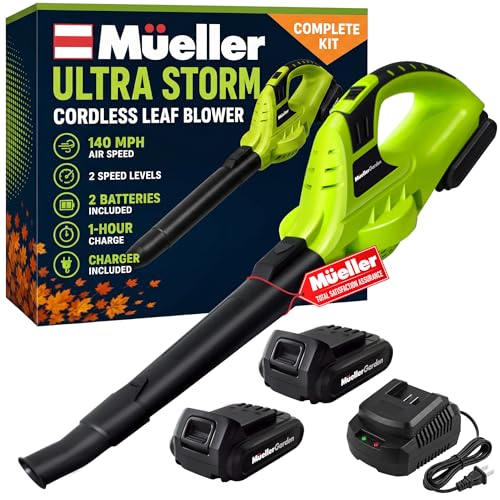
- 1200W brushless motor delivers up to 700 CFM and 200 MPH
- Includes two 5.2Ah batteries and a fast charger
- Three speed modes adapt to dusting or heavy clearing
- Claimed runtime reaches up to 160 minutes on low speed
Cons
- Weighs 7.7 pounds, which may tire arms during long tasks
- Runtime drops to 40 minutes at maximum speed setting
Pros
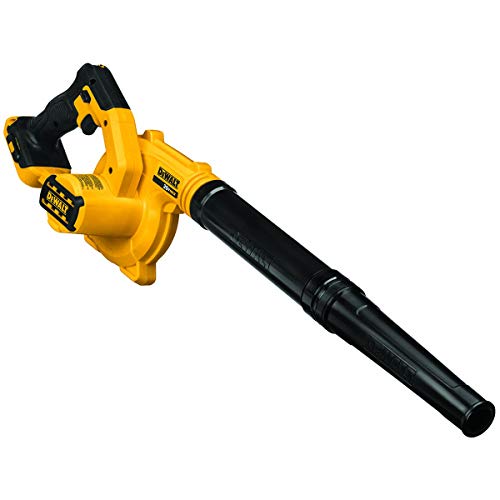
- Lightweight 2.5-pound design fits into tight spaces
- 3-speed variable switch plus variable speed trigger
- Trigger lock-on reduces hand fatigue during continuous use
- Includes 3 nozzle attachments for different clearing tasks
Cons
- Sold as a bare tool without battery or charger
- 100 CFM airflow is strictly intended for jobsite debris

Pros
- Includes two 20V 3000mAh rechargeable batteries
- Motor reaches up to 24,000 RPM for spot tasks
- Air velocity up to 55 MPH safely blows off vehicle water
- Compact handheld build reduces arm fatigue
- Round nozzle concentrates airflow into tight spaces
Cons
- Rated top speed of 55 MPH is limited for heavy yard work
- Brushed DC motor rather than brushless design
High-CFM Yard Clearance vs. Focused Jobsite Blower Performance
Cubic feet per minute (CFM) dictates how broadly and efficiently a tool can sweep large outdoor piles, whereas low-CFM blowers specialize in directional, confined cleanup. When evaluating leaf blowers, air volume determines the width of the swath you clear with each pass.
The Leaf Blower Cordless, New Upgraded 1200W Brushless lists an advertised 700 CFM output and a wind speed of 200 MPH. This level of airflow is intended for dense, wet leaves, driveway sweeping, and winter snow. In contrast, the DEWALT 20V MAX Blower, 100 CFM Airflow delivers 100 CFM. While 100 CFM cannot push deep grass clippings across an open lawn, it allows controlled cleanup on jobsites, clearing mortar joints, or sweeping dust off workbenches without creating an unmanageable airborne dust cloud. Buyers looking for the most powerful cordless blowers for lawn debris should prioritize CFM over narrow nozzle speed.
Battery Kits and Motor Types: Brushless Motors vs. Compact Brushed Units
Complete multi-battery packages remove the surprise cost of buying power packs separately, but your choice of motor technology directly affects energy efficiency and sustained tool life. Brushless designs generally run cooler and draw battery power more efficiently than traditional brushed motors.
Both the orange Leaf Blower Cordless, New Upgraded 1200W Brushless and its counterpart Leaf Blower Cordless, New Upgraded 1200W Brushless feature 1200W brushless motors and include two 5.2Ah batteries alongside a fast charger. The manufacturer claims up to 160 minutes of runtime on low speed and 40 minutes on high speed, though real-world runtime under heavy continuous load will vary. Meanwhile, the Bullseye Blower Cordless Leaf Blower relies on a 350W brushed DC motor running at up to 24,000 RPM, paired with two 20V 3000mAh packs. While adequate for targeted tasks like car drying and patio joints, brushed motors generate more internal friction and heat during extended sessions.
A different consideration applies to the DEWALT DCE100B, which is sold as a bare tool. If you already own compatible 20V MAX batteries, buying bare saves money. However, if you do not already own the charger and battery platform, adding them separately substantially increases the overall purchase price.
New Blowers: Frequently Asked Questions
What is the difference between CFM and MPH when comparing new blowers?
CFM (cubic feet per minute) measures the total volume of air emitted, which determines how wide an area of debris you can move simultaneously. MPH (miles per hour) measures the velocity of that air stream, which determines how effectively the tool can dislodge wet, compacted leaves or heavy dirt.
Does a bare-tool blower include batteries and a charger?
No. A bare tool, such as the DEWALT DCE100B, includes only the blower unit and standard nozzle attachments. Batteries and charging docks must be purchased separately or shared from compatible power tools in the same brand ecosystem.
How should buyers interpret manufacturer battery runtime claims?
Advertised runtimes represent testing under minimal load at the lowest available speed setting. Running a blower continuously on maximum power to move wet yard debris will deplete battery reserves considerably faster than the manufacturer's maximum advertised figure.
How to Choose the Right Blower for Your Yard or Workshop
Choosing between these options depends primarily on your intended workspace, typical debris weight, and whether you need an all-inclusive battery kit out of the box. High-volume yard clearing requires substantial airflow and battery capacity, whereas workshop maintenance and automotive drying benefit from lightweight bodies and precision nozzle attachments.
For standard residential lawn care and moving wet foliage, the Leaf Blower Cordless, New Upgraded 1200W Brushless provides the strongest overall value by supplying dual high-capacity batteries and an advertised 700 CFM rating. Its primary limitation is the lack of extensive independent reliability data and the bulkier frame typical of high-output blowers. For contractors, woodworkers, or homeowners seeking a nimble tool for cleaning machinery and tight workspaces, the DEWALT 20V MAX Blower, 100 CFM Airflow serves as a more compact and precise alternative, provided you already own compatible DEWALT 20V batteries.