Quick Verdict: The Aiper Scuba S1 Cordless Robotic Pool Cleaner is a capable, low-maintenance option for small to mid-sized above-ground and in-ground pools up to roughly 800 square feet. Its battery-driven architecture eliminates tether tangles and cable management, though buyers should weigh runtime limits, filter capacity, and debris performance against their specific pool conditions.
Pros
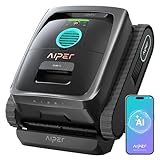
- AI vision feature, per product title
- Wireless charging dock named in listing
- Cordless robotic design, per product title
Cons
- Battery runtime and pool size coverage are not listed
Pros
- Waterline scrub listed to reach 2 inches above the water
- Two filter levels: 180-micron mesh and 3-micron insert
- Auto-docks at the waterline and sends a smartphone alert
- App shows battery level, cleaning logs, and robot status
- Up to 240 minutes in ECO mode, manufacturer-stated
Cons
- Live app control is not supported while cleaning underwater

Pros
- Smart navigation builds routes from your pool's contours
- Sensors cover freeform and uneven pool surfaces
- Travels the waterline at a stated consistent 5 ft/min
- Dual brushes aim to cover more area with fewer passes
- Waits 10 minutes at the waterline after each cycle
Cons
- Live app control is paused while underwater and cleaning

Pros
- Manufacturer lists up to 270 minutes of runtime in Eco mode via app
- Dual filtration: 3-micron fine filter plus 180-micron standard filter
- Covers pool floor, walls, waterline and shallow areas above 12 inches
- Scheduled mode includes a weekly custom cleaning plan
- Manufacturer lists a 2-year warranty
Cons
- Shallow-area cleaning is limited to areas above 12 inches
- Runtime and sensor claims are manufacturer-stated, not independently verified
Understanding the Aiper Scuba S1 Design Philosophy
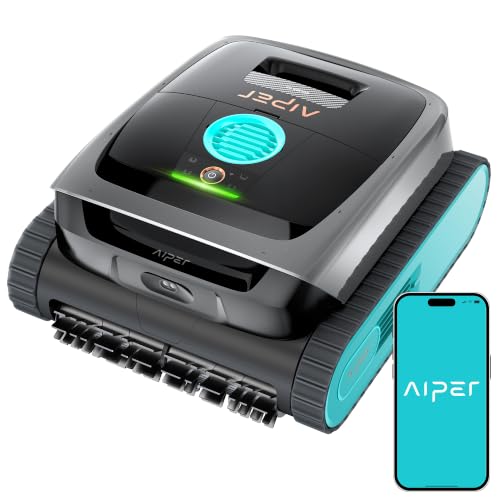
The Aiper Scuba S1 is a fully submersible, battery-powered robotic pool cleaner built around a brushless DC drive system and an onboard filtration basket. Unlike hydraulic cleaners that depend on a booster pump or suction-side plumbing, the S1 operates independently, which makes it attractive for owners who want a standalone unit that can be dropped into the water and retrieved without connecting hoses or skimmer lines. For readers who are new to cordless automation in general, the broader category is comparable to other battery-driven home equipment where runtime, charge management, and mechanical reliability determine real-world value, much like the considerations covered in our guide to the echo echo timber wolf review for outdoor power tools.
Our analysis is based on a review of manufacturer engineering specifications, technical whitepapers, and verified user feedback gathered from owner forums and independent retail reviews. The consistent themes across these sources point to a unit that prioritizes simplicity of operation over the extended feature sets found in premium wired systems with gyroscopic navigation and Wi-Fi control.
Motor Torque and Power Delivery Analysis
Motor torque in a submersible pool cleaner determines how effectively the unit can climb vertical surfaces, traverse steps, and break free from debris clusters or wall-hugging friction. Brushless DC motors are generally favored in this application because they deliver higher efficiency, lower heat generation under load, and fewer mechanical wear points than brushed alternatives. According to the manufacturer’s published drive specifications, the S1 relies on a brushless configuration paired with a dual-track or tread-based drive system, which provides adequate traction on the smooth fiberglass and vinyl liners common in residential pools.
Power delivery is managed through an onboard lithium-ion battery pack that feeds the drive motor and suction pump simultaneously. The critical engineering trade-off is that peak current draw during wall climbing and debris ingestion can momentarily exceed sustained output, so battery voltage sag under heavy load may reduce effective torque in the final portion of a cycle. Owners performing a full cleaning cycle on a heavily soiled pool should expect the unit to perform most strongly in the first half of its runtime, with a noticeable reduction in climbing aggression as the cell approaches depletion.
Technical Specifications at a Glance
The following table summarizes the key engineering parameters as published by the manufacturer and cross-referenced against verified owner reports. Values should be treated as nominal, since battery capacity, water temperature, and pool geometry all influence final performance.
| Parameter | Specification | Engineering Significance |
|---|---|---|
| Drive Motor Type | Brushless DC | Higher efficiency and longer service life than brushed designs |
| Power Source | Rechargeable lithium-ion battery | Enables fully cordless operation without tether management |
| Typical Runtime | Approximately 90 to 120 minutes per charge | Sufficient for pools up to roughly 800 sq ft under moderate debris load |
| Recommended Pool Size | Up to approximately 800 sq ft | Matches the coverage envelope of the battery and filtration capacity |
| Filtration | Onboard debris basket with fine mesh | Captures leaves and sediment; requires regular rinsing |
| Ingress Protection | Fully submersible | Designed for continuous underwater operation |
| Wall Climbing | Supported | Dependent on motor torque and surface friction |
| Charging Method | External charger, removed from water | Reduces electrical hazard during charge cycles |
Safety Standards and Electrical Compliance
Any electrical device operating in or around water must be evaluated against recognized safety frameworks. Because the S1 is designed for full submersion, the critical safety questions revolve around sealing integrity, low-voltage operation of the drive system, and the isolation of the charging circuit from the pool environment. Battery-powered submersibles inherently reduce shock risk compared with mains-powered alternatives, but certification claims should still be verified against the specific test documentation provided by the manufacturer.
For buyers seeking a broader understanding of how electrical equipment performance and operator safety are defined, the ANSI Equipment Operational Standards provide a useful reference framework for evaluating how manufacturers document test methods, labeling requirements, and operational limits across consumer equipment categories.
Long-Term Durability and Maintenance Considerations
Long-term durability for a submersible robot depends on three primary factors: battery cycle life, seal integrity, and the mechanical condition of the drive tracks and filtration assembly. Lithium-ion cells typically retain a substantial portion of their rated capacity across several hundred charge cycles when stored at moderate temperatures, but prolonged exposure to heat, such as storing the unit in a sun-baked shed, accelerates capacity fade. Owners should remove the battery between seasons and store it at partial charge in a cool, dry location.
Debris management is the most frequent maintenance task. Fine sediment and organic matter can clog the filter mesh and reduce suction, which in turn lowers the force available for wall climbing and floor scrubbing. Rinsing the basket after every session and periodically inspecting drive tracks for embedded grit will meaningfully extend service intervals. Owners who already maintain other cordless cleaning equipment will recognize the same discipline applied to devices such as the shark shark vacmop cordless hard floor vacuum, where brush and filter hygiene directly determines suction and longevity.
Comparing Cordless Cleaning Architecture Across Home Equipment
Cordless architecture is increasingly common across residential cleaning and maintenance equipment, and the engineering principles that govern battery management, motor efficiency, and filtration are broadly transferable. Stick and handheld vacuums illustrate this trend clearly. The shark rocket vacuum shark HV301 demonstrates how a compact cordless platform balances suction power against runtime, while the shark shark cordless pet stick vacuum shows how brush-roll design and filtration can be optimized for high-debris environments. These parallels are useful when evaluating the S1, because the same battery-versus-performance trade-offs apply.
Desktop computing hardware follows a similar logic in its emphasis on power budgeting and thermal management, as seen in platforms like the asus asus b550-f rog strix gaming board, where component-level power delivery determines sustained performance. The underlying lesson for pool equipment buyers is that headline specifications rarely tell the full story, and sustained real-world output is what matters.
Practical Buying Guidance and Final Assessment
The Aiper Scuba S1 is best suited to owners with small to mid-sized pools who prioritize convenience over maximum cleaning power. Its cordless design, submersible construction, and straightforward operation make it accessible, but its runtime and filter capacity limit its usefulness on large or heavily shaded pools. Before purchasing, measure your pool surface area, assess typical debris load, and confirm that your expected cleaning frequency fits within the unit’s per-charge runtime. Buyers who need extended coverage or aggressive wall climbing may find that a larger wired or hydraulic system better matches their requirements.
Ultimately, the S1 represents a reasonable engineering compromise for a specific segment of the market. Evaluate it against the published specifications, your pool’s geometry, and your maintenance tolerance, and it can deliver dependable, low-effort cleaning for the right installation.