Quick Answer
Motherboard diagnostic speakers emit POST beep codes during pre-boot initialization before video subsystem activates. Small piezo buzzers quickly isolate CPU, RAM, and GPU faults when displays stay black. Cheap hardware provides reliable diagnostic telemetry on motherboards lacking debug LEDs or code displays, ensuring rapid hardware fault isolation.

Pros
- Four PCIe 5.0 x16 slots listed for multi-GPU use
- Four PCIe 5.0 x4 M.2 slots, per listing
- Dual USB4 Type-C ports and dual 10GbE LAN
- Wi-Fi 7 with directional antenna, per listing
- Up to 2TB ECC R-DIMM capacity, per listing
Cons
- Uses ECC R-DIMM memory, which narrows memory choices
- AI and multi-GPU performance claims are not independently verified

Pros
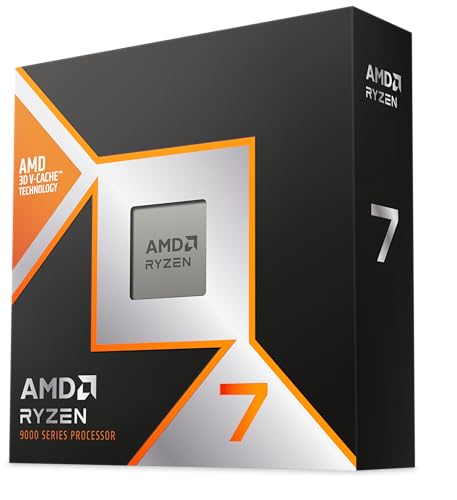
- Very strong CPU specs for gaming and productivity in one chip.
- High-end motherboard feature set with PCIe 5.0, USB4, and Wi-Fi 7.
- DDR5 support with high overclocking headroom on the motherboard.
- Integrated Radeon Graphics adds basic display capability if a discrete GPU is not installed.
Cons
- CPU cooler is not included, so buyers need to budget for a compatible cooling solution.
- 170W default TDP suggests higher cooling and power demands than lower-wattage processors.
- This is an AM5 platform product, so it is not compatible with older AM4 components.
Overview: The Micro Center AMD Ryzen 9 9950X3D Processor with MSI MAG X870E Tomahawk Motherboard is a premium AM5 bundle built for users who want top-tier CPU performance and a feature-rich platform in one purchase. The processor brings 16 cores, 32 threads, and Zen 5 architecture, while the motherboard adds an ATX layout with modern expansion and connectivity.
Performance and features: In real-world use, this combination is aimed at demanding gaming, content creation, and heavy multitasking. The CPU offers a 5.7 GHz max boost and 144 MB of combined cache, while the motherboard supports DDR5 memory, PCIe 5.0, dual PCIe 5.0 M.2 slots, USB4, 5G LAN, and Wi-Fi 7 for a fast and flexible build.
Drawbacks to consider: The processor does not include a cooler, and its 170W default TDP means a strong thermal solution is important. Because it is an AM5-based system, it also requires compatible DDR5 memory and is not a fit for older AM4 setups.
Verdict: This bundle makes the most sense for enthusiasts who want a high-end gaming and productivity foundation with modern connectivity and upgrade headroom. It is best suited to builders who value performance, fast storage support, and a premium motherboard feature set.

Pros
- 16GB DDR4 RAM and 1TB PCIe M.2 NVMe SSD (listed)
- Intel Core i5-12400F, 6 cores and 12 threads
- Wired keyboard and mouse combo included
- Windows 11 Home pre-installed, per listing
- Dual-monitor support via HDMI and DVI, per listing
Cons
- Entry-level GT 1030 graphics limit demanding workloads
- Listing shows no customer reviews yet
Why Motherboard Diagnostic Speakers Are Still Useful
A motherboard diagnostic speaker is a minimal audio output driven directly by the firmware during Power-On Self-Test (POST). It needs no GPU, display controller, operating system, or storage. It depends only on a powered chipset, a CPU that can fetch instructions from the reset vector (0xFFFFFFF0 on x86), and enough initialized logic to toggle a single signal line. That independence is why the speaker remains one of the lowest-level fault indicators in a modern system, even with debug LEDs, two-digit Q-Code displays, and UEFI diagnostics now common on enthusiast boards.
What the Speaker Does
During early POST, firmware checks core subsystems in sequence: CPU registers, ch
For related maintenance and equipment benchmarks, review our technical guides on best gaming pcs, examine multitasking gaming desktops, and compare streaming pc builds. You can also reference our analyses on vr desktop performance and high-performance gaming pcs. For industry engineering standards, consult IEEE Computer Society benchmarks.