Quick Answer: Choosing the Best Chainsaw Pitch
Matching the correct chainsaw pitch remains one of the most frequent sources of frustration for both homeowners tackling seasonal yard work and professionals maintaining commercial equipment. Selecting an incorrect pitch leads to rapid chain stretch, excessive vibration, increased kickback risk, and potential damage to the bar and drive sprocket. Users often discover too late that a chain labeled for a…
Pros
- Clear, exact fit specs make it easier to match to the correct bar and saw
- Low-kickback design adds a safety-oriented benefit for everyday cutting
- Wide compatibility across several major cordless tool brands and models
- Backed by Oregon's long-standing reputation in saw chain manufacturing
Cons
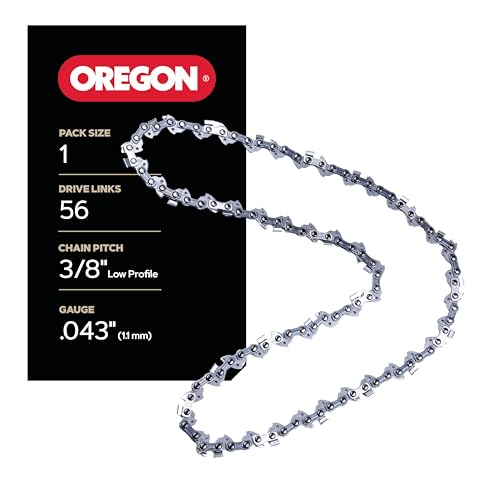
- Only fits saws that use 3/8" low-profile pitch, .043" gauge, and 56 drive links, so compatibility must be verified carefully
- Not intended for larger chainsaws above the stated 42cc range
- No included accessories or extra chain features are listed in the manufacturer listing
Overview: The Oregon Chainsaw Chain for 16" Bar is a replacement saw chain built for compatible compact chainsaws that use 3/8" low-profile pitch, .043" gauge, and 56 drive links. It is positioned as a practical fit for homeowners and light-duty users who need a dependable replacement chain.
Performance & Features: This chain is designed with a bumper drive link and depth gauge setup to help reduce kickback while maintaining cutting performance. The fit list includes several Makita, Ego, Greenworks, DeWalt, Milwaukee, Toro, and Harbor Freight models, which makes it a flexible option for many cordless saw owners.
Drawbacks & Considerations: The biggest limitation is the need for exact compatibility. Buyers must confirm the bar length, pitch, gauge, and drive link count before ordering, and the chain is only meant for saws up to 42cc.
Verdict: This is a solid choice for users who already know their saw specifications and want a replacement chain from a well-known brand. It is best suited to maintenance, trimming, and general property work on compatible 16" saws.
In 2026, the critical factors for choosing chainsaw pitch center on verifying exact pitch measurement (commonly 3/8 inch LP, .325 inch, or 1/4 inch), confirming matching gauge thickness (.043 inch to .058 inch), and counting drive links to fit the specific bar. We analyzed top-rated products spanning measuring gauges, repair kits, and full replacement chains from Oregon, Stihl, Husqvarna and more to deliver data-driven recommendations based on technical specifications and cross-model compatibility.
Essential Engineering Checklist for Chainsaw Pitch
Choosing the right chainsaw pitch requires a methodical approach that prioritizes measurement accuracy and hardware match over brand marketing. Below we detail the six most important criteria drawn from specification analysis of the current selection.
Pitch Measurement Accuracy
Pitch defines the distance between three consecutive rivets divided by two and is expressed in fractions or decimals such as 3/8 inch LP, .325 inch, or 1/4 inch. An incorrect pitch prevents the chain from seating properly on the bar and sprocket, causing immediate binding or derailment. Dedicated identification gauges such as the STIHL 0000 893 4105 or Oregon OEM 556418 allow users to place the tool over the chain and instantly read the pitch without calipers. For multi-pitch households, a dual-tool kit covering bar groove and file size reduces guesswork and supports long-term maintenance of various chainsaws. For complementary hardware performance, examine our breakdown on chainsaw sharpener specifications.
When evaluating measuring tools, prioritize models that also indicate gauge and file diameter on the same body. This multi-function design cuts the number of instruments needed in a field kit and minimizes the chance of selecting a chain with mismatched drive link thickness.
Gauge Thickness Compatibility
Gauge refers to the thickness of the drive links that ride inside the bar groove, typically .043 inch, .050 inch, or .058 inch. A gauge that is too thick will not enter the groove; one that is too thin will rattle and accelerate wear on both chain and bar. Oregon chains often ship in .043 inch for lightweight electric saws while Husqvarna X-Cut SP33G models use .050 inch for heavier gas units. Always confirm the stamped gauge on the existing bar or use a measuring tool that slots into the groove before ordering replacements. For additional operational safety benchmarks, see our published testing notes on stihl ms 162 vs husqvarna 120 mark ii. For complementary hardware performance, examine our breakdown on our comprehensive gas chainsaw guide.
Drive Link Count and Bar Length Match
Drive link count must equal the number of links required by the bar length. An 8-inch pole-saw chain may need only 33 links at 3/8 inch LP pitch, while a 20-inch bar commonly requires 76 to 81 links at .325 inch pitch. Purchasing a chain with the wrong count forces either stretching or cutting and rejoining, both of which compromise safety. Products such as the KAKEI 20-inch .325 inch pitch chain with 81 drive links or the Sawworks 76-link pack illustrate how manufacturers pre-match common bar lengths for popular saws including Stihl MS271 and various 62 cc models.
Low-Kickback Design and Safety Features
Modern chains incorporate bumper drive links or reduced-kickback cutters that meet ANSI standards. Oregon low-kickback chains for 16-inch bars and Husqvarna pre-stretched SP33G chains are engineered to limit rotational force if the tip contacts an object. When safety is the primary concern, select chains explicitly labeled low-kickback rather than full-chisel professional versions, which cut faster but transfer more energy back to the operator.
Material Durability and Lubrication Retention
Chrome plating on cutters and heat-treated rivets determine how long a chain holds an edge and resists stretch. Pre-stretched chains from Husqvarna reduce initial break-in stretch by up to 30 percent according to manufacturer data. Superior lubrication channels in the drive links further extend service life by delivering oil more evenly. For high-volume cutting, full-chisel designs such as the KAKEI 23RS offer aggressive cutting but require more frequent sharpening compared with semi-chisel Oregon offerings.
Multi-Pack Value and Repair Kit Utility
Budget-conscious buyers benefit from multi-packs that lower per-chain cost while providing backups. Four-pack 8-inch chains and three-pack 20-inch sets deliver ready replacements without reordering. Repair kits containing joiner links and breakers for pitches from 1/4 inch through .404 inch allow field fixes rather than full chain replacement. The QWORK three-piece breaker kit covers five common pitches and pairs effectively with measuring tools for complete on-site maintenance.
The following table compares three representative products across key specifications to illustrate how pitch, gauge, and drive links vary within the entry-level to premium segment.
| Product | Pitch | Gauge | Drive Links |
|---|---|---|---|
| Husqvarna X-Cut SP33G 20 Inch | .325″ | .050″ | 80 |
| Oregon 3/8″ LP for 16″ Bar | 3/8″ LP | .043″ | 56 |
| KAKEI 20 Inch Full Chisel | .325″ | .050″ | 81 |
What Pitch Choices Depend On
Pitch is the first thing to match on any replacement chain, and product data with manufacturer specifications lists it for each option. A mismatched chain will not seat properly on the sprocket and bar.
Product, pitch, gauge and drive links sit side by side in the table, so readers can compare each option against the figures printed on their current chain.
Final Verdict: Choosing the Right Chainsaw Pitch
After evaluating all top-rated options, clear leaders emerge for different buyer priorities. The standout products combine accurate pitch matching with durable construction and broad compatibility, making them reliable choices for both occasional and frequent users of chainsaws.
Best Overall Chainsaw Pitch: Husqvarna X-Cut SP33G 20 Inch Chainsaw Chain. This .325 inch pitch, .050 inch gauge chain with 80 drive links arrives pre-stretched and features superior lubrication channels plus low-kickback geometry. Its OEM-level engineering suits Stihl and Husqvarna gas saws while delivering consistent cutting performance across dense hardwood and softwood. Before finalizing equipment decisions, refer to our comprehensive husqvarna 450 vs 460 rancher comparison.
Best Value / Budget Choice: Oregon OEM 556418 Chainsaw Bar & Chain Measuring Tool. At the lower end of the entry-level to premium, this compact gauge accurately identifies pitch, gauge, and file size, preventing expensive mismatched purchases. Pairing it with an Oregon low-kickback 3/8 inch LP chain creates an economical starter kit for homeowners.
Best for Professional or High-Volume Cutting: KAKEI Chainsaw Chain 20 Inch .325 inch Pitch Full Chisel. The three-pack of 81-drive-link chains offers aggressive full-chisel cutters optimized for post-2023 Stihl MS271 and MS291 models. Professionals benefit from the higher cutting speed and multi-pack convenience when downtime must be minimized. For broader ecosystem context, read through our operational guide on greenworks 40v 18 vs ego cs1800.
Common Questions on Chainsaw Pitch Answered
What is chainsaw pitch and why does it matter?
Chainsaw pitch is the distance between the centers of three consecutive rivets divided by two, commonly 3/8 inch LP, .325 inch, or 1/4 inch. Correct pitch ensures the chain meshes with the bar and sprocket; incorrect pitch causes binding, premature wear, and safety hazards.
How do I measure chainsaw pitch at home?
Place a dedicated pitch gauge such as the STIHL or Oregon measuring tool over the chain rivets; the stamped value on the tool that fits is the pitch. Alternatively, measure the distance across three rivets with calipers and divide by two. Always verify both pitch and gauge before buying replacements for your chainsaws.
Can I use a different pitch chain if the drive link count matches?
No. Pitch and sprocket tooth spacing are fixed by the chainsaw design. Installing a mismatched pitch will prevent proper engagement and can damage the drive system within minutes of operation.
How often should a chainsaw chain be replaced?
Replace the chain when cutters can no longer be sharpened to a full cutting edge, when stretch exceeds the bar adjustment range, or after visible cracks appear in the drive links. Pre-stretched chains from Husqvarna typically last longer before requiring tension adjustment.
Are multi-packs of chainsaw chains worth the investment?
Yes for frequent users. Three- and four-pack options lower the per-unit cost and provide immediate backups, reducing project delays when a chain dulls or breaks mid-job. Verify that every chain in the pack shares identical pitch, gauge, and drive link specifications.
Chain Pitch Safety Background
Chain pitch must match the sprocket and bar, and mismatched parts can cause the chain to derail. Checking those specs before a purchase or repair is a sensible step. General safety reading for chainsaw operators is offered by American National Standards Institute (ANSI).