Quick Verdict: Backpack vs Handheld Leaf Blower
Backpack blowers win for heavy wet leaves, deep fall cleanup, acreage, and long sessions because higher CFM and better weight distribution move debris faster. Handheld blowers win for quiet suburban maintenance, patios, garages, small lawns, and grab-and-go ease, especially cordless models with low noise, minimal storage, and no fuel mixing required.

Pros
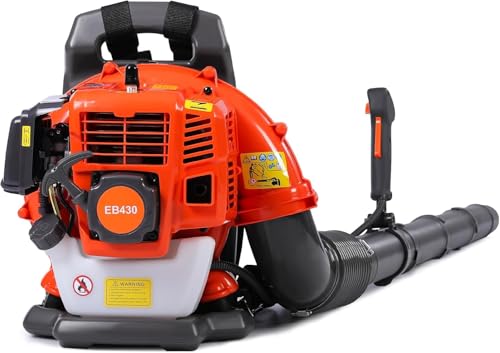
- Equipped with a 64.8cc 4-MIX gas engine
- Engineered for low vibration levels during prolonged wear
- Adjustable blower tube accommodates varied operator heights
- Durable backpack harness supports heavy-duty outdoor cleanups
Cons
- Weighs over 24 pounds before adding fuel
- Requires ongoing gas engine maintenance and fuel mixing

Cons
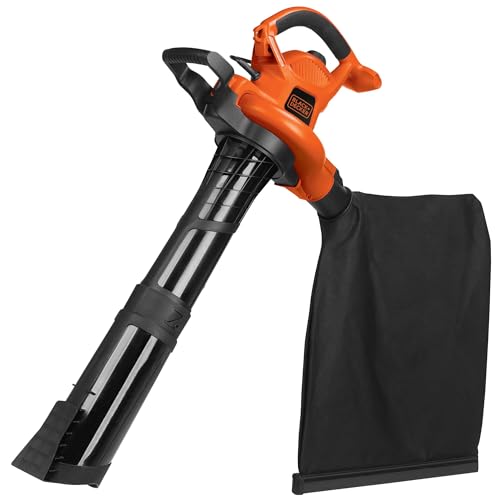
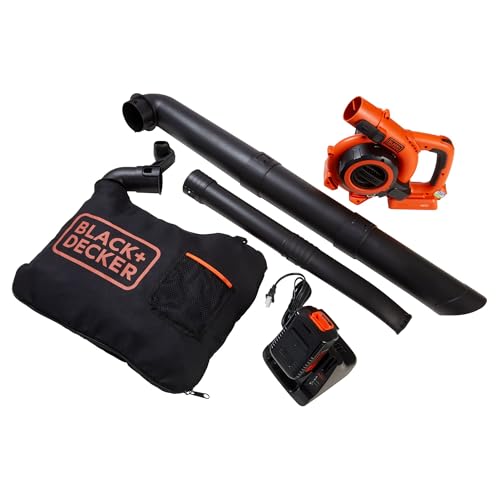
- Feature details are missing from the listing
- Listed weight of 0.000625 pounds appears to be a data error
Backpack vs handheld leaf blower is ultimately a clearing-capacity question: how much leaf mass must you move, how long must the blower run, and how much noise, weight, maintenance, and storage hassle are you willing to accept? In our comparative analysis, backpack blowers rank highest for wet leaves, thick oak and maple piles, long driveways, acreage, and commercial-style cleanup. Handheld blowers rank highest for quick weekly touch-ups, decks, patios, sidewalks, garages, small suburban lots, and users who prioritize simplicity over brute force.
If your main goal is quiet, battery-powered maintenance around a neighborhood property, start with the broader category of cordless leaf blowers. Modern handheld cordless models are no longer weak “dust movers”; many now reach practical airflow numbers that handle dry leaves, grass clippings, pine needles, and light debris with far less fuss than gas equipment. But when leaves are wet, compacted, or spread over an acre or more, the backpack architecture still has a decisive operational advantage.
Backpack vs Handheld Leaf Blower: Clearing Capacity Ranked
For pure clearing capacity, the ranking is straightforward:
- Gas backpack blower: highest sustained clearing force, best for wet leaves, acreage, wooded lots, and commercial routes.
- Battery backpack blower: strong airflow with quieter operation and no fuel mixing, best where emissions and maintenance matter.
- High-output cordless handheld blower: best balance for suburban homeowners, patios, driveways, and small to medium lawns.
- Gas handheld blower: useful where refueling is preferred over charging, but louder and more maintenance-heavy than cordless.
- Compact handheld sweeper: ideal for porches, garages, dust, grass clippings, and very light debris, not serious fall cleanup.
The most important distinction is not simply “backpack equals powerful” and “handheld equals weak.” The real difference is how the machine manages air volume, airspeed, operator fatigue, runtime, and control. A backpack blower places the motor or engine, fan housing, and fuel or battery mass on your back. A handheld blower places that load in your hand, wrist, elbow, and shoulder. Over five minutes, that may not matter. Over forty-five minutes, it matters a lot.
| Feature / Specification | Option A | Option B | The Operational Advantage |
|---|---|---|---|
| Airflow & Volume (CFM) | High CFM Rating | Moderate CFM | Higher volume moves larger mats of saturated wet leaves faster |
| Air Velocity (MPH) | Targeted High MPH | Standard MPH | High airspeed scours stubborn debris stuck to asphalt and turf |
| Decibel Level (Noise) | Residential Quiet | Commercial Standard | Lower decibels comply with local neighborhood noise restrictions |
| Maintenance & Storage | Push-Button Instant | Fuel Mixing Required | Lithium packs eliminate carburetor varnish and off-season winterization |
Core Difference: Weight on Your Back vs Weight in Your Hand
The most practical difference between a backpack and handheld leaf blower is weight distribution. A backpack blower may weigh far more on paper, but the load is carried through shoulder straps, a padded harness, and often a hip or chest strap. A handheld blower is lighter, but the entire machine is cantilevered from one arm.
Backpack Blower Weight Distribution
A backpack blower typically places the engine or motor behind the operator. The tube is held in one hand while the main mass sits on the back. This setup improves comfort during extended clearing because your torso and legs carry the load rather than your wrist. Engineering specifications indicate that this design also allows larger impellers, bigger engines or battery systems, and higher airflow without making the tool impossible to hold.
Best for: 1 to 5+ acres, wooded lots, long driveways, heavy fall cleanup, wet leaves, roadside ditches, parking areas, and users who clear for more than 20 minutes at a time.
Handheld Blower Weight Distribution
A handheld blower is built for immediacy. Pick it up, pull the trigger or start the engine, and clear the surface. Cordless handheld units are especially convenient because there is no choke, primer bulb, fuel can, or pull cord. The downside is wrist load. Even a relatively light blower can feel tiring when the nozzle is constantly angled, swung, lifted, and repositioned.
Best for: patios, decks, porches, garages, sidewalks, driveways, small lawns, weekly maintenance, grass clippings after mowing, and properties up to about 1/2 acre with moderate leaf load.
Airflow Physics: CFM vs MPH Explained
Leaf blower marketing often highlights the biggest number on the box, but clearing performance depends on the relationship between CFM, MPH, nozzle design, and how long the blower can sustain output. CFM and MPH are related, but they do different jobs.
CFM: The Volume That Moves Leaf Piles
CFM stands for cubic feet per minute. It measures air volume. Think of it as the size of the invisible air shovel. Higher CFM moves more total material, especially when leaves are piled, wet, matted, or spread across turf.
Backpack blowers commonly operate in the 700 to 1000+ CFM class, with professional gas models often occupying the upper end. Handheld blowers commonly fall around 400 to 750 CFM, with premium cordless handheld models now pushing into the lower end of backpack territory for short bursts.
For wet leaves, CFM matters more than most homeowners realize. Saturated leaves stick together and form a mat. A narrow, fast jet of air may peel the top layer, but a broad, high-volume stream moves the entire mass. That is why a backpack blower can often clear in one or two passes what a handheld blower requires repeated passes to move.
MPH: The Speed That Breaks Debris Loose
MPH measures air velocity. It matters when debris is stuck to pavement, embedded in grass, packed into cracks, or trapped along curbs. Higher airspeed helps dislodge acorns, pine needles, wet leaf edges, and compacted debris. MPH is the “chisel,” while CFM is the “shovel.”
A blower with very high MPH but low CFM can feel powerful at the nozzle yet still struggle to move a wide blanket of leaves. A blower with high CFM but modest velocity may move dry leaves well but lack the scouring effect needed on damp asphalt. The best backpack blowers combine both: high volume and enough velocity to break material loose.
This power architecture resembles other outdoor equipment debates, where engine displacement, torque delivery, chain speed, and ergonomics all matter together, not separately. For a related look at brand and platform differences in outdoor power tools, see our comparison of stihl vs husqvarna outdoor equipment.
Performance Ranking by Yard Size
Choosing between backpack and handheld should begin with property size and debris type, not brand loyalty. A homeowner with a 1/4-acre lot and two ornamental trees does not need the same tool as someone with three acres under mature oaks.
Patios, Decks, Garages, and Small Urban Lots
Winner: handheld blower. For small hard surfaces, a backpack blower is usually unnecessary. A cordless handheld blower is faster to grab, easier to store, quieter, and less intimidating near vehicles, outdoor furniture, mulch beds, and neighbors. If the job takes under seven minutes, handheld convenience dominates.
Suburban Yards Up to 1/2 Acre
Winner: handheld for routine maintenance; backpack for heavy seasonal leaf fall. A high-output cordless handheld blower is the best everyday choice for driveways, sidewalks, patios, and normal mowing cleanup. But if the property has large deciduous trees and wet fall conditions, a backpack blower can cut cleanup time dramatically.
1 to 2 Acres With Mature Trees
Winner: backpack blower. Once clearing sessions regularly exceed 20 to 30 minutes, the harness advantage becomes significant. The added CFM also matters because leaves are not just being moved off a sidewalk; they are being transported across lawn zones, around landscaping, into piles, or toward wooded edges.
3 to 5+ Acres, Long Drives, and Wooded Properties
Winner: backpack blower by a wide margin. For acreage, handheld blowers become inefficient and fatiguing. A commercial-grade gas backpack or high-capacity battery backpack is the right architecture for long run cycles, high airflow, and repeated seasonal cleanup.
Wet Leaves vs Dry Leaves: Why the Winner Changes
Dry leaves are easy to move because they are light, separated, and responsive to airflow. Wet leaves are heavier, stick to turf, and form overlapping layers that behave more like a damp blanket than loose debris. That is where backpack blowers create separation from handheld models.
In dry-leaf conditions, a premium handheld blower can perform surprisingly close to a smaller backpack blower on short jobs. On a driveway or patio, the difference may be speed rather than capability. In wet-leaf conditions, high CFM becomes much more important. The blower must lift, roll, and push a heavier mass while maintaining enough velocity to break the bottom layer loose.
If you regularly wait until leaves are soaked, compacted, or layered several inches deep, buy a backpack blower. If you blow leaves weekly while they are still dry and scattered, a handheld model is often the smarter, easier tool.
Noise and Municipal Restrictions
Noise is one of the biggest practical issues in the backpack vs handheld leaf blower decision. Municipalities increasingly regulate blower noise by decibel level, operating hours, fuel type, or seasonal use. Before buying a high-output gas backpack blower, check local ordinances, especially in dense suburbs, HOA communities, and cities with electric-only equipment rules.
Decibel ratings are logarithmic, meaning small numerical differences can represent meaningful changes in perceived loudness and sound energy. A blower rated around 65 dB is dramatically more neighborhood-friendly than one operating in the high 70s or above. Gas backpack blowers often produce more objectionable low-frequency sound and carry farther across property lines than cordless handheld models.
For workplace and occupational exposure context, review the OSHA occupational noise exposure standards. Homeowners should still use hearing protection with powerful blowers, especially during long sessions, because operator-ear exposure can exceed what the bystander rating suggests.
Noise Winner
Handheld cordless blowers usually win for suburban noise control. They are not silent, but they avoid the harsher engine tone of gas units and are usually easier to operate within neighborhood expectations. Backpack blowers win clearing speed, but handheld cordless blowers win social compatibility.
Runtime: Battery Charge vs Gas Tank
Runtime depends heavily on throttle setting. Turbo mode on a cordless blower can drain a battery quickly, while moderate throttle extends usable time. Gas blowers also consume fuel faster at full throttle, but refueling is nearly instantaneous compared with battery charging.
Battery Handheld Runtime
Field runtime assessments demonstrate that cordless handheld blowers are excellent for short, frequent jobs. A single battery may be plenty for a driveway, patio, front walk, and garage. However, extended fall cleanup can require multiple battery packs. Users with heavy leaf loads often rotate two or three batteries during one session.
The practical question is not “How long does it run on low?” but “How long does it run at the power setting I actually need?” Wet leaves and deep piles push users toward turbo, and turbo shortens runtime significantly.
Battery Backpack Runtime
Battery backpack blowers improve runtime by carrying larger packs or multiple battery slots. They are a strong option for homeowners who want backpack ergonomics without gas maintenance. The tradeoff is cost. High-capacity batteries and rapid chargers can make the system expensive, especially if you want uninterrupted operation.
Gas Backpack Runtime
Gas backpack blowers remain the runtime benchmark for acreage and professional cleanup. When the tank runs dry, refueling takes minutes. For properties with heavy seasonal leaf drop, that continuous-work capability is a major advantage.
Most two-stroke gas blowers require a fuel-oil mix, commonly 50:1, though owners should always follow the specific manufacturer’s manual. Incorrect fuel ratio can cause poor performance, carbon buildup, overheating, or engine damage. Ethanol-blended fuel can also create storage problems if left untreated.
Maintenance: Carburetors, Fuel Mixing, and Lithium Battery Care
Maintenance is where many homeowners underestimate the difference between gas and cordless blowers. A gas blower can deliver excellent power for years, but it requires fuel discipline. A cordless blower requires less mechanical maintenance, but the batteries must be stored and charged correctly.
Gas Blower Maintenance
- Fuel mixing: Many two-stroke models use 50:1 gasoline-to-oil mix.
- Air filter service: Dusty fall cleanup can clog filters and reduce performance.
- Spark plug inspection: Fouled plugs cause hard starting and weak combustion.
- Carburetor storage: Old fuel can varnish carburetor passages and cause starting problems.
- Fuel stabilizer: Recommended when fuel may sit between uses.
- Winterization: Drain or stabilize fuel according to the manual before off-season storage.
Gas equipment rewards owners who maintain it. Neglect fuel quality, and the blower may become hard to start just when fall cleanup peaks.
Cordless Blower Maintenance
- No fuel mixing: Insert battery and press the trigger.
- No carburetor: Eliminates varnish-related starting issues.
- Battery storage: Store lithium packs in a cool, dry location away from extreme heat.
- Partial charge storage: Many lithium packs prefer storage around partial charge rather than fully depleted.
- Keep vents clean: Motor cooling depends on airflow through the housing.
- Protect contacts: Avoid wet storage and corrosion at terminals.
For most suburban users, cordless maintenance is simpler. For acreage users, gas still offers unmatched refuel speed and sustained output unless you invest in a large battery ecosystem.
Comfort and Ergonomics During Real Cleanup
Comfort is not just about total tool weight. It is about vibration, grip angle, trigger effort, harness quality, tube control, balance, and how often you stop to rest. A handheld blower may weigh less, but the operator supports the full working load with one side of the body. Over time, that can strain the wrist, forearm, elbow, and shoulder.
Backpack Ergonomic Advantages
- Better weight distribution for long jobs
- Less wrist fatigue because only the tube is controlled by hand
- Higher sustained output without making the tool unmanageable
- Cruise control helps reduce trigger fatigue
- Padded straps improve comfort during extended sessions
Backpack Ergonomic Disadvantages
- Slower to put on and take off
- Bulkier around gates, sheds, and vehicles
- Can feel hot during warm-weather cleanup
- Storage requires more space
- Overpowered for small patios and delicate mulch beds
Handheld Ergonomic Advantages
- Fastest grab-and-go convenience
- Easy to maneuver around furniture, planters, and vehicles
- Compact storage
- Better for short jobs and precise cleanup
- Cordless versions are simple for nearly any adult user
Handheld Ergonomic Disadvantages
- All weight sits in one hand
- Wrist fatigue increases during longer sessions
- Less comfortable for acreage
- Smaller fan and motor architecture can limit sustained clearing force
- Turbo use drains batteries quickly on cordless models
Cost Comparison: Purchase Price and Long-Term Ownership
Handheld blowers generally cost less to buy. Backpack blowers cost more because they use larger motors or engines, bigger housings, harness systems, higher airflow components, and often more durable construction. The long-term cost depends on fuel, batteries, chargers, maintenance parts, and how much time the blower saves.
Handheld Cost Profile
- Lower initial purchase price
- Lower storage requirement
- Battery versions can share packs with string trimmers, mowers, and hedge trimmers
- Replacement batteries can be expensive
- Best value when cleanup is frequent but short
Backpack Cost Profile
- Higher initial price
- Better productivity for large properties
- Gas versions require fuel, oil, filters, plugs, and maintenance
- Battery versions may require expensive high-capacity packs
- Best value when it substantially reduces cleanup time
If a backpack blower cuts a four-hour fall cleanup into two hours, the higher price may be justified quickly. If you only clear a front walk twice a week, the backpack’s extra power may sit unused.
Gas vs Battery: Which Power Source Makes More Sense?
The backpack vs handheld decision overlaps with the gas vs battery decision, but they are not the same. You can buy gas handhelds, cordless handhelds, gas backpacks, and battery backpacks. Each combination serves a different user.
Gas Backpack Blower
Best for maximum clearing capacity. Choose this if you have acreage, wet leaves, long sessions, and no local restrictions against gas blowers. It is the most powerful practical option for homeowners with large wooded properties and for professional crews.
Battery Backpack Blower
Best for high airflow with lower maintenance. Choose this if you want backpack ergonomics and stronger clearing than a typical handheld but need quieter operation, no fuel mixing, and lower routine maintenance. Budget carefully for batteries.
Cordless Handheld Blower
Best for most suburban homeowners. Choose this for quick cleanup, small to medium lots, low maintenance, quiet operation, and shared battery platforms. It is the easiest recommendation for users who value convenience.
Gas Handheld Blower
Best for users who want refuelable portability. Gas handhelds still make sense for some users, but they are noisier and more maintenance-heavy than cordless alternatives. They can be useful where battery charging is inconvenient or where the owner already maintains gas equipment.
Use-Case Recommendations
Choose a Backpack Leaf Blower If…
- You clear 1 acre or more.
- You have large deciduous trees and heavy seasonal leaf drop.
- You regularly deal with wet, compacted leaves.
- Your cleanup sessions last more than 20 to 30 minutes.
- You need 700 to 1000+ CFM class airflow.
- You maintain long driveways, roadside edges, or large open lawns.
- You value productivity more than compact storage.
- You are comfortable wearing a harness and managing a larger tool.
Choose a Handheld Leaf Blower If…
- Your yard is under about 1/2 acre.
- You mostly clear patios, decks, garages, sidewalks, and driveways.
- You want the fastest grab-and-go experience.
- You prefer quiet suburban maintenance.
- You have limited storage space.
- You want low maintenance and no fuel mixing.
- You already own compatible lithium batteries.
- Your leaf load is light to moderate and usually dry.
Where Leaf Blowers Fit in a Complete Yard-Clearing System
A leaf blower is only one part of efficient property maintenance. On wooded lots, storms and seasonal cleanup often require cutting fallen limbs before blowing leaves or debris. For that work, see our guide to gas chainsaws for yard clearing. If you already maintain saws, keeping chains sharp is just as important as engine power; our chainsaw chain sharpener guide covers that side of the equipment workflow.
The key is matching tools to stages of cleanup: chainsaw for limbs, rake or tarp for dense piles when needed, blower for transport and finishing, and mower or mulcher for leaf reduction where appropriate. A backpack blower can move more material, but even the strongest blower is not always the fastest solution for a mountain of leaves if a tarp or vacuum system is better suited.
Pro Tips for Better Clearing Efficiency
- Blow with the wind, not against it. Wind direction can matter more than a small difference in blower specs.
- Work in lanes. Move leaves in controlled strips instead of randomly chasing piles.
- Use lower throttle near mulch. Full power can scatter bark, gravel, and soil.
- Break wet leaves first. Use a short, focused blast to lift the stuck layer before pushing the full pile.
- Do not wait too long. Weekly clearing is easier than one massive wet cleanup.
- Wear hearing protection. Even quieter blowers can become fatiguing during extended use.
- Use eye protection. Blowers can launch grit, sticks, acorns, and small stones.
- Plan charging like a route. For cordless systems, rotate batteries before they are fully depleted.
- Store batteries indoors. Avoid freezing sheds and hot garages when possible.
- Think system-wide. As outdoor tools become more connected, battery platforms and scheduling routines increasingly resemble smart home yard automation decisions: the best setup is the one that fits your routine, not just the one with the biggest specification number.
Common Buying Mistakes
Mistake 1: Buying Only by MPH
High MPH sounds impressive, but without enough CFM, the blower may only move a narrow stream of debris. For leaf piles, CFM is usually the more important number.
Mistake 2: Ignoring Noise Rules
A powerful gas backpack blower can be a poor purchase if your municipality restricts gas equipment or enforces low decibel limits. Always verify local rules before buying.
Mistake 3: Underestimating Battery Needs
A cordless blower may advertise impressive output, but sustained turbo operation requires battery capacity. For fall cleanup, plan on multiple packs or a rapid charger.
Mistake 4: Buying Too Much Tool
A backpack blower may clear faster, but it is less convenient for a 90-second porch cleanup. If the tool is too bulky, you may use it less often.
Mistake 5: Buying Too Little Tool
A compact handheld sweeper may be pleasant on a patio but frustrating in a wet maple leaf dump. If fall cleanup is your main job, do not undersize the blower.
Our Final Editorial Take on Backpack Vs Handheld Leaf Blower
Backpack leaf blowers are the clearing-capacity winners. They deliver higher sustained CFM, better long-session ergonomics, and superior performance on wet leaves, large lawns, acreage, and heavy seasonal cleanup. If you have 1 to 5+ acres, mature trees, or repeated deep leaf loads, a backpack blower is the right tool.
Handheld leaf blowers are the convenience winners. They are easier to store, easier to start, better for quick jobs, and usually more neighbor-friendly, especially cordless models. If you maintain patios, sidewalks, garages, driveways, and a small to medium suburban yard, a handheld blower is the smarter everyday choice.
The best buyer decision is not the most powerful blower. It is the blower you will actually use at the right time. For heavy wet leaves and large yards, choose backpack. For quiet suburban maintenance and ease of use, choose handheld.
Carrying Style and Safety Notes
Backpack units shift weight onto the shoulders and hips, while handheld models place the load on the arms and wrists during long sessions. A neutral overview of how safety guidance for outdoor power equipment is developed can be found at American National Standards Institute (ANSI).