How to Determine Your Lawn Mowing Needs
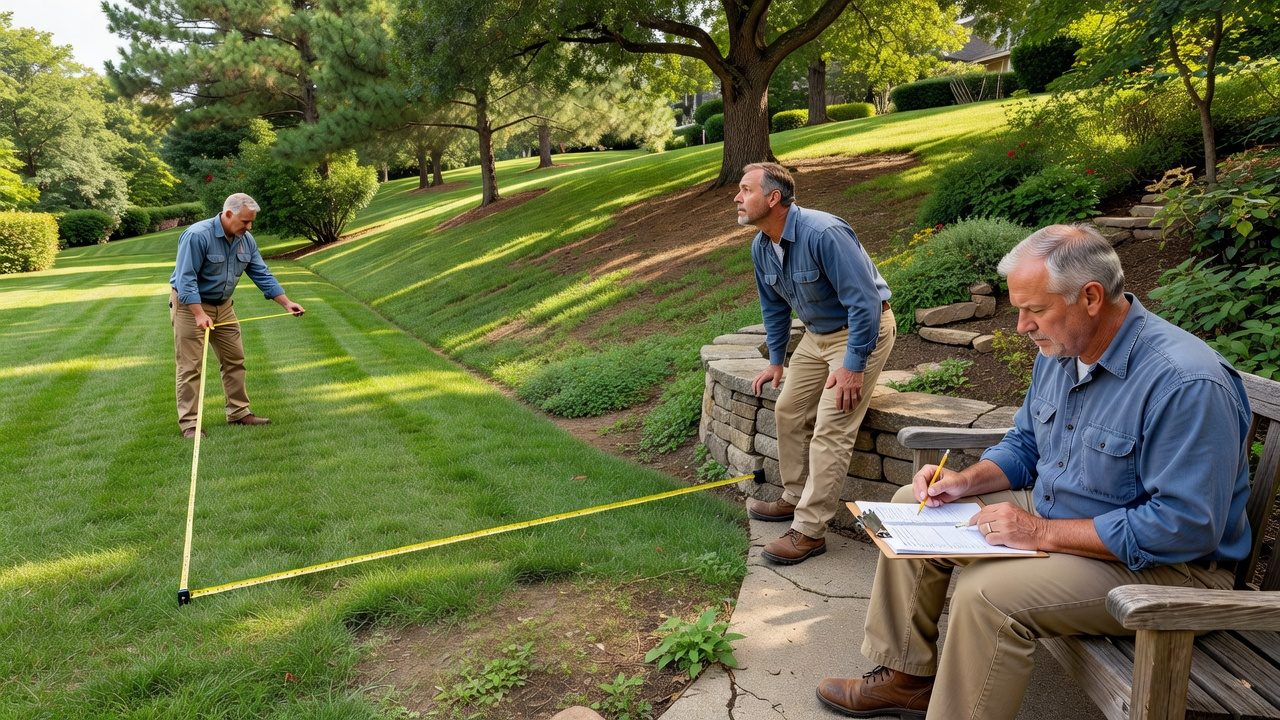
Before evaluating specific mower types, assess your unique situation. The “best” mower for a quarter-acre flat yard in the suburbs differs dramatically from the best option for a two-acre property with slopes and obstacles. Consider these four key factors:
Lawn Size
Lawn size is often the primary driver of mower selection. Small yards (under 5,000 square feet) are typically best served by push or lightweight self-propelled mowers, which are easier to store and maneuver around landscaping. Mid-sized lawns (5,000 to 15,000 square feet) benefit from self-propelled or smaller riding mowers, offering efficiency without excessive bulk. Large properties (over 15,000 square feet) nearly always require riding mowers or robotic systems to keep mowing time reasonable—typically under an hour for regular maintenance.
Terrain and Obstacles
Flat, open lawns allow flexibility across mower types. Sloped or hilly terrain, however, narrows your options significantly. Self-propelled and riding mowers handle slopes better than push models, though very steep grades (over 15 degrees) can be challenging or unsafe on some machines. Dense trees, flower beds, rock gardens, and other obstacles favor mowers with tight turning radii—push and self-propelled mowers excel here, while robotic mowers struggle without professional installation of boundary wires. For complementary field maintenance guidelines, examine our breakdown of jbl partybox club 120 vs sony srs xv500.
Physical Ability and Willingness
Pushing a conventional mower demands sustained physical effort, particularly on larger lawns or in heat. If you have mobility issues, back problems, or simply prefer minimal exertion, self-propelled, riding, or robotic mowers reduce strain significantly. Conversely, many homeowners find push mowing meditative and prefer the simplicity and low maintenance cost. For complementary field maintenance guidelines, examine our breakdown of jbl partybox club 120 vs sony srs xv500.
Budget for Purchase and Maintenance
Initial cost varies widely: quality push mowers range from $200 to $600, self-propelled models from $400 to $1,200, riding mowers from $1,500 to $5,000+, and robotic systems from $800 to $3,500. Beyond purchase price, factor in fuel costs (gas models), battery replacement (cordless electric), annual maintenance, and repair likelihood. Simpler machines have lower lifetime costs; more complex systems may face steeper repair bills outside warranty. To evaluate matched hardware tolerances, consult our detailed overview of z890 vs x870e motherboard.
Understanding the Main Types of Lawn Mowers
Push Mowers (Manual)
Push mowers require you to propel them forward by hand. They are the simplest, most affordable category, with models starting around $100–$200 for basic rotary designs. They are nearly silent, produce zero emissions, require minimal maintenance, and are ideal for small, flat lawns under 5,000 square feet. The trade-off is physical effort—mowing a quarter-acre can take 30–45 minutes of continuous pushing. Reel mowers (with rotating blades) offer a precision cut ideal for fine ornamental grasses, but are heavier and slower than rotary mowers.
Self-Propelled Mowers
Self-propelled models feature a transmission that drives the wheels, meaning you guide rather than push. Available in gas and battery-electric versions, they reduce physical demand by 70–80% compared to push mowers. Gas self-propelled mowers typically cost $400–$1,200 and run 45–60 minutes per tank, making them reliable for mid-sized yards. Battery-electric versions ($600–$1,500) offer quieter operation, zero emissions, and lower maintenance, but runtime depends on battery capacity—usually 30–60 minutes on a full charge. Self-propelled mowers excel for lawns between 5,000 and 15,000 square feet and are forgiving for users with varying strength levels. To evaluate matched hardware tolerances, consult our detailed overview of z890 vs x870e motherboard.
Riding Mowers
Riding mowers are essentially small tractors with cutting decks underneath. You sit atop the machine and steer via a wheel or lap bars. Deck widths typically range from 30 to 60 inches, cutting swaths far wider than walk-behind models. Riding mowers are essential for properties over 15,000 square feet—a two-acre lawn might take 2–3 hours with a self-propelled mower but 30–45 minutes on a rider. Most are gas-powered, though battery-electric riding mowers are emerging. Prices start around $1,500 for entry-level models and climb to $5,000+ for feature-rich machines. They require storage space, regular maintenance (oil changes, belt inspections), and more complex troubleshooting than smaller mowers.
Robotic Mowers
Robotic mowers operate autonomously, mowing on a preset schedule without human intervention. They navigate within a perimeter wire (either buried or laid above ground) and return to a charging dock automatically. Models range from $800 to $3,500 depending on yard size capacity, cutting width, and smart features (app control, weather sensors, mulching capability). Robotic mowers are ideal for homeowners who want a hands-off solution and have relatively open, obstacle-light lawns. They struggle with complex landscaping, steep terrain, and thick vegetation. Operating costs are low (mostly electricity), and noise is minimal. However, initial setup is labor-intensive, and reliability depends heavily on correct boundary wire installation. When planning workspace deployment, consider the engineering criteria outlined in our marshall stanmore iii vs harman kardon onyx studio 8 guide.
Key Features and Specifications to Consider
Cutting Width and Deck Size
Cutting width—the span of grass cut in a single pass—directly impacts mowing time and efficiency. Push and self-propelled mowers typically have 18–22 inch decks, riding mowers 30–60 inches, and robotic mowers 7–10 inches. Wider decks reduce total passes needed but increase maneuverability challenges and storage requirements. For small, tight yards, a narrower deck is often preferable; for open, large lawns, wider is better.
Power Source
Gasoline: Reliable, unlimited runtime, no charging downtime, but noisier, produces emissions, requires seasonal tune-ups and fuel stabilization. For additional operational safety benchmarks, see our published testing notes on dyson v8 cyclone vs bissell featherweight stick.
Corded Electric: Silent, zero emissions, low maintenance. Limited by cord length (typically 100–150 feet), best for small yards only.
Battery-Electric (Cordless): Quieter than gas, zero emissions, minimal maintenance, but runtime limited to 30–90 minutes depending on battery size. Ideal for mid-sized yards; larger properties may require a second battery or mid-mow charging. To compare alternative configurations, check our hands-on review of bissell crosswave hydrosteam vs shark stainforce.
Cutting Height and Mulching Options
Quality mowers offer 5–8 cutting height positions, typically adjustable from 1 to 4 inches. Consistent adjustment across all wheels ensures an even cut and lawn health. Grass disposal options include mulching (finely chopped clippings returned to soil for nutrients), bagging (collected in a hopper), and side-discharge (thrown to the side). Mulching saves time by eliminating bagging but can clog in wet grass; bagging produces a neat appearance and helps with thick growth; side-discharge is fastest but may leave visible windrows.
Safety and Convenience Features
Look for blade-brake clutches (stops the blade instantly when you release the handle), roll bars or canopies on riders (injury prevention), ergonomic handles, and easy-access air filters. Electric start is more convenient than pull-cord starts on larger mowers. On self-propelled and riding models, variable-speed transmission allows you to match ground speed to grass thickness and terrain.
A Step-by-Step Guide to Choosing Your Mower
Step 1: Match Your Lawn to a Mower Category
Under 5,000 sq ft, flat terrain: Push or lightweight self-propelled mower.
5,000–15,000 sq ft, moderate terrain: Self-propelled or small riding mower.
15,000+ sq ft or hilly terrain: Riding mower.
Any size with minimal user involvement desired: Robotic mower (if terrain and landscaping suit it).
Step 2: Compare Models Within Your Category
Once you’ve chosen a category, prioritize features that matter to you: runtime (for battery mowers), noise level, mulching capability, and warranty. Read verified customer reviews focusing on durability reports, maintenance needs, and real-world performance in conditions similar to yours. Check manufacturer specs for guaranteed runtime, cutting width, and cutting height range.
Step 3: Evaluate Long-Term Costs
Calculate total cost of ownership over 5–10 years, including purchase price, fuel or electricity, annual maintenance (oil changes, air filter replacement, blade sharpening), and likely repairs. Gas mowers typically cost more to operate annually; battery-electric mowers have higher upfront cost but lower operational expense.
Step 4: Make Your Purchase
Buy from reputable retailers offering reasonable warranty coverage (typically 2–3 years for walk-behind mowers, 3–5 years for riders). Verify that parts and service are locally available or easily obtainable online. If you’re unfamiliar with small engine maintenance, prioritize models with reputation for reliability and consider purchasing an extended warranty.
Frequently Asked Questions About Best Lawn Mower
Q: Is a gas or electric mower better?
A: It depends on your lawn size and priorities. Gas mowers offer unlimited runtime and are proven reliable, but require fuel storage, produce emissions, and need seasonal maintenance. Electric mowers (corded or battery) are quieter, produce zero emissions, and require minimal upkeep, but are limited by cord length (corded) or battery runtime (cordless). For most suburban lawns under 15,000 square feet, a quality battery-electric self-propelled mower offers the best balance of performance, convenience, and environmental impact.
Q: How often should I sharpen my mower blade?
A: Blades should be sharpened every 20–50 hours of mowing, or roughly every 4–8 weeks during active season. A dull blade tears grass tips rather than cutting cleanly, causing brown fraying that weakens the lawn and invites disease. Check blade condition monthly; if grass tips appear brown or ragged rather than crisply cut, sharpen immediately.
Q: Can I use a riding mower on a slope?
A: Most riding mowers handle slopes up to 15 degrees safely. Steeper terrain increases rollover risk and reduced traction. Always check the manufacturer’s maximum slope rating. For very steep or uneven ground, a commercial-grade zero-turn mower or hiring a professional service is safer than risking a standard residential rider.
Q: Do robotic mowers work in all weather?
A: Most robotic mowers operate in light rain but should not be used during heavy downpours, which reduce traction and can damage electronics. Some models have weather sensors that halt operation automatically during storms. They struggle in wet, muddy grass and cannot navigate snow or ice. Robotic mowers are best suited to mild climates with moderate rainfall and consistent growing seasons.
Wrap-Up: Which Model Delivers True Value?
The best lawn mower is ultimately the one that fits your specific needs, budget, and comfort level. Start by honestly assessing your lawn size, terrain, and physical capacity. Then choose a mower category that aligns with those factors. Within that category, prioritize features that matter most to you—whether that’s low noise, minimal maintenance, runtime, or cutting quality. By following this framework rather than chasing “best” rankings, you’ll select a mower you’re genuinely satisfied with for years to come.
For more hands-on benchmarks and buying recommendations, consult our guides on heavy-duty chainsaw buyer guide, as well as high-CFM commercial leaf blower guide.
Mechanical safety standards, operational tolerances, and protective gear guidelines align with benchmark specifications established by the American National Standards Institute (ANSI).

Pros
- Commercial-grade electric performance with instant torque and no gas engine maintenance.
- Large included battery package and fast charger improve runtime and turnaround time.
- Heavy-duty 54-inch fabricated deck is built for durability and wider coverage per pass.
- Comfort-focused operator features are better than many basic riding mowers in this class.
- Backed by a 4-year limited warranty for added purchase confidence.
Cons
- At 848.78 pounds, it is very heavy and will be difficult to move manually or transport without proper equipment.
- The large footprint, with dimensions of 76.77 x 73.23 x 56.3 inches, requires substantial storage space.
- The premium feature set and battery system may be more than many small-yard owners need.
Overview & Design: The Greenworks 80V 54" MaximusZ Zero Turn Riding Lawn Mower is a commercial-style electric mower built for large residential properties. Its 54-inch 10-gauge fabricated steel deck, zero-turn layout, and premium operator seat give it a serious, heavy-duty feel right away.
Performance & Key Features: This model is positioned as a 41HP gas-equivalent machine with instant torque, a constant 17,900 FPM blade speed, and SmartCut technology that adapts to changing grass conditions. The included battery kit with (2) 16.0Ah and (4) 6.0Ah batteries is designed to support up to 4+ acres per charge, while the 1.5kW fast charger helps reduce downtime.
Drawbacks & Considerations: The mower is extremely heavy at 848.78 pounds, so it is not easy to move or store in tight spaces. It is also a major investment and may be excessive for smaller yards or users who do not need the runtime and power of a large battery-electric zero-turn.
Verdict: This is a strong fit for homeowners with large lawns who want powerful, low-maintenance mowing performance and premium comfort features. Buyers who need a wide cutting deck, long runtime, and electric operation will likely get the most value from it.

Pros
- Brushless motor system delivers gas-equivalent power without emissions or excessive noise
- High-capacity battery kit enables cutting coverage of up to 4.4 acres per charge set
- Durable 10-gauge steel deck and constant high blade tip speed handle dense grass effectively
- Premium seating and lighting features support comfortable extended operation
- 4-year warranty provides strong protection for the investment
Cons
- Runtime tops out around 4.4 acres depending on conditions, requiring recharges for bigger properties
- Electric design depends on charging infrastructure and battery management rather than simple refueling
- Height adjustment is noted only basically without extensive position details in available specs
The Greenworks 60V MaximusZ Zero Turn Riding Lawn Mower is a commercial-grade electric machine built for large lawns. Its primary construction centers on a heavy-duty 60-inch 10-gauge fabricated steel deck that prioritizes durability and airflow, paired with premium comfort elements including an adjustable suspension seat with lumbar support and foldable armrests for a solid first impression of quality and user focus.
Performance shines through an intelligent brushless motor system offering power equivalent to a 31HP gas engine with zero emissions. Three high-torque brushless hub motors sustain a constant 17,900 FPM blade speed, while SmartCut Technology auto-adapts to prevent bogging in thick or wet grass. The complete kit supplies (2) 20.0Ah suitcase batteries plus (4) 8.0Ah batteries and a 1.5kW fast charger for up to 4.4 acres of cutting. Additional capabilities include a 4-in-1 deck for mulching, bagging, rear and side discharge, 300 lb towing capacity with front/rear hitch, dual LED headlights, and an LCD display.
Drawbacks and considerations include the practical need to recharge the battery set after maximum runtime, which can interrupt work on properties exceeding 4.4 acres. Being fully electric means reliance on power sources for recharging instead of fuel, and height adjustment is referenced only in basic terms without more granular position data in the specifications.
In verdict, the Greenworks 60V MaximusZ delivers the most value to homeowners and professionals managing medium-to-large properties who want quiet, emission-free commercial power, versatile cutting options, and the security of a 4-year warranty in a comfortable zero-turn package.

Pros
- Strong stated cutting capacity for large properties, with up to 4 acres per charge.
- Zero-turn design supports fast, precise mowing around obstacles.
- Uses battery power instead of gas, reducing maintenance-related chores and emissions.
- Includes six high-capacity batteries and a charger, so it is ready for use out of the box.
Cons
- Heavy at 720 pounds, which may make transport, storage, or maneuvering by hand difficult.
- Large dimensions require substantial garage or shed space.
- The high upfront cost may put it out of reach for buyers with smaller lawns or limited budgets.
Overview & Design: The EGO Power+ ZT5207L is a 52-inch electric riding lawn mower with a zero-turn radius, built for users who need efficient coverage on larger properties. Its black finish, substantial frame, and 720-pound weight reflect a serious, full-size riding mower designed for demanding residential mowing.
Performance & Key Features: EGO says Peak Power+ technology combines up to six 56V ARC Lithium batteries, and the mower is rated at a 25 HP-equivalent output. The 52-inch deck and zero-turn steering should help reduce mowing time and improve control around landscaping, while the included six 56V 12.0Ah batteries are stated to support up to 4 acres per charge.
Drawbacks & Considerations: This model is large and heavy, so it will not suit every storage space or every user. Its premium positioning also means buyers should be confident they need this much capacity, since smaller yards may not justify the size, weight, or cost.
Verdict: The ZT5207L is best for homeowners with expansive lawns who want battery-powered convenience and zero-turn efficiency in one machine. It is a compelling option if you value gas-like performance, broad deck coverage, and compatibility with EGO's 56V battery ecosystem.
Pros
- Robust 26HP Kohler engine provides ample power for demanding mowing tasks and thick vegetation
- Large 60-inch fabricated steel deck enables faster coverage of extensive lawn areas
- Durable 3-blade fabricated construction enhances deck longevity and resistance to wear
- Zero-turn capability offers precise control and reduced mowing time in complex layouts
Cons
- Large 60-inch deck and overall zero-turn size demand significant storage space and may not suit smaller properties
- Base specifications lack details on accessories such as mulching kits or baggers, which may need separate purchase
- High-powered engine setup could increase fuel use during long sessions relative to lower-horsepower models
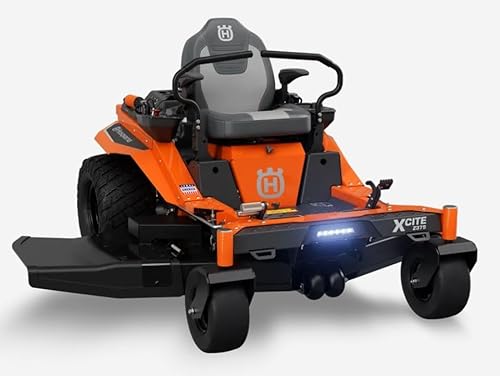
The Husqvarna Xcite Z375 is a zero-turn riding lawn mower engineered for large-scale residential and light commercial mowing. It combines a solid fabricated steel build with a capable Kohler power plant, creating an immediate impression of durability and purposeful design suited to expansive properties.
Performance centers on the 26HP 747cc Kohler V-Twin engine that supplies strong, consistent power for thick grass and varied terrain, paired with the 60-inch 3-blade fabricated steel deck. This setup delivers a wide, clean cut that covers ground efficiently and maintains quality across long sessions.
Considerations include the substantial footprint of the 60-inch deck and zero-turn frame, which requires ample storage and may feel oversized for compact yards. Available data also omits specifics on add-ons or comfort options, so buyers should confirm full feature sets independently.
The Husqvarna Xcite Z375 delivers the most value for owners of large lawns or light commercial operators who prioritize raw cutting power, deck durability, and zero-turn efficiency over compact size or extensive accessory packages.