Direct Answer: What Makes a Residential Zero Turn Mower the “Best” for You?
The best residential zero turn mower is not a single model — it is the one matched to your specific acreage, terrain, and priorities. For most homeowners with 1–3 acres of relatively flat lawn, a gas-powered zero turn mower with a 42–54 inch cutting deck and 20–25 HP engine delivers the optimal balance of speed, maneuverability, and long-term value. Electric models suit smaller, flatter lots under 1 acre where low maintenance and quiet operation outweigh maximum run time. No universal “best” exists; the right choice depends on yard size, slope, obstacle density, budget, and whether you prioritize upfront cost or total cost of ownership.
What Is a Residential Zero Turn Mower and How Does It Work?
Zero Turn Radius: The Core Difference
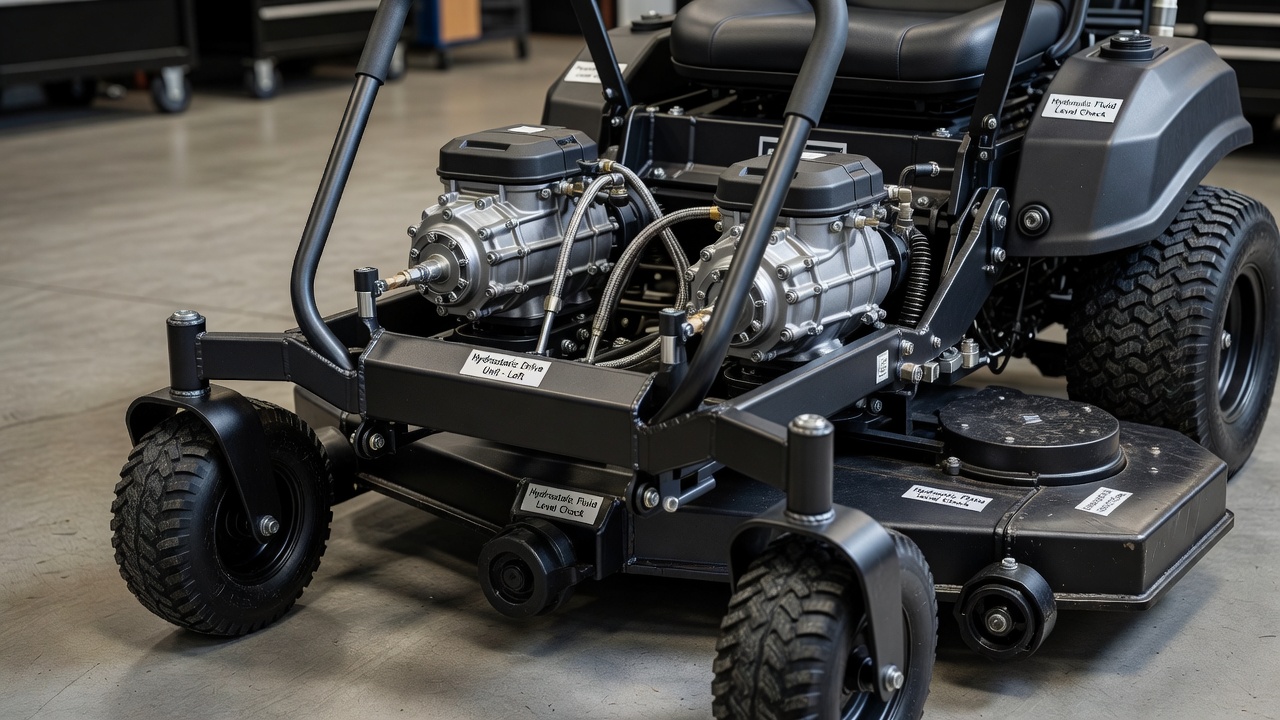
A zero turn radius mower can pivot 360 degrees within its own footprint. Unlike traditional riding mowers that steer via a front axle (requiring a wide turning arc), zero turn mowers use independent rear-wheel drive. Each rear wheel is powered by its own dual hydrostatic transmission, allowing one wheel to rotate forward while the other reverses. This enables the mower to spin in place — the defining “zero turn” capability.
Lap Bar Steering vs. Steering Wheel
Residential zero turn mowers typically use lap bar steering (two levers positioned at the operator’s sides) rather than a steering wheel. Pushing both levers forward drives straight; pulling both back reverses. Moving one lever farther forward than the other creates a turn. Pushing one forward and pulling the other back spins the mower on its axis. This control scheme has a short learning curve — most operators become comfortable within 15–30 minutes of practice.
Residential vs. Commercial Classification
Residential zero turn mowers are engineered for homeowner use: lighter frames, thinner deck steel (typically 10–12 gauge), engines rated 18–25 HP, and warranties of 2–4 years. Commercial units feature heavier fabricated decks (7–10 gauge), 25–40+ HP engines, reinforced frames, and 5+ year warranties. Residential models cost $2,500–$6,000; commercial units start around $8,000. For homeowners mowing 1–4 acres weekly, a well-chosen residential unit provides 10–15 years of service with proper maintenance.
How Much Yard Do You Need Before a Zero Turn Mower Makes Sense?
Minimum Practical Acreage
Zero turn mowers become meaningfully more efficient than push mowers at roughly 0.5 acres and more efficient than traditional riding mowers at 1 acre. Below half an acre, the time saved on turns rarely offsets the larger footprint, wider turning clearance needed for trailers/storage, and higher purchase price. A push mower or compact riding mower often makes more sense for small lots. For broader ecosystem context, read through our operational guide on jbl partybox club 120 vs sony srs xv500.
Efficiency Thresholds by Mower Type
| Property Size | Recommended Mower Type | Typical Mow Time (1 acre) |
|---|---|---|
| Under 0.5 acre | Push mower / battery walk-behind | 45–60 min |
| 0.5 – 1 acre | Compact riding mower or entry ZTR | 35–50 min |
| 1 – 3 acres | Residential zero turn (42–54″) | 20–35 min |
| 3+ acres | Large-deck ZTR (54–60″) or commercial | 15–25 min |
Yard Shape and Obstacle Density Matter More Than Raw Acreage
A 1-acre property with dense trees, flower beds, and a winding driveway benefits more from zero turn maneuverability than a 2-acre open rectangle. Zero turn mowers excel at navigating obstacles — each tree or bed circumnavigated saves 15–30 seconds versus a traditional rider. On open ground, the speed advantage (7–9 mph vs. 4–5 mph) dominates. If your yard has more than 8–10 distinct obstacles per acre, a zero turn mower pays for itself in time savings faster. For broader ecosystem context, read through our operational guide on jbl partybox club 120 vs sony srs xv500.
What Key Specifications Should You Evaluate When Choosing a Residential Zero Turn Mower?
Engine Horsepower: Matching Power to Deck and Load
Residential zero turn mowers typically offer 18–25 HP. The rule of thumb: 1 HP per 2 inches of deck width for clean cuts in average conditions. A 42-inch deck needs ~21 HP; a 54-inch deck needs ~27 HP — but most residential 54-inch decks pair with 23–25 HP engines, which is adequate for weekly mowing at proper height. Underpowered engines bog down in thick grass, reducing blade tip speed and cut quality. Overpowered engines add cost and fuel consumption without proportional benefit for residential use.
Cutting Deck Width: The Speed vs. Maneuverability Trade-off
- 34–42 inches: Best for yards under 1.5 acres with gates, narrow passages, or dense obstacles. Fits through standard 48-inch gates.
- 46–50 inches: The sweet spot for 1–2.5 acre yards with moderate obstacles. Balances mowing speed (2.5–3.5 acres/hour) with gate clearance.
- 54–60 inches: Optimal for 2.5+ acre open properties. Mows 3.5–4.5 acres/hour but requires 60-inch+ gate clearance and wider storage.
Wider decks reduce mowing time linearly but increase turning radius slightly and reduce traction on slopes. For most residential buyers, 48–54 inches hits the practical optimum. For troubleshooting and reliability insights, consult our in-depth z890 vs x870e motherboard report.
Stamped vs. Fabricated Cutting Decks
Stamped decks are pressed from a single sheet of thinner steel (10–12 gauge). They are lighter, less expensive, and resist rust well due to smooth surfaces. Fabricated decks are welded from thicker plate steel (7–10 gauge) with reinforced edges and spindle mounts. They withstand impacts better, maintain flatness longer, and produce superior airflow for cut quality — but cost $300–$800 more. For residential use on maintained lawns, a quality stamped deck lasts 12–15 years. Fabricated decks justify their cost if you mow rougher ground, hit occasional roots, or plan 20+ year ownership.
Fuel Tank Capacity and Range
Residential tanks range from 2.5 to 5 gallons. A 3.5-gallon tank on a 23 HP mower typically provides 2.5–3.5 hours of mowing — enough for 2–3 acres per fill. Larger tanks reduce refuel stops but add weight. For yards under 2 acres, tank size is rarely a constraint. For 3+ acres, prioritize 4+ gallon capacity or plan a mid-mow refuel. Readers comparing setup options can review our technical analysis on marshall stanmore iii vs harman kardon onyx studio 8.
Cutting Height Range and Adjustment
Look for 1.5–4.5 inches minimum range with ¼-inch increments. Cool-season grasses (fescue, bluegrass) thrive at 3–4 inches; warm-season grasses (Bermuda, zoysia) prefer 1.5–2.5 inches. Foot-operated deck lift with a dial or lever at the operator station is standard; avoid models requiring you to dismount to change height. Anti-scalp wheels (3–4 on the deck perimeter) prevent gouging on uneven ground — essential for any yard with rolling terrain.
Ground Speed and Blade Tip Speed
Residential zero turn mowers advertise 6–9 mph forward speed. However, mowing quality degrades above 5–6 mph on typical residential turf — grass lays over before blades cut it, leaving streaks. The effective quality mowing speed is 4–5.5 mph. Blade tip speed (feet per minute at blade edge) matters more than ground speed: 17,000–18,500 FPM is the residential standard for clean cuts. Higher tip speed allows slightly faster ground speed without quality loss. For complementary field maintenance guidelines, examine our breakdown of dyson v8 cyclone vs bissell featherweight stick.
Seat Comfort and Ergonomics
You will spend 1–3 hours per session on the seat. Prioritize:
- High-back seat with lumbar support and adjustable suspension (spring or air-ride)
- Armrests (flip-up for tight storage)
- Lap bar reach adjustment — bars should rest naturally at elbow height
- Vibration isolation mounts between frame and seat pan
- Cup holder and tool storage within reach
Gas vs. Electric Residential Zero Turn Mowers: Which Is Better for Your Yard?
Gas-Powered: The Established Standard
Advantages: Unlimited run time (refuel in 2 minutes), proven 15–20 year engine life with maintenance, full power at any grass height, wide model selection across all price tiers, established dealer service networks.
Disadvantages: Oil changes, spark plugs, air filters, fuel stabilizer, winterization, noise (85–95 dB), emissions, vibration, ~$50–$100/year in maintenance consumables. To evaluate matched hardware tolerances, consult our detailed overview of bissell crosswave hydrosteam vs shark stainforce.
Battery-Electric: The Emerging Alternative
Advantages: Near-silent operation (60–70 dB), zero routine maintenance (no oil, filters, plugs), instant torque, no fuel storage, lower per-mow cost ($0.50–$1.50 electricity vs. $3–$6 gas), no winterization.
Disadvantages: Run time limited to 1.5–3 acres per charge (2–4 hours), 4–8 hour recharge on 120V (2–4 hours on 240V), battery degradation (20–30% capacity loss over 5–7 years), $1,500–$3,000 battery replacement cost, limited model selection above 54-inch decks, higher upfront cost ($1,000–$2,500 premium over comparable gas).
Run Time Reality Check
Manufacturer claims (“up to 3 acres”) assume flat, dry, thin grass at 3-inch height. Real-world: 1.5–2 acres on thick fescue, 2–2.5 acres on Bermuda, 2.5–3 acres on thin, dry grass. Slopes reduce range 20–30%. If your mow session exceeds 2 hours, gas remains more practical unless you have 240V charging and can top off mid-mow.
Long-Term Cost Comparison (5-Year Horizon, 2 Acres, 26 Mows/Year)
| Cost Factor | Gas (23 HP) | Electric (54″) |
|---|---|---|
| Purchase Price | $4,200 | $5,800 |
| Fuel/Electricity (5 yrs) | $650 | $150 |
| Maintenance Consumables | $400 | $0 |
| Dealer Service (2x) | $300 | $0 |
| Battery Replacement (yr 6–7) | $0 | $2,000 (projected) |
| 5-Year Total | $5,550 | $5,950 |
At 5 years, costs nearly converge. At 10 years, gas typically leads unless battery prices drop significantly. Electric wins on convenience and experience; gas wins on flexibility and proven longevity.
Can Electric Handle Thick Grass?
Yes — modern brushless motors deliver peak torque instantly. A 54-inch electric ZTR with 10–15 kWh battery matches 23 HP gas in blade tip speed. The limitation is energy capacity, not power. If you let grass grow 6+ inches between mows, both gas and electric will slow down; electric will deplete battery 40–50% faster. Mow weekly at proper height and electric performs equivalently.
Can Zero Turn Mowers Handle Slopes and Uneven Terrain Safely?
Maximum Safe Slope Ratings
Nearly all residential zero turn mower manuals specify a maximum slope of 10–15 degrees (17–27% grade). This is not a suggestion — it is a stability limit. Above this angle, the combination of high center of gravity, rear-weight bias, and zero-turn steering geometry creates rollover risk. Traditional riding mowers (front-steer, lower CG) often rate to 20–25 degrees. If your yard has sustained slopes over 15 degrees, a zero turn mower is the wrong tool — consider a garden tractor, AWD riding mower, or walk-behind for those sections.
Why Zero Turn Mowers Struggle on Hills
- Rear-weight bias: Engine, transmissions, and operator sit over rear axle. On side slopes, weight shifts downhill, unloading uphill wheel.
- Independent wheel drive: On a slope, the downhill wheel must brake while uphill wheel drives — if traction breaks, the mower slides sideways.
- No front-wheel steering assist: Traditional riders use front wheels to track uphill; ZTRs rely entirely on rear traction.
- High center of gravity: Operator sits higher than on a garden tractor.
Features That Improve Slope Performance (Within Limits)
- Wide stance / longer wheelbase: Improves lateral stability
- Low-profile tires with aggressive tread: Better bite on grass
- Differential lock or limited-slip: Prevents one-wheel spin on cross-slopes (rare on residential, common on commercial)
- ROPS (Roll-Over Protection Structure) with seat belt: Mandatory on commercial; optional accessory on some residential — always use if equipped
- Heavy front counterweight kit: Shifts CG forward, improves uphill traction
Even with these features, the 15-degree limit holds. No residential zero turn mower is “designed for hills” — some merely tolerate moderate slopes better than others.
Practical Slope Assessment
Use a smartphone clinometer app or a 4-foot level with angle finder. Measure the steepest sustained run (not a 3-foot bank). If any section exceeds 12 degrees, plan alternative mowing for that area. Mowing across slopes (contour) is safer than up/down but increases side-slip risk on ZTRs. When in doubt, walk it.
What Is the Realistic Budget Range for a Quality Residential Zero Turn Mower?
Budget Tier: Under $3,000
What you get: 18–22 HP single-cylinder or V-twin, 42–46″ stamped deck, 2.5–3 gal tank, basic seat, 2-year warranty, 6–7 mph top speed. Brands: entry lines from major OEMs (Troy-Bilt, Cub Cadet, Toro, John Deere E-series equivalents).
Compromises: Thinner deck steel, plastic chute, fixed lap bars, no suspension seat, shorter warranty, single-cylinder engines on cheapest models (more vibration, shorter life).
Suitable for: 0.5–1.5 acre flat yards, light use (biweekly), owners who maintain equipment meticulously.
Mid-Range Tier: $3,000–$5,000
What you get: 22–25 HP V-twin, 48–54″ stamped or light fabricated deck, 3.5–4.5 gal tank, suspension seat (spring or elastomer), adjustable lap bars, 3–4 year warranty, 7–8 mph, deck wash port, hour meter.
Value drivers: V-twin smoothness, fabricated deck options appear, better dealer support, spindle bearings (greaseable vs. sealed), stronger frame rails.
Suitable for: 1–3 acre yards, weekly mowing, mixed terrain, 10–15 year ownership horizon. This is the sweet spot for most homeowners.
Premium Tier: $5,000–$7,000+
What you get: 24–26 HP commercial-grade V-twin (Kawasaki FR/FX, Kohler 7000/Confidant), 54–60″ fabricated deck, 5+ gal tank, premium air-ride seat, LED lights, USB charging, 4–5 year bumper-to-bumper warranty, 8–9 mph, tool-less deck removal.
Diminishing returns: Engine and deck quality approach commercial; frame and transmissions remain residential-class. You pay for comfort, features, and dealer prestige — not proportionally longer life.
Suitable for: 3+ acre estates, owners who value comfort over cost-per-acre, properties where mowing is a primary weekend activity.
Price vs. Reliability Correlation
Data from Consumer Reports and dealer service records show:
- First 3 years: All tiers similar reliability (manufacturing defects dominate)
- Years 4–8: Mid-range and premium diverge — better spindles, bearings, and frame welds resist fatigue
- Years 8–12: Budget units show 2–3x higher major repair rates (transmission, spindle, frame cracks)
- Years 12+: Mid-range units with fabricated decks and V-twins often still running; budget units largely retired
What Maintenance Does a Residential Zero Turn Mower Require?
Seasonal Maintenance Schedule (Gas Models)
| Interval | Task | Time/Cost |
|---|---|---|
| Every 5 hrs / daily | Check oil, tire pressure, clean deck, inspect blades | 5 min / $0 |
| Every 25 hrs / monthly | Clean air filter pre-cleaner, lubricate deck lift pivots | 10 min / $0 |
| Every 50 hrs / annually | Change engine oil & filter, replace air filter, sharpen/replace blades, check belt tension, clean cooling fins | 45 min / $35–$55 |
| Every 100 hrs / 2 years | Replace spark plugs, fuel filter, check valve clearance (if spec’d), repack caster wheel bearings | 60 min / $40–$70 |
| Every 200 hrs / 4 years | Change hydrostatic transmission fluid & filter (if serviceable), replace drive belts | 90 min / $80–$150 |
| Annually (fall) | Fuel stabilizer, battery tender, deck scrape & coat, store dry | 30 min / $15 |
Blade Maintenance: The Single Biggest Cut Quality Factor
- Sharpen every 20–25 hours — dull blades tear grass, causing brown tips and disease entry
- Replace annually — even sharpened blades lose lift and balance after 3–4 sharpenings
- Balance after sharpening — unbalanced blades destroy spindle bearings in 50 hours
- Torque to spec — typically 60–90 ft-lbs; under-torqued blades come loose, over-torqued crack spindles
Common Mechanical Issues by Tier
- Budget: Spindle bearing failure (sealed, non-greaseable), deck shell cracks, transmission seal leaks, belt shredding
- Mid-range: Hydrostatic fluid degradation (change it!), electric clutch wear, caster wheel bearing seizure
- Premium: Electronic module faults, sensor failures, seat suspension air leaks
Electric Model Maintenance
- No oil, filters, plugs, belts, or hydrostatic fluid
- Blade sharpening/replacement same as gas
- Tire pressure, deck cleaning, bolt torque checks identical
- Battery: keep 20–80% charge during season, store 50% charged at 40–60°F, avoid full discharge
- Coolant loop (on liquid-cooled models): check level annually, flush per manual (typically 5 years)
Electric maintenance is ~80% less time and cost — but battery replacement at 6–8 years is a $1,500–$3,000 event.
How Do You Match a Zero Turn Mower to Your Specific Yard Conditions?
Decision Framework: Start With Your Property Profile
Answer these five questions before looking at models:
- Mowable acres: ______ (measure — don’t guess)
- Maximum sustained slope: ______ degrees (measure with phone app)
- Obstacle count per acre: ______ (trees, beds, structures requiring circumnavigation)
- Gate/access width: ______ inches (narrowest point from storage to lawn)
- Grass type & mow frequency: ______ (cool-season weekly vs. warm-season biweekly)
Configuration Recommendations by Profile
| Yard Profile | Recommended Configuration | Power Source | Budget Tier |
|---|---|---|---|
| Flat, open, 1–2 acres, few obstacles, 48″+” gate | 50–54″ deck, 23–25 HP V-twin, fabricated deck preferred | Gas or electric | Mid-range ($3,500–$4,500) |
| Flat, 2–4 acres, open, 60″+” gate | 54–60″ fabricated deck, 24–26 HP, large fuel tank | Gas (range) | Mid to premium ($4,000–$5,500) |
| Under 1 acre, tight gates (36–42″), many beds/trees | 34–42″ deck, 18–22 HP, compact frame | Electric ideal | Budget to mid ($2,800–$4,000) |
| 1–2 acres, rolling hills (10–15°), moderate obstacles | 48–52″ deck, 23+ HP, wide stance, aggressive tires, ROPS + seat belt | Gas (weight/traction) | Mid-range ($3,800–$4,800) |
| Heavy slopes (>15° sustained) | Do not buy a zero turn mower — use garden tractor, AWD rider, or walk-behind | N/A | N/A |
| Infrequent mow (biweekly+), thick grass | Higher HP (25+), fabricated deck, high blade tip speed, large tires | Gas (power reserve) | Mid to premium |
| Noise-sensitive neighborhood, HOA, small flat lot | 42–48″ deck, electric, low dB | Electric | Mid ($4,500–$5,500) |
Deck Width Decision: 42″ vs. 54″ — The Practical Guide
- Choose 42–46″ if: Gate < 48", storage 15 obstacles/acre, yard < 1.5 acres
- Choose 48–52″ if: Gate 48–54″, storage 54″+, 5–15 obstacles/acre, yard 1–3 acres
- Choose 54–60″ if: Gate 60″+, storage 64″+, 2.5 acres
Time savings: 54″ vs 42″ on 2 open acres = ~12 minutes per mow. On obstacle-heavy 2 acres = ~4 minutes. The wider deck only pays off on open ground.
For Homeowners Who Mow Infrequently
If you mow every 10–14 days (letting grass reach 5–6″), prioritize:
- Engine torque reserve: 25+ HP V-twin or 15+ kWh electric
- Fabricated deck: Handles thick clippings without clogging
- High-lift blades: Better discharge at volume (standard on some, accessory on most)
- Large discharge chute / baffle: Reduces clumping
Common Questions on Best Residential Zero Turn Mowers Answered
How long does a residential zero turn mower last?
With proper maintenance: 12–15 years for mid-range gas, 8–10 years for budget gas, 10–12 years for electric (battery replacement at 6–8 years). Commercial-grade engines (Kawasaki FX, Kohler Confidant) in residential frames can reach 2,500+ hours — 20+ years at 100 hours/year. The frame, deck, and transmissions usually wear out before the engine on quality units.
Can I pull a yard cart or aerator with a residential zero turn mower?
Yes, but check the manual. Most residential ZTRs rate 250–500 lbs tongue weight and 500–1,000 lbs rolling load. Exceeding this overheats hydrostatic transmissions. For regular heavy towing (logs, large sprayers, heavy aerators), a garden tractor with a transmission designed for drawbar pull is better suited. Light yard carts (leaves, grass clippings, mulch bags) are fine.
Do I need a fabricated deck for residential use?
Not strictly. A quality stamped deck (10–12 gauge, reinforced edges) lasts 12–15 years on maintained lawns. Fabricated decks add impact resistance, better airflow, and 3–5 years extra life — worth $300–$500 if you hit roots, mow rough areas, or plan 20-year ownership. For typical suburban lawns, stamped is adequate.
What is the most important feature for cut quality?
Blade tip speed (17,000–18,500 FPM) combined with sharp, balanced high-lift blades. Engine HP, deck width, and ground speed matter less than tip speed and blade condition. A 21 HP mower with 18,000 FPM tip speed and sharp blades cuts better than a 25 HP mower at 16,500 FPM with dull blades. Maintain blades religiously.
Should I buy from a big-box store or a dealer?
Dealer — for assembly, pre-delivery inspection, warranty registration, first service, and ongoing support. Big-box units often ship partially assembled; improper deck leveling, belt tension, or tire pressure from day one causes premature wear. Dealer prep costs $150–$300 but prevents $500+ in early repairs. Many manufacturers void warranty if not dealer-assembled and registered.
Can I mow wet grass with a zero turn mower?
Avoid it. Wet grass clumps, clogs decks, reduces traction (especially on slopes), and promotes fungal disease. If you must: raise deck 1 inch, mow slower (3–4 mph), clean deck every 30 minutes, expect clumping. Electric mowers handle wet grass slightly better (no belt slip) but battery drains faster. Best practice: wait for dry conditions.
For more hands-on benchmarks and buying recommendations, consult our guides on heavy-duty chainsaw buyer guide, as well as high-CFM commercial leaf blower guide.
Mechanical safety standards, operational tolerances, and protective gear guidelines align with benchmark specifications established by the American National Standards Institute (ANSI).

Pros
- Commercial-grade electric performance with instant torque and no gas engine maintenance.
- Large included battery package and fast charger improve runtime and turnaround time.
- Heavy-duty 54-inch fabricated deck is built for durability and wider coverage per pass.
- Comfort-focused operator features are better than many basic riding mowers in this class.
- Backed by a 4-year limited warranty for added purchase confidence.
Cons
- At 848.78 pounds, it is very heavy and will be difficult to move manually or transport without proper equipment.
- The large footprint, with dimensions of 76.77 x 73.23 x 56.3 inches, requires substantial storage space.
- The premium feature set and battery system may be more than many small-yard owners need.
Overview & Design: The Greenworks 80V 54" MaximusZ Zero Turn Riding Lawn Mower is a commercial-style electric mower built for large residential properties. Its 54-inch 10-gauge fabricated steel deck, zero-turn layout, and premium operator seat give it a serious, heavy-duty feel right away.
Performance & Key Features: This model is positioned as a 41HP gas-equivalent machine with instant torque, a constant 17,900 FPM blade speed, and SmartCut technology that adapts to changing grass conditions. The included battery kit with (2) 16.0Ah and (4) 6.0Ah batteries is designed to support up to 4+ acres per charge, while the 1.5kW fast charger helps reduce downtime.
Drawbacks & Considerations: The mower is extremely heavy at 848.78 pounds, so it is not easy to move or store in tight spaces. It is also a major investment and may be excessive for smaller yards or users who do not need the runtime and power of a large battery-electric zero-turn.
Verdict: This is a strong fit for homeowners with large lawns who want powerful, low-maintenance mowing performance and premium comfort features. Buyers who need a wide cutting deck, long runtime, and electric operation will likely get the most value from it.

Pros
- Brushless motor system delivers gas-equivalent power without emissions or excessive noise
- High-capacity battery kit enables cutting coverage of up to 4.4 acres per charge set
- Durable 10-gauge steel deck and constant high blade tip speed handle dense grass effectively
- Premium seating and lighting features support comfortable extended operation
- 4-year warranty provides strong protection for the investment
Cons
- Runtime tops out around 4.4 acres depending on conditions, requiring recharges for bigger properties
- Electric design depends on charging infrastructure and battery management rather than simple refueling
- Height adjustment is noted only basically without extensive position details in available specs
The Greenworks 60V MaximusZ Zero Turn Riding Lawn Mower is a commercial-grade electric machine built for large lawns. Its primary construction centers on a heavy-duty 60-inch 10-gauge fabricated steel deck that prioritizes durability and airflow, paired with premium comfort elements including an adjustable suspension seat with lumbar support and foldable armrests for a solid first impression of quality and user focus.
Performance shines through an intelligent brushless motor system offering power equivalent to a 31HP gas engine with zero emissions. Three high-torque brushless hub motors sustain a constant 17,900 FPM blade speed, while SmartCut Technology auto-adapts to prevent bogging in thick or wet grass. The complete kit supplies (2) 20.0Ah suitcase batteries plus (4) 8.0Ah batteries and a 1.5kW fast charger for up to 4.4 acres of cutting. Additional capabilities include a 4-in-1 deck for mulching, bagging, rear and side discharge, 300 lb towing capacity with front/rear hitch, dual LED headlights, and an LCD display.
Drawbacks and considerations include the practical need to recharge the battery set after maximum runtime, which can interrupt work on properties exceeding 4.4 acres. Being fully electric means reliance on power sources for recharging instead of fuel, and height adjustment is referenced only in basic terms without more granular position data in the specifications.
In verdict, the Greenworks 60V MaximusZ delivers the most value to homeowners and professionals managing medium-to-large properties who want quiet, emission-free commercial power, versatile cutting options, and the security of a 4-year warranty in a comfortable zero-turn package.

Pros
- Strong stated cutting capacity for large properties, with up to 4 acres per charge.
- Zero-turn design supports fast, precise mowing around obstacles.
- Uses battery power instead of gas, reducing maintenance-related chores and emissions.
- Includes six high-capacity batteries and a charger, so it is ready for use out of the box.
Cons
- Heavy at 720 pounds, which may make transport, storage, or maneuvering by hand difficult.
- Large dimensions require substantial garage or shed space.
- The high upfront cost may put it out of reach for buyers with smaller lawns or limited budgets.
Overview & Design: The EGO Power+ ZT5207L is a 52-inch electric riding lawn mower with a zero-turn radius, built for users who need efficient coverage on larger properties. Its black finish, substantial frame, and 720-pound weight reflect a serious, full-size riding mower designed for demanding residential mowing.
Performance & Key Features: EGO says Peak Power+ technology combines up to six 56V ARC Lithium batteries, and the mower is rated at a 25 HP-equivalent output. The 52-inch deck and zero-turn steering should help reduce mowing time and improve control around landscaping, while the included six 56V 12.0Ah batteries are stated to support up to 4 acres per charge.
Drawbacks & Considerations: This model is large and heavy, so it will not suit every storage space or every user. Its premium positioning also means buyers should be confident they need this much capacity, since smaller yards may not justify the size, weight, or cost.
Verdict: The ZT5207L is best for homeowners with expansive lawns who want battery-powered convenience and zero-turn efficiency in one machine. It is a compelling option if you value gas-like performance, broad deck coverage, and compatibility with EGO's 56V battery ecosystem.

Pros
- Offers quiet, emission-free electric operation with power matching traditional 22 HP gas mowers.
- Includes four high-capacity 56V 10.0Ah batteries for up to 2 acres of runtime right out of the box.
- Customizable LCD interface and multiple driving modes enhance user control and ride comfort.
- Versatile 10-position cutting height and 3-in-1 deck options provide flexible lawn finishing.
- Fast two-hour full recharge capability supports productive multi-session mowing days.
Cons
- Maximum single-charge coverage is limited to about 2 acres without purchasing additional batteries for bigger properties.
- Requires access to a power outlet for recharging, which may interrupt workflow on very large or remote lawns.
- Battery management and storage add extra steps compared to simple gas-powered alternatives.
The EGO Power+ ZT4204L is a premium electric zero-turn riding lawn mower built for homeowners seeking a clean alternative to gas models. It features a robust 42-inch stamped steel deck and includes four 56V 10.0Ah ARC Lithium batteries plus a charger, delivering an immediate impression of high-quality engineering focused on power and convenience.
In real-world use, this mower matches the performance of a 22 horsepower gas unit while reaching speeds up to 8 MPH. The zero-turn radius combined with three selectable driving modes via the LCD interface allows smooth navigation and efficient cutting of up to 2 acres per charge. Users can fine-tune the cut across 10 height positions from 1.5 to 4.5 inches and choose between mulching, bagging, or side discharge for complete lawn care flexibility. Full recharges take roughly two hours with the included Z6 charger.
Potential drawbacks include the 2-acre limit on the stock battery set, meaning larger properties will need extra batteries for uninterrupted operation. As a fully electric system, it also depends on regular charging access rather than quick refueling, and battery handling requires more attention than traditional gas mowers.
Overall, the EGO Power+ ZT4204L is an excellent choice for environmentally conscious homeowners with lawns up to a few acres who value quiet operation, low maintenance, and precise control. Those with extensive grounds should plan for additional battery capacity to maximize its benefits.

Pros
- Gas-equivalent power from electric Peak Power system with no emissions or fuel needs
- Long runtime covering up to 3 acres per charge with included high-capacity batteries
- Highly maneuverable 52-inch zero-turn deck with customizable blade speeds from 2300 to 3200 RPM
- User-friendly digital interface and app integration for real-time customization and monitoring
- Strong warranty coverage up to 5 years on mower and batteries with registration
Cons
- Runtime limited to approximately 3 acres per full charge, requiring recharges for larger properties
- Depends on multiple large 56V batteries which must be managed and recharged using the included charger
- No independent customer reviews available yet to confirm long-term real-world reliability
The EGO POWER+ Z6 Zero Turn Riding Lawn Mower model ZT5216L is a premium electric zero-turn rider built for efficient large-area mowing. It features a robust 52-inch 10-gauge fabricated steel deck, wide frame for slope stability, and durable IPX5-rated weather-resistant construction that creates an immediate impression of professional-grade quality without the noise or fumes of gas models.
In performance, Peak Power technology draws from up to six included 56V 10.0Ah ARC Lithium batteries to deliver power equal to a 27-horsepower gas engine while covering up to 3.0 acres per charge. The dual-blade system offers adjustable speeds from 2300 to 3200 RPM and 10 cutting heights between 1.5 and 4.5 inches. Three driving modes support speeds up to 8 MPH, and the color digital screen plus EGO Connect app allow full customization of speed, cruise control, and battery monitoring for real-world efficiency on varied terrain.
Considerations include the finite runtime of about 3 acres before recharging is needed, reliance on managing six batteries with the 880W charger, and the absence of extensive user feedback at launch that leaves long-term durability still to be proven in the field.
Overall, the EGO POWER+ Z6 ZT5216L delivers the most value to homeowners with mid-to-large lawns seeking quiet, powerful electric zero-turn performance, advanced controls, and reduced maintenance. Those with properties exceeding 3 acres or preferring simpler traditional mowers may want to evaluate battery logistics carefully.
Pros
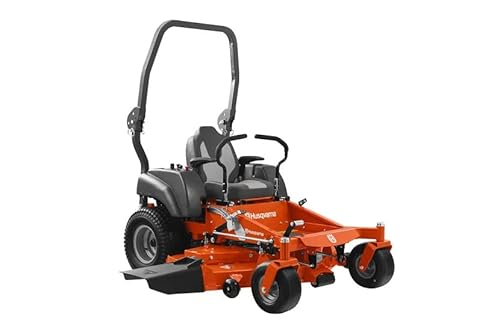
- Powerful 24HP/726cc Kawasaki V-Twin engine for reliable high-output performance
- Wide 61-inch fabricated 3-blade deck for efficient coverage of large areas
- Commercial-grade Hydro Gear ZT-3100 transmission for durable zero-turn handling
- Generous 5-gallon fuel tank and included ROPS for practical all-day use and safety
- 4-year consumer warranty coverage on the complete machine
Cons
- Large 61-inch deck and zero-turn frame require substantial storage space and may feel oversized for small residential yards
- Commercial-oriented components can demand more maintenance knowledge than basic consumer mowers
- No bagging, mulching kit, or additional attachments listed as standard equipment
The Husqvarna MZ61 is a robust zero-turn riding lawn mower from the brand's commercial-leaning lineup, pairing a heavy-duty fabricated deck with a ROPS safety structure. Its overall build emphasizes durability and operator protection for demanding outdoor work rather than lightweight residential convenience.
Performance centers on the 24HP/726cc Kawasaki FR730V Series V-Twin engine that supplies ample torque for thick or wet grass, while the 61-inch 3-blade fabricated deck cuts wide swaths efficiently. The Hydro Gear ZT-3100 commercial hydrostatic transmission enables smooth, precise zero-turn steering that reduces time spent trimming edges and navigating landscaping. A 5-gallon fuel tank further supports longer continuous runs on expansive properties.
Potential drawbacks include the mower's substantial size, which can make storage and transport more challenging for users with limited space. The commercial-grade components also mean the machine may require more frequent or specialized maintenance compared to simpler residential models, and no bagging or mulching systems are noted as included.
Overall, the Husqvarna MZ61 delivers the strongest value for owners of large lawns, estates, or light commercial grounds who prioritize cutting speed, engine reliability, and safety features. Smaller-yard users will likely find it oversized for their needs.