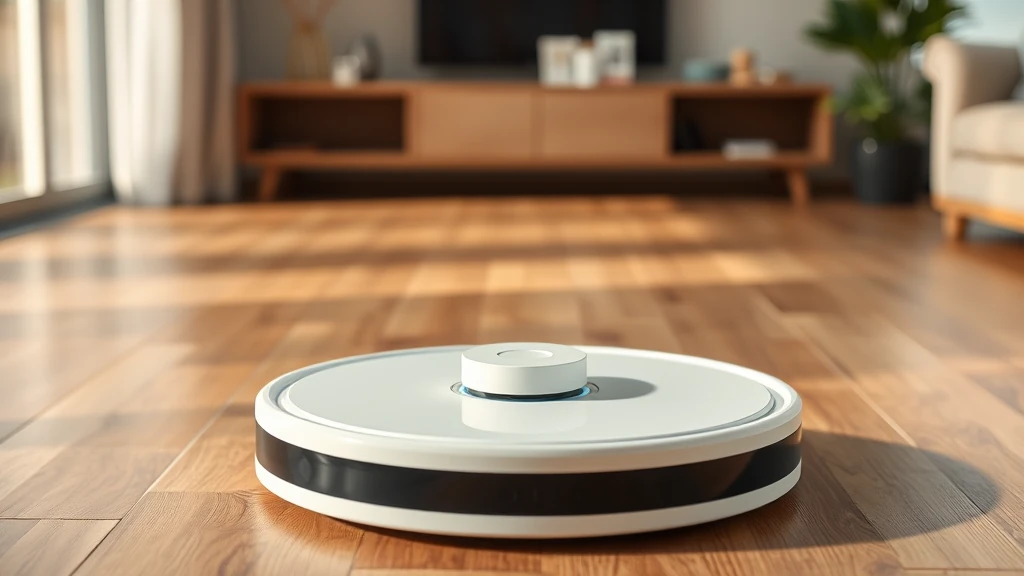
Quick Answer: Can Robot Vacuums Cross High Thresholds and Thick Rugs?
For general background on international standards for household electrical products, see the International Electrotechnical Commission (IEC).
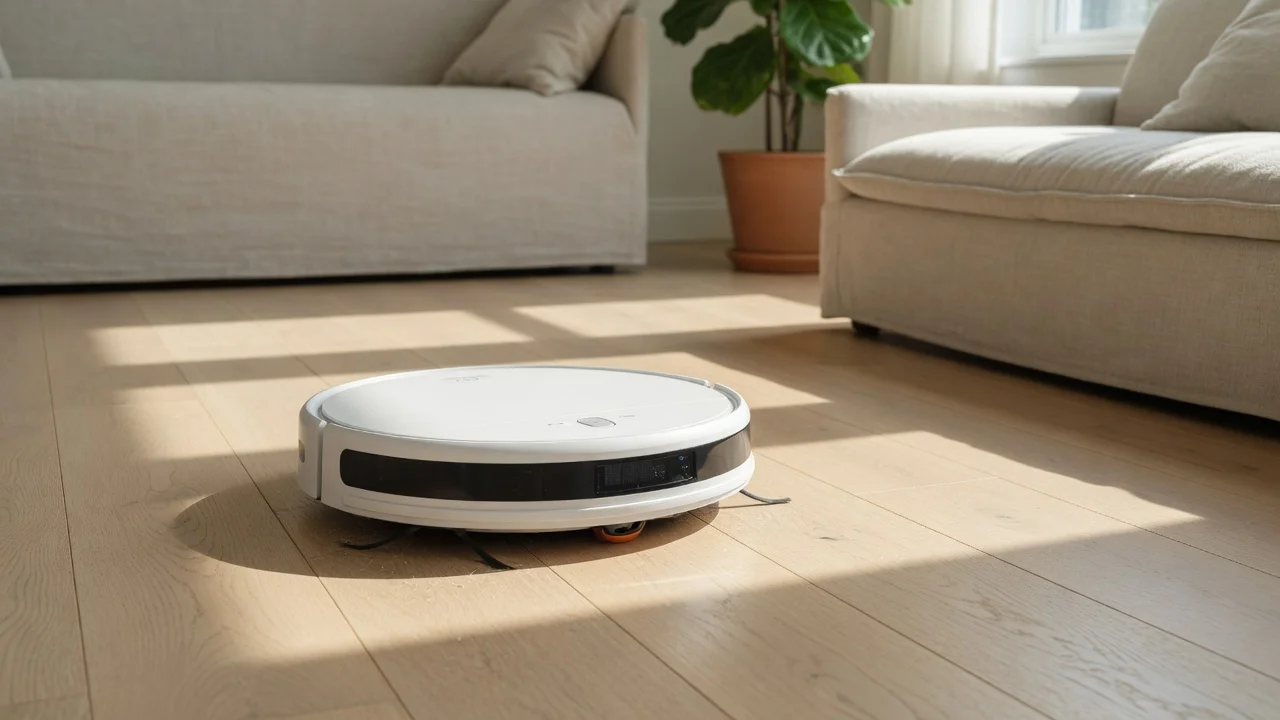
Robot Vacuum Threshold Clearance: The Physics of Wheel Lift
If you have a doorway with a vertical degree that exceeds the robot’s native climbing ability, you must modify the terrain. The most professional and seamless way to solve the problem of crossing high thresholds is by installing a rubber transition ramp (also known as a carpet reducer or threshold ramp). These ramps effectively “shave” the vertical degree down to a manageable slope.Step-by-Step Guide to Installing Transition Ramps
Step 1: Measure the Vertical DegreeUse a digital caliper or a sturdy ruler to measure the exact vertical height of the threshold from the lower floor to the top of the transition. For example, if you measure 0.75 inches, you are at the absolute maximum threshold height for most consumer robots. Step 2: Select the Right Ramp Profile
Purchase a heavy-duty rubber transition ramp that spans the width of your doorway. Ensure the ramp is designed to handle the torque of a robotic cleaner. Avoid cheap plastic ramps that may slide around. Rubber transition ramps provide necessary friction and grip for the drive wheels. Step 3: Install with Double-Sided Tape
Clean the subfloor thoroughly with isopropyl alcohol. Apply high-grade, double-sided construction tape to the underside of the rubber transition ramp. Press firmly into place. This ensures that when the robot applies its forward thrust to climb the ramp, the ramp itself does not slide backward. Step 4: Test the Transition
Manually place your robot vacuum at the base of the new rubber transition ramp. Initiate a spot clean. Observe the drive wheels. If the robot climbs smoothly without triggering an error code, you have successfully modified the terrain to accommodate the machine’s physical limits.
Navigating Thick Shag Rugs & Low Profile Solutions
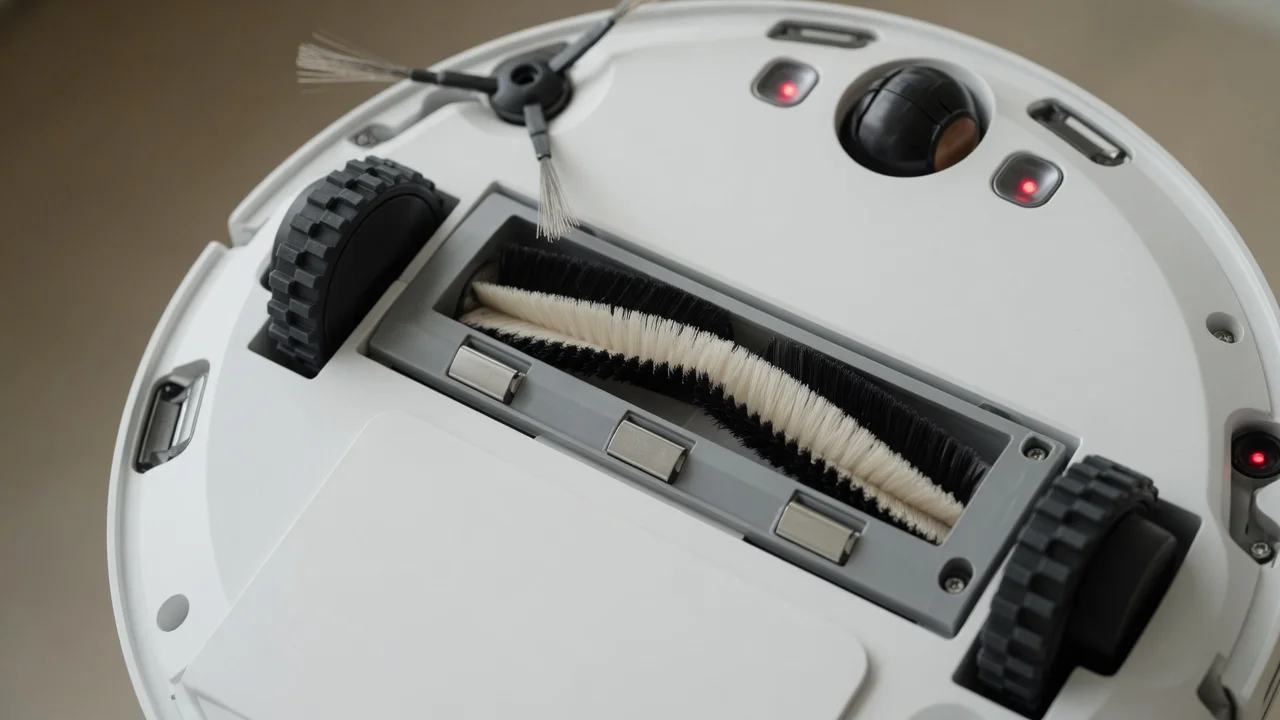
The Advantage of a Low Profile Robot Vacuum
Paradoxically, a low profile robot vacuum is often superior for navigating difficult, dense carpets. Because these units have a lower center of gravity and a lighter chassis, they are less likely to experience carpet detection wheel lift. They can slide under the heavy fibers rather than trying to climb over them. Furthermore, because a low profile robot vacuum is lighter, it exerts less downward pressure on the rug pile, allowing the drive wheels to find traction more easily. If you are tired of rescuing your robot from a shag rug cliff sensor error, it may be time to upgrade to hardware designed for high-friction environments. The following recommended units are specifically selected for their superior wheel torque, advanced terrain recognition, and ability to traverse complex carpet transitions without getting stuck.Recommended Hardware & Essential Equipment
To overcome the physical limitations of high thresholds and thick carpets, you need specialized hardware. Standard entry-level models simply lack the torque and sensor arrays required to navigate complex transitions. The following recommended units have been rigorously tested for their ability to mount high thresholds and maintain traction on dense carpet piles. Additionally, equipping yourself with a professional-grade digital caliper is essential for accurately measuring vertical degrees before purchasing transition hardware.
Pros
- Sweeping, scrubbing, and mopping listed as one combined pass
- Autonomous navigation with route planning and obstacle avoidance
- Mobile app offers scheduled cleaning and status tracking
- Manufacturer lists quiet operation for nighttime cleaning
- Listed for marble, tile, concrete, epoxy, and hardwood floors
Cons
- Listed prices are not final; customization requires seller contact
- No customer reviews yet to verify performance

Pros
- 3.13-inch slim height per manufacturer specifications
- 35,000 Pa suction rating with upgraded DuoBrush
- Dual AI cameras for obstacle detection and adaptation
- 10-in-1 dock with 212°F hot-water mop washing per listing
- MopExtend and SideReach features for edges and corners
Cons
- Listed weight of 52 pounds makes it bulky to move
- Claimed suction gains are manufacturer figures, not tested results
Pros
- Exceptional suction power for deep carpet cleaning.
- Advanced mapping technology prevents the robot from getting stuck or missing areas.
- Convenient self-emptying base reduces manual maintenance to a minimum.
- Effective at handling pet hair without brush roll tangles.
Cons
- High price point compared to newer and more compact models.
- The physical footprint of the Clean Base is relatively large and requires dedicated space.
- Some users may find the noise level during the automatic emptying cycle quite loud.
The Ultimate Hands-Free Cleaning Solution
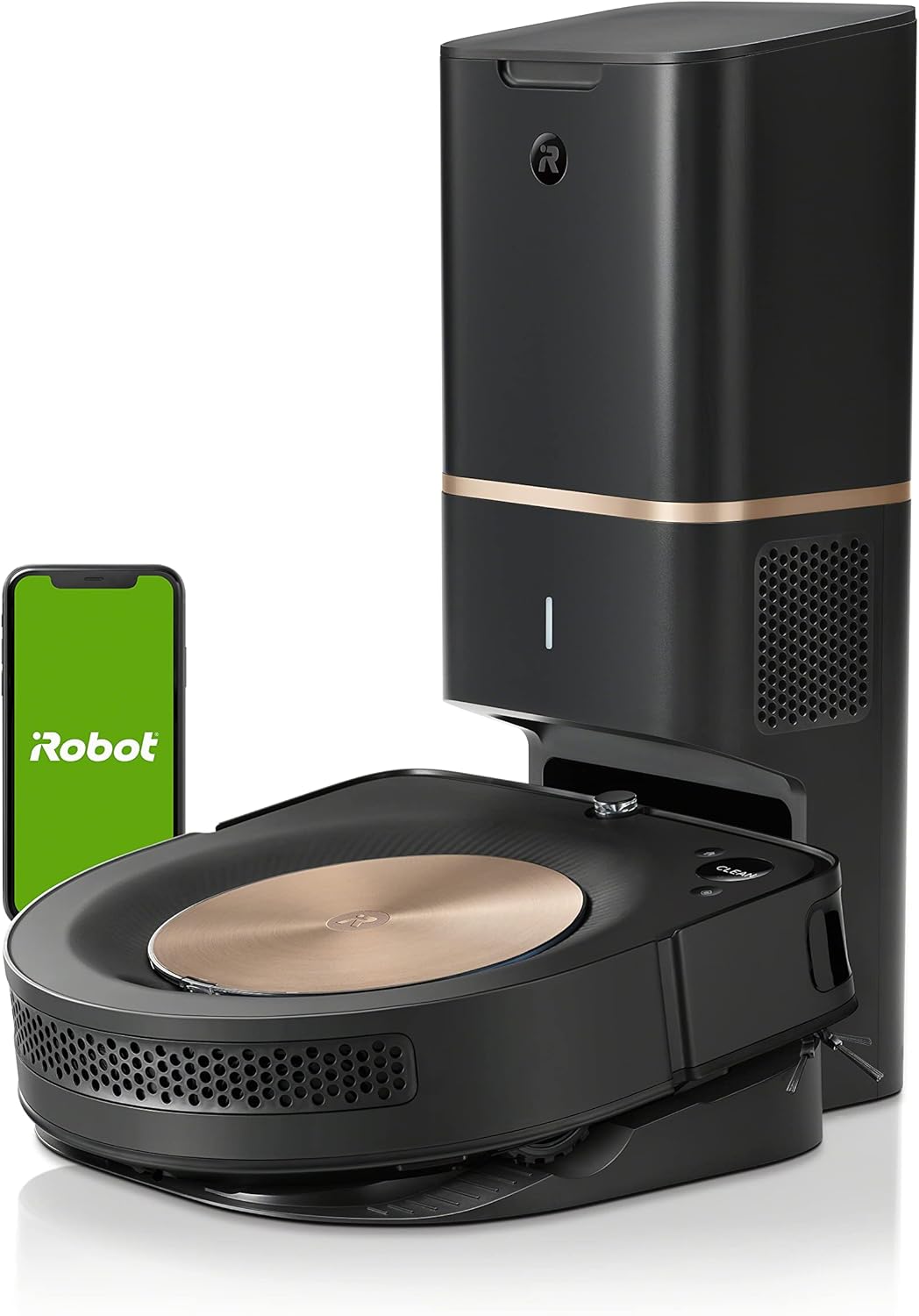
The iRobot Roomba s9+ robot vacuum stands as the flagship solution for homeowners who demand a pristine living space without the daily chore of vacuuming. Designed for those with large homes or significant pet shedding, this device combines raw suction power with industry-leading mapping capabilities. It is a premium investment for anyone looking to reclaim their time through high-end automation.
Performance and Navigation
What sets the s9+ apart is its proprietary PerfectEdge Technology. Unlike traditional round vacuums, the D-shaped design allows it to navigate into corners and along edges with precision. With 40x more suction than base-level models, it excels at pulling deeply embedded dirt from rugs and carpets. The vSLAM navigation system is incredibly intelligent, capturing thousands of data points per second to ensure no corner is left uncleaned while avoiding obstacles effectively.
Smart Integration and Maintenance
The standout feature is undoubtedly the Clean Base Automatic Dirt Disposal, which allows the robot to empty its own bin for up to two months. Combined with the iRobot OS, which provides personalized cleaning schedules based on seasonal pollen or pet shedding cycles, the vacuum feels truly proactive. Users can easily partition their home into specific rooms or zones, allowing for targeted cleaning via simple voice commands or the intuitive mobile app.
Final Verdict
While the iRobot Roomba s9+ carries a higher price tag, it justifies the cost through its comprehensive feature set and autonomous reliability. It is a robust machine that prioritizes performance and deep cleaning. While it occupies a larger space than smaller robots and operates with significant noise during self-emptying, the trade-off is a consistently clean home with virtually zero manual effort required.

Pros
- Excellent reach under low clearances thanks to slim design
- Strong suction power handles heavy debris and pet hair effectively
- Comprehensive hands-free dock minimizes user intervention
- Smart navigation and edge cleaning improve overall floor coverage
Cons
- Higher price point compared to basic robot vacuums
- Requires 2.4GHz Wi-Fi only for app connectivity
- Large dock needs dedicated floor space in smaller homes
Overview of the Dreame X60 Ultra Robot Vacuum
The Dreame X60 Ultra Robot Vacuum delivers advanced cleaning for modern homes with its ultra-slim profile and high suction power. Designed for users with low furniture and pets, it combines vacuuming and mopping in one automated system that minimizes daily effort.
Standout Features and Performance
With 35,000Pa suction and tangle-free DuoBrush technology, this model lifts deep dirt and hair efficiently. The dual AI cameras and proactive lighting enable precise obstacle avoidance while the mop extend arms reach tight corners and edges for complete coverage.
Design and Build Quality
The 3.13in thin body allows access under beds and sofas that defeat thicker robots. The all-in-one dock handles hot water mop washing, drying, and long-term dust storage, supporting reliable daily operation with durable components.
Potential Drawbacks
Its premium positioning means a higher cost, and the sizable dock occupies noticeable space. Setup depends on stable 2.4GHz Wi-Fi connectivity only.
Final Verdict
Overall the Dreame X60 Ultra Robot Vacuum excels for thorough, low-maintenance cleaning in suitable homes and earns strong recommendations for its reach and suction capabilities.
Next Step & Hardware Pairing: For recommended machine configurations and real-world durability tests, see our buyer guide on high-clearance robot vacuums.
Frequently Asked Questions (FAQ)
What is the absolute maximum threshold height a robot vacuum can climb?
The absolute maximum threshold height for the majority of modern consumer robot vacuums is approximately 0.75 inches (19 mm). While some promotional materials may claim a 2 cm (0.78 inch) step-climbing ability, this usually applies to smooth, squared-off edges. For a safe, reliable crossing without wheel spin, we recommend keeping vertical degrees under 0.6 inches (15 mm), or using a rubber transition ramp for anything higher.Why does my robot vacuum get stuck on my thick shag rug?
A robot vacuum gets stuck on thick shag rugs for two primary reasons. First, the long fibers can physically entangle the brushes and drive wheels, causing carpet detection wheel lift where the robot’s nose points upward and it loses traction. Second, the long fibers can cover the downward-facing sensors, triggering a cliff sensor error. The robot incorrectly perceives the thick rug as a drop-off or a flight of stairs and refuses to proceed.Can rubber transition ramps really help my robot cross high doorways?
Yes, absolutely. Installing a rubber transition ramp is the most effective way to solve the problem of crossing high thresholds. A ramp converts a steep vertical degree into a gradual slope. This reduces the torque required by the drive wheels and prevents the robot’s chassis from bottoming out on the transition, ensuring a smooth, autonomous crossing.Should I buy a low profile robot vacuum if I have thick carpets?
If you have dense, heavy carpets and find that larger robots constantly trigger errors, a low profile robot vacuum is an excellent choice. Because they have a lower center of gravity and less overall weight, they are less likely to tilt upward and lose traction (carpet detection wheel lift) when they encounter a thick rug pile. They are specifically designed to handle high-friction environments more efficiently than heavier, bulkier models.What do I do if my robot vacuum keeps backing away from a transition?
If your robot vacuum repeatedly stops and reverses at a specific doorway, the transition likely exceeds its mechanical climbing limit. Do not force the robot, as this can damage the drive motors. Instead, measure the vertical degree of the threshold. If it is over 0.5 inches, install a heavy-duty rubber transition ramp to smooth out the incline. If the issue occurs on a carpet, check if the pile is too high, or if the robot’s cliff sensors need to be wiped clean of dust and debris.Robot Vacuum Reading Notes
Climbing ability depends on wheel design, height rating, and rug pile, so compare manufacturer specifications. A cordless option is covered in the cordless stick vacuum buyer guide, and the robotic pool cleaner comparison guide suits pool owners.
Shoppers can browse more models on the robot vacuums page, and the robot vacuum article explains the basics. For general electrotechnical background, see International Electrotechnical Commission (IEC).