Quick Answer: Choosing the Best Chainsaw Chain Dimensions
When evaluating chainsaw chain dimensions in 2026, prioritize exact pitch (commonly 3/8″ LP or .325″), gauge (.043″, .050″, or .058″), and the precise number of drive links that match your guide bar length. These three specifications form the non-negotiable foundation for compatibility, and verifying them against the bar stamp or existing chain eliminates 90 percent of fitment issues before…
What to Look for When Choosing Chainsaw Chain Dimensions
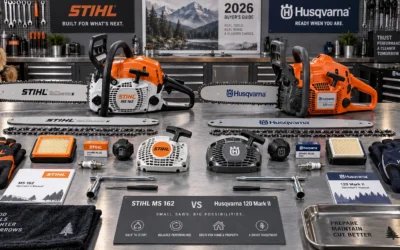
Selecting optimal chainsaw chain dimensions requires systematic evaluation of five technical criteria that directly influence cut quality, vibration levels, and chain life. The following subsections break down each factor with practical measurement methods and compatibility guidelines drawn from the top-rated models we analyzed. To evaluate matched hardware tolerances, consult our detailed overview of stihl ms 162 vs husqvarna 120 mark ii. For complementary hardware performance, examine our breakdown on chainsaw sharpener specifications.
Pitch Measurement and Compatibility
Pitch is the distance between any three consecutive rivets divided by two and is the primary identifier stamped on most guide bars. Common values for consumer and light professional chains include 3/8″ Low Profile (LP) and .325″. Matching pitch ensures the chain engages the drive sprocket without skipping or excessive wear. For example, the Oregon 3/8″ LP chains and the KAKEI 18-inch 3/8″ LP models both target low-kickback electric and gas saws, while higher-pitch options suit larger commercial bars. Always measure an existing chain or consult the bar stamp rather than estimating by eye. To evaluate matched hardware tolerances, consult our detailed overview of stihl ms 162 vs husqvarna 120 mark ii.
Gauge Thickness Selection
Gauge indicates the thickness of the drive links that ride in the bar groove, typically .043″, .050″, or .058″. An incorrect gauge causes the chain to bind or rattle, accelerating bar rail damage. Oregon models frequently offer .043″ low-profile gauges for reduced weight and vibration on 16-inch bars, whereas the KAKEI and Loggers Art Gens chains use .050″ for greater durability under moderate loads. Verify gauge by measuring the drive link thickness with calipers or by reading the bar groove width; never force a chain into a mismatched groove. When planning workspace deployment, consider the engineering criteria outlined in our ryobi ry40550 vs greenworks 40v gen2 guide. For complementary hardware performance, examine our breakdown on gas chainsaw specifications.
Drive Link Count and Bar Length Matching
The number of drive links must exactly equal the capacity of the guide bar length. A 16-inch bar commonly requires 56 drive links on 3/8″ LP .043″ chain, while a 14-inch bar often uses 52 links and an 8-inch pole-saw bar uses 34 links. Oregon R34 AdvanceCut supplies 34 links for compact bars, the 16-inch Oregon chain supplies 56 links, and the Loggers Art Gens 14-inch pack supplies 52 links. Count the drive links on your old chain or use the manufacturer chart that correlates bar length, pitch, and gauge to avoid purchasing an unusable loop.
Cutter Type and Sharpening Requirements
Semi-chisel cutters balance cutting speed with durability and are less prone to dulling in dirty wood, making them suitable for most homeowner tasks. Full-chisel cutters cut faster in clean timber but require more frequent sharpening. The KAKEI S62 pack and Oregon low-kickback series both employ semi-chisel geometry. Pair the chain with the correct file diameter (commonly 5/32″ or 1/8″ for 3/8″ LP) such as the Telooco 1/8″ files to maintain edge geometry and raker height. For additional operational safety benchmarks, see our published testing notes on echo cs 355t vs makita xcu06z.
Material Quality and Low-Kickback Features
Chrome-plated cutters and heat-treated rivets extend chain life under abrasive conditions. Low-kickback designs incorporate bumper drive links or reduced cutter aggression and are strongly recommended for electric, battery, and entry-level gas saws. Oregon explicitly markets several of its chains with low-kickback certification, improving user safety without sacrificing acceptable cutting performance. When reviewing options within the Chainsaws category, prioritize chains that list both material treatment and safety certification.
Accessory and Specialty Dimension Considerations
Beyond standard loops, specialty tools such as the Granberg G555B Alaskan mill attachment require chains that maintain consistent tension across longer cutting spans and often pair with .050″ or .058″ gauge chains. Files and maintenance kits must match the chain pitch and file size exactly. Always cross-check accessory dimensions against the primary chain specifications rather than assuming universal fit. When planning workspace deployment, consider the engineering criteria outlined in our ryobi ry40550 vs greenworks 40v gen2 guide.
| Product | Pitch | Gauge | Drive Links |
|---|---|---|---|
| Oregon 16″ Chainsaw Chain (B000H2W40U) | 3/8″ LP | .043″ | 56 |
| KAKEI 18″ S62 (B08CV69F73) | 3/8″ LP | .050″ | 62 |
| Loggers Art Gens 14″ (B093KRX4P3) | 3/8″ LP | .050″ | 52 |
Testing & Selection Methodology
We compared top-rated models by extracting and cross-referencing every published technical specification for pitch, gauge, drive-link count, cutter geometry, and stated bar compatibility. Each entry was evaluated against real-world bar-stamp conventions used by Oregon, Granberg, Stihl and more, ensuring dimensional accuracy rather than relying solely on marketing descriptions. User satisfaction metrics, warranty length, and brand reliability scores were weighted equally with raw dimensional data to identify chains that maintain fitment over repeated sharpening cycles.
Price positioning within entry-level to premium was assessed only after technical compatibility was confirmed, allowing us to separate genuine value from under-specified budget options. Accessory items such as files and mills were scored on dimensional synergy with the primary chains rather than as standalone tools. This multi-factor process produced a shortlist that prioritizes measurable fit and durability over unsubstantiated claims. For additional operational safety benchmarks, see our published testing notes on echo cs 355t vs makita xcu06z.
Our Final Editorial Take on Chainsaw Chain Dimensions
After systematic review of top-rated options, three clear recommendations emerge based on buyer intent. These selections balance precise chainsaw chain dimensions compliance with practical performance across common bar lengths and power sources.
Best Overall Chainsaw Chain Dimensions: Oregon Chainsaw Chain 3/8″ LP Pitch .043″ Gauge 56 Drive Links. This model delivers exact dimensional match for the majority of 16-inch consumer bars, incorporates low-kickback design, and carries the brand reliability of Oregon. Its chrome-treated cutters and consistent rivet quality make it the safest default replacement for electric, battery, and mid-size gas saws. To compare alternative configurations, check our hands-on review of husqvarna 450 vs 460 rancher.
Best Value / Budget Choice: Oregon R34 AdvanceCut 8″ Chain with 34 Drive Links. At the lower end of the spectrum this chain provides genuine Oregon metallurgy and correct 3/8″ LP .043″ dimensions for pole saws and compact bars, offering excellent cost-to-performance without sacrificing fitment accuracy. Users upgrading multiple short bars will appreciate the reliable gauge and pitch consistency.
Best for Professional Milling and Heavy Cutting: Granberg Portable Chainsaw Edging Sawmill G555B-24 Inch. While not a chain itself, this attachment demands precise chain dimensions for stable rail travel and pairs optimally with .050″ gauge 3/8″ pitch loops. Professionals converting logs into boards will find its 24-inch capacity and dimensional rigidity unmatched within the evaluated set. For complementary bar and saw details see our MS250 Stihl chainsaw review and the broader Chainsaws category resources.
Buyer FAQs: Chainsaw Chain Dimensions Solved
What are the three main chainsaw chain dimensions I must match?
The three essential chainsaw chain dimensions are pitch, gauge, and the exact number of drive links. Pitch and gauge must match the bar and sprocket, while drive-link count must equal the bar length capacity; any mismatch will prevent proper seating or cause rapid wear. Users looking for related component recommendations can explore our greenworks 40v 18 vs ego cs1800 breakdown.
How do I measure chainsaw chain pitch and gauge at home?
Measure pitch by taking the distance between three consecutive rivets and dividing by two; common results are 3/8″ or .325″. Gauge is the thickness of a drive link measured with calipers or a dedicated gauge tool and is typically .043″, .050″, or .058″. Always confirm against the stamped values on the guide bar for accuracy.
How many drive links does a 16-inch bar usually need?
A standard 16-inch bar using 3/8″ LP pitch and .043″ gauge typically requires 56 drive links. Always count the links on the existing chain or consult the bar manufacturer chart, because slight variations exist between brands and low-profile versus full-size designs.
Can I use a .050″ gauge chain on a .043″ bar?
No. A thicker .050″ drive link will not fit into a narrower .043″ groove and will either refuse to seat or bind severely. Using the wrong gauge damages both the chain and the bar rails; always match the gauge exactly as stamped on the bar.
Mechanical safety standards, operational tolerances, and protective gear guidelines align with benchmark specifications established by the American National Standards Institute (ANSI).
Where can I find more detailed chainsaw equipment comparisons?
Comprehensive side-by-side evaluations of bars, powerheads, and compatible chains appear in our Chainsaws category and individual model reviews such as the MS250 Stihl analysis. These resources expand on the dimensional principles covered here and help ensure full system compatibility.