

Quick Answer: Choosing the Best Commercial Chainsaws
When selecting commercial chainsaws in 2026, prioritize engine displacement between 38-cc and 60-cc for balanced power output of 1.8-HP to 3.6-HP, bar lengths of 16 to 24 inches matching workload intensity, and features like LowVib technology or centrifugal air injection systems for durability and reduced maintenance. Our analysis of top-rated models emphasizes X-Torq engines that cut emissions while boosting…

Pros
- Powerful 3.6-HP X-Torq engine delivers high cutting performance
- Ergonomic LowVib design reduces vibrations for easier handling
- Smart Start and combined choke/stop control simplify reliable startups
- Air filtration system supports longer engine durability
- Built-in inertia chain brake enhances user safety
Cons
- 2-cycle gas engine requires fuel-oil mixing and ongoing maintenance
- Limited to recommended bar lengths of 13 to 24 inches only
- Gas-powered design produces typical noise and emissions of combustion tools
The Husqvarna 460 Rancher is a robust gas powered chainsaw with a 24 inch bar built for wood cutting, tree trimming and land clearing. It combines exceptional ergonomic features for easier handling and mobility with the superior power of a gas chainsaw, creating a solid immediate impression as a durable outdoor tool.
Performance comes from the 60.3-cc 3.6-HP X-Torq engine that maximizes power even at low RPMs. Standout features include Smart Start for effortless quick startups, Air Injection Technology that expels larger dust and debris particles before they reach the air filter, an automatic adjustable oil pump, LowVib technology, a 7 degree offset front handle with improved grip, and an inertia-activated chain brake to reduce kickback risks. Combined choke/stop control further eases starting and lowers flooding risk.
Drawbacks and considerations include the need for regular 2-cycle fuel mixing and maintenance typical of gas engines. It is recommended strictly for bar lengths between 13 inches minimum and 24 inches maximum, which may limit versatility on bigger jobs. Users should also account for the noise and emissions common to this power type.
The Husqvarna 460 Rancher delivers the most value to experienced users handling demanding land clearing or heavy wood cutting tasks who prioritize raw power, safety features and ergonomic handling in a reliable gas chainsaw.

Pros
- Strong 3.5-HP X-Torq engine delivers reliable power for demanding outdoor cuts
- Smart Start and ergonomic grip make the saw easy to start and maneuver
- Air Injection system helps prolong engine life by keeping the filter cleaner
- Safety-focused inertia chain brake and LowVib design reduce user fatigue and risk
- Automatic oiler supports consistent operation without frequent manual lubrication
Cons
- As a 2-cycle gas engine it requires fuel mixing and more regular maintenance than electric alternatives
- Limited to recommended bar lengths of 13 to 24 inches which may not suit all heavy-duty needs
- Gas-powered design produces typical noise and emissions associated with 2-cycle chainsaws
The Husqvarna 455 Rancher is a gas-powered handheld chainsaw built around a 55-cc 3.5-HP 2-cycle X-Torq engine paired with a 20-inch bar. Its design emphasizes ergonomic handling with a 7 degree offset front handle and improved grip for better mobility during wood cutting, tree trimming and land clearing. The overall build focuses on combining power with user-friendly features for both residential and more demanding outdoor work.
In performance the patented X-Torq engine technology maximizes power output even at low RPMs while Smart Start allows quick and easy ignition with minimal effort. The centrifugal Air Injection system expels larger dust and debris particles before they reach the filter to support longer engine life. An automatic oiler keeps the chain lubricated during use and LowVib technology with dampeners reduces vibrations for smoother handling across recommended 13 to 24-inch bars. The inertia-activated chain brake further enhances safety by limiting kickback risks.
Potential drawbacks stem from the 2-cycle gas engine which requires proper fuel mixing and ongoing maintenance that electric models avoid. The saw is optimized only for bar lengths between 13 and 24 inches so users needing longer bars will find it restrictive. As with most gas chainsaws it also generates more noise and emissions than battery-powered options.
Overall the Husqvarna 455 Rancher delivers strong value for homeowners, property owners and professionals who need a capable gas chainsaw for medium to heavy outdoor cutting tasks. It is especially well suited as a reliable tool for land clearing and tree work or as a practical gift for men who tackle yard and property maintenance.

Pros
- Efficient X-Torq engine that lowers emissions and improves fuel efficiency
- Smart Start system for effortless and reliable startups
- LowVib technology that reduces vibrations for more comfortable handling
- Air Injection filtration that extends engine life by keeping debris out
- Inertia-activated chain brake that enhances operator safety
Cons
- As a 2-cycle gas engine it requires proper fuel-oil mixing which adds preparation steps compared to electric models
- Gas operation means regular maintenance such as filter cleaning and fuel system care that electric saws often avoid
- The 18-inch bar suits homeowner use but may feel limited for larger professional felling jobs
The Husqvarna 440 gas chainsaw delivers a slimmer saw body and lightweight build that make it approachable for wood cutting and tree trimming around the home. Immediate impressions focus on its balanced design and practical features aimed at everyday users who need dependable performance without excess bulk.
In real-world cutting the 40-cc 2.4-HP X-Torq engine provides solid power while reducing emissions up to 60 percent and raising fuel efficiency up to 20 percent. Smart Start technology allows easy ignition with minimal effort, Air Injection technology expels larger dust and debris before it reaches the filter for longer engine life, and LowVib dampeners keep vibrations low for comfortable handling. The inertia-activated chain brake further supports safer operation during kickback events.
Potential drawbacks center on its 2-cycle gas nature. Users must mix fuel and oil correctly, store gas carefully, and perform routine maintenance that pure electric chainsaws largely eliminate. The fixed 18-inch bar also suits residential tasks best and may not cover heavy commercial work.
Overall the Husqvarna 440 offers the best value for homeowners and DIY enthusiasts who want a reliable gas chainsaw for occasional firewood cutting, pruning, and property maintenance where unrestricted runtime and solid power matter most.

Pros
- Powerful and efficient 50.2-cc X-Torq engine for superior cutting performance
- Effortless Smart Start system for reliable and easy ignition
- Air Injection Technology protects the engine by cleaning debris early
- Ergonomic design combined with LowVib for improved comfort and handling
- Inertia-activated chain brake enhances safety against kickback
Cons
- Requires proper 2-cycle fuel and oil mixing plus ongoing maintenance of filters and chain
- Gas-powered design produces emissions and is unsuitable for indoor or enclosed spaces
- Optimized only for bar lengths between 13 and 20 inches, limiting use with other sizes
The Husqvarna 450 Rancher is a robust 20 inch gas chainsaw built for outdoor tasks including tree pruning, yard cleanups and firewood cutting. Its design emphasizes ergonomics through a soft inlay, ergonomic trigger and asymmetrical handle, creating an immediate impression of solid build quality and practical comfort for regular use. LowVib technology complements the construction to support better overall handling.
In performance the 50.2-cc 3.2-HP 2-cycle X-Torq engine supplies strong and efficient power for cutting through wood of varying sizes. Smart Start technology makes ignition quick and low-effort while the centrifugal Air Injection system removes larger dust and debris particles before they reach the air filter to promote longer engine life. The inertia-activated chain brake adds a key safety measure against kickback. The saw is recommended for bars between 13 and 20 inches, matching a range of common yard and firewood needs.
As a gas-powered model this chainsaw needs correct fuel and oil mixing for its 2-cycle engine along with routine maintenance of the air system and chain. Emissions restrict it to outdoor environments only, and operators should still plan for proper handling technique even with the vibration-reducing features during longer work periods.
The Husqvarna 450 Rancher offers strong value for homeowners and landscapers who need dependable gas power for medium to heavy cutting jobs. Users focused on easy starting, engine durability and ergonomic comfort will benefit most when tackling pruning, cleanups and firewood preparation.

Pros
- Commercial-grade 55cc engine size is suitable for demanding cutting applications
- Oregon bar and 20-inch setup are well matched for larger cutting jobs
- Magnesium crankcase and forged crankshaft construction suggest a focus on durability
- Automatic oiling supports chain longevity and easier maintenance
- Backed by a 3-year residential warranty and 1-year commercial warranty
Cons
- As a gas-powered 2-cycle chainsaw, it requires fuel mixing and more upkeep than a cordless electric model
- The 1-year commercial warranty is shorter than the residential warranty
- The included accessory set is basic, so extra chains or additional maintenance supplies may need to be purchased separately
Overview: The PRORUN PCS560C is a 55.5cc gas-powered 2-cycle commercial chainsaw with a 20-inch chain and Oregon bar. Its full magnesium crankcase and forged crankshaft point to a design focused on durability and repeated use.
Performance: This saw is built for users who need more cutting power than a typical homeowner model. The spring-assisted pull handle and decompression valve are practical touches that can make starting easier, while automatic oiling helps support smoother operation and chain wear reduction.
Drawbacks: It is not a low-maintenance cordless tool, so owners should expect fuel mixing, routine engine care, and more noise than an electric saw. The commercial warranty is also shorter than the residential coverage, which may matter for professional buyers.
Verdict: The PCS560C makes the most sense for contractors, property owners, and users who want a rugged gas chainsaw with a longer bar and serious cutting capability. It looks best suited to buyers who value power and durability over convenience.

Pros
- Commercial-grade 34.4cc gas engine for serious cutting performance.
- Reduced starting effort thanks to the i-30 starter system.
- Vibration control system improves comfort during longer jobs.
Cons
- Gas-powered design requires fuel mixing, refueling, and routine engine maintenance.
- Rear-handle layout is less convenient for overhead or specialized one-handed cutting tasks.
- 16-inch bar and 34.4cc engine may be less suitable for very large-diameter or heavy forestry work.
Overview & Design: The ECHO Commercial Gas Rear Handle Chain Saw with 16In Bar and 34.4Cc is a gas-powered chainsaw aimed at users who want a compact, work-ready tool for regular cutting tasks. Its lower-weight design is a meaningful advantage for users who spend long periods on the saw.
Performance & Key Features: The 34.4cc commercial-grade engine provides the type of power expected from a professional-focused chainsaw, while the i-30 starter is designed to reduce starting effort by 30%. The 3-point spring vibration reduction system and air injection air cleaner add comfort and help support easier maintenance over time.
Drawbacks & Considerations: As a gas saw, it is not as simple as a battery model when it comes to fueling and upkeep. The rear-handle design is best suited to standard cutting positions, and the 16-inch bar may be limiting for users who regularly tackle much larger wood.
Verdict: This ECHO chainsaw is a strong fit for contractors, property owners, and professionals who want a lighter commercial-grade gas saw with easier starting and comfort-focused features. It is best for users who value dependable cutting performance and are comfortable with gas-tool maintenance.

Pros
- Powerful 68 cc engine for heavier-duty cutting.
- Anti-vibration system adds comfort during use.
- Quick-start design can make the saw easier to get running.
- Useful for pruning, firewood preparation, land clearing, and storm cleanup.
Cons
- Gas-powered design requires fuel mixing and routine maintenance, and it will be louder than battery models.
- Top-handle chainsaws can be less comfortable for extended ground-level cutting and may suit experienced users better.
- The manufacturer listing does not include full specs such as weight, chain pitch, or included accessories.
Overview: The PROYAMA 68CC 2-Cycle Top Handle Gas Powered Chainsaw is built for users who need portable cutting power for outdoor work. The top-handle format and gas engine point to a tool aimed at pruning, cleanup, and general wood cutting rather than light-duty trimming.
Performance: Its 68 cc 2-cycle engine is the key strength, offering the kind of power that can help with firewood prep, clearing storm debris, and cutting larger branches or logs. The anti-vibration system should also improve control and reduce fatigue, while the quick-start design is a practical advantage when you want to get to work faster.
Drawbacks: As with most gas chainsaws, this model will require fuel handling, routine maintenance, and will be noisier than an electric or battery alternative. The top-handle design may also be less comfortable for long sessions of ground-level cutting, and the manufacturer listing does not list full technical details such as weight or chain specifications.
Verdict: This PROYAMA chainsaw makes the most sense for property owners, landscapers, or experienced users who want a powerful gas saw for pruning and cleanup tasks. If you value strong cutting performance and portability more than low maintenance and quiet operation, it is a solid option to consider.
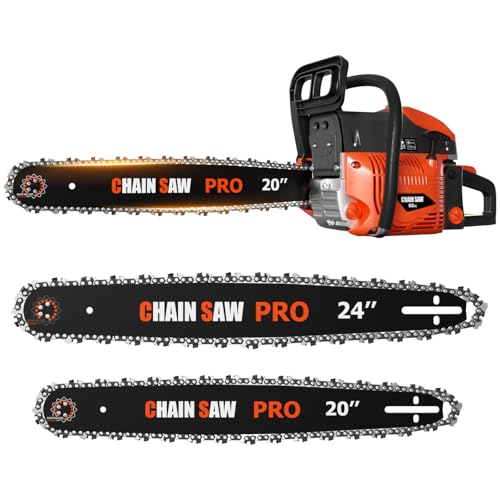
Pros
- Powerful 62CC gas engine with 3.5HP output for demanding wood cutting jobs.
- Comes with two guide bar sizes, 20 inch and 24 inch, for better task versatility.
- Safety-focused design includes low-kickback chain, start lock, and quick-stop brake.
- Shock-absorbing handle system helps reduce vibration and user fatigue.
- High-strength steel bar and chain support durability and fast cutting.
Cons
- Gas-powered 2-stroke operation requires fuel mixing and more maintenance than electric chainsaws.
- At 14 lbs, it may still feel heavy for extended overhead pruning or users seeking an ultra-light saw.
- Product data does not list included accessories, fuel tank capacity, chain pitch, or exact dimensions.
Overview & Design: The Baotree B0FXM6NNZT is a professional-style 62CC gas chainsaw built for tree cutting, firewood processing, trimming, and medium-duty felling tasks. Its high-strength steel bar and chain are designed for fast cutting and wear resistance, while the ergonomic non-slip handle and built-in shock absorber focus on control and comfort during longer work sessions.
Performance & Key Features: With a 2-stroke engine rated at 3.5HP and speeds up to 12,000 RPM, this chainsaw is built for users who need more cutting force than a compact electric saw can typically provide. The included 20-inch and 24-inch guide bars make it more versatile, allowing shorter-bar handling for branches and longer reach for larger wood. The low-kickback chain, quick-stop brake, and anti-accidental-start lock add practical safety support.
Drawbacks & Considerations: Because this is a gas chainsaw, it requires fuel mixing, routine maintenance, and more setup than a battery-powered or corded model. The listed 14 lb weight is portable for its engine class, but it may still be tiring for overhead cutting or users who prefer very lightweight tools. Some technical details, such as tank capacity, chain pitch, and exact dimensions, are not provided in the product data.
Verdict: The Baotree B0FXM6NNZT is best suited for homeowners, landowners, and outdoor workers who want a powerful gas chainsaw with dual bar options and built-in safety features. It offers strong value for cutting firewood, trimming branches, and tackling small to medium trees, especially for users comfortable with the maintenance needs of a 2-stroke gas tool.

Pros
- Strong 58CC, 3.6HP gas engine for heavier cutting applications.
- Easy-start ignition system is designed for more reliable startup performance.
- Multiple safety controls are included for added user protection.
- Reinforced components support continuous, high-load use.
Cons
- Gas-powered design means more maintenance than a battery or electric chainsaw.
- It will likely be louder and produce exhaust fumes during use.
- The listing does not provide key comparison details such as weight, chain speed, or package contents.
Overview: The WORKIT 58CC Gas Powered Chainsaw is a 2-cycle gas saw designed around a 3.6HP Xtreme Engine. Its reinforced body and heavy-duty hardware give it a rugged, work-ready feel for users who need a tool built for frequent outdoor cutting.
Performance: Based on the listed specifications, this model is aimed at hardwood cutting, thick logs, and tree pruning. The OptiSpark Ignition is intended to improve starting consistency, while the auto oiler helps keep the chain lubricated during longer jobs.
Drawbacks: Like most gas chainsaws, it requires fuel, routine maintenance, and careful handling. The listing also leaves out several comparison details, including weight, chain speed, and package contents, which may matter to shoppers who want a fuller spec sheet.
Verdict: This chainsaw makes the most sense for buyers who want gas-powered performance, easier starts, and multiple safety features in one tool. It is especially relevant for homeowners with demanding yard work and users who need more cutting power than a typical electric saw.
What to Look for When Choosing Commercial Chainsaws
Engine Displacement and Power Output
Engine size measured in cubic centimeters determines the sustained cutting force required for commercial workloads involving hardwoods, thick limbs, and continuous land clearing. Units in the 50-cc to 60-cc range delivering 3.2-HP to 3.6-HP excel at maximizing torque even at lower RPMs thanks to X-Torq technology, while 38-cc to 40-cc engines at around 1.8-HP to 2.4-HP suit lighter pruning and occasional firewood tasks. Calculate requirements by estimating average daily cut volume and wood density: high-intensity professional use demands at least 50-cc to avoid overheating or power fade mid-session. Models equipped with patented engine tech that reduces emissions up to 60 percent and increases fuel efficiency up to 20 percent extend runtime between refuels, directly impacting job-site productivity. Users looking for related component recommendations can explore our stihl ms 162 vs husqvarna 120 mark ii breakdown. For complementary hardware performance, examine our breakdown on our comprehensive chainsaw sharpener guide.
When comparing options, match the horsepower rating to bar length recommendations to prevent strain on the powerhead. Higher displacement also supports automatic oil pumps that keep chains lubricated under heavy loads. Reviewers should note combined choke and stop controls that simplify restarts and lower flooding risk after pauses, a practical advantage during multi-hour clearing projects. This criterion remains foundational because underpowered engines lead to longer work times and higher fuel consumption overall.
Bar Length and Chain Compatibility
Bar length directly influences cutting capacity and maneuverability for commercial chainsaws. Recommended ranges typically span 13 to 24 inches depending on the model, with 18-inch to 20-inch bars offering versatility for mixed tree trimming and wood processing, while 24-inch options handle larger diameter logs efficiently. Select a bar that aligns with the engine’s output so the chain maintains speed without bogging down. Automatic adjustable oil pumps ensure consistent lubrication across the full length, reducing wear and heat buildup during prolonged cuts.
Tool-free tensioning systems, when available, allow quick mid-job adjustments without specialized tools, minimizing downtime. Confirm compatibility with the listed min-max bar lengths to avoid voiding performance claims. Shorter bars improve control in dense brush, whereas longer ones increase reach for felling or bucking. Pairing the correct bar with inertia-activated chain brakes enhances safety by stopping the chain rapidly on kickback detection. This selection process prevents inefficient cutting angles and excessive operator effort, as noted when reviewing similar specifications in our MS250 Stihl chainsaw analysis.
Safety Features and Vibration Control
Safety systems form a non-negotiable layer for commercial operators facing daily exposure to kickback and fatigue risks. Inertia-activated chain brakes engage automatically to halt chain movement during sudden upward forces, significantly lowering injury potential. Soft inlays, ergonomic triggers, and asymmetrical or 7-degree offset front handles improve grip and reduce strain during extended handling of recommended bar lengths. LowVib technology using specialized dampeners isolates the operator from engine and cutting vibrations, allowing longer sessions with less risk of hand-arm vibration syndrome.
Air purge systems combined with Smart Start mechanisms further support safe operation by enabling reliable cold and warm starts with minimal effort, reducing the chance of flooding or abrupt restarts. Evaluate these elements together because effective vibration reduction pairs with secure handling to maintain precision on uneven terrain or overhead cuts. Models lacking robust dampening force frequent breaks and lower overall productivity. Prioritizing these features protects both the user and the investment across farm, forest, and yard environments.
Air Filtration, Fuel Efficiency, and Maintenance
Centrifugal air injection or cleaning systems expel larger dust and debris particles before they reach the air filter, extending engine life under dusty commercial conditions such as land clearing or firewood processing. This technology reduces cleaning frequency and prevents power loss from restricted airflow. X-Torq engines contribute by lowering emissions and raising fuel efficiency, which translates to fewer tank refills during full workdays. Automatic oilers maintain chain and bar lubrication without manual intervention, decreasing the chance of premature wear.
Maintenance considerations include accessible filters and simple choke controls that minimize downtime. Units designed for easier starting and reduced flooding support consistent daily readiness. Assess expected service intervals based on these systems rather than basic designs that clog quickly. Efficient filtration and lubrication directly correlate with lower long-term ownership costs and higher reliability scores among professional users.
Weight, Ergonomics, and Portability
Overall balance and weight distribution affect all-day usability more than raw mass alone. Slimmer body designs combined with soft grips and LowVib dampeners allow better control during pruning or cleanup without excessive arm fatigue. Front handle offsets improve natural wrist position when working at various angles. For mobile crews moving between sites, lighter configurations around mid-range power outputs facilitate transport while still delivering adequate cutting force.
Test the interaction between handle geometry and vibration isolation by reviewing listed ergonomic features. Models intended for commercial duty often incorporate these elements to sustain output across multi-hour shifts. Proper ergonomics also improve accuracy and reduce compensatory postures that lead to secondary injuries. Choose designs that match the primary use case – compact for detailed tree work or more substantial for ground-based bucking – to optimize comfort and efficiency.
| Model | Engine Specs | Bar Length | Key Technologies |
|---|---|---|---|
| Husqvarna 460 Rancher | 60.3-cc 3.6-HP X-Torq | 24 Inch (13-24 range) | Smart Start, Air Injection, LowVib, Inertia Brake |
| Husqvarna 450 Rancher | 50.2-cc 3.2-HP X-Torq | 20 Inch (13-20 range) | Smart Start, Air Injection, LowVib, Soft Inlay Grip |
| VEVOR Gas Chainsaw | 52CC 2-Cycle | 18 Inch | Not Specified |
Engine and Bar Specs Compared
Commercial buyers tend to start with engine specs and bar length. The table places model, engine specs, bar length and key technologies together, using maker specifications and Amazon listings as the reference. Ratings from customers are included when they exist. Another pairing to view is husqvarna 450 vs 460 rancher.
Our Final Editorial Take on Commercial Chainsaws
After structured comparison of the full set, clear leaders emerge for different professional needs. The Husqvarna 460 Rancher Gas Powered Chainsaw qualifies as the Best Overall Commercial Chainsaws thanks to its 60.3-cc 3.6-HP X-Torq engine, support for up to 24-inch bars, Smart Start system, centrifugal air injection, and LowVib technology with a 7-degree offset handle. These attributes deliver superior low-RPM power, reduced kickback risk via inertia brake, and lower operator fatigue during intensive wood cutting, tree trimming, and land clearing. Readers comparing setup options can review our technical analysis on greenworks 40v 18 vs ego cs1800.
The Best Value / Budget Choice is the VEVOR Gas Chainsaw with its 52CC 2-cycle engine and 18-inch bar configuration, offering capable performance for forest, wood, garden, and farm cutting at the accessible end of the spectrum. For Best for Professional Land Clearing and Heavy Timber, the Husqvarna 455 Rancher stands out with its approximately 55-cc 3.5-HP X-Torq setup, automatic oiler, Air Injection, and ergonomic LowVib design suited to sustained 13-to-24-inch bar work. Additional strong contenders include the Husqvarna 450 Rancher for balanced 20-inch versatility and the Husqvarna 440 for lighter efficient 18-inch tasks. Cross-reference these selections with broader evaluations available in our detailed chainsaw review and the complete Chainsaws category page.
In final assessment, models incorporating X-Torq efficiency, robust filtration, and vibration isolation consistently rank highest for commercial durability and daily usability. Selecting according to primary workload – power for heavy clearing versus agility for pruning – ensures optimal return across the evaluated top-rated options in 2026.
Buyer FAQs: Commercial Chainsaws Solved
What engine size is ideal for commercial chainsaws?
Engines between 50-cc and 60-cc delivering 3.2-HP to 3.6-HP provide the ideal balance of power and efficiency for most commercial chainsaws used in tree work and land clearing. Smaller 38-cc to 40-cc units handle lighter pruning and yard cleanups effectively, while larger displacements support continuous heavy cutting without power loss. X-Torq designs within this range further improve low-RPM performance and fuel economy.
What bar length should I choose for heavy-duty cutting?
Bar lengths of 18 to 24 inches suit heavy-duty commercial cutting of larger logs and dense timber, provided the engine supports the recommended maximum. Shorter 16-inch bars offer better control for detailed pruning and maneuverability in tight spaces. Always match the bar to the model’s specified min-max range and ensure the automatic oiler covers the full length for consistent lubrication.
How do anti-vibration systems improve use of commercial chainsaws?
Anti-vibration systems such as LowVib technology with dampeners significantly reduce the transmission of engine and cutting forces to the operator’s hands and arms. This allows longer continuous work periods with lower risk of fatigue or vibration-related injury while maintaining precise control. Combined with ergonomic grips and offset handles, these features improve overall productivity and comfort on demanding job sites.
What is the typical price range for quality commercial chainsaws?
Quality commercial chainsaws typically fall within the $99.99 to $649.99 range, covering everything from capable entry-level gas models to high-output professional units with advanced engines and ergonomics. Budget options emphasize core cutting ability for farm and garden use, while premium selections add filtration, Smart Start, and extended bar support for intensive commercial applications. Evaluate total cost of ownership including fuel efficiency and maintenance needs rather than purchase price alone. Additional comparisons appear in our Chainsaws category overview.
Are gas or cordless models better for commercial applications?
Gas-powered models generally outperform cordless options for commercial applications requiring unlimited runtime, higher sustained power, and capability with longer bars in remote or high-volume settings. Cordless units with brushless motors and multiple batteries suit lighter intermittent tasks or noise-sensitive areas but may require frequent swaps during full-day clearing. Most professional users prefer gas for its power density and independence from charging infrastructure.
Professional Use and Parts Sourcing
Keeping a professional saw running depends on sourcing the right parts, so the guide to homelite chainsaw replacement parts is a useful next read.
Frequent or professional use raises the stakes for safety, and American National Standards Institute (ANSI) is a sound place to begin.









