A compact cordless blower suits homeowners, DIYers, and mechanics who need lightweight, fast clearing for patios, vehicle surfaces, and garage floors without managing cumbersome extension cords. While bare-tool options offer great value if you already own brand-name batteries, they lack included power packs, whereas standalone dual-battery kits provide ready-to-use packages but use proprietary battery platforms.

Pros
- Includes two 4.0Ah batteries and a fast charger
- Stepless variable-speed trigger with safety lock
- Comes with two detachable nozzle tubes and a shoulder strap
- Stated wind speed capability reaching up to 65 m/s
- Includes storage toolbox and protective earplugs
Cons
- Claimed 30-minute runtime per battery is limited to low speed
- Conflicting weight figures listed between specs and description
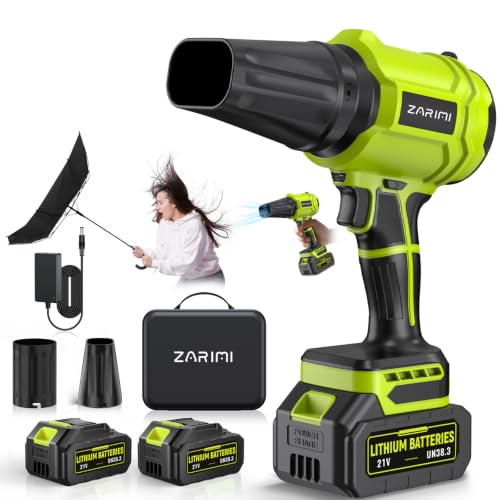
Pros
- Extremely lightweight at only 2.8 pounds for low-fatigue use
- Reaches stated air speeds over 50 m/s (110+ MPH)
- Comes with two batteries and charger for alternating use
- Includes a concentrated narrow nozzle for detailed edging
- Compact footprint stores easily in tight spaces or vehicle trunks
Cons
- Limited runtime of only about 13 minutes per battery
- Not designed for moving heavy or deep piles of wet leaves

Pros
- Weighs only 2.28 lbs for easy one-handed operation
- Includes two 21V 4000mAh lithium batteries
- Variable speed trigger provides precise airflow control
- Comes with an extension tube and flat nozzle attachment
Cons
- Rated runtime tops out at roughly 30 minutes
- Not designed for large properties or heavy wet debris

Pros
- Ultra-lightweight design at just 1.3 pounds
- Compatible with existing DeWalt 20V Max lithium-ion batteries
- Rated for up to 430 CFM air volume and 125 mph air speed
- Variable speed trigger enables controlled airflow
Cons
- Sold as a bare tool with no battery or charger included
- Compact mini size is best suited for light-duty clearing

Pros
- Includes two 21V 4.0Ah batteries for extended runtime
- Delivers up to 420 CFM airflow and 150 MPH air speed
- Lightweight design weighs under 3 lbs bare tool for low fatigue
- Comes with both round and flat interchangeable nozzles
- Two adjustable speed settings for varying cleanup tasks
Cons
- Limited to two preset airflow speeds
- Best suited for dry leaves and light debris rather than heavy wet waste
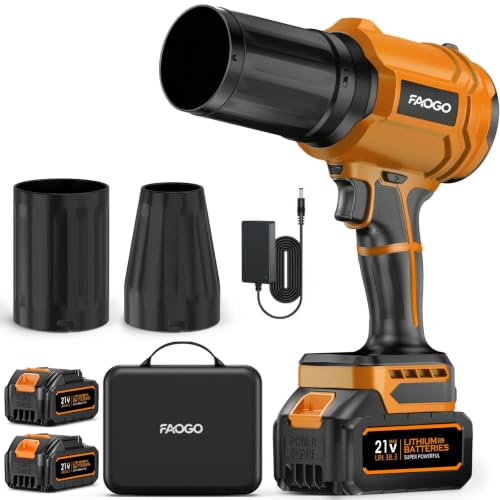
Pros
- Lightweight and compact design for comfortable one-handed use
- Includes two batteries and charger for uninterrupted swapping
- Comes with two extended interfaces for reach in tight spaces
- Storage bag included for convenient organization
Cons
- Total battery life is rated at roughly 26+ minutes across both packs

Pros
- Includes two rechargeable batteries and a dedicated charger
- Ultra-lightweight handheld body allows easy one-handed control
- Comes with two extension interfaces and a storage carry bag
- Built-in overheat protection during battery charging
Cons
- Total runtime is limited to approximately 26+ minutes across both packs
- Manufacturer motor rating of 990,000 RPM is an exaggerated marketing claim
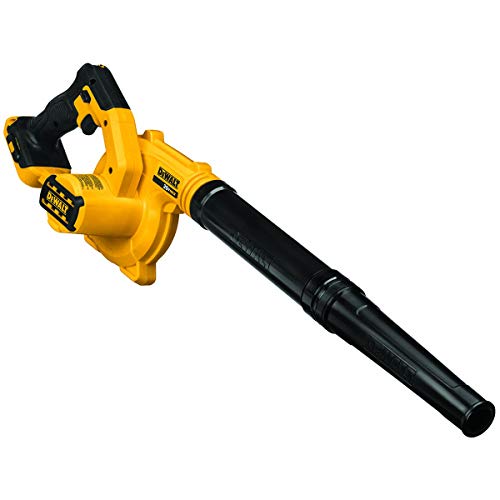
Pros
- Lightweight 2.5-pound design fits into tight spaces
- 3-speed variable switch plus variable speed trigger
- Trigger lock-on reduces hand fatigue during continuous use
- Includes 3 nozzle attachments for different clearing tasks
Cons
- Sold as a bare tool without battery or charger
- 100 CFM airflow is strictly intended for jobsite debris
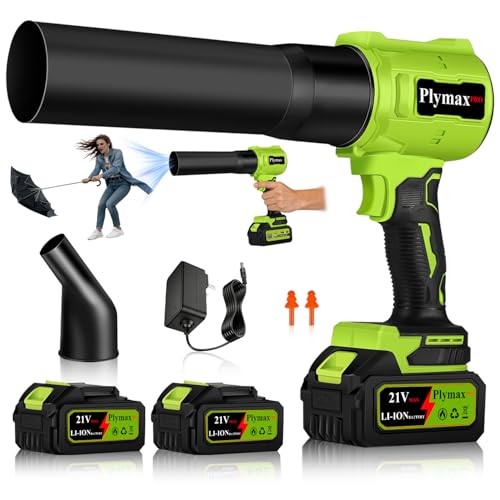
Pros
- Includes two 21V 4.0Ah lithium batteries and a charger
- Motor rated up to 800,000 RPM for focused air speeds
- Includes both a wide nozzle and a precision jet nozzle
- Suitable for outdoor patios, garage dusting, and car drying
- Compact, lightweight handheld design minimizes fatigue
Cons
- Compact frame less suited for expansive lawn leaf clearing
- Airflow volume specifications are not provided
Bare Tool vs. Complete Dual-Battery Kits: Which Format Fits Your Needs?
Choosing between a bare tool and a complete kit depends entirely on whether you already own compatible power tool batteries, as bare tools eliminate the cost of redundant power packs while complete kits offer an out-of-the-box solution.
For instance, the Cordless Leaf Blower Compatible with Dewalt 20V and the DEWALT 20V MAX Blower, 100 CFM Airflow are sold strictly as bare tools. They require you to supply your own DeWalt 20V lithium-ion battery (such as the DCB200, DCB203, or DCB204). This setup is cost-effective if your workshop is already stocked with compatible packs, but buying a battery and charger separately will substantially raise your initial investment.
Conversely, models like the Leaf Blower Cordless Handheld Blower with 2×4.0Ah, the Electric Leaf Blower Cordless with Battery, and the wanvzo Cordless Leaf Blower ship with two batteries and a compatible charger. The trade-off is cross-compatibility: these generic 21V slide-on batteries rarely work with major cordless power tool brands, locking those batteries to that specific blower.
Weight and One-Handed Ergonomics for Tight Space Cleanup
When clearing gutters, blowing out vehicle interiors, or sweeping elevated workshop shelves, an ultra-lightweight blower reduces forearm strain and allows effortless one-handed control.
Chassis weight varies noticeably across models. The Leaf Blower Cordless Handheld Blower with 2×4.0Ah advertises an ultra-light 1.12-pound body and includes a shoulder strap for extended use. The Cordless Leaf Blower Compatible with Dewalt 20V lists an advertised weight of 1.3 pounds, while the wanvzo Cordless Leaf Blower claims 2.28 pounds and the YUQUESEN Cordless Leaf Blower lists 2.8 pounds with a vibration-damped handle. The Electric Leaf Blower Cordless with Battery explicitly notes its 2.74-pound weight is measured without the battery installed.
The key trade-off involves operational balance: manufacturer weight specifications often measure only the bare plastic housing. Snapping on a heavy 4.0Ah battery pack shifts the center of gravity downward, increasing the true working weight in your hand during extended yard sweeps.
Understanding Airflow Claims: CFM, Airspeed, and Motor RPM
Evaluating real-world cleaning capability requires looking at air volume (CFM) and air speed (MPH) rather than eye-catching motor RPM specifications advertised by manufacturers.
Several handheld units highlight staggering motor ratings, such as the 990,000 RPM claimed by the wanvzo Cordless Leaf Blower and FAOGO Cordless Leaf Blower with 2 Batteries, or the 800,000 RPM listed for the Plymax Cordless Leaf Blower. However, rotational motor speed does not directly translate to clearing effectiveness on wet leaves. Instead, airflow volume (CFM) dictates how wide a pile of debris you can shift, while velocity (MPH) controls how easily stubborn dirt is dislodged.
For example, the Electric Leaf Blower Cordless with Battery advertises 420 CFM and 150 MPH, and the Cordless Leaf Blower Compatible with Dewalt 20V claims 430 CFM and 125 MPH. By comparison, the DEWALT 20V MAX Blower, 100 CFM Airflow delivers an advertised 100 CFM. While 100 CFM is plenty for clearing sawdust from workbenches or blowing water out of door jambs, it lacks the broad air volume required to push wet, matted leaves across grass. Always treat extreme manufacturer RPM numbers as unverified internal metrics rather than standardized performance benchmarks.
Comparing Workshop Sweepers to Multipurpose Outdoor Blowers
Workshop sweepers are tailored for narrow air concentration and indoor dust management, whereas outdoor blowers prioritize broader air dispersion across wide surfaces like driveways and lawns.
The DEWALT 20V MAX Blower, 100 CFM Airflow functions primarily as an indoor and jobsite sweeper. It includes three targeted nozzle attachments, a 3-speed selector switch, and a trigger lock designed for cleaning masonry joints, clearing machinery tables, and general jobsite cleanup. Homeowners seeking a small cordless blower for outdoor maintenance may find this narrow stream inefficient for larger yards.
In contrast, general-purpose yard blowers such as the wanvzo Cordless Leaf Blower, Plymax Cordless Leaf Blower, and Leaf Blower Cordless Handheld Blower with 2×4.0Ah feature wide extension tubes and flat nozzles. These wider attachments allow you to sweep patios, driveways, and garden beds more rapidly, as detailed in our guide to driveway leaf blowers. The trade-off is bulk: wider outdoor nozzles make maneuvering inside vehicle footwells or between cramped garage workbenches awkward.
Making the Final Decision: Choosing the Best Compact Cordless Blower
Finding the right compact cordless blower comes down to balancing your battery ecosystem against the size and nature of your typical cleanup tasks. If you already have a workshop filled with brand-name power tool batteries, opting for a compatible bare tool keeps costs low and avoids extra chargers cluttering your space. However, if you need an independent tool strictly for outdoor patio care, a dual-battery kit ensures you have continuous power without buying into an expensive contractor tool platform.
Keep in mind that published retail prices and battery claims fluctuate over time, and manufacturer runtime numbers represent best-case scenarios on low-power settings. For heavy seasonal cleanup, consider whether a smaller handheld unit has the airflow needed or if exploring broader options in the leaf blowers category makes more sense for your property size.
For most homeowners seeking an affordable, all-inclusive package for residential patios and driveways, the Electric Leaf Blower Cordless with Battery is our recommended choice, offering dual 4.0Ah batteries, dual nozzle attachments, and an advertised 420 CFM airflow right out of the box. Its main limitation is that its generic 21V batteries will not cross-power standard workshop tools from mainstream brands. If you are already invested in DeWalt power tools and need a precision tool for workshop sweeping and vehicle drying, the DEWALT 20V MAX Blower, 100 CFM Airflow is the ideal alternative, trading broad yard sweeping volume for exceptional compact control and ecosystem compatibility.