For homeowners tackling routine property cleanups without battery anxiety, a corded electric yard blower provides uninterrupted runtime, though your working perimeter remains tethered to an electrical outlet and extension cord. Cordless alternatives deliver complete freedom of movement around large perimeters, but they require managing battery charges and runtimes during heavier seasonal chores.

Pros
- Lightweight 4 lb build minimizes arm fatigue
- Delivers up to 390 CFM airflow and 210 MPH speed
- Continuous corded power eliminates recharging pauses
- Two-speed switch toggles between light and full force
- Nested two-piece tube design for full assembly
Cons
- Requires an extension cord and nearby wall outlet
- Tubes ship nested and must be pulled apart before use

Pros
- Lightweight design at only 4.4 pounds
- 7-Amp motor rated up to 180 MPH and 180 CFM
- Built-in cord retention prevents unplugging
- Zero emissions with instant push-button start
- Simple, low-maintenance corded design
Cons
- Extension cord is not included
- Operating range is limited by cord reach

Pros
- Delivers up to 600 CFM and 110 MPH airflow
- Continuous corded power eliminates recharging and gas mixing
- Variable-speed control adjusts airflow to the task
- Lightweight design weighs just 6.4 pounds
Cons
- Operating range is tethered to an electrical outlet
Pros
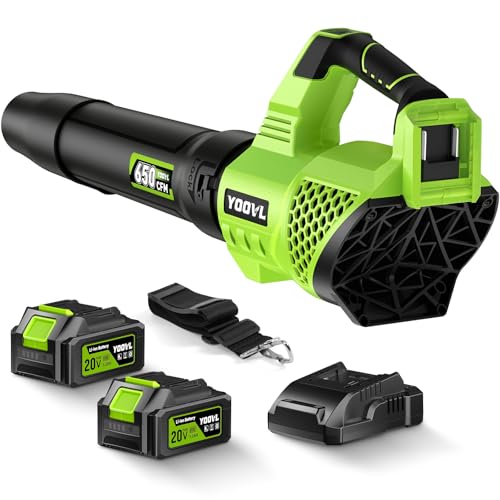
- Airflow rated up to 650 CFM using advanced turbo technology
- Comes with two high-capacity 20V 5.2Ah batteries and fast charger
- Three selectable speed modes for delicate to heavy-duty jobs
- Includes an adjustable shoulder strap to reduce arm fatigue
- Includes blower tube and extension nozzle attachments
Cons
- Maximum 150-minute runtime applies only to low-speed mode
- Heavier battery packs may add weight during prolonged handheld use

Pros
- High-performance brushless motor rated up to 700 CFM and 170 MPH
- Includes an 80V 2.5Ah battery and compatible charger
- Cruise control and variable-speed trigger for effortless pacing
- Rated at 74 dB for quieter operation than comparable gas units
Cons
- Operating continuously on turbo mode quickly depletes the 2.5Ah battery
- Weighs 5.84 pounds before factoring in user movement

Pros
- Includes two 21V 4.0Ah batteries for extended runtime
- Delivers up to 420 CFM airflow and 150 MPH air speed
- Lightweight design weighs under 3 lbs bare tool for low fatigue
- Comes with both round and flat interchangeable nozzles
- Two adjustable speed settings for varying cleanup tasks
Cons
- Limited to two preset airflow speeds
- Best suited for dry leaves and light debris rather than heavy wet waste

Pros
- Airflow reaches up to 450 CFM and 140 MPH
- Built-in scraper helps loosen wet, stuck debris
- Two-speed switch allows quick airflow adjustment
- Cord retention hook helps prevent accidental unplugging
- Compact axial fan design weighs approximately 7 pounds
Cons
- Tethered by an electrical cord, limiting reach
- Requires a suitable outdoor extension cord (not included)

Pros
- Brushless motor delivers rated airflow up to 650 CFM and 180 MPH
- Includes two 20V 4.0Ah batteries and a fast charger
- Six adjustable speed settings ranging from 80 to 180 MPH
- Comes with an ergonomic shoulder strap and two detachable nozzles
- Includes a storage bag to keep components organized
Cons
- Stated 30-minute runtime is restricted to low-speed operation
- High-speed settings will deplete battery charge more rapidly

Pros
- Instant switch between blow and vacuum modes
- High 18:1 mulch ratio maximizes bag capacity
- Rated up to 350 CFM and 210 MPH air output
- Variable-speed control for different debris types
- Includes 42L debris collection bag
Cons
- Corded design limits overall yard reach
- Weighs 9.3 pounds before debris accumulates

Pros
- Includes two 20V 2.0Ah batteries and a fast charger
- Extremely lightweight design at just 3.4 pounds
- Two selectable speed modes match light and heavier tasks
- Ergonomic non-slip grip allows comfortable one-handed use
- Comes with an extension nozzle for targeted airflow
Cons
- Runtime decreases significantly at the higher speed setting
- Best suited for light residential cleanup rather than dense debris
Corded Continuous Power vs. Cordless Battery Mobility
Choosing between corded and battery designs comes down to property layout versus maintenance simplicity. Corded units draw continuous utility power, which means you never face depleted packs halfway through a task. Models like the cordless battery leaf blower alternatives, on the other hand, eliminate the hassle of managing tangled extension cords around trees and fences.
For small, close-to-home spaces such as driveways, patios, and decks, the Grasstigon Electric Leaf Blower Corded, 7-Amp offers an accessible plug-in solution weighing just 4.0 pounds with an advertised 390 CFM and 210 MPH rating. Its primary limitation is the cord constraint, requiring an outdoor-rated extension cord. In contrast, cordless options such as the Leaf Blower Cordless, 650CFM Electric Leaf Blowers pack dual 20V 5.2Ah batteries, letting you roam freely across an expansive property. The trade-off is eventual battery exhaustion, making continuous heavy clearing dependent on maintaining fully charged spares.
Airflow Volume (CFM) vs. Airspeed (MPH) for Clearing Debris
Airflow volume (CFM) dictates how broad of a leaf pile you can sweep, whereas airspeed (MPH) dictates the concentrated force needed to unstick wet, embedded matter. Balancing these two metrics helps you pick a machine tailored to your typical lawn conditions rather than chasing a single peak specification.
The BLACK+DECKER Electric Leaf Blower provides 180 MPH velocity but tops out at an advertised 180 CFM. This concentrated, high-velocity stream works well for dislodging stuck pine needles or clearing tight walkway crevices, but sweeping large, scattered fall lawns takes longer due to the narrow swath. Conversely, the BLACK + DECKER Electric Leaf Blower provides an axial fan design that generates up to 450 CFM at 140 MPH, creating a broader air pattern suited for gathering larger leaf piles across open turf, though with slightly less dislodging force.
High-Power Yard Clearing: Greenworks 80V vs. WORX 12 Amp Turbine
When heavy seasonal debris or wet leaves blanket a large yard, standard compact blowers can struggle to push through deep piles. Buyers needing maximum output typically compare high-voltage cordless tools with high-amperage turbine corded blowers.
The Greenworks 80V Electric Leaf Blower, 700 CFM delivers high-tier performance, advertising 700 CFM and 170 MPH using an 80V brushless motor and an included 2.5 Ah battery. It features cruise control and variable speed to blast wet leaves without cords, but it carries a higher purchase price and limits full-power operation to your battery capacity. The WORX 12 Amp Turbine Electric Leaf Blower for Daily matches heavy-clearing demands with an advertised 600 CFM and 110 MPH turbine fan at a significantly lower cost. Its 12-amp motor delivers continuous power without fade, but users must manage a heavy-gauge extension cord across their yard and carry a 6.4-pound handheld chassis.
Mulching and Vacuuming vs. Dedicated Blowing
Most electric yard blowers are dedicated air movers, leaving you to rake, bag, or mulch your gathered piles separately. Multi-function machines integrate waste collection directly into the tool for single-step disposal.
The WORX Trivac 3-in-1 Electric Leaf Blower/Leaf incorporates a built-in vacuum and mulcher with an advertised 18:1 reduction ratio alongside its 350 CFM and 210 MPH blower modes. This allows homeowners to shred leaves directly into its 42-liter collection bag, eliminating manual bagging. The trade-off is added bulk, mechanical complexity, and the maintenance required to keep the internal impellers clean of wet debris. Dedicated handheld blowers like the VIBOGEN Electric Leaf Blower Cordless with Battery keep maintenance minimal and weigh significantly less (2.74 pounds bare), but they offer no collection or mulching capabilities.
Electric Yard Blower FAQ
Do corded electric yard blowers come with an extension cord included?
Most corded models do not include an extension cord. For example, the BLACK+DECKER Electric Leaf Blower explicitly lists that it does not include an extension cord, requiring buyers to provide their own outdoor-rated cord suitable for their yard size.
What is the difference between CFM and MPH in an electric yard blower?
CFM (cubic feet per minute) measures the total volume of air pushed out, which determines how much debris you can move at once. MPH (miles per hour) measures the velocity of the air stream, which dictates how easily the blower can dislodge wet or compacted leaves.
How to Choose the Right Electric Yard Blower for Your Property
Selecting the best electric yard blower requires balancing the size of your lot against your tolerance for cords, machine weight, and runtime limits. Properties with tight perimeters, small lawns, and nearby electrical outlets benefit most from the continuous output and lightweight handling of corded tools, while sprawling yards require the untethered mobility of battery power.
For buyers needing heavy clearing volume without the ongoing tether of an extension cord, the Greenworks 80V Electric Leaf Blower, 700 CFM is the recommended pick due to its commercial-grade 700 CFM output and brushless platform. Its primary limitation is its premium price tag and bounded runtime per battery charge. For budget-conscious homeowners with smaller properties near an outdoor outlet, the Grasstigon Electric Leaf Blower Corded, 7-Amp serves as a practical, lightweight alternative that delivers continuous clearing power at a fraction of the cost.