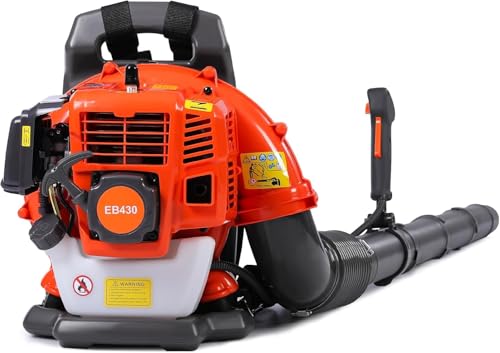
A corded unit provides steady clearing power without battery degradation, though an outdoor extension cord restricts your working perimeter. Cordless blowers grant unrestricted movement around driveways and fences, but you must balance operating speeds to avoid depleting batteries mid-cleanup.

Pros
- Lightweight 4 lb build minimizes arm fatigue
- Delivers up to 390 CFM airflow and 210 MPH speed
- Continuous corded power eliminates recharging pauses
- Two-speed switch toggles between light and full force
- Nested two-piece tube design for full assembly
Cons
- Requires an extension cord and nearby wall outlet
- Tubes ship nested and must be pulled apart before use

Pros
- Ultralight build at just 2.73 lbs
- Delivers up to 130 MPH and 420 CFM
- 6-speed dial for customized airflow
- Includes 21V 4.0Ah battery and fast charger
Cons
- 60-minute runtime is limited to low speed
- Single battery requires recharging between large tasks

Pros
- Lightweight design at only 4.4 pounds
- 7-Amp motor rated up to 180 MPH and 180 CFM
- Built-in cord retention prevents unplugging
- Zero emissions with instant push-button start
- Simple, low-maintenance corded design
Cons
- Extension cord is not included
- Operating range is limited by cord reach
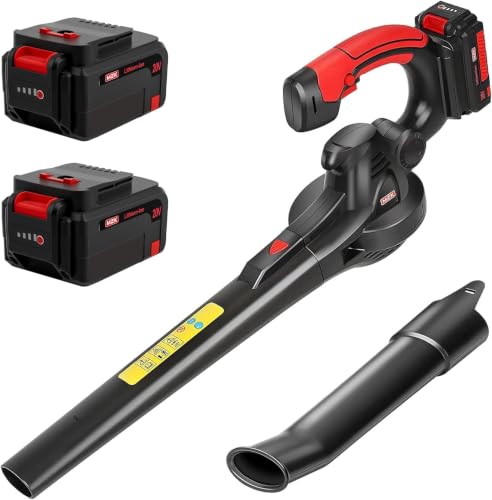
Pros
- Weighs only 3.9 pounds for light handling
- Rated airflow up to 450 CFM
- Cordless design allows unrestricted mobility
- Convenient one-hand trigger operation
- No gas mixing or cord management required
Cons
- Runtime varies significantly by power output
- Battery charging intervals required

Pros
- Delivers up to 600 CFM and 110 MPH airflow
- Continuous corded power eliminates recharging and gas mixing
- Variable-speed control adjusts airflow to the task
- Lightweight design weighs just 6.4 pounds
Cons
- Operating range is tethered to an electrical outlet
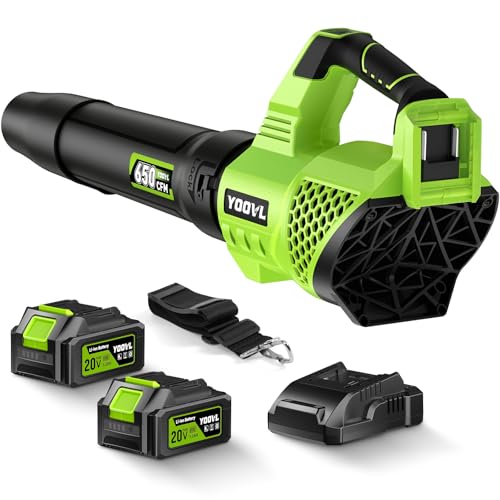
Pros
- Airflow rated up to 650 CFM using advanced turbo technology
- Comes with two high-capacity 20V 5.2Ah batteries and fast charger
- Three selectable speed modes for delicate to heavy-duty jobs
- Includes an adjustable shoulder strap to reduce arm fatigue
- Includes blower tube and extension nozzle attachments
Cons
- Maximum 150-minute runtime applies only to low-speed mode
- Heavier battery packs may add weight during prolonged handheld use

Pros
- Includes two 21V 4.0Ah batteries for extended runtime
- Delivers up to 420 CFM airflow and 150 MPH air speed
- Lightweight design weighs under 3 lbs bare tool for low fatigue
- Comes with both round and flat interchangeable nozzles
- Two adjustable speed settings for varying cleanup tasks
Cons
- Limited to two preset airflow speeds
- Best suited for dry leaves and light debris rather than heavy wet waste

Pros
- Brushless motor delivers rated airflow up to 650 CFM and 180 MPH
- Includes two 20V 4.0Ah batteries and a fast charger
- Six adjustable speed settings ranging from 80 to 180 MPH
- Comes with an ergonomic shoulder strap and two detachable nozzles
- Includes a storage bag to keep components organized
Cons
- Stated 30-minute runtime is restricted to low-speed operation
- High-speed settings will deplete battery charge more rapidly

Pros
- Instant switch between blow and vacuum modes
- High 18:1 mulch ratio maximizes bag capacity
- Rated up to 350 CFM and 210 MPH air output
- Variable-speed control for different debris types
- Includes 42L debris collection bag
Cons
- Corded design limits overall yard reach
- Weighs 9.3 pounds before debris accumulates

Pros
- Includes two 20V 2.0Ah batteries and a fast charger
- Extremely lightweight design at just 3.4 pounds
- Two selectable speed modes match light and heavier tasks
- Ergonomic non-slip grip allows comfortable one-handed use
- Comes with an extension nozzle for targeted airflow
Cons
- Runtime decreases significantly at the higher speed setting
- Best suited for light residential cleanup rather than dense debris
Corded Reliability vs. Cordless Mobility for Cleanups
Choosing between corded and cordless electric leaf blowers comes down to whether you prioritize continuous runtime or total physical freedom. A corded tool like the high-powered leaf blower style found in the WORX 12 Amp Turbine Electric Leaf Blower for Daily draws continuous power directly from an outlet. That eliminates charging pauses, yet limits your range to the length of your outdoor-rated extension cord and requires careful cord management around obstacles.
Conversely, a cordless battery leaf blower such as the SIXCRAFTS Leaf Blower Cordless with 4.0Ah Battery removes cord snagging across decks, car roofs, and long walkways. The trade-off is finite operational duration. While SIXCRAFTS advertises up to 60 minutes of low-speed runtime on its 21V 4.0Ah pack, running at peak velocity drains batteries substantially faster. For expansive properties, multi-battery bundles like the Leaf Blower Cordless, 650CFM Electric Leaf Blowers pair two 5.2Ah batteries to rotate charges and minimize downtime.
Airflow CFM vs. Airspeed MPH: What Cleans Debris Faster?
Airflow volume (CFM) measures the quantity of air pushed through the tube, while airspeed (MPH) dictates the velocity of that stream. High CFM is essential for sweeping large volumes of dry leaves across open turf, whereas high MPH helps dislodge wet, matted foliage stuck to hard concrete.
The WORX 12 Amp Turbine Electric Leaf Blower for Daily emphasizes volume with a manufacturer-rated 600 CFM at 110 MPH, making it effective for pushing broad piles over grass. In contrast, the Grasstigon Electric Leaf Blower Corded, 7-Amp advertises a sharper 210 MPH velocity paired with 390 CFM, focusing air into a concentrated jet that lifts debris from driveway crevices. Choosing the right metric depends on whether your regular cleanup involves broad lawn sweeping or clearing packed dirt and wet clippings from paved paths.
Handling Tool Weight, Balance, and Shoulder Straps
Operating a handheld electric blower for more than a few minutes quickly reveals the importance of balanced physical weight. Compact units reduce strain during high-reach tasks like gutter cleaning or patio dusting, whereas heavier, high-output blowers benefit from ergonomic support accessories.
The SIXCRAFTS Leaf Blower Cordless with 4.0Ah Battery lists a bare-tool weight of 2.73 pounds, facilitating easy one-handed maneuvering around stairs and vehicle panels. At the heavier end, the Leaf Blower Cordless, 650CFM Electric Leaf Blowers and Leaf Blower Cordless 650CFM with 2×4.0Ah Battery include dedicated adjustable shoulder straps. While shoulder straps distribute motor and dual-battery weight away from your wrists during large yard maintenance, they add extra straps to adjust when switching hands or working in tight garage aisles.
Managing Mulching and Debris Collection Features
Most standard electric leaf blowers focus solely on pushing debris into piles, but multi-function designs integrate suction and shredding to eliminate manual bagging. If disposal volume is your primary hurdle, specialized 3-in-1 tools offer an all-in-one alternative to raking.
The WORX Trivac 3-in-1 Electric Leaf Blower/Leaf features a 12-amp motor capable of blowing at up to 210 MPH and 350 CFM, while switching tool-free into a vacuum mulcher that shreds garden waste at an advertised 18:1 ratio into an attached 42-liter collection bag. The trade-off is bulk and maintenance; collection bags add weight as they fill, and vacuum impellers require caution around rocks and hard twigs that could jam the shredding mechanism, unlike simple blow-only tubes.
Good Electric Leaf Blower Frequently Asked Questions
Does a corded electric leaf blower include an extension cord?
Most corded blowers, including the BLACK+DECKER Electric Leaf Blower, feature a short plug pig-tail with a cord retention hook but do not include an extension cord. You must supply your own outdoor-rated extension cord rated for the tool's amperage.
How do manufacturer runtime estimates compare to actual yard work?
Cordless leaf blower runtimes are typically advertised at the lowest speed setting. Operating on high speed or turbo mode to dislodge wet leaves consumes battery charge substantially faster, making dual-battery setups practical for extended sessions.
What is the primary difference between CFM and MPH when blowing leaves?
CFM (cubic feet per minute) measures the overall volume of air moving through the nozzle, which determines how wide a pile you can push. MPH (miles per hour) measures air speed, which determines the force available to lift heavy or wet debris.
Which Good Electric Leaf Blower Should You Choose?
Determining the most effective electric leaf blower relies on your yard perimeter and whether you prefer an endless power supply or unrestricted mobility. Smaller paved lots and garages demand light, nimble handhelds, whereas broader tree-lined lawns demand higher air volume or integrated collection to keep yard debris manageable.
For buyers needing continuous power on a standard residential lot, the WORX 12 Amp Turbine Electric Leaf Blower for Daily offers strong value with its high 600 CFM turbine output, though you remain tied to a wall outlet and an extension cord. If your cleanup involves distant fences, walkways, and landscaping beds where cords cannot reach, the Leaf Blower Cordless, 650CFM Electric Leaf Blowers provides cordless flexibility with dual 5.2Ah batteries and shoulder support, requiring you to manage routine battery recharging between tasks.