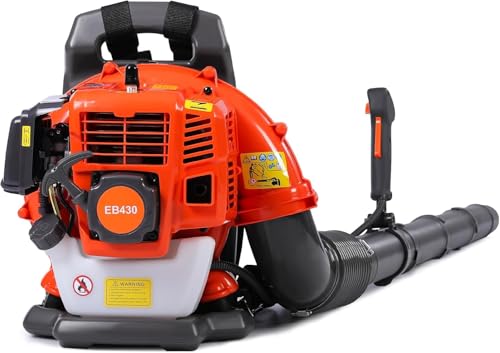
For clearing residential patios, decks, and walkways without gas maintenance, a cordless handheld electric blower like the Electric Leaf Blower Cordless with Battery offers immediate portable clearing power, though it trades off continuous, unlimited runtime against finite battery packs.

Pros
- High-speed motor reaches up to 130,000 RPM
- Includes 5 interchangeable cleaning nozzles
- Built-in LED light for illuminating dark crevices
- Up to 240 minutes runtime on the lowest setting
Cons
- Maximum speed runtime is limited to 25 minutes
- Audible operation reaches up to 82.5 dB
- Requires a 10-minute cooldown period before charging

Pros
- Lightweight design at only 4.4 pounds
- 7-Amp motor rated up to 180 MPH and 180 CFM
- Built-in cord retention prevents unplugging
- Zero emissions with instant push-button start
- Simple, low-maintenance corded design
Cons
- Extension cord is not included
- Operating range is limited by cord reach
Pros
- Extremely lightweight at only 2.8 pounds for low-fatigue use
- Reaches stated air speeds over 50 m/s (110+ MPH)
- Comes with two batteries and charger for alternating use
- Includes a concentrated narrow nozzle for detailed edging
- Compact footprint stores easily in tight spaces or vehicle trunks
Cons
- Limited runtime of only about 13 minutes per battery
- Not designed for moving heavy or deep piles of wet leaves

Pros
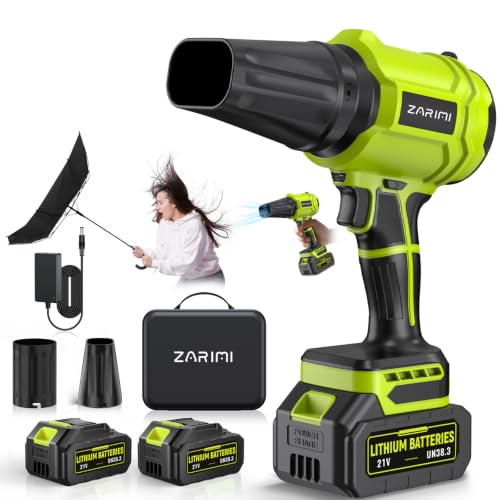
- Includes two 21V 4.0Ah batteries for extended runtime
- Delivers up to 420 CFM airflow and 150 MPH air speed
- Lightweight design weighs under 3 lbs bare tool for low fatigue
- Comes with both round and flat interchangeable nozzles
- Two adjustable speed settings for varying cleanup tasks
Cons
- Limited to two preset airflow speeds
- Best suited for dry leaves and light debris rather than heavy wet waste

Pros
- Includes two high-capacity 6.0Ah rechargeable battery packs
- Tool-free assembly allows quick and straightforward setup
- Ergonomic, lightweight handheld frame minimizes arm fatigue
- 21V cordless platform enables flexible mobility around the yard
Cons
- Does not disclose standardized CFM or MPH airflow metrics
- Charger inclusion is not explicitly stated in the package details
- 990,000 RPM motor claim is an unrealistic marketing figure

Pros
- Includes two rechargeable batteries and a dedicated charger
- Ultra-lightweight handheld body allows easy one-handed control
- Comes with two extension interfaces and a storage carry bag
- Built-in overheat protection during battery charging
Cons
- Total runtime is limited to approximately 26+ minutes across both packs
- Manufacturer motor rating of 990,000 RPM is an exaggerated marketing claim
Pros
- Reaches up to 110,000 RPM on high gear
- Weighs just 0.5 lbs for portable everyday carry
- Includes 5 specialized nozzles for versatile tasks
- Dual 2500mAh batteries run up to 240 mins on low
Cons
- Requires up to 3.5 hours for a full charge
- Top speed runtime is considerably shorter than low gear

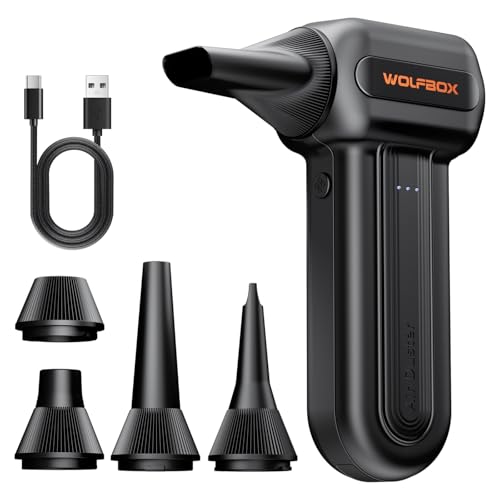
Pros
- Reaches up to 110,000 RPM for efficient dust removal
- Ultra-compact, lightweight body weighs just 0.45 lbs
- Includes four specialized nozzles and a lanyard
- Recharges in roughly 3.5 hours via USB Type-C
- Sustainable alternative to disposable canned air
Cons
- Max speed runtime is significantly shorter than low gear
- Recharge time takes roughly 3.5 hours
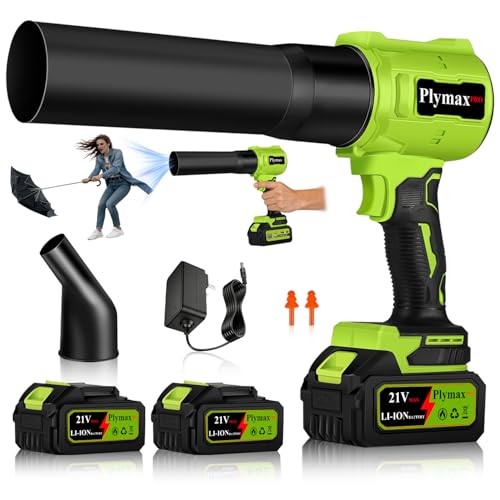
Pros
- Includes two 21V 4.0Ah lithium batteries and a charger
- Motor rated up to 800,000 RPM for focused air speeds
- Includes both a wide nozzle and a precision jet nozzle
- Suitable for outdoor patios, garage dusting, and car drying
- Compact, lightweight handheld design minimizes fatigue
Cons
- Compact frame less suited for expansive lawn leaf clearing
- Airflow volume specifications are not provided
Corded Power vs. Cordless Freedom for Outdoor Cleanup
Choosing between corded and cordless tools comes down to balancing continuous runtime against unrestricted mobility. Corded models rely on household electricity through an outdoor extension cord, delivering uninterrupted motor power for as long as you need to clear heavy autumn leaves. The main trade-off is the cord itself, which restricts your working radius and requires management around shrubs, corners, and outdoor furniture.
For example, the BLACK+DECKER Electric Leaf Blower features a 7-Amp motor weighing just 4.4 pounds. It provides steady output without tapering off as a battery discharges, and its integrated cord retention clip keeps extension leads from slipping loose. However, the purchase does not include an extension cord, which you must source separately. In contrast, battery-driven models provide complete perimeter freedom. They allow you to step off paved areas into far yard corners without dragging cables, though runtimes are limited to the capacity of the charged battery packs on hand. Homeowners weighing these power differences can explore additional formats in our guide to small cordless blowers.
Yard Blowers vs. Precision Electronic Air Dusters
While search listings often group all compact blowing tools together, high-speed electronic dusters serve entirely different tasks than outdoor leaf blowers. Outdoor blowers are engineered to move larger volumes of air through broad tubes to sweep fallen leaves, pine needles, and grass clippings off hard surfaces. Micro-blowers, by contrast, focus high-velocity air through miniature nozzles to dislodge fine grit from keyboards, cameras, and automotive vents.
Handheld micro-dusters like the Compressed Air Duster,130000RPM Super Power or the WOLFBOX MF60 Compressed Air Duster weigh under a pound and operate via rechargeable internal batteries charged by USB-C. These compact tools are cost-effective replacements for disposable canned air in workshop and office settings. However, their air streams lack the volumetric width required to clear a lawn, driveway, or patio. If your goal is exterior ground maintenance rather than tech maintenance, choose a dedicated yard blower designed for outdoor debris.
Decoding Airflow: Understanding CFM and MPH Ratings
Blower capability depends on two distinct airflow measurements: cubic feet per minute (CFM) and miles per hour (MPH). CFM measures the total volume of air moving through the nozzle, which determines how much debris the tool can push in a single pass. MPH measures air speed, which dictates the tool’s force when lifting wet, stuck-down leaves or compacted dirt.
The Electric Leaf Blower Cordless with Battery lists a manufacturer rating of up to 420 CFM and 150 MPH, giving it a balanced mix of sweeping volume and concentrated push for clearing patios, garages, and driveways. By comparison, the corded BLACK+DECKER Electric Leaf Blower outputs an advertised 180 CFM at 180 MPH, using a narrower air stream at higher speed to dislodge stubborn debris. Some compact cordless options, such as the YUQUESEN Cordless Leaf Blower and the FAOGO 990,000 RPM Cordless Leaf Blower, emphasize extreme motor RPM metrics (such as 980,000 or 990,000 RPM claims) rather than standard volumetric CFM. When evaluating tools for typical yard sweeps, verified CFM and airspeed ratings provide a clearer picture of real-world ground coverage than motor rotational speeds.
Managing Battery Runtimes and Dual-Pack Setups
The primary constraint of any battery-powered yard tool is run duration under load, which makes multi-battery configurations a practical necessity for larger properties. High-velocity turbine motors draw significant current, meaning that running a compact blower at maximum speed will drain a small pack within 10 to 15 minutes of continuous operation.
Several models counter this limitation by bundling two batteries directly in the box. The Plymax Cordless Leaf Blower supplies two 4.0Ah 21V batteries, while the Handheld 21V Cordless Leaf Blower, 990000 RPM packages two 6.0Ah batteries. Alternating between two packs lets you leave one on the charger while working with the other, effectively doubling active yard time. For property owners clearing larger spaces, reading our review of blowers for driveways helps contextualize how long continuous sweeping tasks realistically take.
Frequently Asked Questions About Handheld Electric Blowers
Can a mini electric air duster be used to clear leaves outside?
No. Mini electric air dusters, such as the WOLFBOX MF60 or CAGIWIRU models, are designed with narrow nozzles for detailed tasks like cleaning electronics, vehicle vents, and computer hardware. They do not generate the broad air volume (CFM) required to push leaves or lawn debris across a yard.
What is the primary trade-off between corded and cordless blowers?
Corded blowers provide non-stop power at a consistent output without battery degradation, but require an outdoor-rated extension cord that restricts working distance. Cordless blowers offer full portable freedom anywhere on the property but require monitoring battery charge levels.
Selecting the Best Handheld Electric Blower for Your Needs
Selecting the right handheld electric blower depends on matching the tool’s power source and design to the layout of your property and the types of debris you routinely clear. If you only maintain an attached deck or garage workspace, a lightweight cordless unit minimizes physical strain and eliminates storage clutter. For expansive lawns, managing battery rotations or switching to continuous corded power prevents mid-job interruptions.
For most residential patio, deck, and walkway cleanups, the recommended option is the Electric Leaf Blower Cordless with Battery. It offers practical clearing power with its manufacturer-rated 420 CFM airflow and includes two 4.0Ah battery packs so you can clean without dealing with extension cords. Its primary limitation is that overall runtime is strictly tied to battery charge levels, requiring routine recharging between heavy sessions. For buyers with small yards who prioritize endless runtime and lower up-front costs over cord-free range, the corded BLACK+DECKER Electric Leaf Blower serves as an affordable alternative that never runs out of power.