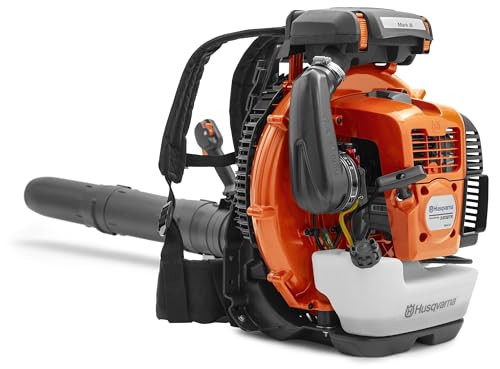
For homeowners needing the strongest overall clearing force, the cordless EGO POWER+ Cordless Electric Leaf Blower, 765 CFM leads with an advertised 765 CFM and 200 MPH, but it requires a significantly higher investment than corded alternatives. If you need continuous power without managing battery recharge cycles, a high-amp corded tool provides steady output at a fraction of the initial cost.

Pros
- Turbo mode pushes up to 765 CFM and 200 MPH
- Cruise control dial for speeds from 260 to 580 CFM
- Includes a 5.0Ah 56V battery and fast charger
- High-efficiency brushless motor for smooth performance
- Comes with both tapered and spread nozzles
Cons
- Turbo output significantly reduces total operating runtime
- Total tool weight reaches 9.5 pounds

Pros
- Airflow rated up to 650 CFM using advanced turbo technology
- Comes with two high-capacity 20V 5.2Ah batteries and fast charger
- Three selectable speed modes for delicate to heavy-duty jobs
- Includes an adjustable shoulder strap to reduce arm fatigue
- Includes blower tube and extension nozzle attachments
Cons
- Maximum 150-minute runtime applies only to low-speed mode
- Heavier battery packs may add weight during prolonged handheld use

Pros
- High-volume airflow rated up to 680 CFM
- Includes two 21V batteries and a charger
- 5-speed variable control for delicate or heavy debris
- Lightweight build at just 3.6 pounds
- Ergonomic handle with anti-slip grip
Cons
- Battery life drops faster at maximum speed
- Requires swapping and charging batteries

Pros
- Brushless motor delivers rated airflow up to 650 CFM and 180 MPH
- Includes two 20V 4.0Ah batteries and a fast charger
- Six adjustable speed settings ranging from 80 to 180 MPH
- Comes with an ergonomic shoulder strap and two detachable nozzles
- Includes a storage bag to keep components organized
Cons
- Stated 30-minute runtime is restricted to low-speed operation
- High-speed settings will deplete battery charge more rapidly

Pros
- Delivers up to 600 CFM and 110 MPH airflow
- Continuous corded power eliminates recharging and gas mixing
- Variable-speed control adjusts airflow to the task
- Lightweight design weighs just 6.4 pounds
Cons
- Operating range is tethered to an electrical outlet
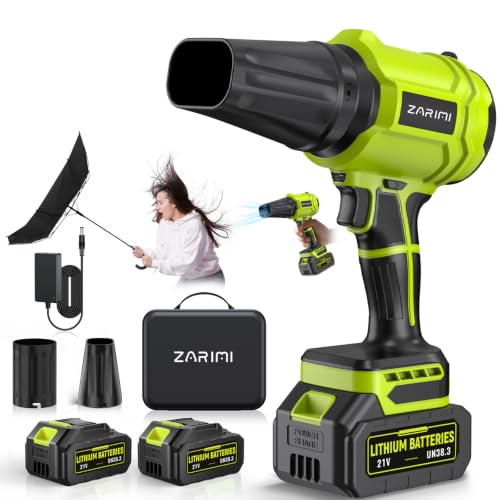
Pros
- Extremely lightweight at only 2.8 pounds for low-fatigue use
- Reaches stated air speeds over 50 m/s (110+ MPH)
- Comes with two batteries and charger for alternating use
- Includes a concentrated narrow nozzle for detailed edging
- Compact footprint stores easily in tight spaces or vehicle trunks
Cons
- Limited runtime of only about 13 minutes per battery
- Not designed for moving heavy or deep piles of wet leaves

Pros
- Weighs only 2.28 lbs for easy one-handed operation
- Includes two 21V 4000mAh lithium batteries
- Variable speed trigger provides precise airflow control
- Comes with an extension tube and flat nozzle attachment
Cons
- Rated runtime tops out at roughly 30 minutes
- Not designed for large properties or heavy wet debris

Pros
- Includes two 21V 4.0Ah batteries for extended runtime
- Delivers up to 420 CFM airflow and 150 MPH air speed
- Lightweight design weighs under 3 lbs bare tool for low fatigue
- Comes with both round and flat interchangeable nozzles
- Two adjustable speed settings for varying cleanup tasks
Cons
- Limited to two preset airflow speeds
- Best suited for dry leaves and light debris rather than heavy wet waste

Pros
- Lightweight design at only 4.4 pounds
- 7-Amp motor rated up to 180 MPH and 180 CFM
- Built-in cord retention prevents unplugging
- Zero emissions with instant push-button start
- Simple, low-maintenance corded design
Cons
- Extension cord is not included
- Operating range is limited by cord reach

Pros
- Lightweight 4 lb build minimizes arm fatigue
- Delivers up to 390 CFM airflow and 210 MPH speed
- Continuous corded power eliminates recharging pauses
- Two-speed switch toggles between light and full force
- Nested two-piece tube design for full assembly
Cons
- Requires an extension cord and nearby wall outlet
- Tubes ship nested and must be pulled apart before use
Which Model Delivers the Highest Total Air Output?
The EGO POWER+ Cordless Electric Leaf Blower, 765 CFM advertises the highest overall air volume among verified models at up to 765 CFM and air speeds reaching 200 MPH in turbo mode. This combination is engineered to move wet debris, heavy grass clippings, and accumulated yard waste faster than standard blowers, but achieving this peak power relies on an included 56V 5.0Ah ARC Lithium battery that limits continuous maximum-blast operation.
Close behind in cordless output is the Cordless Leaf Blower, 680 CFM High Power Battery, which advertises 680 CFM powered by an axial flow fan and two 21V batteries. The Leaf Blower Cordless, 650CFM Electric Leaf Blowers and Leaf Blower Cordless 650CFM with 2×4.0Ah Battery also provide an advertised 650 CFM. While these battery tools offer unrestricted mobility, their highest output levels consume battery capacity quickly, making multi-battery rotation essential for larger properties.
Corded vs. Cordless Power: CFM Output and Practical Limits
Corded blowers provide uninterrupted power for prolonged cleaning sessions without output dropping as a charge depletes, but your range remains tethered to an outlet and extension cord. For buyers with small to mid-sized yards who prioritize non-stop operation, corded units eliminate charge-time interruptions.
Among corded options, the WORX 12 Amp Turbine Electric Leaf Blower for Daily features a 12-amp motor delivering up to 600 CFM and 110 MPH. In contrast, the Grasstigon Electric Leaf Blower Corded, 7-Amp uses a 7-amp motor generating 390 CFM, but achieves a higher velocity of 210 MPH. The BLACK+DECKER Electric Leaf Blower operates on 7 amps as well, offering 180 CFM and 180 MPH. While cordless tools reach higher advertised CFM numbers, corded models guarantee consistent power without the expense of replacement batteries or the wait for recharges.
Air Volume (CFM) vs. Air Velocity (MPH) for Clearing Power
Cubic feet per minute (CFM) measures the overall volume of air moving through the tube, whereas miles per hour (MPH) measures the speed at which that air exits the nozzle. A high CFM moves broad piles of dry leaves quickly across large areas, while high MPH provides the targeted force necessary to dislodge stuck or damp debris.
For example, the Grasstigon Electric Leaf Blower Corded, 7-Amp pairs a modest 390 CFM with a high 210 MPH air speed, focusing its output into a sharp, narrow stream that excels at lifting debris from hard surfaces. Conversely, the WORX 12 Amp Turbine Electric Leaf Blower for Daily moves 600 CFM at 110 MPH, spreading a wider wall of air designed to sweep open turf efficiently. When comparing high-power units, consider whether your primary task involves sweeping large, open surfaces or peeling matted debris off driveways and patios.
Handling Weight and Ergonomic Trade-offs at High Speeds
Generating elevated airflow often requires larger motors, robust housing, and heavier battery packs, directly impacting user fatigue during lengthy clearing tasks. Handheld blowers that lack weight-distributing accessories can strain wrists and forearms after several minutes of operation.
Compact cordless options like the wanvzo Cordless Leaf Blower weigh just 2.28 lbs, while the Electric Leaf Blower Cordless with Battery is listed at 2.74 lbs without its battery. Even the 680 CFM FAOGO unit stays relatively light at an advertised 3.6 lbs. However, units pushing large volumes often add structural weight; the corded 12-amp WORX WG520 weighs 6.4 lbs. To counteract this, manufacturers of high-output blowers like the Leaf Blower Cordless, 650CFM Electric Leaf Blowers and the Leaf Blower Cordless 650CFM with 2×4.0Ah Battery include dedicated shoulder straps to shift the tool’s mass off the operator’s arms.
High Power Leaf Blower Performance FAQ
Does a higher CFM rating always mean a leaf blower is better?
Not necessarily. CFM measures the volume of air, which determines how wide of an area you can clear at once. However, MPH measures air speed, which dictates the force available to lift wet or stuck debris. A blower with high CFM but low MPH may struggle against heavy, matted leaves.
How do corded electric blowers compare in power to cordless models?
Top-tier cordless models currently claim higher peak CFM numbers—such as 765 CFM on high-voltage battery platforms compared to 600 CFM on heavy-duty 12-amp corded blowers. However, corded models provide continuous, unwavering electrical current with no power degradation or battery downtime.
What should I check regarding battery runtime on high-power cordless blowers?
Operating a cordless leaf blower on turbo or high-speed settings drains battery power significantly faster than low-speed operation. Always check the battery's amp-hour (Ah) rating and consider models that bundle two battery packs so one can recharge while the other is in use.
Selecting the Right High-Power Leaf Blower for Your Yard
Choosing the highest powered leaf blower requires matching the tool’s air delivery format to the physical layout of your property and your tolerance for runtime constraints. Cordless blowers provide total mobility and peak advertised CFM ratings, but they demand battery management and command a higher price tag. Corded units exchange unbounded movement for constant power and budget-friendly pricing.
For buyers who demand maximum clearing output across diverse lawn conditions, the EGO POWER+ Cordless Electric Leaf Blower, 765 CFM is the recommended choice due to its top-tier 765 CFM and 200 MPH turbo capability. Its primary limitation is its premium price point and eventual battery recharge needs. If you have an outdoor outlet, prefer continuous runtime, and want to avoid battery charging altogether, the WORX 12 Amp Turbine Electric Leaf Blower for Daily serves as a powerful corded alternative with an advertised 600 CFM output.