Direct Answer: Snow Blower Pricing Overview
Snow blowers typically cost between $300 and $13,000+, depending on type and features. Single-stage models start around $300-$800, two-stage models range from $800-$3,000+, and three-stage commercial units cost $3,000-$13,000+. Cordless electric options typically fall between $400-$2,000. Your actual cost depends on clearing width, engine power, fuel type, brand, and whether you buy new or used.

Pros
- 24-inch clearing path covers large areas quickly
- Self-propelled drive reduces manual pushing effort
- Equipped with 13-inch snow tires for traction
- Electric start enables fast ignition in cold weather
- Manufacturer-rated snow throwing distance up to 40 feet
Cons
- Heavy 142-pound build requires significant effort to store
- Listing title notes recoil start while features state electric

Pros
- 15-amp electric motor moves up to 840 lbs of snow per minute
- Wide 22-inch cutting path with a 13-inch intake depth
- Steel auger with 4 rubber-tipped blades protects paved surfaces
- 180-degree adjustable chute throws snow up to 25 feet
- Dual LED headlights improve visibility in dark winter conditions
Cons
- Requires continuous cord management with an outdoor extension cord
- Best suited for flat, paved surfaces rather than uneven gravel

Pros
- Clears a 20-inch-wide, 12-inch-deep snow path
- 15A motor throws snow up to a stated 25 feet
- 180-degree adjustable directional chute
- Dual LED headlights for low-light visibility
- Dual safety switch helps avoid accidental starts
Cons
- Corded design requires an extension cord and limits range
Understanding Snow Blower Types and Price Tiers
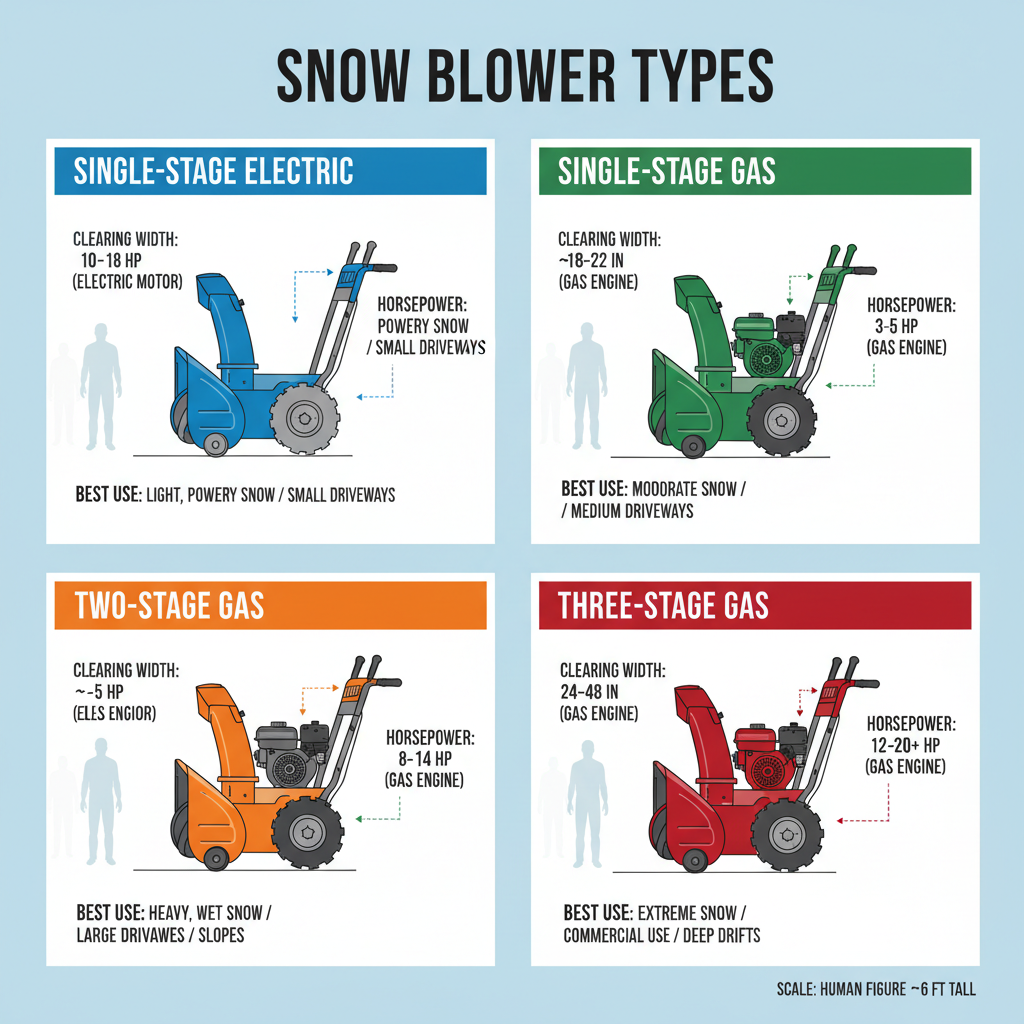
Snow blower pricing is heavily influenced by the machine’s category. Each type is designed for different snow volumes and property sizes, which directly affects cost.
Single-Stage Snow Blowers ($300-$800)
Single-stage models are the entry-level option, ideal for light to moderate snowfall on smaller properties (driveways, small patios, or light residential use). These machines use a single rotating auger that both scoops and propels snow forward in one motion.
- Typical clearing width: 18 to 24 inches
- Engine power: 3 to 5 horsepower
- Best for: Wet, heavy snow or light, dry snow; not ideal for deep accumulation
- Fuel type: Gas or cordless electric
Budget brands like Toro, Ariens, and MTD offer reliable single-stage models in this range. Cordless electric single-stage models typically cost $500-$800 and eliminate fuel mixing and maintenance concerns.
Two-Stage Snow Blowers ($800-$3,000+)
Two-stage blowers are the most popular choice for homeowners with moderate to heavy snowfall. They feature an auger that scoops snow and a separate impeller that throws it out through a chute, allowing greater throwing distance and handling deeper accumulation.
- Typical clearing width: 24 to 30 inches
- Engine power: 8 to 16 horsepower
- Best for: Regular winter snow, larger driveways, residential properties
- Fuel type: Gasoline or cordless electric hybrid
Mid-range brands include Toro (SnowMaster series $1,200, $2,500), Ariens (Platinum series $1,500, $2,800), and John Deere ($1,800, $3,000+). Premium models with heated grips, electric start, and power steering add $300, $800 to the base price. For additional operational safety benchmarks, see our published testing notes on z890 vs x870e motherboard.
Three-Stage Snow Blowers ($3,000-$13,000+)
Three-stage models feature an auger, accelerator, and impeller for maximum snow handling. These commercial-grade or heavy-duty machines are built for frequent use, severe climates, or very large properties.
- Typical clearing width: 32 inches or larger
- Engine power: 18+ horsepower
- Best for: Heavy snow regions, commercial use, properties over 2 acres
- Fuel type: Commercial-grade gasoline
Brands like Ariens (Pro series $4,000, $8,000), Honda, and commercial-focused manufacturers dominate this category. These machines often feature power steering, hydrostatic drive, and heated cabins, justifying premium pricing. To compare alternative configurations, check our hands-on review of marshall stanmore iii vs harman kardon onyx studio 8.
Cordless Electric Snow Blowers ($400-$2,000)
Battery-powered snow blowers are gaining popularity due to zero emissions, minimal maintenance, and quiet operation. Pricing depends on battery capacity and motor power.
- Light-duty models: $400-$700 (smaller battery, 20 to 24″ clearing width)
- Mid-range models: $800-$1,500 (dual battery, 24 to 27″ clearing width)
- Premium models: $1,500-$2,000 (professional-grade, two-stage capability)
Popular cordless brands include Greenworks, Ego Power+, and Snow Joe. Note that battery replacement costs ($200, $500 per battery) should factor into long-term ownership costs. Users looking for related component recommendations can explore our dyson v8 cyclone vs bissell featherweight stick breakdown.
Key Factors That Affect Snow Blower Pricing
Clearing Width
Clearing width directly impacts price and efficiency. A 24″ model costs roughly 10 to 20% less than a 30″ model from the same manufacturer, but clears driveways significantly slower. Wider models justify higher prices through faster snow removal and reduced labor time.
| Clearing Width | Typical Use | Price Impact |
|---|---|---|
| 18 to 20″ | Small patios, narrow walkways | Baseline |
| 24 to 26″ | Standard driveways | +10 to 15% |
| 28 to 30″ | Large driveways, multiple vehicles | +20 to 30% |
| 32″ or larger | Commercial, large properties | +50 to 100% |
Engine Horsepower
Horsepower determines snow-throwing power and ability to handle wet, heavy snow. Each additional horsepower typically adds $50, $150 to the base price. A 8 HP machine costs roughly $400, $600 more than a comparable 5 HP model, but handles damp snow and deeper accumulation substantially better. Before finalizing equipment decisions, refer to our comprehensive bissell crosswave hydrosteam vs shark stainforce comparison.
Fuel Type: Gas vs. Electric
Gasoline models cost 10 to 30% less upfront but require fuel storage, seasonal maintenance, spark plug changes, and carburetor cleaning. Average annual maintenance runs $50-$150.
Cordless electric models cost more initially but eliminate fuel mixing, oil changes, and tune-ups. However, battery degradation after 3 to 5 years may require $200-$500 replacement. For homeowners clearing snow 2 to 3 times per year, cordless often provides better lifetime value.
Features and Build Quality
Premium features add measurable cost:
- Electric start: +$100-$300 (vs. pull-cord)
- Heated grips: +$100-$200
- Power steering: +$200-$500
- Chute control (remote or manual): +$50-$150
- Hydrostatic transmission: +$400-$800 (vs. friction drive)
- Rubber track drive: +$300-$600 (vs. wheels)
Professional-grade construction, reinforced frames, and commercial warranties add 15 to 40% to pricing compared to consumer-grade equivalents.
Brand Reputation and Warranty
Established brands command 10 to 25% price premiums:
- Budget brands: Toro, MTD, Craftsman ($300-$1,500)
- Mid-tier brands: Ariens, Honda, Husqvarna ($800-$3,000)
- Premium brands: John Deere, commercial Ariens ($2,000-$13,000+)
Warranty length also reflects price: budget models typically offer 2 to 3 years, while premium brands offer 5 to 10 year warranties. Extended warranties add $100-$300 to purchase price.
New vs. Used Snow Blower Pricing
Used Snow Blower Pricing
Used models typically sell for 40 to 60% of original retail price, depending on age, condition, and hours of use. A two-stage blower originally priced at $2,000 typically resells for $800-$1,200 after 3 to 5 years of light residential use.
- 1 to 2 years old, light use: 65 to 75% of original price
- 3 to 5 years old, moderate use: 45 to 60% of original price
- 6+ years old, heavy use: 25 to 45% of original price
Where to Find Used Models
Facebook Marketplace, Craigslist, and local equipment dealers typically offer the widest selection. End-of-season (April-May) often yields better deals as homeowners clear storage space. Estate sales and rental company liquidations can yield significant discounts on barely-used commercial-grade equipment.
What to Inspect When Buying Used
- Operating condition: Start the engine and listen for unusual noises; check for smoke or fuel leaks
- Auger and impeller condition: Check for bent blades, rust, or missing bolts
- Belts and pulleys: Look for cracks, fraying, or slippage
- Tire or track condition: Assess tread depth and verify wheels roll freely
- Chute movement: Test that chute rotates smoothly and controls respond
- Service history: Request maintenance records; well-maintained machines justify higher prices
Seasonal Pricing and When to Buy
Off-Season Buying (Spring and Summer)
Snow blower prices typically drop 20 to 35% from March through August as inventory clears. Retailers offer clearance sales to make room for spring and summer products. A two-stage model priced at $1,800 in November may sell for $1,200-$1,400 in May.
Peak-Season Pricing (September-November)
As winter approaches, prices creep upward and selection narrows. Early September typically offers the best combination of selection and moderate pricing before holiday demand drives prices up. By November, most retailers have cleared inventory and reduced selection significantly.
Regional Price Variation
Heavy-snow regions (Northeast, Midwest, Mountain West) typically see prices 10 to 20% higher than mild-climate areas due to stronger local demand. Conversely, retailers in mild climates often offer aggressive clearance pricing on remaining stock. Shipping costs (typically $100-$300) may offset regional price differences for online purchases.
Total Cost of Ownership Beyond Purchase Price
Maintenance and Fuel Costs
Gasoline models: Budget $50-$150 annually for spark plugs, oil changes, air filter replacement, and seasonal carburetor cleaning. Fuel costs depend on machine size and use; a typical two-stage blower used 10 times per season consumes roughly 5 to 8 gallons, costing $20-$35 at current fuel prices.
Cordless electric models: Annual maintenance is minimal ($0-$25 for filter cleaning). Battery replacement ($200-$500) occurs every 5 to 7 years, raising effective annual cost by $35-$70.
Storage and Protection
Proper storage extends snow blower life significantly. A weather-resistant cover ($30-$60) protects against rust and UV damage. Dedicated garage or shed storage (vs. outdoor exposure) can add 5 to 10 years to machine lifespan, justifying shed construction investment for serious snow-prone regions.
Warranty and Insurance
Standard warranties (2 to 3 years on consumer models) protect against defects but typically exclude wear items and user damage. Extended warranties ($100-$300) can provide peace of mind but are often unnecessary given snow blower durability. Some homeowner insurance policies partially cover equipment damage from weather events.
Alternative Options: Rental and Service
For occasional users or those hesitant to buy, snow blower rental costs $50-$100 per day or $200-$400 per season at local equipment dealers. Professional snow removal services charge $150-$400 per visit, making them uneconomical for homeowners who can operate equipment themselves but attractive for those with mobility limitations or complex properties.
Frequently Asked Questions About How Much Are Snow Blowers
Q: Is a cordless electric snow blower worth the extra upfront cost?
A: For most homeowners, cordless models make financial sense over time. While initial costs run $100-$400 higher than comparable gas models, you eliminate annual maintenance costs, spark plug replacements, fuel storage, and seasonal tune-ups. If you use the blower 3 to 5 times per year, cordless saves money after year two. For heavy commercial use (20+ hours per season), gas models remain more practical due to longer runtime and faster refueling.
Q: What’s the ideal snow blower size for a typical residential driveway?
A: A 24 to 26″ two-stage blower with 8 to 12 horsepower handles most residential driveways efficiently. This size balances maneuverability (fits through gates, easier to store) with productivity. If your driveway is wider than two cars or you experience frequent heavy snow, consider upgrading to 28 to 30″. For narrow walkways or small patios, single-stage 18 to 20″ models suffice and cost 40 to 50% less.
Q: How much can I save by buying used instead of new?
A: Used snow blowers typically cost 40 to 60% of retail price. A $2,000 two-stage model might sell used for $800-$1,200 after 3 to 5 years of light use. You save $800-$1,200, but sacrifice warranty protection and face potential repair costs if hidden damage emerges. For budget-conscious buyers willing to inspect machines carefully or test them before purchase, used equipment represents excellent value, especially models 1 to 3 years old from reliable brands.
Q: When is the best time to buy a snow blower?
A: Buy in May-August for maximum discounts (20 to 35% off) and early September for strong selection at moderate prices. Avoid peak season (November-December) when prices rise and inventory depletes. If an early winter approaches unexpectedly, you may face premium pricing and limited selection, so advance purchasing protects against this scenario.
Making Your Snow Blower Decision
Your ideal snow blower price balances your property size, local snow conditions, and frequency of use. Homeowners clearing snow fewer than 5 times per season typically find value in single-stage or cordless models ($300-$900). Those in heavy-snow regions clearing regularly benefit from investing in two-stage gas models ($1,200-$2,000) that handle wet, heavy snow reliably. Only commercial operators or those with very large properties justify three-stage machines ($3,000+).
Timing your purchase for off-season sales, considering total cost of ownership beyond the sticker price, and carefully inspecting used equipment can significantly reduce effective costs. Whether you choose gas, cordless, or professional removal depends on your climate, property size, physical ability, and budget priorities.
Technical Standards and Compliance
Mechanical safety standards, operational tolerances, and protective gear guidelines align with benchmark specifications established by the American National Standards Institute (ANSI).