Direct Answer: When to Sharpen Your Chainsaw Chain
A chainsaw chain should be sharpened when it shows signs of dullness, rather than on a fixed schedule. Signs include producing fine sawdust instead of wood chips, requiring excessive force to cut, or smoking and burning during use. For regular homeowner use, this typically means sharpening every 5-10 hours of cutting time. Professional users may sharpen more frequently, sometimes every 2-4 hours, depending on wood type and cutting conditions.

Pros
- Supports a wide range of chainsaw chains up to .404 pitch
- Includes both chain grinding wheels and a depth-gauge maintenance disc
- Can be mounted on a bench or wall for flexible workspace setup
- Built for frequent sharpening tasks rather than occasional use
Cons
- May be more machine than needed for casual users who sharpen chains only occasionally
- Requires mounting and workshop space, so it is less portable than handheld sharpeners
- Compatibility is limited to chains up to .404 pitch
Overview: The Oregon 520-120 is a professional 120-volt chainsaw chain sharpener designed for frequent, high-volume use. It can be mounted on a bench or wall, making it a practical fit for a garage, workshop, or service area.
Performance and Features: This universal sharpener handles chains up to .404 pitch and is intended to work with many popular chain brands, including Oregon, Stihl, and Husqvarna. Multiple adjustment points support more accurate sharpening, while the built-in light helps improve visibility during detailed grinding work.
Drawbacks and Considerations: Its professional focus means it may be more capable than many casual users need. It also requires a mounting setup and dedicated space, so it is not as portable as simpler chain sharpeners. Chains larger than .404 pitch are not supported.
Verdict: The Oregon 520-120 is best suited to professional users or serious property owners who sharpen chains regularly and want a more controlled, workshop-style solution. If you need a durable sharpener for repeated use and value adjustment precision, this model is a strong fit.

Pros
- Space-saving alternative to a full-size chain sharpener.
- Wide chain compatibility up to .404 inch pitch.
- Includes useful setup and maintenance accessories.
- Bench mounting with included bolts adds stability in a workshop or garage.
Cons
- Best suited to occasional use rather than high-volume sharpening.
- Requires a bench or fixed work surface for installation.
- No customer review details are available in the provided data, so long-term performance feedback is limited.
Overview & Design: The Oregon Professional Compact 120-Volt Bench Chain Grinder is a small bench-mounted chain sharpener built for home workshops and garages. Its compact footprint makes it a practical choice for users who want a dedicated sharpening tool without the size of a full professional machine.
Performance & Key Features: This grinder is designed to sharpen chains up to .404 inch pitch, which covers many common chainsaw chains from brands such as Oregon, Stihl, and Husqvarna. It includes a manual chain clamping vice, one-way motor rotation for added safety, two grinding wheels, a dressing brick, and a profile guide.
Drawbacks & Considerations: The main limitation is that it is aimed at occasional users rather than heavy-duty shop use. It also needs to be bolted to a bench, so it is not a portable sharpener. Since no customer review details were provided, there is limited real-world feedback to judge long-term durability.
Verdict: For homeowners, property owners, and light-duty users who want an affordable and space-saving way to maintain saw chains, this Oregon grinder is a sensible option. It offers the core features needed for basic sharpening while staying compact and straightforward.
Pros
- Electric sharpener with a 230W rating listed in the title
- Designed for saw chain and blade sharpening per title
Cons
- Chain size compatibility is not stated in supplied data
Pros
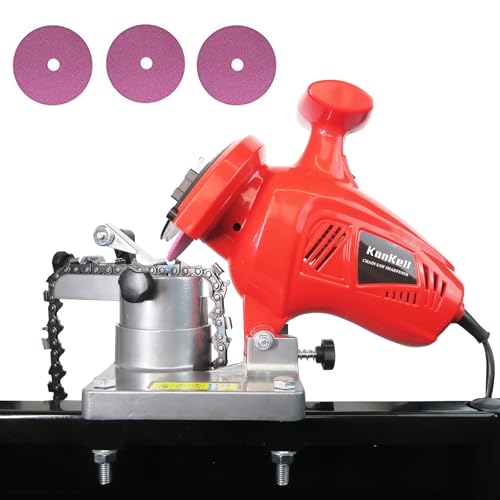
- High-speed 8400 RPM operation supports efficient sharpening.
- Adjustable angle adds flexibility for different chain types.
- Stable mountable base can improve control during use.
- Lightweight and compact compared with many bench-style sharpeners.
Cons
- Best suited to chains between 1/4" and 3/8" pitch, so it is not a universal solution for every chain size.
- Mountable setup is less portable than a fully handheld sharpener.
- No included accessory list or detailed specs were provided in the source data, so buyers may need to confirm what comes in the box.
Overview: The KonKell Electric Chainsaw Sharpener is a 250W bench-style chain grinder designed to restore cutting edges quickly and with more consistency than manual filing. Its heavy-duty build and compact 1.55 kg design make it a practical option for garages, workshops, and on-site maintenance.
Performance and Features: With an 8400 RPM motor and adjustable grinding angle, this sharpener is built for efficient, repeatable sharpening on chains from 1/4" to 3/8" pitch. The mountable base adds stability, which can help improve accuracy and reduce movement during operation. That makes it a strong fit for users who want a more controlled sharpening process.
Drawbacks and Considerations: The sharpening range is limited to specific chain pitches, so it will not fit every chainsaw chain. Because it is designed to be mounted, it is less convenient for fully portable use than a handheld tool. The provided product data also does not include a full accessory list, so buyers may want to confirm what is included before purchasing.
Verdict: This sharpener makes the most sense for DIY owners, homeowners, and professionals who regularly maintain compatible chains and want a stable, power-driven sharpening solution. If you value speed, adjustability, and a more precise setup, it is a sensible choice.
Understanding Chainsaw Chain Dullness: Key Signs to Watch For
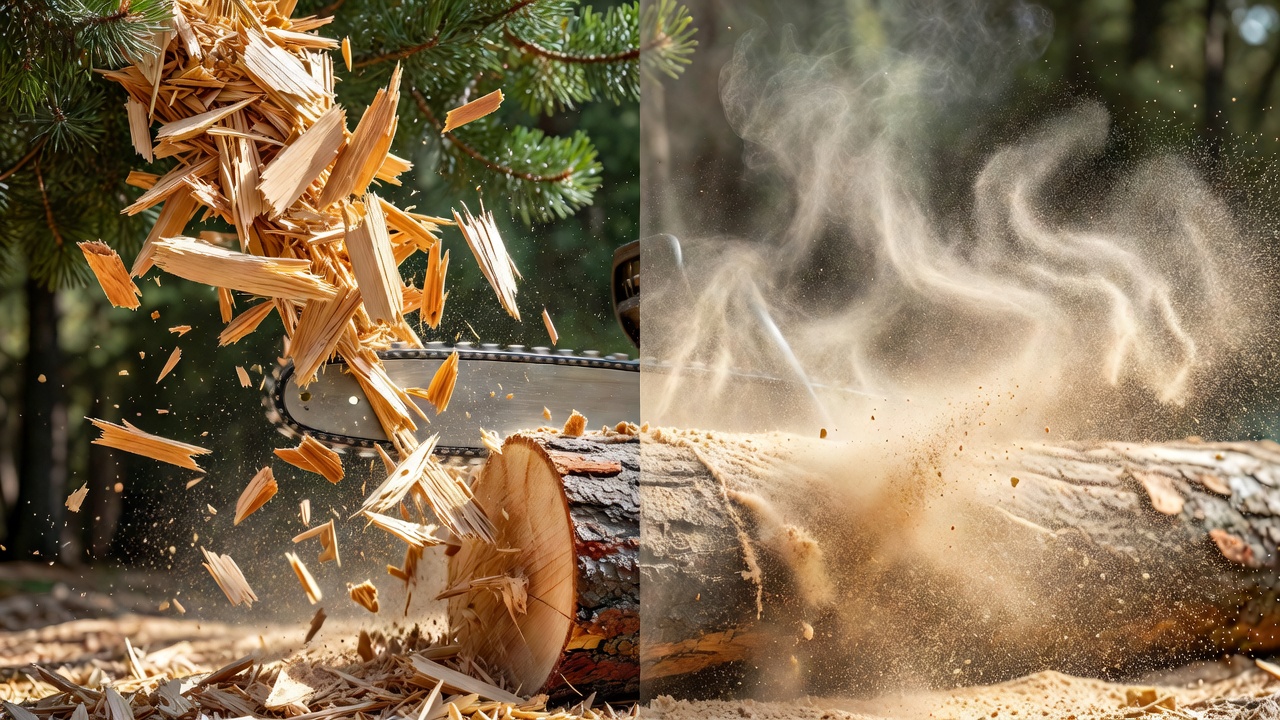
Recognizing when your chainsaw chain needs sharpening is more reliable than following a calendar. A dull chain becomes a safety hazard and dramatically reduces cutting efficiency.
Visual and Performance Indicators
- Sawdust vs. Wood Chips: A sharp chain produces uniform wood chips. A dull chain produces fine sawdust, which is the most reliable indicator of dullness.
- Cutting Force Required: If you must push hard to make the saw cut, the chain is likely dull. A sharp chain cuts smoothly with minimal pressure.
- Smoke and Burning: Friction from a dull chain causes smoking and a burnt smell during operation, indicating immediate sharpening is needed.
- Uneven Cutting: A dull or unevenly sharpened chain may cause the saw to pull to one side rather than cutting straight.
- Increased Vibration: A dull chain can cause excessive vibration, which increases user fatigue and reduces control.
Why Chain Dullness Matters
A dull chainsaw chain poses safety risks and operational problems. Dull chains require the operator to apply excessive pressure, increasing the risk of kickback and loss of control. They also generate more heat through friction, which can damage the chain, bar, and engine. Additionally, a dull chain accomplishes less work per unit of fuel consumed, making cutting less efficient and more costly. For complementary field maintenance guidelines, examine our breakdown of jbl partybox club 120 vs sony srs xv500.
Factors That Determine Sharpening Frequency
Several variables influence how quickly a chainsaw chain becomes dull and, therefore, how often you need to sharpen it. For complementary field maintenance guidelines, examine our breakdown of jbl partybox club 120 vs sony srs xv500.
Wood Type and Density
Hardwoods like oak, maple, and ash dull a chain faster than softwoods like pine and fir due to their density and mineral content. Cutting through hardwoods may require sharpening every 2-3 hours of use, while softwood may allow 5-10 hours between sharpenings. To evaluate matched hardware tolerances, consult our detailed overview of z890 vs x870e motherboard.
Wood Condition
The condition of the wood significantly affects chain wear. Dirty or sandy wood accelerates dullness because sand and soil particles contain silica, which abrades the chain teeth. Frozen wood is harder and dulls chains faster than room-temperature wood. Wet wood is softer and easier on the chain than dry wood.
Cutting Frequency and Intensity
A homeowner who cuts firewood once a month needs less frequent sharpening than a professional logger who operates a chainsaw 8 hours per day. Occasional users may sharpen 2-3 times per year, while professionals may sharpen daily or multiple times per day. To evaluate matched hardware tolerances, consult our detailed overview of z890 vs x870e motherboard.
Chainsaw Type and Chain Quality
Electric chainsaws and gas-powered chainsaws both use chains that dull at similar rates, but the engine type may influence how quickly you notice dullness. Higher-quality chains with better steel formulations may stay sharp slightly longer than budget chains, but all chains eventually dull and require sharpening.
Maintenance Practices
Regular maintenance extends the time between sharpenings. Proper chain tension, adequate bar oil, and avoiding obstacles like dirt and rocks will reduce chain wear and keep your saw cutting efficiently longer. When planning workspace deployment, consider the engineering criteria outlined in our marshall stanmore iii vs harman kardon onyx studio 8 guide.
Practical Guide to Sharpening Your Chainsaw Chain
Tools Needed
You have several options for sharpening a chainsaw chain:
- Round File and File Guide: Hand sharpening with a round file matched to your chain size is the most accessible and affordable method. A file guide helps maintain the correct angle.
- Flat File: Used to sharpen the depth gauges (rakers) that control how deep each tooth cuts.
- Bench Grinder: A powered grinding wheel sharpens chains quickly but requires more skill to maintain proper angles.
- Electric Chain Sharpener: Dedicated sharpeners automate the process and are ideal for frequent sharpening.
- Professional Service: Local equipment shops and arborists often sharpen chains for a fee, a practical option for occasional users.
Basic Hand Sharpening Steps
- Secure the chainsaw in a vice or clamp to prevent movement.
- Identify the correct round file size for your chain (typically marked on the chain or in the manual).
- Place the file guide on the chain tooth at the correct angle (usually around 30-35 degrees).
- File each tooth with smooth, even strokes, working away from your body.
- File every tooth on one side of the chain, then flip and file all teeth on the other side.
- Check and adjust depth gauges with a flat file as needed.
- Test the chain on scrap wood before returning to regular use.
When to Replace Instead of Sharpen
Not all dull chains can be rescued. Replace your chain if: For additional operational safety benchmarks, see our published testing notes on dyson v8 cyclone vs bissell featherweight stick.
- Teeth are significantly worn down or unevenly worn across the chain.
- The chain has broken or missing links.
- The chain stretches excessively and won’t tighten properly.
- Teeth are cracked, chipped, or severely damaged.
- The chain has been sharpened many times and teeth are too short to sharpen further.
Extending Time Between Sharpenings
- Keep the chain at proper tension—loose chains wear faster.
- Use adequate bar oil to reduce friction and heat.
- Avoid cutting into dirt, rocks, or other debris.
- Let the saw do the cutting; avoid forcing it through wood.
- Keep the engine well-maintained and running at proper speed.
General Sharpening Schedule by User Type
| User Type | Typical Frequency | Conditions |
|---|---|---|
| Occasional Homeowner | 2-4 times per year or every 5-10 hours of cutting | Cuts softwood occasionally; inspects chain before each use |
| Regular Homeowner | Every 5-8 hours of cutting or weekly during cutting season | Regular firewood cutting or yard maintenance; mixed wood types |
| Professional/Frequent User | Every 2-4 hours of cutting or daily inspection | Heavy daily use; hardwood or dirty conditions; often sharpens on-site |
Everything You Need to Know: How Often Sharpen Chainsaw FAQ
Q: Can I sharpen a chainsaw chain without removing it?
Yes, you can sharpen a chain while it remains on the saw. Secure the saw in a vice, ensure the chain is tight, and use a file guide to sharpen each tooth. However, removing the chain makes it easier to inspect and sharpen thoroughly, and is recommended for beginners.
Q: How long does a chainsaw chain typically last?
A chainsaw chain can last 5-10 years or longer with regular maintenance and proper sharpening. However, the practical lifespan depends on usage frequency and conditions. A chain used heavily in abrasive conditions may need replacement every 1-2 years, while an occasional-use chain may last much longer. To compare alternative configurations, check our hands-on review of bissell crosswave hydrosteam vs shark stainforce.
Q: Is it worth sharpening a chainsaw chain, or should I just buy a new one?
Sharpening is almost always more cost-effective than replacing a chain. A professional sharpening service typically costs $10-20, while replacement chains cost $40-100 or more. Hand sharpening at home costs only the price of a file ($5-15) and your time. Most chains can be sharpened 5-10 times before replacement becomes necessary.
Q: What’s the difference between sharpening and filing?
The terms are often used interchangeably. Sharpening refers to the overall maintenance of chain teeth, while filing specifically describes using a file to restore the sharp edge. When sharpening, you also adjust depth gauges to ensure proper cutting depth.
For more hands-on benchmarks and buying recommendations, consult our guides on residential zero-turn lawn mower guide, as well as high-CFM commercial leaf blower guide, as well as durable ride-on lawn tractor guide.
Mechanical safety standards, operational tolerances, and protective gear guidelines align with benchmark specifications established by the American National Standards Institute (ANSI).