Quick Answer: How Often To Sharpen Chainsaw Chain?
There is no single fixed interval for sharpening a chainsaw chain, but a common guideline is to sharpen after every two to four hours of active cutting, or roughly every three to five tank fillings of fuel. In practice, the best approach is to sharpen whenever you notice the chain producing fine sawdust instead of chips, requiring more force to…

Pros
- Supports a wide range of chainsaw chains up to .404 pitch
- Includes both chain grinding wheels and a depth-gauge maintenance disc
- Can be mounted on a bench or wall for flexible workspace setup
- Built for frequent sharpening tasks rather than occasional use
Cons
- May be more machine than needed for casual users who sharpen chains only occasionally
- Requires mounting and workshop space, so it is less portable than handheld sharpeners
- Compatibility is limited to chains up to .404 pitch
Overview: The Oregon 520-120 is a professional 120-volt chainsaw chain sharpener designed for frequent, high-volume use. It can be mounted on a bench or wall, making it a practical fit for a garage, workshop, or service area.
Performance and Features: This universal sharpener handles chains up to .404 pitch and is intended to work with many popular chain brands, including Oregon, Stihl, and Husqvarna. Multiple adjustment points support more accurate sharpening, while the built-in light helps improve visibility during detailed grinding work.
Drawbacks and Considerations: Its professional focus means it may be more capable than many casual users need. It also requires a mounting setup and dedicated space, so it is not as portable as simpler chain sharpeners. Chains larger than .404 pitch are not supported.
Verdict: The Oregon 520-120 is best suited to professional users or serious property owners who sharpen chains regularly and want a more controlled, workshop-style solution. If you need a durable sharpener for repeated use and value adjustment precision, this model is a strong fit.

Pros
- Space-saving alternative to a full-size chain sharpener.
- Wide chain compatibility up to .404 inch pitch.
- Includes useful setup and maintenance accessories.
- Bench mounting with included bolts adds stability in a workshop or garage.
Cons
- Best suited to occasional use rather than high-volume sharpening.
- Requires a bench or fixed work surface for installation.
- No customer review details are available in the manufacturer listing, so long-term performance feedback is limited.
Overview & Design: The Oregon Professional Compact 120-Volt Bench Chain Grinder is a small bench-mounted chain sharpener built for home workshops and garages. Its compact footprint makes it a practical choice for users who want a dedicated sharpening tool without the size of a full professional machine.
Performance & Key Features: This grinder is designed to sharpen chains up to .404 inch pitch, which covers many common chainsaw chains from brands such as Oregon, Stihl, and Husqvarna. It includes a manual chain clamping vice, one-way motor rotation for added safety, two grinding wheels, a dressing brick, and a profile guide.
Drawbacks & Considerations: The main limitation is that it is aimed at occasional users rather than heavy-duty shop use. It also needs to be bolted to a bench, so it is not a portable sharpener. Since no customer review details were provided, there is limited real-world feedback to judge long-term durability.
Verdict: For homeowners, property owners, and light-duty users who want an affordable and space-saving way to maintain saw chains, this Oregon grinder is a sensible option. It offers the core features needed for basic sharpening while staying compact and straightforward.
Pros
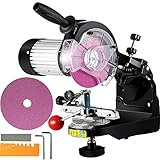
- Electric sharpener with a 230W rating listed in the title
- Designed for saw chain and blade sharpening per title
Cons
- Chain size compatibility is not stated in manufacturer listing
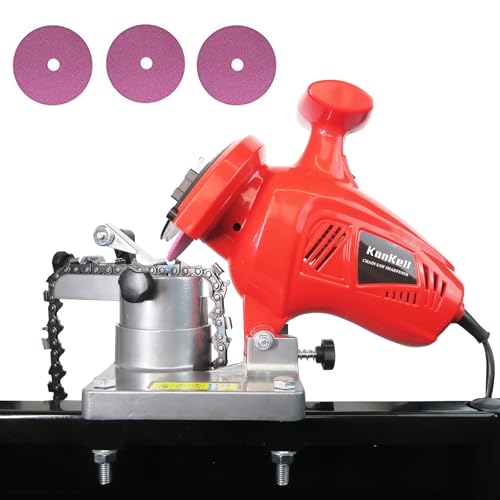
Pros
- High-speed 8400 RPM operation supports efficient sharpening.
- Adjustable angle adds flexibility for different chain types.
- Stable mountable base can improve control during use.
- Lightweight and compact compared with many bench-style sharpeners.
Cons
- Best suited to chains between 1/4" and 3/8" pitch, so it is not a universal solution for every chain size.
- Mountable setup is less portable than a fully handheld sharpener.
- No included accessory list or detailed specs were provided in the manufacturer listing, so buyers may need to confirm what comes in the box.
Overview: The KonKell Electric Chainsaw Sharpener is a 250W bench-style chain grinder designed to restore cutting edges quickly and with more consistency than manual filing. Its heavy-duty build and compact 1.55 kg design make it a practical option for garages, workshops, and on-site maintenance.
Performance and Features: With an 8400 RPM motor and adjustable grinding angle, this sharpener is built for efficient, repeatable sharpening on chains from 1/4" to 3/8" pitch. The mountable base adds stability, which can help improve accuracy and reduce movement during operation. That makes it a strong fit for users who want a more controlled sharpening process.
Drawbacks and Considerations: The sharpening range is limited to specific chain pitches, so it will not fit every chainsaw chain. Because it is designed to be mounted, it is less convenient for fully portable use than a handheld tool. The manufacturer listing also does not include a full accessory list, so buyers may want to confirm what is included before purchasing.
Verdict: This sharpener makes the most sense for DIY owners, homeowners, and professionals who regularly maintain compatible chains and want a stable, power-driven sharpening solution. If you value speed, adjustability, and a more precise setup, it is a sensible choice.
General Sharpening Frequency Guidelines
Chainsaw operators often refer to the “tank filling” rule as a practical benchmark. After refueling three to five times, most chains show measurable dulling, especially under regular use. This translates roughly to two to four hours of continuous cutting for typical homeowners and property maintenance work.
Occasional users may find their chain stays sharp longer because they are not cutting as frequently, but the actual wear per cutting hour remains similar. The key difference is elapsed time: a chain used once a month will dull more slowly in calendar time than one used daily, even though each hour of cutting produces comparable wear. Standard operational and maintenance protocols can be consulted via U.S. Consumer Product Safety Commission (CPSC) lawn mower guidelines.
Professional arborists and landscapers often sharpen daily or between jobs to maintain peak performance, whereas homeowners sharpening a few times per season may notice less dramatic performance drops. Starting with the two to four hour guideline and adjusting based on your own observation gives you the most reliable starting point.
Signs Your Chain Needs Sharpening
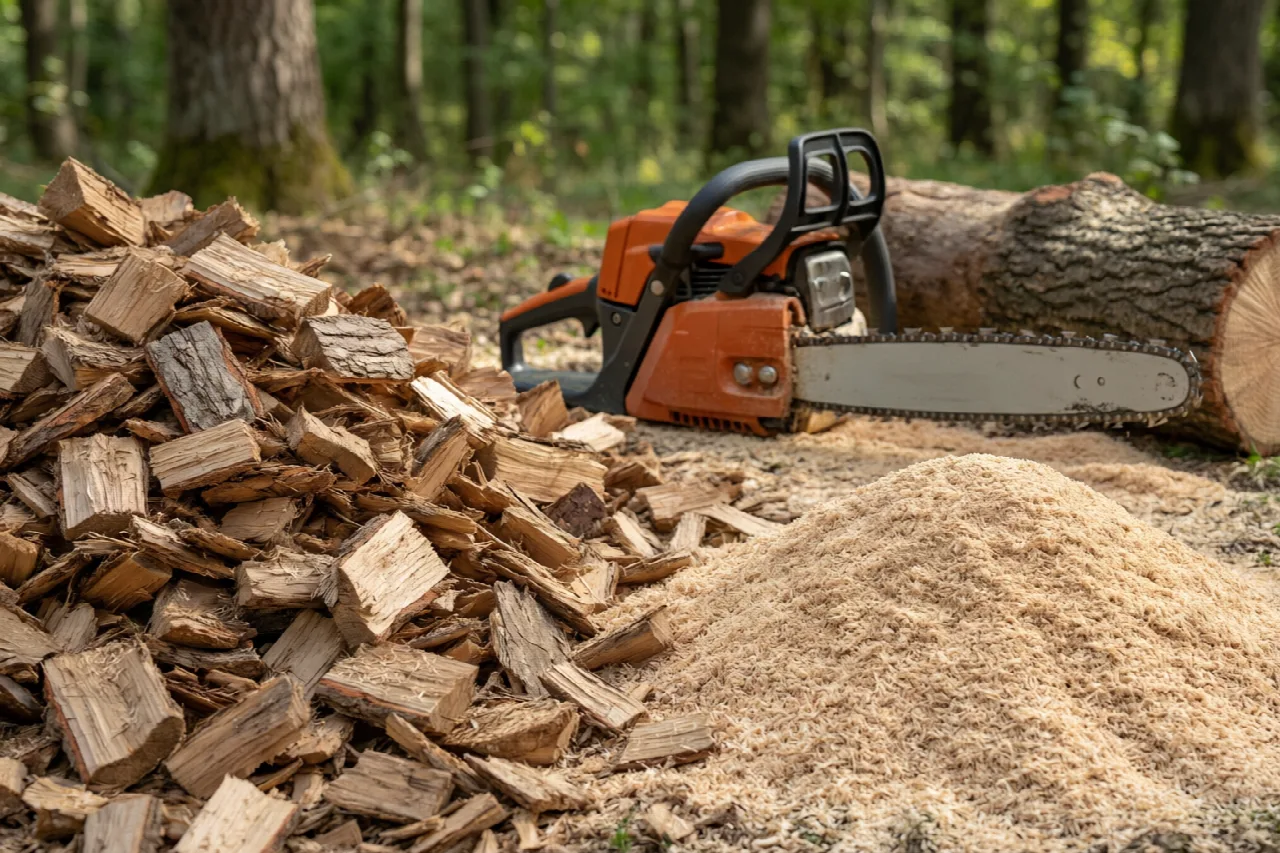
The most reliable indicator of a dull chain is the type of debris it produces. A sharp chain cuts cleanly and throws out uniform wood chips roughly the size of grains of rice. A dull chain struggles to bite into the wood and instead produces fine sawdust that accumulates around the cut. If you notice this shift, sharpening is overdue.
Other warning signs include increased cutting force required to make progress, the saw pulling to one side even when you apply even pressure, and a generally sluggish feel during operation. You may also notice the engine working harder, which can waste fuel and stress the motor unnecessarily. Some operators describe the feeling as the saw “fighting” the wood rather than slicing through it smoothly.
A dull chain also increases the risk of kickback and operator fatigue because you must push harder to maintain cutting speed. Recognizing these signs early and sharpening promptly keeps the saw performing safely and efficiently.
Factors That Change How Often You Sharpen
Wood type has a significant impact on how quickly a chain dulls. Hardwoods such as oak, maple, and hickory are denser and harder than softwoods like pine or fir, so cutting them dulls the chain faster. Dirt, sand, and rocks embedded in or stuck to the bark also accelerate dulling by scoring the cutters. This is one reason professional cutters avoid cutting near the ground and try to keep the bar clean.
Chain quality matters as well. Premium chains with harder steel alloys retain their edge longer than budget models. The design of the cutter teeth and the sharpening angle also influence edge retention. A chain that has been sharpened many times may not hold an edge as well as a newly sharpened one, especially if previous sharpenings were poorly executed.
Operator technique affects wear too. Smooth, controlled cuts with consistent saw positioning produce less stress on the chain than forcing the saw or using a jerky motion. Proper chain tension and adequate bar oil lubrication reduce friction and heat, which slows dulling.
Tips for Extending Time Between Sharpenings
Keep the chain properly tensioned according to the manufacturer’s specifications. A loose chain can slip on the sprocket and wear unevenly, while an over-tight chain strains the motor and dulls faster. Check tension regularly, especially during breaks in cutting. For additional operational safety benchmarks, see our published testing notes on marshall stanmore iii vs harman kardon onyx studio 8.
Use high-quality bar oil and maintain the oil level in the reservoir. Good lubrication reduces friction and heat, which extends the life of the cutting edge. Never operate the saw with an empty oil tank, as this accelerates dulling and damages the bar.
Avoid cutting into dirt, sand, or rocks whenever possible. If you must fell a tree or trim near the ground, try to position the cut above the dirtiest part of the trunk. Clean the bar and chain occasionally to remove embedded debris. To compare alternative configurations, check our hands-on review of dyson v8 cyclone vs bissell featherweight stick.
Use a sharp file or professional sharpening service to maintain a proper cutting angle, usually around 30 degrees for most chains. A poorly sharpened chain dulls faster than one sharpened correctly, so if you are unsure about your technique, consider having a professional service the chain every few sharpenings.
Common Questions on How Often To Sharpen A Chainsaw Answered
Should I sharpen the chain myself or take it to a professional? DIY sharpening is inexpensive and quick once you develop the skill, but it requires practice to maintain the correct angle and pressure. Professional sharpening guarantees consistent quality and may be worthwhile if you are uncomfortable filing or lack the proper tools. Many owners do a combination: self-sharpen for minor maintenance and use professional service for major tune-ups. Users looking for related component recommendations can explore our bissell crosswave hydrosteam vs shark stainforce breakdown.
At what point should I replace the chain instead of sharpening it? If the chain has been sharpened many times and the cutters are very short, or if you notice cracked, missing, or severely damaged teeth, replacement is more practical than sharpening. Most chains can be sharpened 5 to 10 times before the cutter height becomes too short for safe operation. Inspect the chain before sharpening to identify damage that warrants replacement.
Related Maintenance and Operating Guides
To keep your equipment running at peak operating efficiency, explore our related technical walkthroughs and maintenance tutorials:
- Consult our detailed breakdown on residential zero-turn lawn mower guide.
Sharpening Frequency and Safety
A dull chain forces more pressure and can make the saw kick unexpectedly, so sharpen before cutting becomes a struggle. For general chainsaw safety guidance, see American National Standards Institute (ANSI).