

Direct Answer: How to Determine Chainsaw Bar Length
The right chainsaw bar length is determined by balancing three factors: your chainsaw’s engine size (displacement in cubic centimeters or cc), the diameter of the wood you need to cut, and the manufacturer’s recommended range for your specific model. As a general rule, a 40cc engine pairs with a 14-16 inch bar, a 50cc engine with a 16-18 inch bar, and a 60cc+ engine with an 18-24 inch bar. However, always consult your owner’s manual first, as it lists the exact compatible bar lengths for your saw. The bar should be long enough to cut through your typical workpiece in one pass, but not so long that it becomes difficult to control.

Pros
- Published specifications are clear, which makes compatibility checks easier.
- 20-inch length suits users who need a longer guide bar for larger cutting jobs.
- Works as a straightforward replacement part for a worn or damaged bar.
Cons
- Compatibility is narrow and depends on matching pitch, gauge, and drive links exactly.
- No chain, mounting hardware, or other accessories are listed with the bar.
- Limited product detail is provided, so buyers cannot assess material or construction specifics from the listing alone.
Overview: The PROYAMA Replacement Chainsaw Guide Bar is a 20-inch replacement part built for compatible chainsaws. Its key identifiers are the 3/8" pitch, 0.058" gauge, and 68 drive links, so the main priority is matching the correct fit rather than looking for extra features.
Performance: For the right saw, this guide bar should be a practical swap-in solution for replacing a worn or damaged bar. The 20-inch length offers extended reach, while the published specs make it easier for buyers to confirm compatibility before ordering.
Drawbacks: Compatibility is specific, so this is not a universal bar. The listing does not include chain, mounting hardware, or construction details, and there is limited customer feedback available in the manufacturer listing.
Verdict: This product is best for chainsaw owners who already know they need a 20-inch bar with a 3/8" pitch, 0.058" gauge, and 68 drive links. If the measurements match, it is a sensible replacement option; if not, buyers should look for a different fit.

Pros
- Complete combo includes both bar and chain
- Lightweight laminated steel construction
- Compatible with listed Stihl 025, MS 250, and MS 251 series models
Cons
- Fitment is specific, so buyers must verify A074 mount and chain specs before ordering
- Not a universal replacement, despite broader compatibility claims
- Lack of user review volume makes long-term real-world feedback limited
Overview: The FORESTER 18" Replacement Chainsaw Bar & Chain Combo is a replacement parts kit built for select Stihl chainsaws. It pairs an 18 inch laminated steel guide bar with a matching chain, giving users a ready-to-install option when the original setup is worn or damaged.
Performance and Features: The lightweight bar design is meant to improve control and reduce recoil, while the reversible construction adds practical value by extending the bar's usable life. The listed specifications, including .325 pitch, .063 gauge, 68 drive link, and A074 mount, make it important to match the kit carefully to the saw model.
Considerations: This is not a universal fit product, so compatibility should be checked before purchase. While the design is straightforward and installation is described as easy, buyers should still confirm that their saw matches the exact bar mount and chain requirements.
Verdict: This combo is best suited for Stihl owners who need a replacement bar and chain in the exact listed size. It offers a practical, complete solution for routine maintenance, especially for users who value lighter handling and reversible bar construction.
- 18 inch replacement bar and chain combo
- .325 pitch, .063 gauge, 68 drive link
- Fits listed Stihl 025, MS 250, and MS 251 models
- Reversible laminated steel bar design

Pros
- Matches a clear set of chain specs for easy compatibility checking
- Reduced-kickback design is useful for added control during cutting
- Pre-cut loop design simplifies replacement compared with assembling a chain from parts
- Includes a 1-year warranty for added buyer confidence
Cons
- Only fits saws that require the listed 20 in bar, .050 gauge, 3/8 pitch, and 72 drive links
- Replacement chain only, so a bar and accessories are not included
- Chisel-style chains can need regular sharpening and correct tensioning to stay effective
Overview: The TriLink 20-inch chainsaw chain is a pre-cut replacement loop designed for saws that use a 20 in bar, .050 in gauge, 3/8 in pitch, and 72 drive links. It is an aftermarket chain built to meet OEM specifications, which makes fit verification important before purchase.
Performance: Its chisel reduced-kickback design is intended to support cleaner cutting while helping maintain control. The pre-cut loop format also makes installation more straightforward than building a chain from individual links.
Considerations: The main limitation is compatibility, since this chain only works with saws that match the exact size and drive-link requirements. It is also a replacement part only, so buyers should expect to reuse their existing bar and any other hardware.
Verdict: This is a practical option for buyers who need a 20-inch, 72 DL replacement chain with reduced-kickback features and OEM-style specifications. It is best suited to users who already know their saw's exact chain requirements.

Pros
- Clearly specified 16-inch length, .050 gauge, and 1.3mm width for fit verification.
- Designed to reduce kickback for safer, more controlled cutting.
- Lightweight build improves maneuverability for occasional users.
- Suitable for both small electric and gas-powered chainsaws with compatible specifications.
Cons
- Compatibility is not universal, so buyers must confirm fit with their chainsaw model before purchase.
- No chain is specified as included with this guide bar.
- Best suited to small chainsaws and occasional cutting rather than heavy-duty professional use.
Overview & Design: The Tamashitec 2025 16-inch chainsaw guide bar is a replacement bar designed for users who need a 16 in, .050 gauge, 1.3mm guide bar for compatible chainsaws. Its construction focuses on durability while keeping the bar light enough for manageable handling during routine cutting tasks.
Performance & Key Features: This guide bar is positioned for small electric and gasoline-powered chainsaws, making it useful for pruning, trimming, and occasional woodcutting when the saw specifications match. The reduced-kickback design is a practical advantage for users who prioritize control and safer operation, especially during lighter homeowner tasks.
Drawbacks & Considerations: The most important consideration is fitment. The product data does not list specific chainsaw models, so buyers should verify the required bar length, gauge, width, and mounting compatibility before ordering. It is also a guide bar only, with no included chain specified, and it is better suited for small saws than heavy-duty professional cutting.
Verdict: The Tamashitec 2025 16-inch chainsaw guide bar is a sensible choice for occasional woodcutters and homeowners looking for a lightweight, reduced-kickback replacement bar with clearly stated core measurements. It offers the best value to buyers who already know their chainsaw requires a 16-inch, .050 gauge, 1.3mm bar.
Understanding the Core Factors for Bar Length Selection
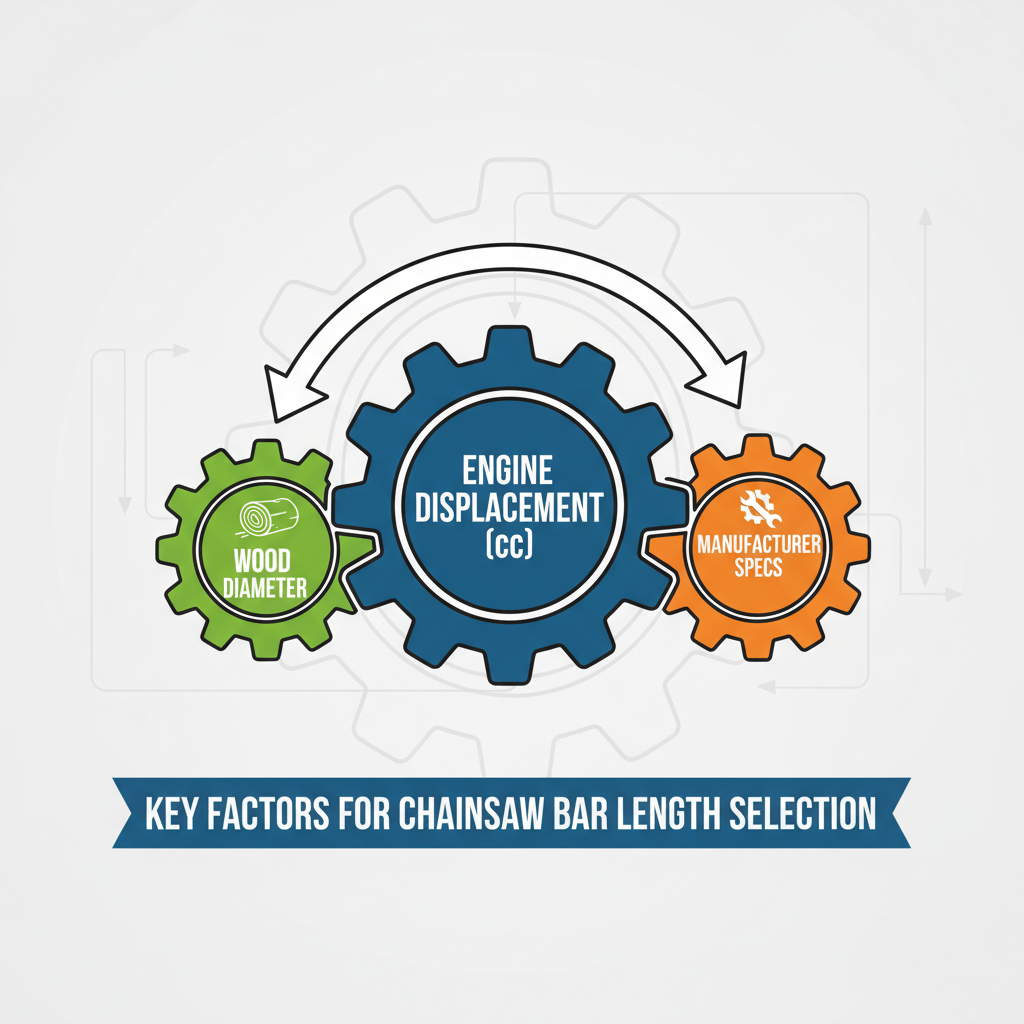
Why Engine Displacement Matters
Engine displacement, measured in cubic centimeters (cc), determines how much power your chainsaw produces. A larger engine generates more torque and can sustain cutting through thicker wood and larger diameter logs. Bar length must match this power output because a bar that’s too long for your engine will cause the saw to bog down, overheat, and wear prematurely. Conversely, pairing a small bar with a large engine wastes the saw’s potential.
The relationship is straightforward: more cc equals the ability to handle a longer bar. A 30cc saw is designed for light pruning and small branches (10-12 inch bar), while a 90cc professional saw can handle a 25+ inch bar for felling large trees.
The Cutting Task and Wood Diameter
The type of work you perform directly influences the ideal bar length. If you’re primarily cutting firewood, trimming branches, or maintaining your yard, you likely need a bar in the 14-18 inch range. If you’re a professional arborist felling large trees or a landowner clearing timber, you may need 20-24 inches or longer.
The most practical consideration is the diameter of the wood you’ll cut most often. The bar length should be at least 2 inches longer than the diameter of the thickest wood you plan to cut in a single pass. For example, if you regularly cut logs 12 inches in diameter, you need at least a 14-16 inch bar to cut through cleanly.
Manufacturer Specifications and Safety Limits
Every chainsaw manufacturer specifies a minimum and maximum bar length for each model. This range is engineered based on the saw’s power delivery, weight distribution, fuel capacity, and vibration characteristics. Exceeding the maximum recommended bar length is dangerous because it can cause the saw to stall under load, increase vibration, reduce control, and put excessive strain on the engine, clutch, and sprocket.
Going below the minimum isn’t dangerous, but it underutilizes your saw’s power and may leave you unable to complete typical cutting tasks efficiently.
Step-by-Step Guide: How to Choose the Right Bar Length
Step 1: Find Your Chainsaw’s Engine Displacement
Locate your chainsaw’s model number and engine displacement, typically found on the saw’s housing or in your owner’s manual. This number appears as “cc” or “cm³.” For example, a popular consumer saw might be listed as “46cc” or “55cc.”
Step 2: Check the Owner’s Manual for Recommended Bar Lengths
This is the most important step. Your manufacturer has already done the engineering work. Open the owner’s manual (or find it online through the manufacturer’s website) and look for a section titled “Specifications,” “Bar Length Compatibility,” or “Accessory Chart.” This section will list all approved bar lengths for your specific model. For troubleshooting and reliability insights, consult our in-depth marshall stanmore iii vs harman kardon onyx studio 8 report.
For example, a Stihl MS 250 (45cc) might list compatible bars as: 14, 16, and 18 inches. A Husqvarna 455 (55cc) might recommend: 16, 18, and 20 inches.
Step 3: Use the cc-to-Bar-Length Rule of Thumb
If you don’t have access to the manual, use these general guidelines as a starting reference:
| Engine Displacement | Recommended Bar Length Range | Typical Use |
|---|---|---|
| 25-35cc | 10-14 inches | Light trimming, pruning, small firewood |
| 35-50cc | 14-18 inches | Homeowner use, small to medium logs |
| 50-65cc | 18-22 inches | Semi-professional, larger logs, felling |
| 65cc+ | 20-28 inches | Professional, large timber, commercial use |
Important: This is a general guideline only. Always defer to your manufacturer’s specifications, as individual models may vary significantly. Readers comparing setup options can review our technical analysis on dyson v8 cyclone vs bissell featherweight stick.
Step 4: Assess Your Typical Cutting Diameter
Think about the wood you cut most often. Measure the diameter of a typical log or branch. For efficient cutting, your bar should be 2-4 inches longer than the wood diameter.
- Cutting logs up to 8 inches diameter? A 12-14 inch bar is sufficient.
- Cutting logs up to 12 inches diameter? Plan for a 14-16 inch bar.
- Cutting logs up to 16 inches diameter? You need at least an 18-20 inch bar.
- Cutting logs over 20 inches diameter? Consider a 22-28 inch bar (and a more powerful saw).
Step 5: Consider Your Physical Capability and Safety
Bar length directly affects the weight and balance of your chainsaw. Longer bars are heavier and can fatigue you more quickly, especially if you’re using the saw overhead (pruning) or for extended periods. A saw that’s too heavy or hard to control is a safety liability. If you’re a homeowner or occasional user, don’t feel pressured to buy the longest bar compatible with your saw, choose a length you can safely and comfortably control. For complementary field maintenance guidelines, examine our breakdown of bissell crosswave hydrosteam vs shark stainforce.
Important Considerations and Safety Notes
Why Not Go Longer Than Recommended?
Exceeding the maximum bar length specified by the manufacturer creates several problems:
- Engine stalling: A bar that’s too long for the engine’s power output will cause the saw to stall under cutting load, leaving you stranded and frustrated.
- Increased vibration: Longer bars oscillate more, increasing vibration transmitted to your hands and arms, leading to fatigue and potential repetitive strain injury.
- Poor weight distribution: Excessive length throws off the saw’s balance, making it harder to control and more likely to kick back.
- Accelerated wear: The clutch, sprocket, and engine components will wear prematurely from the constant strain of powering an oversized bar.
- Safety risk: A saw you can’t fully control is dangerous to you and bystanders.
Understanding Bar Components: Gauge and Pitch
When shopping for replacement bars, you’ll encounter two additional specifications: gauge (thickness of the bar’s grooved slot) and pitch (distance between chain teeth). These must match your saw’s sprocket configuration. A 14-inch bar and a 16-inch bar for the same saw typically have the same gauge and pitch, they’re just different lengths. Always match the manufacturer’s part number to ensure compatibility.
How Bar Length Affects Chain Selection
The bar length determines the chain length you need. A longer bar requires a longer chain with more drive links. When replacing a bar, you’ll almost certainly need to replace the chain as well. Chains are inexpensive compared to bars, but budget for both when upgrading.
Professional vs. Homeowner Considerations
Professional arborists and loggers often operate saws with 20-28 inch bars and engines over 70cc, because they cut full-time and prioritize speed and capacity. Homeowners typically find a 14-18 inch bar with a 40-55cc engine meets 95% of their needs: cutting firewood, clearing downed branches, and occasional tree trimming. Choose based on your actual workload, not on what professionals use.
Quick Reference: How to Measure Bar Length
If you’re verifying an existing bar, measurement is straightforward. The listed bar length is measured from the tip of the bar to where it enters the chainsaw’s housing. Lay a measuring tape along the top of the bar (the side you see when holding the saw) from the pointed tip to the housing. Round to the nearest half-inch. A bar labeled “16 inch” should measure very close to 16 inches.
Everything You Need to Know: How To Determine Chainsaw Bar Length FAQ
Can I use a bar longer than my owner’s manual recommends?
Technically, many chainsaws can accept a bar slightly longer than recommended without immediate failure, but it’s not advised. You risk stalling the engine, overworking the clutch, and losing control of the saw. Manufacturers set maximum bar lengths for safety and reliability. Stick to the specification.
What if I need to cut wood thicker than my bar can handle in one pass?
Cut from both sides: cut partway through one side, then flip the log and cut from the other side until the pieces separate. This is common practice for logs larger than your bar can handle and is much safer than exceeding your saw’s rated capacity.
Is a longer bar always better?
No. A longer bar increases weight, vibration, and fatigue while reducing control and accuracy. For most homeowner tasks, a mid-range bar (14-18 inches) paired with a 40-55cc engine is the sweet spot: powerful enough for real work, but not so heavy or unwieldy that it becomes tiring or unsafe.
How often should I replace my chainsaw bar?
Bars don’t wear out quickly if maintained properly. A bar can last 5-10+ years with regular cleaning, occasional sharpening of the grooves, and proper chain maintenance. Replace your bar only if it’s bent, cracked, or severely worn in the sprocket groove. A dull chain causes more cutting problems than a worn bar.
Conclusion
Determining the right chainsaw bar length comes down to three steps: know your engine displacement, consult your owner’s manual, and honestly assess the wood diameter you cut most often. The general cc-to-bar-length correlation provides a helpful starting point, but your manufacturer’s specifications are the final authority. Choosing a bar that matches your saw’s power, your typical workload, and your physical capability ensures you’ll work efficiently, safely, and with a tool that lasts. When in doubt, opt for a shorter bar, you can always work around larger logs by cutting from both sides, but a saw that’s overmatched is dangerous and unreliable.
Related Maintenance and Operating Guides
To keep your equipment running at peak operating efficiency, explore our related technical walkthroughs and maintenance tutorials:
- Consult our detailed breakdown on residential zero-turn lawn mower guide.
Technical Standards and Compliance
Mechanical safety standards, operational tolerances, and protective gear guidelines align with benchmark specifications established by the American National Standards Institute (ANSI).









