Quick Answer: How to Start a Riding Lawn Mower
To start a riding lawn mower safely: check fuel and oil levels, ensure you’re seated (the seat switch must engage), set the choke to full or half depending on engine temperature, set throttle to low, turn the ignition key or press the start button, and release once the engine catches. Most riding mowers follow this sequence, though specific steps vary by brand and start type (electric vs. manual recoil). Always consult your mower’s manual for model-specific instructions.
Pre-Start Inspection: Why These Checks Matter
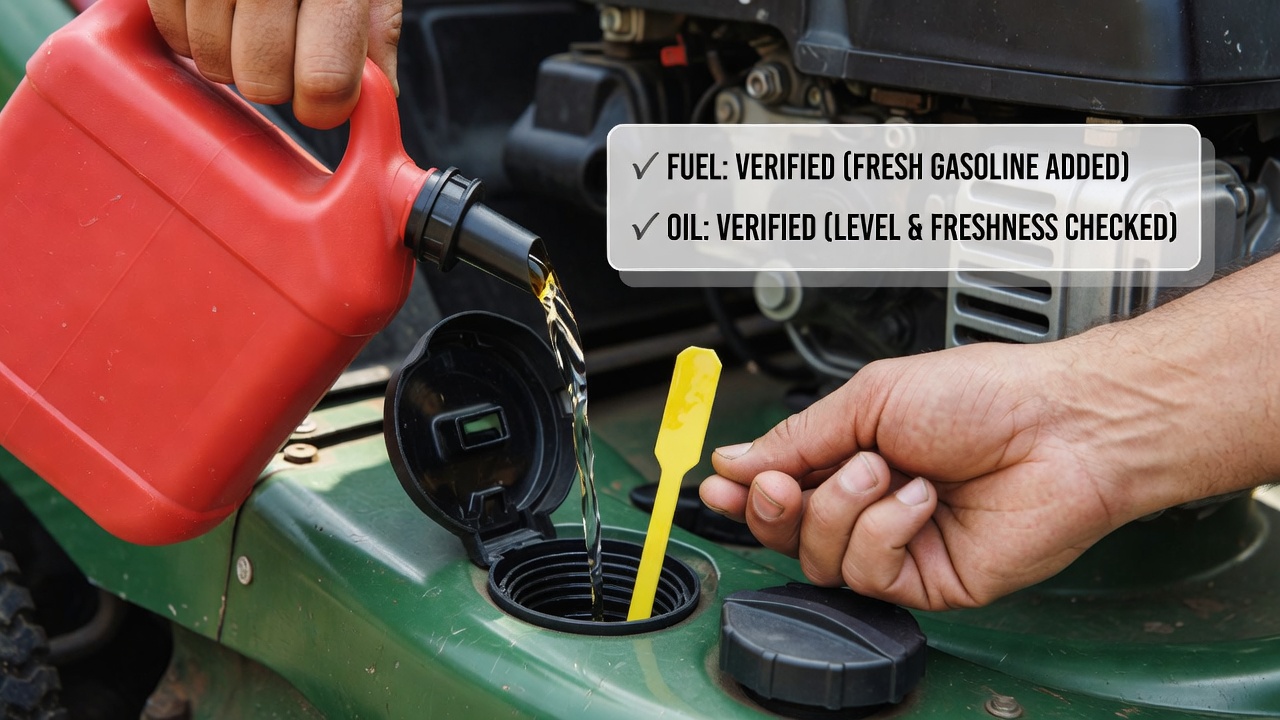
Before you attempt to start your riding mower, a quick inspection prevents equipment damage, engine strain, and safety hazards. Skipping these checks is the leading cause of hard starts and no-starts.
Check Fuel Level and Type
- Use fresh, unleaded gasoline (typically 87-octane minimum for most residential mowers)
- Top off the tank if level is below half-full; low fuel can cause sputtering and hard starts
- Never use E15 or higher ethanol blends unless your mower manual explicitly allows it; ethanol can damage fuel systems and carburetors
- If storing for over 30 days, add fuel stabilizer to prevent stale fuel issues that make starting difficult
Verify Oil Level
- Locate the dipstick (usually a bright yellow or orange handle on the side of the engine)
- Pull the dipstick fully out and wipe it clean with a rag
- Reinsert completely, then pull again to read the true level
- Top off if below the minimum mark using the oil type specified in your manual (typically SAE 30, 10W-30, or 5W-30)
- Low oil is a common cause of hard starts and engine damage; never skip this step
Confirm the Seat Switch is Functional
- The seat switch is a safety interlock: it prevents the engine from starting unless the operator is seated
- Sit firmly on the seat before attempting to start
- If your mower won’t start despite following all steps, the seat switch may be faulty—contact a technician or your dealer
Check Battery Condition (Electric-Start Mowers)
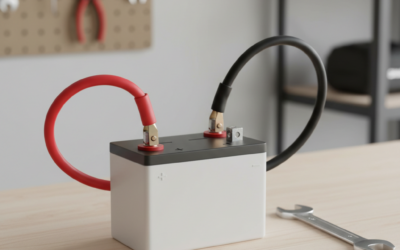
- Look for corrosion around battery terminals (white, green, or blue crusty deposits)
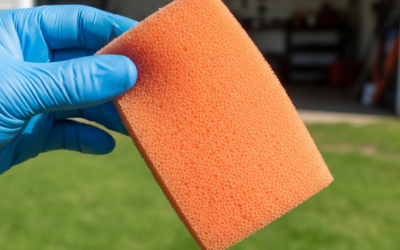
- Clean terminals if corroded using a wire brush and a mix of baking soda and water
- If the mower clicks but won’t turn over, the battery is likely weak and needs charging or replacement
Understanding Your Mower’s Control Systems
Riding mowers use different control layouts depending on brand and age. Familiarizing yourself with these controls ensures you start the mower correctly the first time.
The Choke: Cold Start vs. Warm Start
The choke restricts airflow to the carburetor, creating a richer fuel mixture needed for cold starts. Once the engine warms, the choke should open to allow normal air intake.
- Cold start (engine hasn’t run in hours or overnight): set choke to full or “cold” position
- Warm restart (engine ran recently): set choke to half or “warm” position, or leave it off entirely
- Some modern mowers have automatic chokes that adjust as the engine warms—check your manual
- After the engine starts, gradually move the choke lever toward “off” as the engine idles smoothly
Throttle Control
- Always set throttle to low (or “start”) position before attempting ignition
- High throttle during startup stresses the engine and can prevent ignition
- Once running, increase throttle gradually to operating speed (typically mid to high)
Ignition Key vs. Push Button
- Key ignition: turn clockwise from “Off” to “Start;” release once the engine catches (do not hold in “Start” longer than 3-5 seconds)
- Push-button start: press and hold the button for 2-3 seconds; release when you hear the engine fire
- If your mower has a pull-cord (manual start), see the “Manual Recoil Start” section below
Step-by-Step Starting Procedure for Electric-Start Mowers
Follow this sequence for the vast majority of riding mowers sold in North America.
- Sit firmly on the mower seat. You’ll hear or feel a click as the seat switch engages.
- Set the choke lever to “Full” or “Cold” (or follow your manual if your mower has auto-choke).
- Set the throttle to “Low” or “Start.”
- Turn the ignition key to “Start” (or press the start button). You should hear the starter motor engage.
- Hold for 3–5 seconds. The engine should turn over and catch within this window.
- Release the key immediately once the engine starts. Do not hold “Start” longer than 5 seconds—you risk damaging the starter.
- Listen to the engine idle. It may sound rough for 10–15 seconds. This is normal.
- Gradually move the choke toward “Off” or “Run” as the engine smooths out. If it dies, return the choke to “Cold” and let it warm longer.
- Once running smoothly, increase throttle to operating speed. The mower is now ready to mow.
If the engine does not start after 5 seconds of cranking, release the key, wait 30 seconds, and try again. Continuous cranking drains the battery.
Manual Recoil Start vs. Electric Start
Older mowers and some budget models use a pull-cord starter instead of a battery-powered electric starter. The pre-start checks remain identical, but the ignition sequence differs.
Manual Recoil Start Procedure
- Set the choke to “Full” or “Cold.”
- Set the throttle to “Start” or low idle.
- Locate the recoil starter handle (usually a red or black cord handle on top of the engine).
- Pull the cord sharply and quickly in one smooth motion. Do not jerk it repeatedly; one or two pulls should be sufficient for a cold start.
- If the engine doesn’t catch after 2–3 pulls, stop and wait 30 seconds. Repeated pulling can flood the carburetor.
- Move the choke toward “Run” or “Warm” as the engine idles. If it dies, go back to “Cold” and pull again.
- Set throttle to operating speed once the engine runs smoothly.
Common mistake: Pulling too hard or too fast can cause the cord to snap or the engine to hydro-lock. Smooth, firm pulls work best.
Electric Start vs. Recoil: Advantages and Disadvantages
| Feature | Electric Start | Manual Recoil |
|---|---|---|
| Ease of Use | Turn key or press button—minimal effort | Requires pulling cord; can be strenuous |
| Reliability | Depends on battery health; may fail if battery dies | Nearly always works if engine is mechanically sound |
| Cost | Higher upfront cost; battery replacement $100–$300 | Lower initial cost; no battery to maintain |
| Starting in Cold Weather | Can be slow or fail if battery is weak | Reliable, though may require more pulls |
Seasonal Restart After Storage
Mowers stored for months over winter or during off-season can be harder to start. Stale fuel and varnish buildup in the carburetor are the primary causes.
Before Seasonal Storage (Prevention)
- Add fuel stabilizer to the fuel tank in early fall before the final mow
- Run the engine for 10 minutes with stabilizer circulating through the fuel system
- Turn off the mower and let it cool before storing in a dry garage or shed
- This step prevents varnish and gum buildup that makes spring starts difficult
Restarting After Winter Storage
- Drain old fuel if you did not use stabilizer (stale fuel older than 6 months is unlikely to ignite easily)
- Fill the tank with fresh, unleaded gasoline
- Check and top off oil (cold engines use slightly more oil)
- Check the battery: charge if it shows low voltage (<12V)
- Set the choke to “Full” or “Cold” (stored engines need richer fuel mixture)
- Attempt starting as described above; be patient and allow 5–10 seconds of cranking
- Let the engine idle for 5–10 minutes after starting to circulate oil and warm the engine
- If the engine refuses to start, you may need to have the carburetor professionally cleaned (common after long storage)
Safety Precautions and Operator Presence Controls
Riding mowers include safety systems designed to prevent accidents. Understanding and respecting these controls protects you and others.
Operator Presence Control (OPC) Systems
All modern riding mowers have an operator presence control—a safety interlock that stops the engine if the operator leaves the seat or loses control.
- The seat switch: Disengages the ignition if you stand up or dismount while the mower is running. The engine shuts down immediately.
- The blade engage lever: Typically disengages blades and reduces engine speed if you release it. Some models shut off the engine entirely.
- These are not optional features and cannot be disabled without violating safety standards and likely your mower’s warranty.
Before You Ride
- Never allow passengers to sit on the mower except as explicitly permitted by the manufacturer (some mowers have rear seats; most do not)
- Keep children and pets away from the mower while it runs
- Remove loose clothing and tie back long hair to prevent entanglement with moving parts
- Wear closed-toe shoes with good grip; sandals or flip-flops can slip off
- Never mow after consuming alcohol or while taking medication that impairs judgment or reaction time
What to Do Before Leaving the Mower
- Set the blade engage lever to “Disengage” or “Off” to stop the cutting blades
- Set the throttle to low idle
- Do not dismount while the engine is running if it’s not necessary
- If you must stop briefly, engage the parking brake (if equipped), disengage blades, and keep the engine running at low idle
- If you leave the mower unattended for any reason, turn off the engine, remove the ignition key, and wait for all moving parts to stop
Troubleshooting: When Your Mower Won’t Start
If your mower fails to start after following the correct procedure, use this diagnostic guide to identify the problem.
Engine Cranks (Starter Engages) But Won’t Catch
Symptom: You hear the starter motor turn the engine over, but it doesn’t ignite.
- Check fuel level: Empty tank? Fill it and try again.
- Verify fresh fuel: Stale gas older than 6 months won’t ignite. Drain and refill.
- Inspect the spark plug: Black, wet spark plugs often indicate fuel flooding. Dry with a rag, set to proper gap (usually 0.030 inches), and try again.
- Check choke position: If choke is fully open (cold engine), the mixture is too lean. Set to “Full” or “Cold.”
- Suspect flooded carburetor: If you’ve pulled the recoil cord 5+ times without starting, excess fuel has entered the cylinder. Wait 10 minutes and try with choke off. Alternatively, remove and dry the spark plug.
Engine Makes a Clicking Sound But Doesn’t Turn Over
Symptom: You hear rapid clicking from the starter area, but the engine doesn’t rotate.
- Battery is weak or dead. This is the most common cause in electric-start mowers.
- Clean battery terminals: Corrosion prevents current flow. Disconnect the negative terminal, clean both terminals and cable ends with a wire brush, and reconnect.
- Charge the battery: Use a battery charger (12V, 2–10 amps) for 4–8 hours. A fully charged battery should read 12.6V or higher with a multimeter.
- If the battery won’t hold charge, it’s dead and needs replacement. Most lawn mower batteries cost $100–$300 installed.
Starter Doesn’t Engage At All (No Cranking Noise)
Symptom: Turning the key or pressing the button does nothing; you hear no starter sound.
- Confirm the seat switch is engaged: Sit firmly and try again. A faulty seat switch will prevent starting.
- Check the ignition key: Is it in the “Start” position, or stuck in “Off” or “Accessory”?
- Inspect the battery terminals again: A corroded connection breaks the entire electrical circuit.
- Blown fuse: Check your mower’s fuse box (usually under the seat or near the battery) for a blown fuse. Replace with the same amperage rating.
- Faulty safety interlock: The seat switch or blade engage lever may not be registering correctly. Try lifting or adjusting the seat switch lever; if that doesn’t help, contact a technician.
Engine Starts But Dies Immediately
Symptom: The engine fires and runs for 1–3 seconds, then stalls.
- Choke is opening too fast: Move the choke back toward “Cold” to provide a richer fuel mixture as the engine warms.
- Throttle is too low: Increase throttle to low-idle position; the engine needs sufficient fuel flow to sustain combustion.
- Dirty fuel filter: A clogged filter starves the engine of fuel. Replace if your mower has a fuel filter cartridge.
- Stale fuel: Old gasoline won’t burn reliably. Drain and refill with fresh fuel.
When to Consult a Professional
If you’ve completed the diagnostic steps above and the mower still won’t start, the problem likely requires professional service:
- Carburetor cleaning or rebuild (varnish or debris in fuel passages)
- Ignition coil or capacitor failure (no spark reaching the spark plug)
- Compression loss (worn or damaged piston rings, head gasket, or valves)
- Faulty electrical components (starter motor, alternator, voltage regulator)
Contact a local lawn mower repair shop or your mower’s authorized dealer. Many offer diagnostic services for $50–$100 and can estimate repair costs before proceeding.
Frequently Asked Questions
Q: How long should I let my riding mower engine warm up after starting?
A: Let the engine idle for 2–3 minutes after starting, especially in cold weather or after storage. During this time, move the choke gradually from “Cold” to “Off” as the engine smooths out. This circulates oil to the engine bearings and allows the carburetor to adjust. You’ll know the engine is warmed when idle is smooth and steady.
Q: Can I start my mower in the rain or wet grass?
A: Avoid starting or operating your mower in wet conditions if possible. Water can damage the ignition system, short-circuit the battery terminals, and create electrical hazards. If you must start in wet conditions, dry the engine and battery area with a towel first. Never use a power washer near electrical components. After wet use, let the mower dry for 24 hours before storing.
Q: Why does my mower have trouble starting after mowing?
A: If your mower starts fine initially but struggles on restart after mowing, the issue is usually heat-related. The engine is hot, so the carburetor doesn’t need extra fuel enrichment. Set the choke to “Warm” or “Off” on restart. Additionally, if you mowed for an extended period in high heat, allow the engine to cool for 5–10 minutes before restarting. High engine temperature can cause vapor lock, preventing fuel flow.
Q: Should I use premium or regular gasoline in my riding mower?
A: Use regular unleaded gasoline (87-octane) unless your mower manual specifies otherwise. Premium fuel provides no additional benefit for small engines and wastes money. Avoid E15 (15% ethanol) and higher blends; ethanol can damage fuel systems and carburetors not designed for high ethanol content. Always check your manual, but most residential mowers run fine on standard 87-octane unleaded.
Q: Is it bad to leave the choke on while mowing?
A: Yes, leaving the choke fully engaged while mowing causes excessive fuel consumption, rough running, black smoke, and spark plug fouling. The choke should be fully off (or in “Run” position) once the engine is warm and idle is smooth. If your mower runs poorly during mowing even with the choke off, the carburetor may be dirty and need professional cleaning.