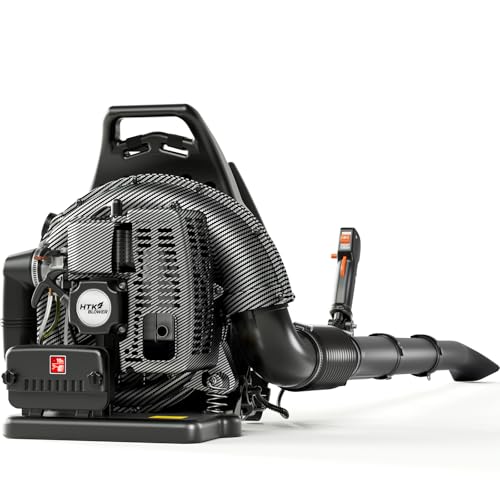
When examining images of leaf blowers to gauge physical size, ergonomics, and power setups, the EGO POWER+ Cordless Electric Leaf Blower, 615 CFM stands out for its high-output turbine build, though it represents a significantly higher investment than budget options. For smaller properties where visual bulk and extension cords are manageable, ultra-light corded alternatives provide continuous clearing without the added weight of battery packs.

Pros
- Lightweight 4 lb build minimizes arm fatigue
- Delivers up to 390 CFM airflow and 210 MPH speed
- Continuous corded power eliminates recharging pauses
- Two-speed switch toggles between light and full force
- Nested two-piece tube design for full assembly
Cons
- Requires an extension cord and nearby wall outlet
- Tubes ship nested and must be pulled apart before use

Pros
- Rated for up to 200 MPH airspeed and 550 CFM air volume
- Infinite variable speed trigger provides precise airflow control
- Includes two 20V 4.0Ah batteries and a dual-port charger
- Comes with flat, round, and brush interchangeable nozzles
- Lightweight 3.5-pound design allows comfortable one-handed use
Cons
- High-output operation significantly reduces battery runtime
- Battery power may struggle with heavy, waterlogged debris piles

Pros
- Turbo mode delivers up to 650 CFM and 200 MPH
- Includes 20V 4.0Ah battery and 1-hour fast charger
- Battery features integrated overheat protection
- Ergonomic handle with contoured, rubberized grip
Cons
- Weighs 8.69 pounds, which may feel heavy to some users
- Includes only one battery, leading to downtime between charges

Pros
- Delivers up to 615 CFM and 170 MPH in turbo mode
- Variable speed dial with lock-on button from 200–480 CFM
- High-efficiency brushless motor reduces operating vibration
- Includes 56V 2.5Ah battery and standard 50-minute charger
- Fully compatible with all EGO 56V ARC Lithium batteries
Cons
- Turbo mode rapidly reduces the available battery runtime
- Weighs 7.5 pounds, which may feel heavy with larger batteries

Pros
- Lightweight design at only 4.4 pounds
- 7-Amp motor rated up to 180 MPH and 180 CFM
- Built-in cord retention prevents unplugging
- Zero emissions with instant push-button start
- Simple, low-maintenance corded design
Cons
- Extension cord is not included
- Operating range is limited by cord reach
Pros
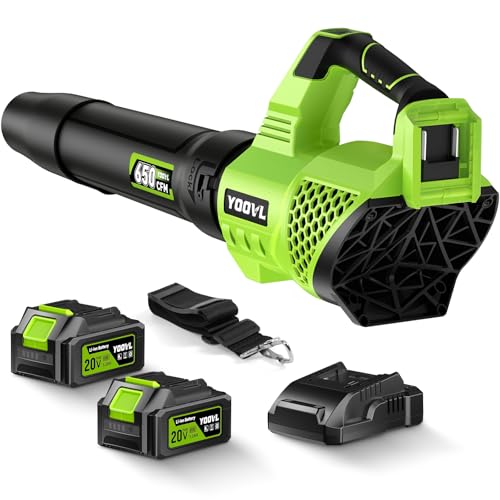
- Airflow rated up to 650 CFM using advanced turbo technology
- Comes with two high-capacity 20V 5.2Ah batteries and fast charger
- Three selectable speed modes for delicate to heavy-duty jobs
- Includes an adjustable shoulder strap to reduce arm fatigue
- Includes blower tube and extension nozzle attachments
Cons
- Maximum 150-minute runtime applies only to low-speed mode
- Heavier battery packs may add weight during prolonged handheld use

Pros
- Includes two 21V 4.0Ah batteries for extended runtime
- Delivers up to 420 CFM airflow and 150 MPH air speed
- Lightweight design weighs under 3 lbs bare tool for low fatigue
- Comes with both round and flat interchangeable nozzles
- Two adjustable speed settings for varying cleanup tasks
Cons
- Limited to two preset airflow speeds
- Best suited for dry leaves and light debris rather than heavy wet waste

Pros
- Lightweight build suitable for one-handed operation
- Operates at a relatively quiet 65 dB
- Rated up to 200 MPH and 600 CFM output
- Cordless battery platform allows flexible movement
- Versatile for dry debris, sawdust, and car drying
Cons
- Runtime decreases significantly at maximum output
- Single included battery limits extended sessions
- Not suited for heavy, wet leaf accumulations

Pros
- Brushless motor delivers rated airflow up to 650 CFM and 180 MPH
- Includes two 20V 4.0Ah batteries and a fast charger
- Six adjustable speed settings ranging from 80 to 180 MPH
- Comes with an ergonomic shoulder strap and two detachable nozzles
- Includes a storage bag to keep components organized
Cons
- Stated 30-minute runtime is restricted to low-speed operation
- High-speed settings will deplete battery charge more rapidly

Pros
- Delivers up to a stated 930 CFM airflow and 197 MPH
- Includes two 4.0Ah batteries and a fast charger
- Six variable-speed settings with a constant-speed lock
- Tool-free assembly with included blower tubes
Cons
- Stated dual-battery runtime is limited to 30–60 minutes
What Visual Features Matter Most When Comparing Leaf Blowers?
Visual comparisons reveal critical intake positions, nozzle contours, and trigger mechanisms that airflow numbers alone cannot convey. When inspecting product imagery, pay close attention to the intake vent location. Side-mounted intakes can occasionally pull in loose clothing during operation, whereas inline or rear-mounted housings draw air cleanly without interfering with your stride. Visual profiles also demonstrate barrel angle and tube length, showing whether you can clear ground debris comfortably without hunching.
For example, models like the Grasstigon Electric Leaf Blower Corded, 7-Amp feature a streamlined barrel with two nested tubes that pull apart for assembly, maintaining a compact footprint that weighs only 4 pounds. In contrast, battery-heavy units such as the Garvee Leaf Blower Cordless 20V 4.0A 2 Speed 650 show a substantially wider rear chassis accommodating its 20V 4.0Ah battery, bringing its advertised weight to 8.6 pounds. Evaluating these physical dimensions helps you judge whether a tool will feel agile or cumbersome on long pathways, which is especially important when choosing a leaf blower for driveway cleanups.
Corded vs. Cordless Profiles: Assessing Maneuverability and Storage
Corded blowers present a slender, motor-forward design with integrated cord clips, while cordless blowers feature bulkier base receivers to hold lithium-ion battery packs. This visual distinction translates directly into how the tool handles in tight spaces and how much storage shelf space it requires in your shed or garage.
The BLACK+DECKER Electric Leaf Blower LB700 illustrates the minimalist profile typical of corded models: at an advertised 4.4 pounds, its housing is narrow and incorporates built-in cord retention to prevent accidental disconnections, though it does not include an extension cord in the box. On the other hand, wireless options like the MZK 20V Cordless Leaf Blower demonstrate an integrated lower battery cradle. While that design adds bulk beneath the handle, it keeps overall weight at an advertised 3.9 pounds and eliminates cord management entirely. The core trade-off centers on range versus runtime: corded blowers deliver unlimited continuous power within reach of an outlet, whereas cordless models offer total freedom of movement across larger perimeters. If you are planning where to source your equipment, our guide on where to buy a leaf blower outlines popular retailer options.
Examining Nozzle Attachments and Airflow Control in Product Designs
The diameter and shape of a leaf blower’s nozzle indicate whether the unit is optimized for sweeping wide swathes of light dust or generating concentrated force to dislodge wet debris. Wide-mouth tubes prioritize air volume (CFM) for sweeping dry grass clippings across open lawns, whereas narrow or flattened tips accelerate air speed (MPH) to scrape stubborn, damp leaves from pavement.
Looking at product packages, the Handheld Cordless Leaf Blower 980,000 RPM showcases three distinct modular nozzles: a flat nozzle for concentrated scraping, a round nozzle for tight corners, and a brush attachment suited for workshop surfaces or vehicle drying. Similarly, the Electric Leaf Blower Cordless with Battery from VIBOGEN provides both flat and round nozzles to adjust its advertised 150 MPH output. For dedicated high-power jobs, the EGO POWER+ Cordless Electric Leaf Blower, 615 CFM includes a tapered nozzle specifically designed to focus its aeronautic-inspired turbine air stream. While interchangeable nozzles expand cleaning versatility, having multiple loose parts requires dedicated storage space so attachments do not become misplaced between seasons.
Weight Distribution and Ergonomic Layouts Across Compact Blowers
Grip contours, balance points, and support straps shown in product layouts reveal whether a blower is comfortable for extended single-handed clearing or requires supplemental support. A poorly balanced tool places unnecessary torque on your wrist, even if the total weight rating seems modest on paper.
Heavy-duty, dual-battery tools such as the Leaf Blower Cordless, 650CFM Electric Leaf Blowers from YOOVL and the Leaf Blower Cordless 650CFM with 2×4.0Ah Battery from laapee clearly feature included shoulder harnesses in their product kits. The harness redistributes the tool’s mass across the shoulders and back, offsetting fatigue during 30-minute cleanups. Conversely, ultralight options such as the VIBOGEN blower advertise a bare-tool weight of just 2.74 pounds, relying solely on an ergonomic single-hand grip for effortless maneuvering around steps and patios. For light routine maintenance, checking the visual profile of a small cordless blower helps verify that the handle placement fits your physical comfort before purchasing. Keep in mind that while harness systems make heavy-duty blowers easier to control, they require extra time to put on and adjust compared to grab-and-go handheld frames.
Frequently Asked Questions About Leaf Blower Designs
What can you learn from images of leaf blowers before buying?
Visual details show where the intake vents are placed, whether the handle has rubberized grip zones, how the battery or cord attaches, and which modular nozzles are included in the package.
How does nozzle shape affect blower performance in practice?
Narrow or flat nozzles compress airflow to produce higher air velocity (MPH) for peeling wet leaves off concrete, while round or wide nozzles maximize volume (CFM) to sweep loose clippings across broader surfaces.
Why do some handheld leaf blowers include a shoulder strap?
Blowers carrying dual batteries or high-capacity battery packs carry more physical weight, so manufacturers include a shoulder strap to redistribute mass across your upper body and reduce wrist strain during long cleanups.
Choosing the Right Leaf Blower for Your Yard Maintenance Needs
Selecting the right leaf blower involves balancing your yard size, physical handling preferences, and willingness to manage batteries against the limitation of power cords. Reviewing physical dimensions, nozzle options, and battery setups ensures you select a model suited to your routine outdoor chores rather than overspending on unnecessary bulk.
For homeowners seeking heavy-duty air volume from an established battery platform, the EGO POWER+ Cordless Electric Leaf Blower, 615 CFM is the top recommendation for clearing stubborn wet leaves and extensive lawns, though its premium 56V system requires a higher budget and heavier battery investment. For property owners with modest driveways and accessible outdoor outlets who prefer an ultra-lightweight build with unlimited runtime, the corded Grasstigon Electric Leaf Blower Corded, 7-Amp is a dependable, budget-friendly alternative that provides an advertised 210 MPH air speed without the hassle of charging docks. To explore broader category recommendations, read our detailed breakdown on what leaf blower is the best.