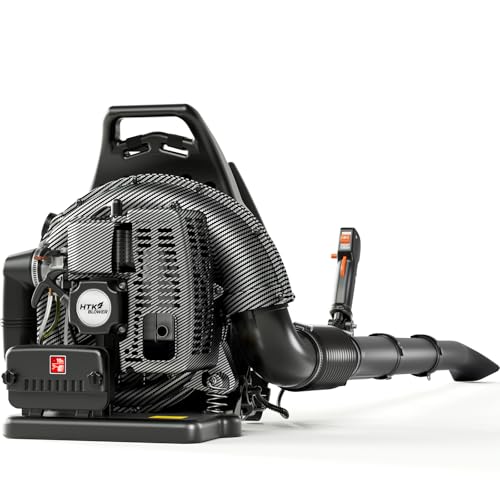
For large-acreage property owners, a dedicated pull-behind machine like the SuperHandy tow-behind gas model moves massive debris behind a lawn tractor, though it demands significant storage space and a much higher financial investment. Handheld alternatives suit operators who simply need to blast grass clippings off their mower deck or clear tight perimeter paths that a tractor cannot reach.

Pros
- Delivers up to 615 CFM and 170 MPH in turbo mode
- Variable speed dial with lock-on button from 200–480 CFM
- High-efficiency brushless motor reduces operating vibration
- Includes 56V 2.5Ah battery and standard 50-minute charger
- Fully compatible with all EGO 56V ARC Lithium batteries
Cons
- Turbo mode rapidly reduces the available battery runtime
- Weighs 7.5 pounds, which may feel heavy with larger batteries

Pros
- Lightweight design at only 4.4 pounds
- 7-Amp motor rated up to 180 MPH and 180 CFM
- Built-in cord retention prevents unplugging
- Zero emissions with instant push-button start
- Simple, low-maintenance corded design
Cons
- Extension cord is not included
- Operating range is limited by cord reach

Pros
- Boost button provides up to 410 CFM and 110 MPH
- Brushless motor extends runtime and performance
- Includes a 5.0Ah V20 battery and charger
- Integrated hook fits VERSATRACK storage systems
- Weatherguard technology helps protect tool from dust/moisture
Cons
- Rated runtime is up to 24 minutes per charge
- Boost mode will deplete the battery more quickly
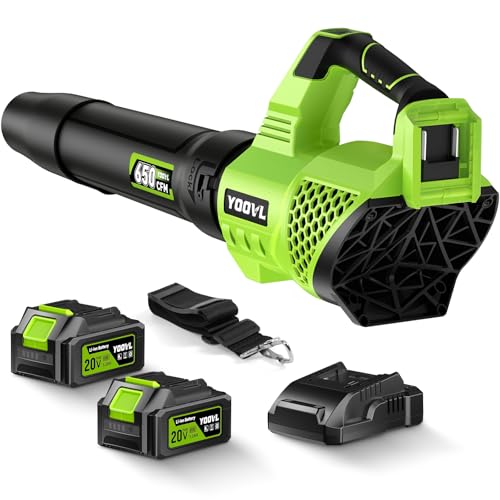
Pros
- Airflow rated up to 650 CFM using advanced turbo technology
- Comes with two high-capacity 20V 5.2Ah batteries and fast charger
- Three selectable speed modes for delicate to heavy-duty jobs
- Includes an adjustable shoulder strap to reduce arm fatigue
- Includes blower tube and extension nozzle attachments
Cons
- Maximum 150-minute runtime applies only to low-speed mode
- Heavier battery packs may add weight during prolonged handheld use

Pros
- High-volume clearing with a rated 3000 CFM and 207 MPH
- Electric start eliminates manual pulling effort
- Standard clevis pin hitch connects easily to ATVs and tractors
- Adjustable vertical airflow discharge for directed blowing
- Durable steel frame construction with large wheels
Cons
- Requires a towing vehicle like an ATV or lawn tractor
- Weighs 291 pounds and demands significant storage space

Pros
- Lightweight build suitable for one-handed operation
- Operates at a relatively quiet 65 dB
- Rated up to 200 MPH and 600 CFM output
- Cordless battery platform allows flexible movement
- Versatile for dry debris, sawdust, and car drying
Cons
- Runtime decreases significantly at maximum output
- Single included battery limits extended sessions
- Not suited for heavy, wet leaf accumulations

Pros
- Brushless motor delivers rated airflow up to 650 CFM and 180 MPH
- Includes two 20V 4.0Ah batteries and a fast charger
- Six adjustable speed settings ranging from 80 to 180 MPH
- Comes with an ergonomic shoulder strap and two detachable nozzles
- Includes a storage bag to keep components organized
Cons
- Stated 30-minute runtime is restricted to low-speed operation
- High-speed settings will deplete battery charge more rapidly

Pros
- Delivers airspeeds up to 125 MPH
- 3-speed selector switch for versatile airflow control
- Lock-on trigger helps reduce hand fatigue during extended use
- Weighs just 3.2 lbs for comfortable handling
- Includes three nozzle attachments for diverse applications
Cons
- Bare tool only; battery and charger are sold separately

Pros
- Lightweight 4.4-pound design with battery
- Delivers up to 360 CFM airflow
- Includes 20V battery and charger
- Two-speed switch for varied sweeping
- Compatible with WORX PowerShare system
Cons
- Airflow is modest for heavy, wet leaves
- Single pack offers limited run time

Pros
- Delivers up to 600 CFM of air volume
- Airspeeds reach up to 125 MPH
- Handheld axial design weighs 6.9 lbs
- Compatible with DEWALT 60V MAX FLEXVOLT system
Cons
- Bare tool only; battery and charger must be purchased separately
Tow-Behind Rig or Handheld Companion for Mower Cleanup?
Choosing between a pull-behind blower and a handheld unit depends on whether your tractor is the debris-clearing vehicle or merely the machine you need to clean after mowing. A dedicated tow-behind unit attaches directly to the tractor hitch to clear wide swathes of open turf while you drive, whereas handheld blowers serve as supplementary utility tools.
The best leaf blower setup depends entirely on your acreage. The SuperHandy Tow-Behind Leaf Blower is built specifically as a tractor attachment, utilizing a standard clevis pin hitch to connect behind lawn tractors, ATVs, and utility carts. In contrast, portable blowers such as the EGO POWER+ Cordless Electric Leaf Blower, 615 CFM or the WORX Cordless Leaf Blower provide zero tow capability. Instead, tractor owners keep these handheld tools in a shed to clear off spindle covers, clean cooling fins, and blow clippings off driveways after mowing.
Air Volume and Speed Differences: 3,000 CFM Tow-Behind vs Handheld Blowers
Dedicated tractor blowers deliver massive volume to move deep drifts across wide fields, while handheld blowers prioritize directional air speed in compact spaces. The difference in overall air movement dictates how fast you can clean large properties.
The SuperHandy Tow-Behind Leaf Blower features an 18-inch metal impeller driven by a 15-horsepower gas engine, generating an advertised 3,000 CFM at speeds up to 207 MPH. That volume allows you to push thick blankets of wet leaves and field debris while driving your tractor. Handheld units deliver considerably lower total air displacement. The battery-powered EGO POWER+ blower reaches an advertised 615 CFM and 170 MPH in turbo mode, while budget options like the MZK 20V Cordless Leaf Blower claim up to 600 CFM and 200 MPH. Handheld blowers are precise enough to scour grass clippings from your tractor’s undercarriage, but trying to clear several acres of dense fall foliage on foot with a handheld tool takes substantially more time and effort.
Hitch Compatibility and Towing Demands for Lawn Tractors
Pulling a leaf blower requires a tractor with adequate towing hardware, sufficient engine displacement, and stable rear traction. Ground conditions and machine weight heavily influence whether your riding mower can safely pull the load.
The SuperHandy Tow-Behind Leaf Blower utilizes a clevis pin connection designed to hitch to common rear drag plates on lawn tractors and ATVs. However, buyers must account for machine weight. At 291 pounds, this rugged steel unit adds significant drag on slopes, damp soil, or uneven acreage. Small residential mowers with light hydrostatic transmissions may struggle or lose traction on damp inclines when pulling nearly 300 pounds. Handheld cordless tools eliminate towing compatibility concerns entirely, functioning as standalone tools regardless of what tractor brand you own.
Gas Maintenance Demands Versus Battery Simplicity
A gas-powered tractor blower offers endless continuous runtime at the cost of routine engine upkeep, whereas battery handheld blowers provide instant push-button start with limited operating windows. Deciding between them comes down to whether you prioritize continuous field power or maintenance-free convenience.
With its 15-horsepower electric-start gas engine, the SuperHandy model requires oil changes, spark plug checks, clean fuel management, and battery maintenance for the starter. In exchange, it runs as long as you keep the fuel tank filled. Battery alternatives like the CRAFTSMAN Leaf Blower Cordless with Battery require zero carburetor cleaning or oil changes, but runtime is limited. Craftsman advertises up to 24 minutes of runtime on its included 5.0Ah pack, while the Leaf Blower Cordless, 650CFM Electric Leaf Blowers bundle includes two 5.2Ah batteries to swap when one depletes. If your tractor work involves quick 15-minute cleanups around the barn, cordless simplicity wins; for all-day field clearing, gas remains the primary option.
Frequently Asked Questions About Tractor Leaf Blowers
Can any standard riding mower tow a pull-behind leaf blower?
Most tow-behind units connect via a standard clevis pin hitch plate found on typical lawn tractors and ATVs. However, you must verify your tractor's towing capacity and rear hitch plate strength, as heavy tow-behind units like the SuperHandy blower weigh roughly 291 pounds.
Why would someone buy a handheld cordless blower instead of a tow-behind model?
A handheld cordless blower costs significantly less, stores easily, and excels at focused tasks a large pull-behind cannot reach, such as blowing caked grass off the tractor cutting deck, cleaning engine cooling fins, and clearing tight perimeter pathways.
How do you know what CFM rating you need for tractor-scale acreage?
Massive open acreage with heavy leaf piles demands high air volume, such as the advertised 3,000 CFM provided by dedicated gas trailer blowers. For spot cleanup or blowing off mower decks after a cut, a handheld unit producing 360 to 650 CFM is generally sufficient.
Which Leaf Blower for Tractor Setups Should You Choose?
Matching the right tool to your tractor depends entirely on whether your goal is commercial-scale yard clearance or post-mow machine maintenance. Buying a tow-behind implement when you only need to clean grass off mower decks wastes money and garage floor space, while relying on a handheld blower to clear multiple acres leads to extreme operator fatigue.
For broad acreage and genuine pull-behind operation, the SuperHandy Tow-Behind Leaf Blower is the clear choice for tractor owners needing to clear deep debris without walking the property. Its main limitation is its substantial 291-pound weight, premium price, and the storage footprint required in your barn or shed. If you simply need a dependable tool to blow clippings off your tractor deck and tidy adjacent hard surfaces, consider the EGO POWER+ Cordless Electric Leaf Blower, 615 CFM, which provides robust 615 CFM output and quick push-button convenience at a fraction of the cost and size.