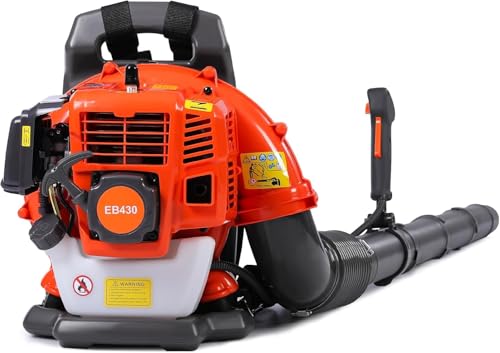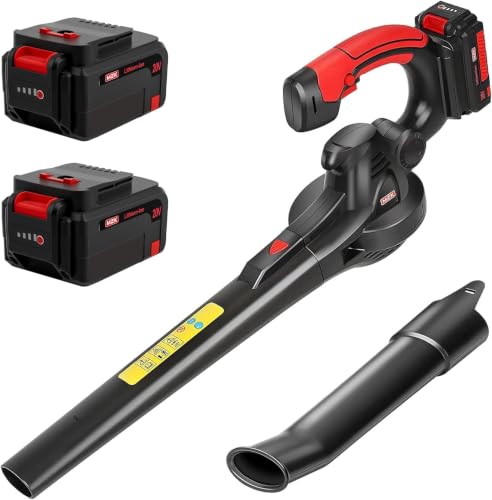
A gas-powered walk-behind blower suits property owners managing expansive lawns covered in deep, heavy leaf piles, delivering up to five times the airflow volume of standard handheld tools. However, these machines require dedicated storage space, routine engine maintenance, and manual pushing effort over rough ground.

Pros
- Powerful 7HP 212cc 4-stroke OHV gas engine
- Heavy-duty 13.5-inch metal impeller
- 360° front swivel wheel and 10-inch rear wheels
- 90° adjustable airflow output angle
- Rust-resistant powder-coated steel frame
Cons
- Engine oil is not included upon unboxing
- Manual push operation requires physical effort
- Gasoline and oil maintenance required

Pros
- Tool-free conversion among blow, vac, and mulch modes
- Air speeds up to 230 mph with 2-speed settings
- Vortex impeller grinds up to 10 bags down to 1
- Built-in cord retainer helps prevent accidental unplugging
- Includes concentrator, blow/vacuum tubes, and bag
Cons
- Requires constant extension cord tether
- Two fixed speeds offer less fine-tuned control

Pros
- Lightweight design at only 4.4 pounds
- 7-Amp motor rated up to 180 MPH and 180 CFM
- Built-in cord retention prevents unplugging
- Zero emissions with instant push-button start
- Simple, low-maintenance corded design
Cons
- Extension cord is not included
- Operating range is limited by cord reach
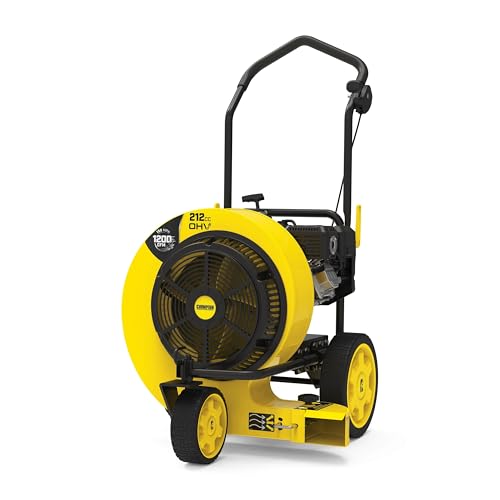
Pros
- Rated for up to 1200 CFM of air volume
- 3-position wind vane plus forward air attachment
- Large 12-inch never-flat rear wheels
- Lockable 360-degree front swivel wheel
- Ergonomic handle features height adjustment
Cons
- Weighs 104 pounds without power propulsion
- Gas engine requires fuel and oil upkeep
- Bulky frame requires ample storage space
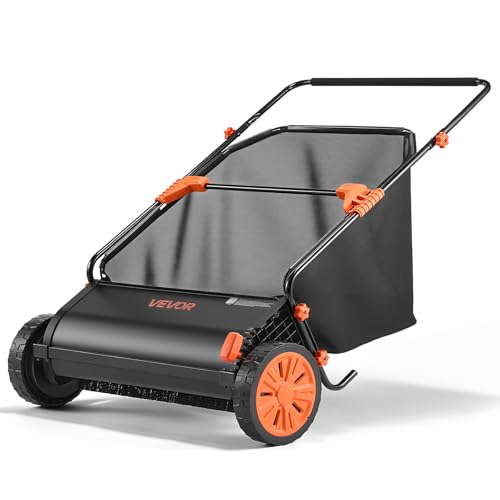
Pros
- Efficient 30-inch sweeping width covers large areas quickly
- Large 12 cu.ft hopper capacity minimizes interruptions
- Versatile 10-setting brush height for multiple terrains
- Smooth traction rubber wheels for easy pushing
- Durable metal frame with tangle-resistant V-shaped brushes
Cons
- Wet leaves may reduce sweeping efficiency as noted in product features
- Manual push design requires physical effort without motorized assist
- Optional replacement brushes for hard nuts sold separately
The VEVOR Push Lawn Sweeper is a robust walk-behind yard tool featuring a durable metal frame and 30-inch sweep path. It delivers a solid first impression as a practical leaf and grass collector ready for immediate use after simple frame and hopper attachment.
Performance and Key Features: The high-efficient V-shaped rotating brushes with a 1:5 brush-to-wheel ratio reach deep into grass while reducing resistance, collecting clippings, leaves, and pine needles effectively. The 10-level adjustable brush height and large 12 cu.ft tear-resistant hopper bag support versatile cleaning on lawns, patios, and driveways, with rubber wheels ensuring smooth traction on damp or rough surfaces.
Drawbacks and Considerations: Wet leaves may reduce sweeping efficiency according to the product notes. As a manual push model, it demands physical effort, and replacement brushes for hard nuts are available only as optional accessories.
Verdict: This lawn sweeper suits homeowners with medium yards who want a reliable non-powered solution for seasonal debris cleanup, offering strong capacity and adjustability without complex setup.

Pros
- High-volume clearing with a rated 3000 CFM and 207 MPH
- Electric start eliminates manual pulling effort
- Standard clevis pin hitch connects easily to ATVs and tractors
- Adjustable vertical airflow discharge for directed blowing
- Durable steel frame construction with large wheels
Cons
- Requires a towing vehicle like an ATV or lawn tractor
- Weighs 291 pounds and demands significant storage space

Pros
- Powerful 12-amp motor generating up to 260 MPH and 450 CFM
- Hands-free 55-liter backpack collection bag for easy carrying
- Tool-free conversion between blower, vacuum, and mulcher
- Wide-mouth bag opening enables quick emptying
Cons
- Requires an extension cord for power, limiting yard reach
- Weighs 11.27 pounds without debris in the collection bag

Pros
- Produces up to 1270 CFM airflow and 150 MPH wind speed
- Runs on standard unleaded 87-octane gasoline with no oil mixing
- 360-degree front swivel wheel and 12-inch rear wheels for steering
- 90-degree adjustable flow angle directs debris where needed
- Convenient handle-mounted controls for speed adjustment
Cons
- Manual push design requires physical effort on uneven ground
- Bulky footprint requires dedicated garage or shed storage

Pros
- 212cc 4-stroke engine delivers up to 1200 CFM
- Durable 13-inch steel impeller with welded blades
- Adjustable airflow: level, 15° up, or 15° down
- Includes front air deflector and engine oil
- 8-inch 360° swivel wheel with 12-inch rear wheels
Cons
- Manual-push machine weighing 88 pounds
- Requires ongoing 4-stroke engine maintenance
- Large footprint takes up significant garage space

Pros
- 209cc engine rated up to 1200 CFM and 150 MPH
- 7-position air flow angle control lever
- 8-inch front swivel caster and 12-inch rear wheels
- Variable throttle control for speed and volume
- Includes removable forward/side discharge chute
Cons
- Heavy 82-pound unit requires manual pushing
- Listing features conflicting engine cycle specs
- Gasoline engine requires regular maintenance
When a Push-Behind Blower Outperforms Handheld Units
Push-behind wheeled blowers are designed specifically for wide-open areas, long driveways, and heavy seasonal leaf falls where carrying a handheld or backpack blower causes severe fatigue. Moving significant volume is the primary metric: units like the Landworks Leaf Blower Wheeled Walk Behind Jet advertise between 1270 and 2000 CFM, moving immense piles in wide swaths that smaller electric tools cannot budge efficiently.
Conversely, compact corded models like the BLACK+DECKER Electric Leaf Blower output an advertised 180 CFM. While lightweight and simple to plug in, they are limited by extension cord reach and narrow air streams. Choosing a walk-behind design trades close-quarters agility around tight garden beds for rapid, broad-area clearing power. For additional operational safety benchmarks, see our published testing notes on small rechargeable leaf blower.
Airflow and Wind Speed Ratings: What the Numbers Deliver
Airflow volume (CFM) dictates how broad of a leaf wall you can move, while velocity (MPH) dictates how well the airstream breaks loose wet, matted debris. The SuperHandy Walk Behind Leaf Blower pairs a 7HP 209cc 4-stroke engine with a manufacturer-stated 150 MPH wind speed and 1270 CFM airflow. Similarly, the BILT HARD 212cc Gas Walk Behind Leaf Blower pairs its 212cc engine with an advertised 1200 CFM and 150 MPH, driven by a 13-inch welded steel impeller.
Higher velocity on paper does not necessarily equal faster overall property cleanup if total volume is low. For instance, corded units often boast high airspeeds up to 230 or 260 MPH through narrowed concentrator nozzles, but lack the sustained volume required to clear wide swaths of turf quickly. To compare alternative configurations, check our hands-on review of blower para soplar hojas.
Wheel Layout and Handling on Slopes or Rough Turf
Because walk-behind blowers lack drive transmissions, the wheel configuration determines how much physical energy you spend steering. The Champion Power Equipment 212cc 1200 CFM features 12-inch never-flat rear tires paired with an 8-inch front caster wheel that can swivel 360 degrees or lock straight. Locking the caster provides tracking stability across hillsides, while unlocking it allows nimble turns around trees.
The Landworks unit utilizes slightly smaller 10-inch rear wheels alongside an 8-inch front swivel caster. Smaller wheels can transmit more vibration and ground resistance across rutted, uneven terrain. Evaluating your yard’s grading is vital, as pushing a steel-framed blower weighing dozens of pounds uphill requires substantial manual effort. Users looking for related component recommendations can explore our blower at lowes breakdown.
Discharge Chutes and Deflectors for Controlled Piles
Aiming the airstream precisely prevents blown debris from scattering backward or scattering across freshly cleaned areas. The Yardmax Gas Walk-Behind Blower, Orange, (YF1565) provides a 7-position side-control handle that tilts the outward airflow horizontal, upward, or downward, along with a removable deflector adapter to shoot air straight ahead or to the side.
The BILT HARD blower also includes a forward air deflector and allows 15-degree upward or downward angle adjustments. When blowing against curbs, stone walls, or fence lines, forward-deflecting chutes are essential to avoid throwing rocks and mulch back into the operator’s path. Before finalizing equipment decisions, refer to our comprehensive leaf blower for driveway comparison.
Maintenance Realities: Gas Engines vs. Manual Sweepers
A gas walk-behind blower demands regular oil checks, spark plug maintenance, and fresh fuel management to avoid ethanol-related carburetor issues. For buyers who want to clear leaves without dealing with gas, oil, or engine noise, non-motorized equipment presents a completely different approach.
The VEVOR Push Lawn Sweeper, 30 in Leaf & Grass uses mechanical ground-driven spinning brushes and a 12-cubic-foot hopper bag to physically lift debris off the lawn. While the sweeper produces zero emissions and requires no engine upkeep, its manufacturer notes that wet leaves reduce sweeping efficiency, and it does not relocate debris into piles the way a high-velocity blower does. For broader ecosystem context, read through our operational guide on snap on leaf blower.
Frequently Asked Questions About Wheeled Blowers
What type of fuel do gas push-behind blowers require?
Models like the Landworks and SuperHandy walk-behind units specify unleaded 87-octane gasoline, with manufacturer guidelines recommending no more than 10% ethanol content.
Are walk-behind leaf blowers self-propelled?
The walk-behind models listed here, including the Landworks and Champion units, are manually propelled. They rely on large rear wheels and a swiveling front caster to ease physical pushing over turf.
Can push-behind leaf blowers vacuum or mulch debris?
Dedicated gas push-behind blowers only blow debris outward. If you require physical collection or mulching, handheld combo units or mechanical push sweepers are built for gathering material into bags or hoppers.
Choosing the Right Wheeled Blower for Your Acreage
Matching equipment to your property comes down to the volume of debris you need to relocate and the maintenance you are willing to perform. Heavy leaf drops over large lots demand a high-CFM gas unit, while smaller yards with tight obstacles are better served by lightweight tools that don’t take up half a shed.
For most homeowners with half an acre or more of open lawn, the Champion Power Equipment 212cc 1200 CFM is a strong primary recommendation, offering an adjustable-height ergonomic handle and a lockable front caster to balance stability and turning agility. Its primary limitation is storage footprint and the manual effort needed on steep inclines. If your clearing needs extend to multi-acre properties with an ATV or tractor available, the SuperHandy Tow-Behind Leaf Blower eliminates pushing altogether with its 15HP engine, provided you have the towing equipment to haul its 291-pound frame.
Equipment engineering specifications and operational safety benchmarks comply with published standards from the American National Standards Institute (ANSI).