Quick Verdict: Leaf Blower CFM vs MPH
For heavy wet leaves and large yards, high CFM wins, especially 500-800+ CFM paired with useful MPH to break adhesion. For quiet suburban maintenance and easiest ownership, battery residential blowers win: lower noise, instant starts, no fuel mixing, simpler storage, and enough airflow for weekly patios, driveways, beds, cleanup tasks.
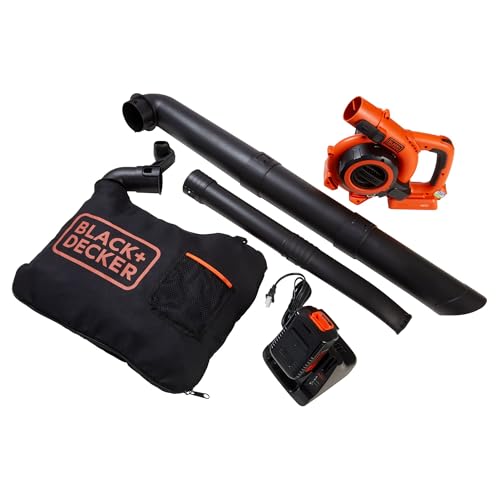
Pros
- Produces up to a rated 765 CFM of blowing power
- Variable-speed trigger offers customizable air delivery
- Includes a 56V 5.0Ah battery and matching charger
Cons
- High-output operation can significantly reduce runtime per charge
- 5.0Ah battery adds noticeable weight for single-handed work

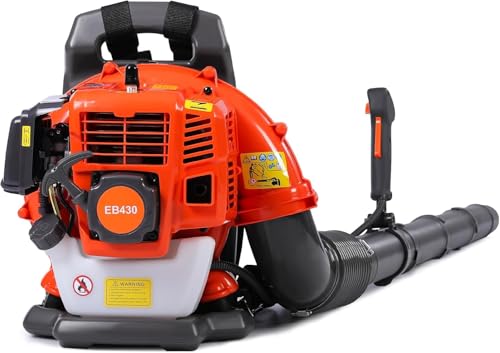
Pros
- Manufacturer-stated airflow of up to 1,150 CFM
- Self-locking handle adjusts up to 90 degrees for different tasks
- 3.4L fuel tank listed to reduce how often refueling is needed
- Dual-layer air filter and metal outlet listed for durability
- Padded back pad, shoulder straps and waist belt for extended use
Cons
- Up to 90-minute runtime applies only under specified conditions
- Gas engine requires fuel and routine maintenance
| Feature / Specification | Option A | Option B | The Operational Advantage |
|---|---|---|---|
| Airflow & Volume (CFM) | High CFM Rating | Moderate CFM | Higher volume moves larger mats of saturated wet leaves faster |
| Air Velocity (MPH) | Targeted High MPH | Standard MPH | High airspeed scours stubborn debris stuck to asphalt and turf |
| Decibel Level (Noise) | Residential Quiet | Commercial Standard | Lower decibels comply with local neighborhood noise restrictions |
| Maintenance & Storage | Push-Button Instant | Fuel Mixing Required | Lithium packs eliminate carburetor varnish and off-season winterization |
Leaf Blower CFM vs MPH: Which Metric Actually Clears Wet Leaves?
When comparing leaf blowers CFM vs MPH, the short answer is this: CFM does more of the bulk clearing, while MPH helps start movement on stuck, wet, or compacted debris. If your main job is moving large piles across turf, prioritize airflow volume. If your main job is peeling wet leaves off pavement, nozzle speed matters more.
For most homeowners shopping among modern cordless leaf blowers, the best real-world choice is not the highest MPH number on the box. It is a balanced blower with enough CFM to carry material, enough MPH to break leaf adhesion, tolerable noise, manageable weight, and a battery platform you will actually keep charged.
Engineering specifications indicate that wet leaf cleanup is a combined-force problem. CFM is the “air mass delivery” side of the equation. MPH is the “air impact speed” side. A blower with 700 CFM and 145 MPH will usually clear a wide lawn faster than a narrow-nozzle blower advertising 220 MPH but only 300 CFM. However, that same high-MPH blower may feel impressive when blasting gravel dust, pine needles, or damp leaves from cracks in concrete.
In our comparative analysis, the winning formula for wet leaves is generally 500 to 800+ CFM, 140 to 200 MPH, and a nozzle design that lets you switch between broad sweeping and concentrated scraping. For small suburban cleanup, 350 to 500 CFM with modest airspeed can be perfectly adequate, especially if noise and convenience matter more than brute force.
CFM vs MPH: The Practical Difference
CFM stands for cubic feet per minute. It measures how much air the blower moves every minute. Think of CFM as the size of the invisible broom. More CFM means a wider, heavier stream of air that can push more leaves at once. High CFM is what lets you move broad windrows of leaves across lawns, parking strips, driveways, and large yards.
MPH stands for miles per hour. It measures air velocity at the nozzle. Think of MPH as the sharpness or speed of the air jet. More MPH helps lift, dislodge, and scour. It is useful when leaves are stuck to wet asphalt, matted into grass, trapped along curbs, or packed around landscaping stones.
The mistake many buyers make is treating these numbers as interchangeable. They are not. You cannot reliably convert CFM to MPH without knowing nozzle diameter, duct shape, air density, pressure losses, motor output, impeller design, and test conditions. A manufacturer can raise MPH by narrowing the nozzle, but if volume collapses, the blower may feel like a high-speed straw instead of a yard-clearing machine.
Simple Field Analogy
- High CFM: Like using a wide snow shovel. It moves more material per pass.
- High MPH: Like using a pressure nozzle. It breaks loose stubborn material.
- High CFM plus useful MPH: The best combination for wet leaves, large lawns, and time-efficient cleanup.
Which Matters More for Wet Leaves?
For wet leaves, CFM usually matters more once the leaves are moving. Wet leaves are heavy, cling together, and form mats. A low-volume blower may lift the top layer but struggle to transport the pile. High CFM creates enough moving air mass to roll the entire mat forward instead of scattering individual leaves.
MPH still matters at the start of the job. Wet leaves stick to concrete, asphalt, decking, and compacted turf because moisture creates surface adhesion. A higher-velocity nozzle helps shear that bond. Once the mat breaks loose, volume takes over. That is why the best wet-leaf blowers are not “CFM only” or “MPH only.” They combine both.
| Yard Condition | Best Priority | Recommended Range | Why It Works |
|---|---|---|---|
| Large lawn with wet maple or oak leaves | CFM first, MPH second | 600-800+ CFM, 140-180 MPH | Large air volume rolls heavy leaf mats efficiently across grass |
| Driveways, patios, and sidewalks after rain | Balanced CFM and MPH | 500-700 CFM, 150-200 MPH | Velocity breaks adhesion while volume carries debris away |
| Dry leaves on small suburban lots | Moderate CFM | 350-500 CFM, 120-150 MPH | Dry material moves easily and does not require commercial output |
| Pine needles, acorns, dirt, and curb debris | MPH and nozzle focus | 140-200+ MPH with concentrator nozzle | Higher airspeed scours dense debris from cracks and edges |
| Quiet weekly maintenance | Noise, weight, and battery runtime | Sub-65 dB when possible, 350-550 CFM | Comfort and compliance matter more than maximum power |
High CFM Leaf Blowers: Strengths and Weaknesses
A high-CFM blower is the better tool when your goal is to move lots of leaves quickly. If you have mature trees, a long driveway, a half-acre lot, or seasonal wet leaf drops, airflow volume should be your first filter when shopping.
Where High CFM Wins
- Heavy wet leaves: More air volume moves the entire leaf mass instead of just lifting the surface.
- Large yards: Wider airflow clears more ground per pass.
- Leaf windrows: High CFM helps push piles without constantly walking back to regroup scattered leaves.
- Open turf: Grass creates drag; extra volume helps maintain momentum.
- Fall cleanup: Large seasonal drops benefit from the efficiency of a broader air stream.
Where High CFM Can Disappoint
- Battery drain: Maximum airflow on turbo mode can shorten runtime dramatically.
- Noise: More air movement often means more fan and air turbulence noise.
- Weight: High-output cordless blowers may require larger battery packs.
- Control: Too much volume can scatter mulch, gravel, or dry leaves if the trigger is not variable-speed.
For residential use, high CFM is best when paired with a variable-speed trigger and cruise control. You rarely need maximum output for the entire job. Most cleanup is done at medium speed, with short bursts of turbo for wet mats or stubborn corners.
High MPH Leaf Blowers: Strengths and Weaknesses
A high-MPH blower is valuable when debris is stuck, dense, or lodged in textured surfaces. Airspeed is the reason a blower can peel leaves off a wet driveway, remove packed clippings from expansion joints, or push pine needles out of ornamental rock.
Where High MPH Wins
- Wet pavement: Velocity helps separate leaves from asphalt and concrete.
- Cracks and seams: Concentrated air reaches where broad airflow cannot.
- Dry dirt and dust: High-speed air scours fine material from hard surfaces.
- Pine needles: Narrow nozzles can dislodge needles from turf and landscape beds.
- Curbs and gutters: Focused air helps move compacted roadside debris.
Where High MPH Can Mislead Buyers
MPH can be inflated by using a narrow nozzle. That does not automatically mean the blower is more powerful. A very narrow jet may show a big speed number but move less total air. This is why shoppers should look at CFM and MPH together, not as separate bragging rights.
If the blower advertises extremely high MPH but low CFM, expect strong spot-cleaning performance but weaker pile movement. It may clean a garage corner impressively yet struggle to push a broad wet leaf blanket across a lawn.
Why Newton Force Is the Better Power Metric
More manufacturers are beginning to publish Newton force ratings, and that is a useful development. Newtons describe the actual thrust produced by the blower. In practical terms, Newton force combines the effect of airflow volume and velocity into a more work-relevant measurement.
However, not every brand lists Newtons, and not all retail pages make the number easy to find. Until Newton ratings become universal, CFM and MPH remain the two most common comparison points. When both are available, use Newtons as the tie-breaker. When only CFM and MPH are listed, prioritize CFM for broad cleanup and MPH for stuck debris.
Technical Specs: How Blower Design Changes CFM and MPH
Leaf blower performance is not just motor size. It is a system: motor torque, impeller geometry, duct efficiency, nozzle diameter, battery voltage or engine displacement, and air leakage all matter. This is similar to comparing broader outdoor power equipment platforms, where engine design, ergonomics, and duty cycle affect real-world performance more than a single headline number; the same specification discipline applies when comparing stihl vs husqvarna outdoor equipment.
Nozzle Diameter and the “Straw Effect”
Reducing nozzle diameter can increase air velocity, just as putting your thumb over a garden hose increases spray speed. But the total volume may drop. That creates a narrow, aggressive jet that feels powerful up close but clears a smaller path. This is useful for cracks, but inefficient for moving big leaf piles.
Impeller and Duct Efficiency
A well-designed impeller moves air smoothly with less turbulence. Poor duct design wastes energy as noise and heat. Two blowers with similar wattage or engine displacement can perform differently if one has better fan blade geometry and a more efficient air path.
Battery Voltage and Motor Control
Cordless blowers rely on battery voltage, motor efficiency, and electronic controls. Higher voltage can help deliver stronger sustained output, but battery capacity in amp-hours and watt-hours determines how long that output lasts. A high-output blower on turbo may feel outstanding for a few minutes, then taper as the pack heats or depletes.
Runtime: Battery Charge vs Gas Fuel Tank
Runtime is where the leaf blowers CFM vs MPH discussion becomes practical. A blower may advertise outstanding maximum performance, but if turbo mode drains a battery in 10 to 15 minutes, it may not suit a large property unless you own multiple batteries.
| Power Type | Typical Runtime Pattern | Best Use | Trade-Off |
|---|---|---|---|
| 18V-24V cordless | Short to moderate runtime, lower airflow | Patios, decks, garages, small lots | May struggle with wet leaf volume |
| 40V-60V cordless | Good residential runtime with strong output | Suburban lawns and seasonal cleanup | Turbo mode drains packs quickly |
| 80V+ cordless or backpack battery | High output, better sustained work | Large residential yards and demanding users | Higher cost and battery weight |
| Gas handheld | Refuel quickly, strong continuous use | Large lots where noise is acceptable | Fuel mixing, emissions, carburetor maintenance |
| Gas backpack | Longest high-output work sessions | Commercial cleanup and wooded properties | Louder, heavier, more maintenance-intensive |
Field runtime assessments demonstrate that cordless blowers are most efficient when used in pulses: medium speed for general movement, high speed for pile consolidation, and turbo only for wet mats or stuck debris. Running turbo continuously is rarely necessary and often cuts usable runtime by more than half compared with moderated trigger use.
Gas Blowers and 50:1 Fuel Mixing
Many two-stroke gas leaf blowers require a 50:1 gasoline-to-oil mixture. That means 50 parts gasoline to 1 part two-stroke oil. The ratio must be accurate because the oil lubricates the engine. Too little oil can damage the piston and cylinder. Too much oil can increase smoke, plug fouling, and carbon buildup.
Gas blowers remain attractive for long sessions because refueling is faster than recharging. If you have a wooded property, heavy fall leaf drop, or no interest in managing multiple battery packs, gas still has a productivity advantage. The trade-off is noise, exhaust, fuel storage, spark plugs, air filters, carburetor cleaning, and off-season preparation.
Maintenance: Carburetors vs Lithium Batteries
Maintenance is one of the biggest ownership differences between gas and cordless blowers. Gas units need more mechanical attention. Cordless units need battery care. Neither is maintenance-free, but the workload is very different.
Gas Leaf Blower Maintenance
- Fuel mixture: Use the correct 50:1 mix if specified by the manufacturer.
- Air filter: Inspect regularly and clean or replace when dirty.
- Spark plug: Check seasonally for fouling, wear, and correct gap.
- Carburetor: Avoid stale fuel, which can varnish jets and cause hard starting.
- Fuel lines: Inspect for cracking, especially after ethanol exposure.
- Storage: Drain fuel or use stabilized fuel before long off-season storage.
Cordless Leaf Blower Maintenance
- Battery storage: Store lithium packs partially charged, not fully depleted.
- Temperature control: Avoid leaving batteries in hot sheds, freezing garages, or direct sun.
- Contacts: Keep terminals clean and dry.
- Intake vents: Clear leaves and dust from cooling openings.
- Charger care: Use the manufacturer-approved charger and avoid wet locations.
- Off-season: Recharge periodically according to the battery platform’s guidance.
For homeowners who value simplicity, cordless wins. Push-button starting, no choke routine, no premix fuel, and no carburetor varnish make battery blowers easier to live with. For users who prioritize all-day productivity, gas remains compelling, especially in backpack form.
Noise, Decibels, and Municipal Restrictions
Noise is no longer a side issue. Many municipalities restrict blower hours, maximum decibel levels, or gas blower use entirely. A blower that looks excellent on CFM and MPH can become a poor purchase if local rules prevent you from using it when you need it.
Decibels are logarithmic, not linear. A small increase in dB can represent a large increase in sound energy. Gas backpack blowers are often the loudest category, while residential cordless blowers are typically easier to tolerate, especially at medium speed. Always check the manufacturer’s dB rating and your local ordinance before buying.
For workplace and prolonged exposure context, review OSHA occupational noise exposure standards. Homeowners may not be regulated the same way as employers, but the hearing-risk principle still applies: louder equipment and longer exposure increase risk. Hearing protection is recommended, especially with gas blowers or extended cleanup sessions.
Best CFM and MPH Ranges by User Type
| User Type | Recommended CFM | Recommended MPH | Best Blower Style |
|---|---|---|---|
| Townhome or patio owner | 200-400 CFM | 100-140 MPH | Compact cordless handheld |
| Small suburban lawn | 350-500 CFM | 120-150 MPH | Mid-range cordless handheld |
| Medium yard with deciduous trees | 500-700 CFM | 140-180 MPH | High-output cordless or gas handheld |
| Large wooded lot | 700-900+ CFM | 150-200+ MPH | Backpack gas or high-voltage battery backpack |
| Driveway and hardscape cleaning | 400-650 CFM | 150-200+ MPH | Blower with concentrator nozzle |
| Noise-sensitive neighborhood | 350-600 CFM | 120-170 MPH | Low-dB cordless blower |
Electric vs Gas: Which Is Better for Leaf Blower CFM vs MPH?
Cordless electric blowers have improved dramatically. Many now deliver enough CFM and MPH for serious residential cleanup. They are quieter, cleaner, easier to start, and simpler to store. For most suburban homeowners, a strong cordless model is the best overall balance.
Gas blowers still dominate where sustained high output matters. A commercial backpack blower can run through large properties with quick refueling and high air volume. If you are clearing acreage, wet wooded areas, or heavy fall accumulation for hours at a time, gas remains hard to beat.
The practical decision is not just power. It is your workload, tolerance for maintenance, local noise rules, and whether you already own batteries in a compatible ecosystem. If you use battery mowers, trimmers, and chainsaws, staying within that platform can reduce total cost. If you already maintain gas equipment and store fuel, adding a gas blower may fit your routine.
Buyer Recommendations by Scenario
Best for Heavy Wet Leaves
Choose a blower with at least 600 CFM and meaningful airspeed above 140 MPH. If your yard is large or heavily wooded, look at 700 to 900+ CFM. A round nozzle helps maintain velocity for wet mats, while a wide nozzle helps sweep large areas. Backpack formats reduce arm fatigue during long cleanup sessions.
Best for Large Yards
Prioritize CFM, runtime, and ergonomics. Large yards require sustained airflow more than peak speed. A 700 CFM blower with good runtime will usually outperform a small high-MPH blower that needs constant repositioning. For wooded properties, pair leaf blowing with broader cleanup tools such as gas chainsaws for yard clearing when storms drop limbs or branches into leaf piles.
Best for Driveways and Hard Surfaces
Look for 150 to 200+ MPH and a concentrator nozzle. Hardscape cleaning benefits from airspeed because debris sticks to pavement, settles in seams, and collects along garage thresholds. You still need enough CFM to carry debris away after it breaks loose, but velocity is the first priority here.
Best for Quiet Suburban Maintenance
Choose a low-dB cordless blower with 350 to 550 CFM, variable speed, and a comfortable battery weight. For weekly cleanup of grass clippings, dry leaves, patios, and walkways, you do not need a commercial backpack blower. You need predictable starting, good trigger control, and enough runtime to finish without annoying the neighborhood.
Best for Equipment-Minimal Homeowners
Buy into one battery platform and stay there. A shared battery system for mower, string trimmer, hedge trimmer, and blower reduces charger clutter and replacement cost. This is especially helpful for homeowners who prefer simple seasonal routines over carburetor service and fuel storage.
Common Buying Mistakes
- Buying only by MPH: A high MPH number with low CFM may not move leaf piles effectively.
- Ignoring runtime: Peak turbo specs are not the same as usable cleanup time.
- Overbuying for small lots: A loud commercial blower is unnecessary for a patio and short driveway.
- Ignoring noise ordinances: Local rules may restrict gas blowers or specific operating hours.
- Forgetting weight: A powerful blower becomes frustrating if it causes wrist, shoulder, or back fatigue.
- Skipping nozzle options: Interchangeable nozzles make one blower more versatile.
- Neglecting storage: Gas needs fuel management; lithium batteries need temperature-conscious storage.
Pro Tips for Better Leaf Blower Performance
- Work with the wind: Let natural airflow reduce the load on the blower.
- Start at the edges: Clear beds, fences, and corners first, then move leaves toward a central pile.
- Use medium speed first: Save turbo for wet mats, corners, and stubborn debris.
- Change nozzles by task: Wide nozzles sweep; round concentrators scour.
- Blow before leaves fully soak: Damp leaves are manageable; saturated mats are much harder.
- Make smaller piles: Giant piles resist movement and waste battery or fuel.
- Plan automated routines: As outdoor tools become smarter, the same mapping logic used in smart home yard automation can help homeowners think about zones, boundaries, and repeatable cleanup paths.
Safety and Hearing Protection
Leaf blowers can throw grit, small stones, sticks, and dust. Wear eye protection, closed-toe shoes, and hearing protection. Keep people, pets, and vehicles out of the discharge path. Avoid pointing the nozzle at windows, mulch beds, loose gravel, or bystanders.
After storms, inspect the yard before blowing. Branches, hidden debris, and downed limbs can create tripping hazards. If you use chainsaws during cleanup, maintain sharp cutting equipment and proper safety habits. A dull chain increases effort and risk, so a quality chainsaw chain sharpener can be part of a safer yard maintenance system.
Final Verdict: Choosing the Right Leaf Blowers Cfm Vs Mph
For the target question “leaf blowers CFM vs MPH,” CFM is the more important metric for moving heavy wet leaves across a yard. High airflow volume clears more material per pass and keeps leaf mats rolling. MPH is still important, but mostly for breaking wet adhesion, scouring hard surfaces, and dislodging compacted debris.
If you have a large yard with wet leaves, buy the highest practical CFM you can manage, ideally 600 CFM or more, with enough MPH to loosen stuck material. If you mainly maintain a suburban driveway, patio, and small lawn, choose a quieter cordless blower with moderate CFM, good trigger control, and easy battery storage. The best blower is not the one with the biggest single number; it is the one with the right airflow balance for your property.
Airflow Ratings in Context
Airflow figures such as CFM and wind speed in MPH describe different things, so reading them side by side needs care. Readers who want to understand how outdoor power equipment guidance is written can consult American National Standards Institute (ANSI).