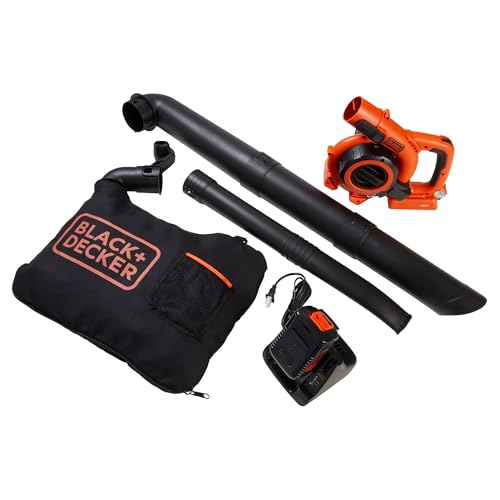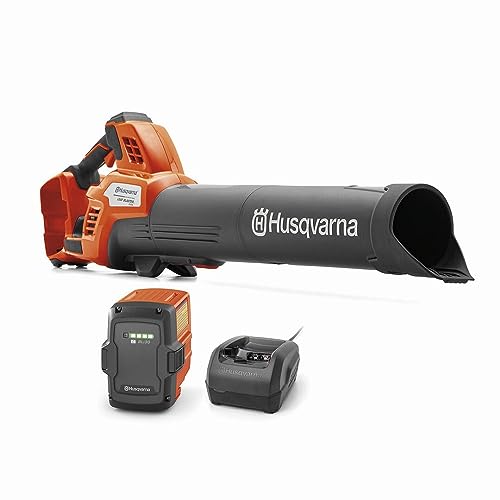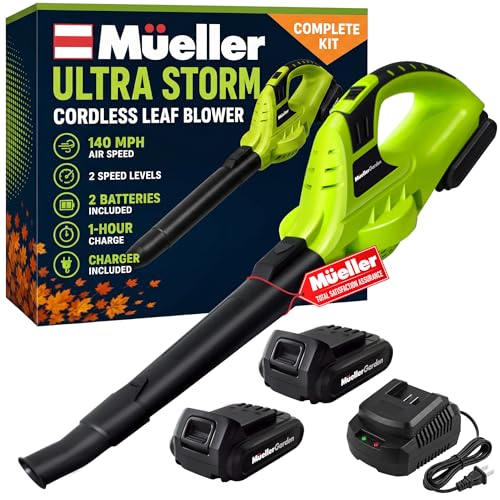
For continuous power on open driveways and large lawns, the WORX 12 Amp Turbine Electric Leaf Blower for Daily delivers an advertised 600 CFM, though you remain tethered to an extension cord. Homeowners needing go-anywhere convenience will prefer cordless options with spare batteries, but must accept limited runtime per charge.

Pros
- Lightweight 4 lb build minimizes arm fatigue
- Delivers up to 390 CFM airflow and 210 MPH speed
- Continuous corded power eliminates recharging pauses
- Two-speed switch toggles between light and full force
- Nested two-piece tube design for full assembly
Cons
- Requires an extension cord and nearby wall outlet
- Tubes ship nested and must be pulled apart before use

Pros
- Produces up to 500 CFM airflow and 167 MPH air speed
- Efficient mulching system shreds debris down to a 15:1 ratio
- Integrated support wheels ease arm strain during vacuuming
- Lightweight 6.6 lb build with a slim profile for tight spaces
- Secure cord retainer prevents accidental unplugging
Cons
- Corded operation limits cleaning range to extension cord reach
- Narrow body may require careful pacing to prevent intake blockages

Pros
- Lightweight design at only 4.4 pounds
- 7-Amp motor rated up to 180 MPH and 180 CFM
- Built-in cord retention prevents unplugging
- Zero emissions with instant push-button start
- Simple, low-maintenance corded design
Cons
- Extension cord is not included
- Operating range is limited by cord reach

Pros
- Delivers up to 600 CFM and 110 MPH airflow
- Continuous corded power eliminates recharging and gas mixing
- Variable-speed control adjusts airflow to the task
- Lightweight design weighs just 6.4 pounds
Cons
- Operating range is tethered to an electrical outlet
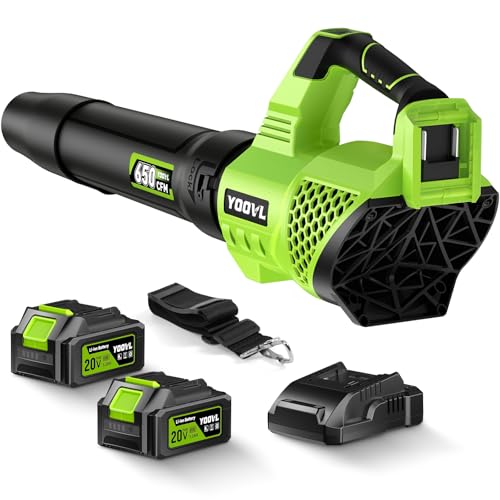
Pros
- Airflow rated up to 650 CFM using advanced turbo technology
- Comes with two high-capacity 20V 5.2Ah batteries and fast charger
- Three selectable speed modes for delicate to heavy-duty jobs
- Includes an adjustable shoulder strap to reduce arm fatigue
- Includes blower tube and extension nozzle attachments
Cons
- Maximum 150-minute runtime applies only to low-speed mode
- Heavier battery packs may add weight during prolonged handheld use

Pros
- Includes two 21V 4.0Ah batteries for extended runtime
- Delivers up to 420 CFM airflow and 150 MPH air speed
- Lightweight design weighs under 3 lbs bare tool for low fatigue
- Comes with both round and flat interchangeable nozzles
- Two adjustable speed settings for varying cleanup tasks
Cons
- Limited to two preset airflow speeds
- Best suited for dry leaves and light debris rather than heavy wet waste

Pros
- Instant switch between blow and vacuum modes
- High 18:1 mulch ratio maximizes bag capacity
- Rated up to 350 CFM and 210 MPH air output
- Variable-speed control for different debris types
- Includes 42L debris collection bag
Cons
- Corded design limits overall yard reach
- Weighs 9.3 pounds before debris accumulates

Pros
- Weighs only 2.6 pounds for easy one-handed handling
- Includes two 2.0Ah rechargeable batteries and a charger
- Manufacturer-rated airflow reaches up to 130 MPH and 180 CFM
- Two interchangeable tubes accommodate floor or tabletop work
- Rated for over 30 minutes of total operating time across packs
Cons
- Not intended for heavy, wet leaf piles
- Modest 180 CFM output limits heavy-duty yard clearing

Pros
- Weighs only 4.2 pounds for comfortable one-handed use
- Includes two 21V 3.0Ah batteries and a fast charger
- Offers 6 adjustable speed levels for flexible airflow control
- Operates at a relatively quiet 78 dB sound level
- Comes with an extension nozzle for hard-to-reach spaces
Cons
- Airflow may be insufficient for clearing heavy, wet debris
- Requires regular battery swaps for larger outdoor properties
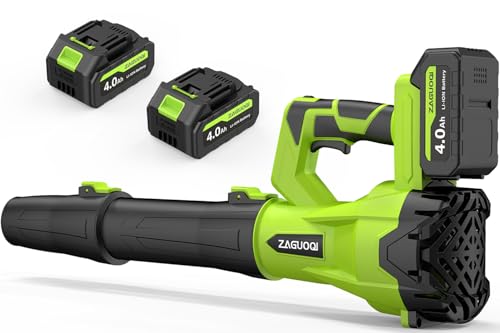
Pros
- Brushless motor rated up to 280,000 RPM
- Includes two 4.0Ah lithium-ion battery packs
- Six adjustable speed modes for versatile cleaning control
- Rated for up to 650 CFM and 288 MPH maximum output
- Lightweight handheld design weighing under 3 pounds
Cons
- Battery life decreases rapidly on higher speed modes
- Requires full initial charging before first use
Corded vs. Cordless: Choosing Your Yard Power Source
Choosing between corded electric and battery-powered leaf blowers comes down to whether you prioritize unlimited runtime or unrestricted mobility around your property.
Corded units such as the Grasstigon Electric Leaf Blower Corded, 7-Amp and the BLACK+DECKER Electric Leaf Blower offer continuous operation without the need to manage battery degradation or recharge cycles. The 7-amp Grasstigon weighs just 4 lbs while claiming 210 MPH and 390 CFM, and the 4.4-lb BLACK+DECKER claims 180 MPH and 180 CFM. However, corded models require suitable outdoor extension cords—which are typically not included—limiting your cleaning range to the length of your cord. For wider properties, explore leaf blowers with internal power packs.
By comparison, cordless options like the Electric Leaf Blower Cordless with Battery (2.74 lbs bare tool) and the Leaf Blower Cordless with 2.0Ah Battery & Charger (2.6 lbs) let you reach remote fence lines, garden beds, and outbuildings freely. Both include dual batteries to mitigate downtime. The trade-off is total operating life: manufacturers advertise runtime under unspecified test settings, and heavy debris will deplete compact packs quickly. If high-capacity mobility is paramount, consider dedicated designs such as the most powerful blower cordless alternatives.
Air Volume (CFM) vs. Airspeed (MPH) for Lawn Debris
Air volume (CFM) dictates how much debris a blower can sweep across a broad area, whereas airspeed (MPH) determines its force in dislodging heavy or wet debris.
When clearing expansive lawns, higher CFM moves larger piles with fewer passes. The Leaf Blower Cordless, 650CFM Electric Leaf Blowers advertises a substantial 650 CFM powered by two 20V 5.2Ah batteries and includes an adjustable shoulder strap to offset fatigue. Similarly, the Leaf Blower Cordless 650CFM 288MPH Electric Leaf pairs an advertised 650 CFM with an aggressive 288 MPH claim and a brushless motor. These high-volume models excel at gathering broad scatters of autumn leaves into centralized rows.
Conversely, tools with lower CFM but focused velocity, such as the Leaf Blower Cordless, 21V 500CFM 2×3.0Ah (500 CFM, 150 MPH, 6 speeds) or compact 180 CFM blowers, work best for precision sweeping on hard surfaces like patios, porches, and garage floors. The key trade-off is scope: lower-CFM handheld units take significantly longer to clear turf, while high-CFM sweepers can easily blow topsoil and mulch out of delicate garden borders if not throttled down.
When to Consider a Blower-Mulcher Combination Tool
A multi-function blower vacuum is ideal if your primary goal is removing debris entirely rather than simply herding it into piles, though these units are inherently bulkier than dedicated blowers.
Combination units like the KMFurnila 3-in-1 Electric Leaf Blower Vacuum and the WORX Trivac 3-in-1 Electric Leaf Blower/Leaf integrate vacuuming and shredding mechanisms. The KMFurnila claims a 500 CFM motor, 167 MPH airspeed, a 15:1 reduction ratio, and support wheels to relieve arm fatigue. The 12-amp WORX Trivac advertises up to 350 CFM, 210 MPH, an 18:1 mulching ratio, and a 42-liter collection bag with tool-free mode switching. For more dual-purpose designs, check our guide on yard blower vac options.
The main trade-off with 3-in-1 tools is handling and maintenance. While standard handheld blowers weigh between 2.6 and 6.4 lbs, vac-mulchers add collection bags, broader chutes, and internal shredders that can clog if fed wet soil, sticks, or oversized debris. They save significant time on disposal and composting, but they lack the featherweight agility of dedicated sweepers.
Lawn & Garden Leaf Blower FAQ
Are advertised leaf blower CFM and MPH ratings measured under the same standards?
Not necessarily. Manufacturers measure CFM and MPH using different nozzle attachments and settings. Maximum MPH is often achieved with a narrow concentrator nozzle, while peak CFM is typically recorded through an open, wide tube. Treat manufacturer numbers as advertised maximums rather than standardized real-world benchmarks.
How long will a cordless leaf blower battery last during yard cleanup?
Battery runtime depends on pack capacity (measured in amp-hours, like 2.0Ah vs. 5.2Ah) and motor speed. Using high or turbo modes significantly reduces operating time compared to low sweeping speeds. To avoid interruptions on larger lawns, look for models supplied with two batteries so one can charge while the other is in use.
Can electric leaf blowers handle wet leaves and light snow?
Higher-output units claiming 500 CFM or above and high airspeed can move wet leaves and light dusting snow, but dense, soggy piles require significantly more effort. Lightweight blowers under 200 CFM are primarily designed for dry debris, grass clippings, and hard surfaces like driveways and patios.
Which Leaf Blower Fits Your Yard Cleanup Routine?
Selecting the right leaf blower depends on balancing yard size, debris weight, and your tolerance for extension cords or battery recharging schedules.
If you have an average residential lot with exterior outlets, the WORX 12 Amp Turbine Electric Leaf Blower for Daily provides the best mix of blowing force (advertised 600 CFM) and steady, continuous power without battery downtime. Its main limitation is cord dependence, requiring you to manage an outdoor extension cord around obstacles. For buyers who prioritize off-cord mobility for large or remote properties, the Leaf Blower Cordless, 650CFM Electric Leaf Blowers is a strong alternative that delivers high advertised airflow across two 5.2Ah batteries, provided you manage your cleanup within its charge cycle.