For heavy seasonal cleanups and wet leaf piles, high-displacement backpack units deliver the greatest clearing force, though their bulk and two-cycle fuel maintenance require considerably more effort than smaller handheld tools. Buyers seeking commercial-scale clearing output will get the highest engine capacity from the PRORUN 75.6cc model, while smaller suburban yards may only require a lighter, mid-range backpack.

Pros
- Lightweight 9.4-pound design offers easy handheld maneuvering
- Reduced-resistance recoil system eases engine pull starts
- Translucent fuel tank allows quick monitoring of gas levels
- Cushioned anti-vibration handle helps dampen arm strain
- Capable of up to 380 CFM and 180 MPH airflow
Cons
- Requires mixing 2-cycle gas and oil at a 50:1 ratio
- Modest 380 CFM output is best suited for lighter debris

Pros
- Delivers up to 550 CFM and 230 MPH for moving wet yard debris
- Lightweight 17-pound backpack design with cushioned straps
- Thumb throttle includes cruise control for steady blowing
- 33.8 fl oz fuel tank yields up to 45 minutes of run time
- Operating temperature range spans 14°F to 104°F
Cons
- Requires 2-cycle fuel mixing and engine maintenance
- 550 CFM is modest for a backpack-class gas blower
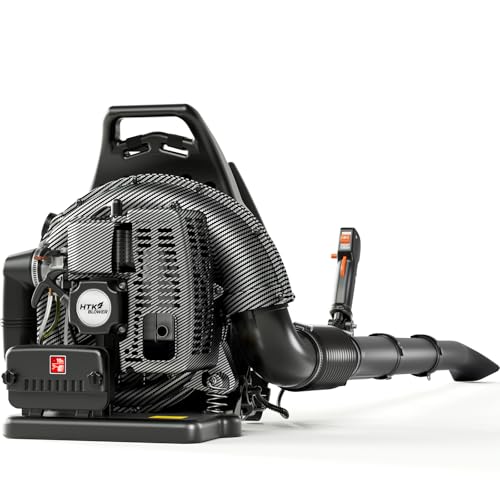
Pros
- 63CC 2-stroke engine provides up to 665 CFM and 205 MPH
- Fully padded ergonomic backpack harness
- Variable-speed throttle with built-in cruise control
- Generous 1.7 L fuel tank for extended yard sessions
Cons
- Requires 2-stroke fuel mixing and gas engine maintenance

Pros
- Engine rated at 63cc delivering up to 665 CFM and 205 MPH
- Generous 1.7-liter fuel tank extends running time between refills
- Cruise control and variable speed dial enable hands-free throttle
- Tool-free two-stage air filter simplifies routine maintenance
- Padded backpack harness evenly distributes weight during operation
Cons
- Weighs 22 pounds before adding fuel
- Requires mixing 2-cycle oil and gasoline
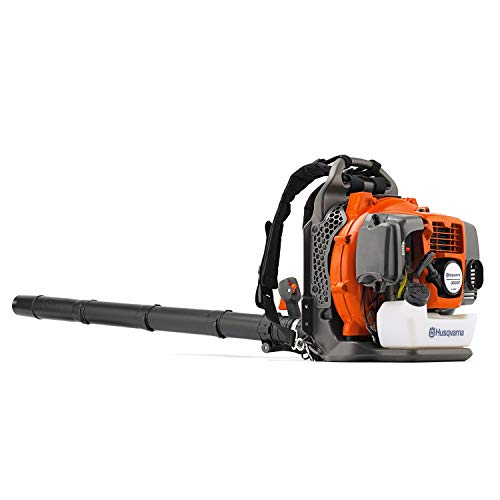
Pros
- 50.2-cc 2.1-HP X-Torq engine
- Rated blowing force of 692 CFM and 180 MPH
- LowVib technology dampens machine vibrations
- Air purge primer simplifies engine starts
- Ergonomic harness with offset control handle
Cons
- Weighs 22 pounds before fuel is added
- Requires ongoing two-stroke fuel mixing

Pros
- High manufacturer-rated output up to 1020 CFM and 240 MPH
- Powerful 75.6cc 2-cycle gas engine for large properties
- Padded backpack harness designed to lessen operator fatigue
Cons
- Heavy 32.8 lb weight requires more effort to mount and carry
- Gas 2-cycle engine requires standard fuel and oil mixing

Pros
- 65cc engine delivers a high-volume 850 CFM at 205 MPH
- Includes both fan and concentrator nozzle attachments
- 1.7-liter fuel tank reduces frequent stopping for refills
- Backpack harness features ventilated backrest for comfort
- Variable throttle with cruise control simplifies steady operation
Cons
- Requires 2-stroke fuel mixing and routine engine upkeep
- At 70.8 inches long assembled, storage requires ample space

Pros
- Delivers up to 230 MPH airspeed and 920 CFM air volume
- Powered by a 63.3 cc, 3.7 HP 2-stroke gas engine
- Large 65 oz (1.9L) fuel tank reduces frequent refills
- Padded shoulder harness and back support enhance user comfort
- Weighs 19.5 pounds for manageable backpack handling
Cons
- Requires 2-stroke gas-and-oil fuel mixing
- Heavier and louder than comparable cordless electric alternatives

Pros
- Claims up to 1,110 CFM airflow and 220 MPH air speed
- Generous 1.89-liter fuel tank allows 50 to 60 minutes of runtime
- Padded harness and shock-absorption system reduce vibration
- Cruise control locks throttle for continuous operation
- Includes earmuffs, maintenance tools, and fuel mixing bottle
Cons
- Heavy 26.46-pound total weight can fatigue operators
- Requires mixing 2-cycle gas and oil fuel

Pros
- 51cc 2-cycle engine produces up to 765 CFM and 270 MPH
- Padded harness and hip belt provide balanced load distribution
- Air purge system removes fuel line air for easier starting
- Variable speed throttle includes cruise control functionality
- Proven X-Torq engine technology maintains high clearing force
Cons
- Heavier 22-pound build can cause fatigue on extended jobs
- Requires routine 2-cycle gas and oil fuel maintenance
High CFM vs. High Airspeed: How Blower Output Truly Moves Debris
Choosing among high-output blowers requires balancing total air volume against concentrated velocity, as neither metric alone determines total clearing effectiveness. Air volume, measured in cubic feet per minute (CFM), indicates the broad quantity of air pushing across the ground, which is essential for sweeping wide swathes of dry leaves. Air speed, measured in miles per hour (MPH), represents the targeted force needed to dislodge matted, wet debris from turf or pavement.
Manufacturer ratings across this lineup show distinct engineering trade-offs. The VEVOR 63CC Gas Backpack Leaf Blower advertises a high volume of 1,110 CFM alongside a 220 MPH air speed, whereas the PRORUN 75.6cc 1020 CFM 240 MPH Gas-Powered 2-Cycle pairs a larger 75.6cc engine with a claimed 1,020 CFM and a higher 240 MPH velocity. Meanwhile, the Husqvarna 150BT Gas Backpack Leaf Blower focuses on velocity with an advertised 270 MPH stream at 765 CFM, producing 22 Newtons of blowing force. Buyers needing to scour packed dirt or wet foliage often benefit more from higher airspeed, while clearing expansive open lawns is faster with maximum air volume.
Engine Displacement and Fuel Tank Sizing for Heavy Clearing
Engine displacement directly correlates with continuous pushing power, but larger displacement engines consume more fuel and add overall weight. A handheld model such as the Getell 26cc Gas Leaf Blower provides 380 CFM at 180 MPH from a modest 26cc engine, making it convenient for quick patio sweeps but underpowered for large acreage. In contrast, heavy-duty backpack units step up to 50cc to 75.6cc engines to maintain high airflow over prolonged sessions.
To support sustained clearing without constant stops, fuel capacity becomes a vital operational factor. The Schröder Backpack Leaf Blower – Backpack Blower integrates a 63.3cc engine with a substantial 1.9-liter (65 oz) fuel tank, matching its commercial-oriented 19.5-pound frame. Similarly, the Thalorus 63CC Backpack Leaf Blower, 665 CFM and the HTK Gas Backpack Leaf Blower, 63CC 2-Stroke both feature 1.7-liter fuel reservoirs. While larger tanks extend runtime, carrying nearly half a gallon of premixed fuel increases the total physical load on the operator’s back and shoulders.
Frequently Asked Questions About High-Output Gas Blowers
What is the difference between CFM and MPH when evaluating blower strength?
CFM (cubic feet per minute) measures the total volume of air pushed through the tube, determining how wide a swath of leaves you can move at once. MPH (miles per hour) measures the velocity of that air stream, which determines how effectively the blower can break free heavy, wet, or compacted debris.
Why do high-displacement backpack blowers require premixed fuel?
The high-output blowers listed utilize two-cycle (two-stroke) gasoline engines, which do not have an independent oil reservoir. They require a specific ratio of gasoline mixed with two-cycle engine oil (often 50:1) to properly lubricate internal engine components during operation.
How heavy are high-output gas backpack blowers during operation?
Dry weights for high-output backpack blowers typically range from around 17 to nearly 20 pounds, with models like the Schröder SR-6400L listed at 19.5 pounds. Adding a full tank of fuel (up to 1.7 to 1.9 liters) adds approximately 3 to 4 additional pounds to the operating weight on your back.
Choosing the Right Heavy-Duty Gas Blower for Your Property
Selecting the ideal high-power blower comes down to matching the physical footprint of your property against your comfort tolerance for machine weight and maintenance. Operators managing expansive acreage, thick woodlands, or frequent wet autumn leaves require the robust airflow of commercial-tier backpack platforms, whereas smaller suburban properties rarely justify carrying 17 to 20 pounds of equipment for brief cleanups.
For buyers needing maximum sweeping strength and engine size, the PRORUN 75.6cc 1020 CFM 240 MPH Gas-Powered 2-Cycle stands out as the most capable heavy-duty option due to its 75.6cc displacement and advertised 1,020 CFM output. Its chief limitation is the weight and physical demand inherent to operating a large two-stroke backpack platform. For suburban homeowners with routine maintenance needs who prefer lighter handling and simple maneuverability, the Getell 26cc Gas Leaf Blower provides a practical handheld alternative that avoids the bulk of a backpack rig.