If you need maximum sweeping volume for outdoor yard cleanup, the Cordless Leaf Blower for DEWALT 20V Max Battery provides the highest advertised airflow at 720 CFM, though sustained high-output clearing requires frequent battery swaps.

Pros
- Compatible with Dewalt 20V Max lithium-ion batteries
- Lightweight 1.8-pound handheld design reduces arm fatigue
- Includes standard tube and flat concentrating nozzle
- Manufacturer-rated airflow reaches up to 720 CFM and 180 MPH
- Built-in work light aids visibility in dim workspaces
Cons
- High-power operation may quickly deplete the included 4.0Ah battery
- Charger is not explicitly mentioned as included in the package
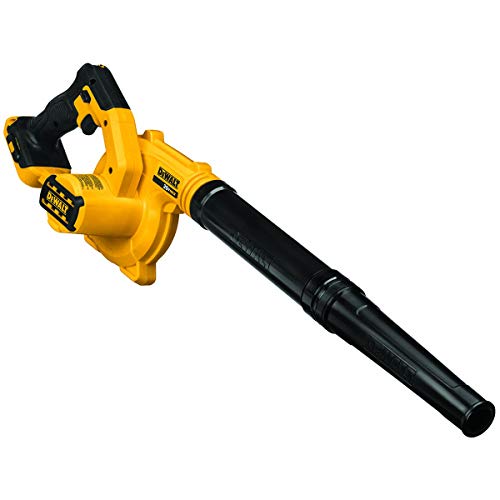
Pros
- Lightweight 2.5-pound design fits into tight spaces
- 3-speed variable switch plus variable speed trigger
- Trigger lock-on reduces hand fatigue during continuous use
- Includes 3 nozzle attachments for different clearing tasks
Cons
- Sold as a bare tool without battery or charger
- 100 CFM airflow is strictly intended for jobsite debris
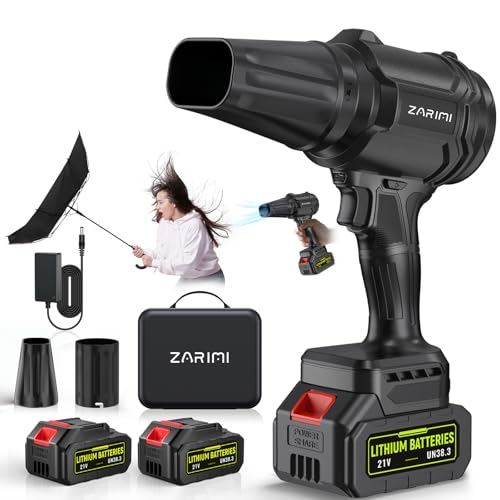
Pros
- Weighs only 2.8 lbs for fatigue-free one-handed use
- Includes two batteries and dedicated charger
- Rated air speeds over 50 m/s (110+ mph)
- Narrow nozzle included for concentrated airflow
- Compact footprint fits easily in car trunks or tight storage
Cons
- Each battery is rated for only 13+ minutes of continuous use
- Not suited for continuous, heavy large-property clearing

Pros
- Includes two 4.0Ah batteries and a fast charger
- Stepless variable-speed trigger with safety lock
- Comes with two detachable nozzle tubes and a shoulder strap
- Stated wind speed capability reaching up to 65 m/s
- Includes storage toolbox and protective earplugs
Cons
- Claimed 30-minute runtime per battery is limited to low speed
- Conflicting weight figures listed between specs and description
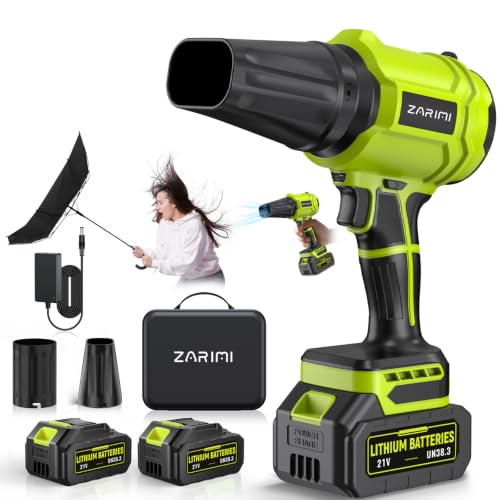
Pros
- Extremely lightweight at only 2.8 pounds for low-fatigue use
- Reaches stated air speeds over 50 m/s (110+ MPH)
- Comes with two batteries and charger for alternating use
- Includes a concentrated narrow nozzle for detailed edging
- Compact footprint stores easily in tight spaces or vehicle trunks
Cons
- Limited runtime of only about 13 minutes per battery
- Not designed for moving heavy or deep piles of wet leaves

Pros
- Weighs only 2.28 lbs for easy one-handed operation
- Includes two 21V 4000mAh lithium batteries
- Variable speed trigger provides precise airflow control
- Comes with an extension tube and flat nozzle attachment
Cons
- Rated runtime tops out at roughly 30 minutes
- Not designed for large properties or heavy wet debris
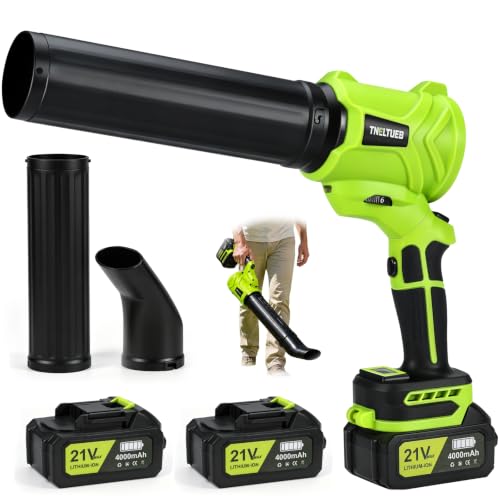
Pros
- Six selectable speed settings spanning 100 to 200 MPH
- 180-degree rotating handle facilitates versatile blowing angles
- Includes two 21V 4.0Ah rechargeable battery packs
- Comes equipped with two interchangeable nozzle attachments
- Ultralight 2-pound build allows easy one-handed maneuvering
Cons
- Battery runtime drops considerably when using higher speed modes
- Requires swapping batteries during large property cleanups
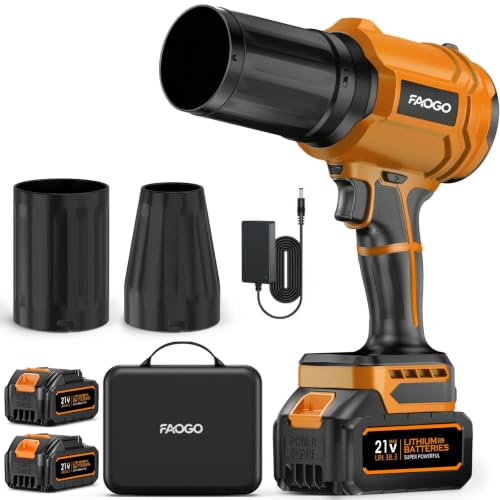
Pros
- Lightweight and compact design for comfortable one-handed use
- Includes two batteries and charger for uninterrupted swapping
- Comes with two extended interfaces for reach in tight spaces
- Storage bag included for convenient organization
Cons
- Total battery life is rated at roughly 26+ minutes across both packs

Pros
- Includes two rechargeable batteries and a dedicated charger
- Ultra-lightweight handheld body allows easy one-handed control
- Comes with two extension interfaces and a storage carry bag
- Built-in overheat protection during battery charging
Cons
- Total runtime is limited to approximately 26+ minutes across both packs
- Manufacturer motor rating of 990,000 RPM is an exaggerated marketing claim

Pros
- Includes two high-capacity 6.0Ah rechargeable battery packs
- Tool-free assembly allows quick and straightforward setup
- Ergonomic, lightweight handheld frame minimizes arm fatigue
- 21V cordless platform enables flexible mobility around the yard
Cons
- Does not disclose standardized CFM or MPH airflow metrics
- Charger inclusion is not explicitly stated in the package details
- 990,000 RPM motor claim is an unrealistic marketing figure
What Determines Blowing Power in Handheld Cordless Blowers?
True blowing power depends on the relationship between airflow volume (measured in cubic feet per minute, or CFM) and wind velocity (miles per hour or meters per second), rather than astronomical motor RPM claims. While several compact models advertise figures as high as 980,000 or 990,000 RPM, those manufacturer numbers reflect internal turbine rotation rather than the actual force applied to ground debris.
A blower moving a high volume of air pushes wide piles of leaves across large areas, while high air velocity dislodges wet, compacted material stuck to hard surfaces. For instance, the Cordless Leaf Blower Lightweight Handheld Blowers from TNELTUEB advertises a wind speed of 80 m/s (up to 180–200 MPH) across six speed settings, focusing on high-speed scouring. Conversely, the DOOYUTOOL model focuses on high volumetric output with an advertised 720 CFM. The trade-off with ultra-compact blowers emphasizing high output is rapid battery drain and concentrated heat buildup under continuous maximum load.
Air Volume (CFM) vs. Air Speed (MPH): Which Matters More for Heavy Debris?
Air volume (CFM) moves larger piles of dry material over open turf, whereas air speed (MPH) provides the penetrating thrust needed to lift wet leaves, snow, and stubborn dirt from paved walkways. Choosing between the two comes down to whether your typical chore involves clearing open lawns or scouring driveways and gutters.
The selection of handheld blowers demonstrates this distinction clearly. The wanvzo Cordless Leaf Blower advertises 500 CFM, balancing broad air displacement with a concentrated flat nozzle attachment for focused blasts. In contrast, workshop-centric tools like the DEWALT 20V MAX Blower, 100 CFM Airflow generate a modest 100 CFM, which is purpose-built for sweeping sawdust, clearing workbench crevices, or drying vehicle panels rather than clearing large lawns. A high-CFM unit covers ground faster, but wider nozzles disperse the airstream, making tightly stuck debris harder to budge without a focused attachment.
Comparing High-Output Compact Blowers: DOOYUTOOL vs. DEWALT DCE100B
The DOOYUTOOL Cordless Leaf Blower and the DEWALT 20V MAX Blower (DCE100B) both utilize the DeWalt 20V MAX battery platform, but they serve completely different cleaning tasks. The DOOYUTOOL model is configured for broader yard and patio cleanup, whereas the DEWALT DCE100B is an industrial jobsite blower designed for contained workspace maintenance.
DOOYUTOOL advertises 720 CFM and 180 MPH along with an included 4.0Ah battery, two-section extension tube, and axial flow fan design weighing 1.8 lbs. It targets fallen leaves and outdoor walkways. On the other hand, the DEWALT DCE100B delivers a manufacturer-rated 100 CFM, comes as a bare tool without a battery or charger, and includes three nozzle attachments for targeted cleaning such as tuck pointing joints and clearing overhead surfaces. While the DOOYUTOOL claims over seven times the volumetric airflow for outdoor clearing, DEWALT provides a proven 3-speed variable switch and trigger lock mechanism tailored for precision tool and worksite cleanup. The trade-off with the DEWALT is its lower total air volume, which makes yard cleanup impractical.
How Battery Capacity and Motor Ratings Affect Real-World Runtime
Sustained blowing performance is constrained by battery pack capacity, meaning high motor output directly shortens operational time per charge. Compact handheld blowers with high-draw motors typically deplete standard battery packs in 10 to 30 minutes depending on speed settings and workload.
Several models attempt to balance this by bundling dual batteries. The YUQUESEN Cordless Leaf Blower and FAOGO Cordless Leaf Blower each include two battery packs, with manufacturer ratings indicating roughly 13 minutes of runtime per pack (26+ minutes total) on continuous strong airflow. Meanwhile, the Handheld 21V Cordless Leaf Blower from ZMBRNP supplies two higher-capacity 6.0Ah batteries to extend working intervals across larger garden areas. The key trade-off with larger or multiple battery packs is added weight and total charging time, as high-amp-hour batteries increase hand fatigue during extended overhead or single-handed clearing sessions.
Frequently Asked Questions About Handheld Blowers
What is the difference between CFM and MPH when evaluating blower power?
CFM (cubic feet per minute) measures the volume of air exiting the nozzle, which determines how much debris the blower can push at once. MPH (miles per hour) measures the speed of that air, which determines how effectively the airstream can lift heavy, damp, or compacted debris off the ground.
Are advertised motor speeds like 980,000 RPM a reliable indicator of yard cleaning performance?
No. These extreme RPM ratings reflect internal micro-turbine rotational speeds rather than the usable clearing force at the end of the tube. Practical clearing performance is better judged by a combination of nozzle design, CFM, air speed, and battery stability under load.
Choosing the Right Handheld Blower for Your Yard and Workspace
Matching the tool to your primary chore prevents disappointment with either inadequate airflow or unexpectedly short battery runtime. If you primarily blow sawdust from a garage, patio furniture, or vehicle trim, a lower-CFM, variable-speed tool offers superior precision and battery conservation over raw sweeping power.
For broad patio clearing and general lawn maintenance, the recommended model is the Cordless Leaf Blower for DEWALT 20V Max Battery due to its advertised 720 CFM output, axial fan architecture, and included 4.0Ah power pack. Its main limitation is that its high-output performance relies on unverified manufacturer claims and works best within a DeWalt-compatible battery setup. If your priority is precision cleaning on job sites, clearing tight joints, or maintaining shop benches, the DEWALT 20V MAX Blower, 100 CFM Airflow is a better fit, offering established variable-speed trigger control despite its lower overall airflow volume.