Quick Answer: Choosing the Best Pushing Leaf Blower
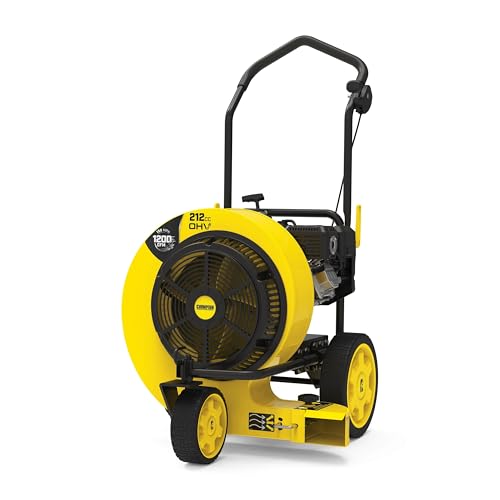
If you have a wide lawn or long driveway to clear, a true walk-behind pushing leaf blower like the Champion Power Equipment 212cc 1200 CFM provides high airflow without carrying heavy machinery on your back, though it demands ample storage space and an upfront investment of $579.00.
Pros
- Rated for up to 1200 CFM of air volume
- 3-position wind vane plus forward air attachment
- Large 12-inch never-flat rear wheels
- Lockable 360-degree front swivel wheel
- Ergonomic handle features height adjustment
Cons
- Weighs 104 pounds without power propulsion
- Gas engine requires fuel and oil upkeep
- Bulky frame requires ample storage space
Why Choose a Dedicated Walk-Behind Blower Over Handheld Models?
A true walk-behind pushing leaf blower solves fatigue by resting the engine weight on wheels rather than your arm or shoulders. Handheld units excel in tight spots, but covering broad grass surfaces with a handheld model requires constant swinging and carrying anywhere from 2 to 10 pounds for extended periods.
The Champion Power Equipment 212cc 1200 CFM operates on large 12-inch never-flat rear wheels, letting you roll the machine across uneven lawn surfaces while steering via an adjustable ergonomic handle. The tradeoff is physical footprint: a rolling machine cannot easily navigate tight flowerbeds, stairs, or raised decks, meaning many homeowners still rely on a small handheld unit for detailed perimeter touch-ups. To compare alternative configurations, check our hands-on review of small rechargeable leaf blower.
Champion Power Equipment 212cc vs. SuperHandy Tow-Behind: Clearing Power Compared
For properties that exceed typical push-clearing capacity, the choice shifts between walking behind the machine and pulling it behind a utility vehicle. The Champion Power Equipment 212cc delivers an advertised 1200 CFM from its 212cc engine, guided manually by the operator. By contrast, the SuperHandy Tow-Behind Leaf Blower features a massive 15HP electric-start engine and an 18-inch metal impeller generating an advertised 3000 CFM at 207 MPH.
The operational difference comes down to vehicle access and weight. The SuperHandy unit weighs 291 lbs and connects via a standard clevis pin hitch to lawn tractors or ATVs, making it strictly an acreage or commercial towing solution. The Champion model is self-directed on foot, making it the practical choice for standard suburban lots where an ATV cannot maneuver, even though it produces less than half the air volume of the tow-behind rig. Users looking for related component recommendations can explore our blower para soplar hojas breakdown.
Airflow Volume and Airspeed: What the Manufacturer Specs Mean
Airflow volume (measured in CFM) moves large piles of leaves, while air speed (measured in MPH) loosens wet or matted debris. When selecting equipment for broad property maintenance, balancing these numbers against the power source is essential.
Manufacturer-advertised performance spans widely across formats: Before finalizing equipment decisions, refer to our comprehensive blower at lowes comparison.
- SuperHandy Tow-Behind: 3000 CFM and 207 MPH via a 15HP gas engine.
- Champion Power Equipment Walk-Behind: 1200 CFM via a 212cc gas engine.
- Greenworks 80V Handheld: Up to 730 CFM and 170 MPH brushless battery power.
- MZK 2-in-1 Corded: Up to 460 CFM and 167 MPH with 15:1 mulching capability.
- Grasstigon Corded: 390 CFM and 210 MPH from a 7-amp motor.
- Getell 26cc Gas Handheld: 380 CFM and 180 MPH from a 2-cycle engine.
Higher CFM numbers on rolling units clear wide swaths in fewer passes, while high MPH on focused handheld nozzles helps dislodge debris stuck between pavement joints.
Maneuverability: Wheels, Swivels, and Terrain Handling
A rolling blower is only as effective as its wheel system on rough or sloping ground. Fixed wheels roll straight easily, but turning at the property edge can require significant effort if the front wheel does not rotate freely. For broader ecosystem context, read through our operational guide on leaf blower for driveway.
The Champion Power Equipment 212cc addresses this by featuring a front wheel that can either lock straight for long perimeter runs or swivel 360 degrees for nimble turning around trees and borders. Combined with its 3-position adjustable wind vane (tilting 15 degrees up or down) and forward-flow air attachment, the operator can redirect discharge without awkwardly wrestling the chassis into awkward angles.
Corded and Cordless Handheld Alternatives for Smaller Spaces
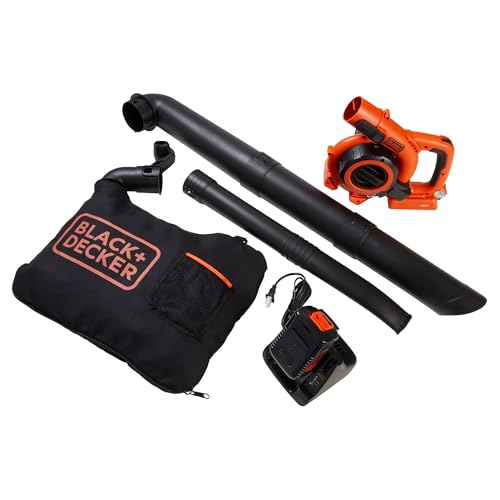
If your yard does not warrant a large rolling machine, lightweight alternatives offer quick cleanup without gas maintenance. For modest driveways and patios, corded tools like the Grasstigon Electric Leaf Blower Corded, 7-Amp ($30.99) or the BLACK+DECKER Electric Leaf Blower ($42.00, 180 CFM/180 MPH) offer continuous power without charging pauses, limited only by your extension cord range. For complete layout guidance, see our guide on where to buy a leaf blower.
For cordless portability, compact options like the wanvzo Cordless Leaf Blower and the YUQUESEN Cordless Leaf Blower weigh under 3 pounds and include dual battery setups, making them easy to handle for patio dusting. However, for deep lawns piled with autumn leaves, their compact nozzles cannot match the wide clearing path of wheeled or commercial blowers.
Pushing Leaf Blower FAQ: Practical Clearing Questions
What makes a walk-behind pushing leaf blower different from a handheld blower?
A dedicated walk-behind model, such as the Champion Power Equipment 212cc 1200 CFM unit, rolls on wheels and utilizes a large 212cc gas engine to produce significantly higher airflow (1200 CFM) than standard handheld blowers, reducing arm strain on wide-open ground but requiring dedicated storage space and flat to gently rolling terrain.
When should you pick a tow-behind model instead of a push-style blower?
A tow-behind blower like the SuperHandy 15HP model is built for acreage or commercial spaces where you already operate an ATV, lawn tractor, or utility cart. At 291 lbs, it cannot be pushed by hand, whereas a walk-behind push blower is manually guided across residential lawns.
Can high-voltage cordless blowers replace a walk-behind machine?
Handheld models like the Greenworks 80V blower reach up to 730 CFM, which is sufficient for driveways and spot-cleaning around landscaping, but they require holding the weight in your hand and depend on battery charge, whereas a gas walk-behind blower rolls its weight on the ground and runs as long as fuel is supplied.
How to Choose the Right Leaf Blower for Your Yard
Choosing the right machine comes down to property acreage, storage capacity, and whether you prefer rolling a chassis or carrying a lightweight tool. Wheeled equipment eliminates shoulder strain across broad lawns, but requires sufficient garage floor space and basic engine upkeep.
For buyers needing a true pushing leaf blower to clear large open yards without shoulder strain, the Champion Power Equipment 212cc 1200 CFM is the clear match, providing rolling stability and adjustable airflow direction. Its main drawback is its bulk and $579.00 price tag compared to portable models. If you have a smaller paved space or need to clean tight walkways on a modest budget, consider the Grasstigon Electric Leaf Blower Corded, 7-Amp as an ultra-affordable, lightweight alternative that avoids fuel mixing altogether.
Push Blower Safety Background
Push blowers are usually walked across lawns and driveways at a steady pace, which leaves time to watch for bystanders. Those who want a broader view of safety guidance can start with American National Standards Institute (ANSI).