A small battery blower provides rapid cleanup for hard surfaces without the weight of heavy outdoor equipment, but you must choose between broad-path yard clearers and ultra-compact precision dusters. Buyers needing to clear walkways and patios benefit most from multi-battery setups, while those looking to dust workshops or vehicle interiors trade wide-area volume for pocket-sized portability.

Pros
- High-speed motor reaches up to 130,000 RPM
- Includes 5 interchangeable cleaning nozzles
- Built-in LED light for illuminating dark crevices
- Up to 240 minutes runtime on the lowest setting
Cons
- Maximum speed runtime is limited to 25 minutes
- Audible operation reaches up to 82.5 dB
- Requires a 10-minute cooldown period before charging
Pros
- Extremely lightweight at only 2.8 pounds for low-fatigue use
- Reaches stated air speeds over 50 m/s (110+ MPH)
- Comes with two batteries and charger for alternating use
- Includes a concentrated narrow nozzle for detailed edging
- Compact footprint stores easily in tight spaces or vehicle trunks
Cons
- Limited runtime of only about 13 minutes per battery
- Not designed for moving heavy or deep piles of wet leaves

Pros
- Ultra-lightweight design at just 1.3 pounds
- Compatible with existing DeWalt 20V Max lithium-ion batteries
- Rated for up to 430 CFM air volume and 125 mph air speed
- Variable speed trigger enables controlled airflow
Cons
- Sold as a bare tool with no battery or charger included
- Compact mini size is best suited for light-duty clearing

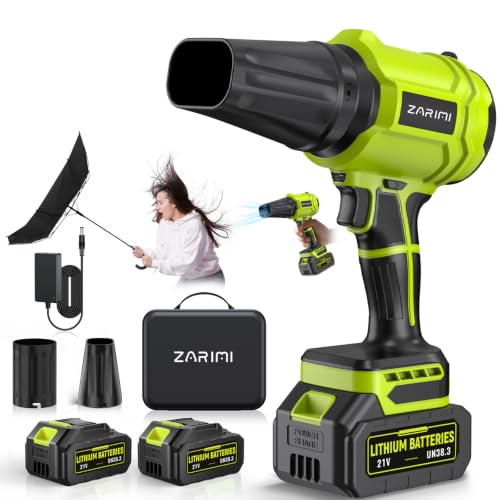
Pros
- Includes two 21V 4.0Ah batteries for extended runtime
- Delivers up to 420 CFM airflow and 150 MPH air speed
- Lightweight design weighs under 3 lbs bare tool for low fatigue
- Comes with both round and flat interchangeable nozzles
- Two adjustable speed settings for varying cleanup tasks
Cons
- Limited to two preset airflow speeds
- Best suited for dry leaves and light debris rather than heavy wet waste
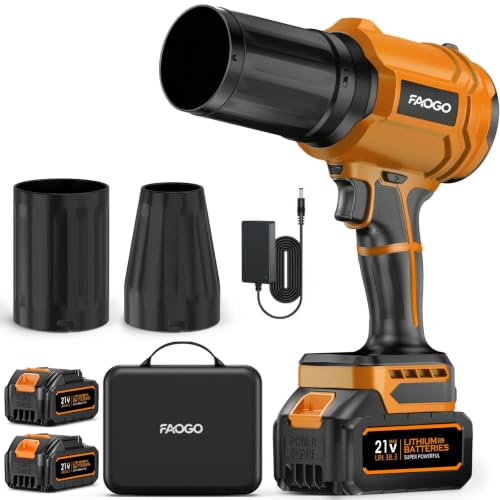
Pros
- Lightweight and compact design for comfortable one-handed use
- Includes two batteries and charger for uninterrupted swapping
- Comes with two extended interfaces for reach in tight spaces
- Storage bag included for convenient organization
Cons
- Total battery life is rated at roughly 26+ minutes across both packs

Pros
- Weighs only 2.6 pounds for easy one-handed handling
- Includes two 2.0Ah rechargeable batteries and a charger
- Manufacturer-rated airflow reaches up to 130 MPH and 180 CFM
- Two interchangeable tubes accommodate floor or tabletop work
- Rated for over 30 minutes of total operating time across packs
Cons
- Not intended for heavy, wet leaf piles
- Modest 180 CFM output limits heavy-duty yard clearing
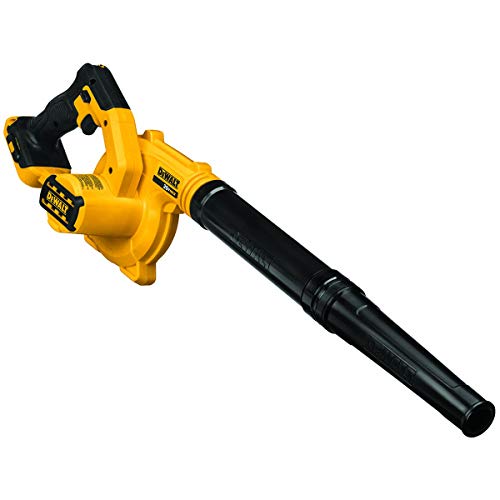
Pros
- Lightweight 2.5-pound design fits into tight spaces
- 3-speed variable switch plus variable speed trigger
- Trigger lock-on reduces hand fatigue during continuous use
- Includes 3 nozzle attachments for different clearing tasks
Cons
- Sold as a bare tool without battery or charger
- 100 CFM airflow is strictly intended for jobsite debris

Pros
- Reaches up to 110,000 RPM for efficient dust removal
- Ultra-compact, lightweight body weighs just 0.45 lbs
- Includes four specialized nozzles and a lanyard
- Recharges in roughly 3.5 hours via USB Type-C
- Sustainable alternative to disposable canned air
Cons
- Max speed runtime is significantly shorter than low gear
- Recharge time takes roughly 3.5 hours
Pros
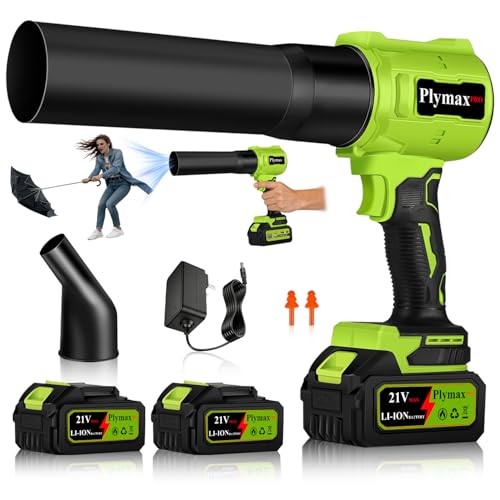
- Includes two 21V 4.0Ah lithium batteries and a charger
- Motor rated up to 800,000 RPM for focused air speeds
- Includes both a wide nozzle and a precision jet nozzle
- Suitable for outdoor patios, garage dusting, and car drying
- Compact, lightweight handheld design minimizes fatigue
Cons
- Compact frame less suited for expansive lawn leaf clearing
- Airflow volume specifications are not provided
How to Choose Between Dedicated Yard Blowers and Micro Handheld Dusters
The label of a compact air tool covers two distinct formats: miniature high-RPM turbine dusters for electronics and vehicles, and tube-extended handheld blowers designed for outdoor yard waste. Picking the wrong category either leaves you with too narrow a nozzle for dry lawn debris or an outdoor blower too bulky for indoor cabinetry.
Models like the Compressed Air Duster,130000RPM Super Power and the WOLFBOX MegaFlow 50 Compressed Air Duster rely on micro-turbines spinning up to 130,000 RPM. These devices weigh well under a pound (the WOLFBOX lists at 0.45 lb) and recharge via standard USB-C cables. They are tailored to blast dust out of car vents, PC components, and workshop nooks using interchangeable specialty nozzles. However, their ultra-narrow air stream cannot move widespread leaves across a deck or driveway efficiently.
Conversely, tools like the Electric Leaf Blower Cordless with Battery or the YUQUESEN Cordless Leaf Blower use wide barrels to move loose matter across broad surfaces. If you are sweeping a garage or preparing garden beds, look to small rechargeable leaf blower designs that extend to the ground, rather than duster barrels that require bending over.
Comparing Airflow: Why CFM and Wind Speed Determine Cleaning Power
Blower efficiency is determined by cubic feet per minute (CFM) for volume and miles per hour (MPH) for velocity, rather than motor RPM numbers alone. High speed dislodges debris, but generous air volume pushes it into manageable piles.
For outdoor surfaces, the Electric Leaf Blower Cordless with Battery claims up to 420 CFM and 150 MPH, giving it enough surface spread to handle dry yard debris, patio dust, and grass clippings. Similarly, the Cordless Leaf Blower Compatible with Dewalt 20V lists an advertised 430 CFM and 125 MPH, prioritizing broader outdoor air movement.
In contrast, the DEWALT 20V MAX Blower, 100 CFM Airflow targets tighter jobsite cleanup with an advertised 100 CFM rating. While 100 CFM is plenty for sweeping sawdust off framing, clearing masonry joints, or cleaning out a truck bed, it requires more sweeping passes across wide turf or driveways than higher-CFM alternatives. For wider ground projects, reviewing a specialized leaf blower for driveway use will highlight how volume makes a practical difference.
Bare-Tool Blowers vs. Complete Multi-Battery Cleaning Kits
Choosing between bare-tool models and complete kits depends entirely on whether you already participate in an established 20V battery ecosystem. Buying a tool that leverages batteries you already own saves money, but third-party complete kits supply their own dedicated packs.
If your workshop is already stocked with 20V yellow power tool packs, bare-tool choices like the OEM DEWALT 20V MAX Blower, 100 CFM Airflow or the budget-oriented Cordless Leaf Blower Compatible with Dewalt 20V provide immediate utility without adding redundant chargers. The GREENFURY tool specifically notes compatibility with standard DCB200-series packs, keeping initial costs down if you already run those cells.
For homeowners starting fresh, all-in-one bundles eliminate battery compatibility guesswork. The YUQUESEN Cordless Leaf Blower, FAOGO Cordless Leaf Blower with 2 Batteries, and Leaf Blower Cordless with 2.0Ah Battery & Charger all include two battery packs and a dedicated charger in the box. Having two packs lets you rotate cells as one charges, avoiding long interruptions during weekend yard cleanups.
Weight, Ergonomics, and Fatigue Management for Quick Tasks
Small battery blowers are prized for single-handed control and low operating weight, making overhead dusting and one-handed sweeping manageable for all user demographics. However, physical weight and tube configuration dictate whether a tool is comfortable for extended use.
Extremely light tools minimize strain during sustained chores. The bare-tool Cordless Leaf Blower Compatible with Dewalt 20V weighs just 1.3 lbs before battery attachment, while the Leaf Blower Cordless with 2.0Ah Battery & Charger comes in at 2.6 lbs and includes two extension tubes so you do not need to stoop while sweeping walkways. The Electric Leaf Blower Cordless with Battery registers at 2.74 lbs without battery, pairing that weight with round and flat nozzle attachments to customize air direction.
For continuous operation, ergonomics also rely on throttle design. The DEWALT 20V MAX Blower, 100 CFM Airflow incorporates a variable-speed trigger with a trigger lock-on switch, sparing your finger from holding continuous tension while sweeping out a garage. Explore our broader review of leaf blowers for further perspective on handle profiles and trigger configurations.
Small Battery Blower Frequently Asked Questions
Can small battery blowers handle wet leaves and heavy yard debris?
Small blowers excel on dry leaves, sawdust, and light debris across hard surfaces. While models like the YUQUESEN and FAOGO claim high wind speeds capable of shifting damp leaves, compact battery tools have smaller air volumes than gas blowers, meaning heavy or deeply matted wet lawn piles will take significantly longer to clear.
What is the difference between CFM and MPH when comparing compact blowers?
CFM (cubic feet per minute) indicates how much total air volume the blower moves, which dictates the size of the area you can sweep at once. MPH (miles per hour) measures the speed of that air, which determines its ability to dislodge stuck or heavy debris. Effective outdoor sweepers require a balance of both ratings.
How should I maintain the batteries included with compact blowers?
Always allow batteries to cool down before placing them on a charger, especially after running high-RPM motors. For seasonal storage, keep lithium-ion batteries in a dry, temperate environment and recharge them periodically as instructed in the user manual to maintain overall cell health.
Which Small Battery Blower Fits Your Space and Needs?
Matching the right tool to your space requires balancing broad airflow against portable precision. Buyers tackling seasonal leaves on paths and patios need tube reach and volume, while workshop hobbyists need maneuverability and concentrated air pressure.
For most homeowners needing an easy, complete setup to sweep patios and walkways, the Electric Leaf Blower Cordless with Battery is the practical recommendation. It pairs dual 4.0Ah batteries with 420 CFM and 150 MPH output, balancing continuous sweeping power and low weight. Its main limitation is that proprietary battery packs lack the cross-tool versatility of larger contractor tool platforms. If you already own compatible 20V battery packs, the bare-tool DEWALT 20V MAX Blower, 100 CFM Airflow serves as a heavy-duty alternative built specifically for compact jobsite cleanup.