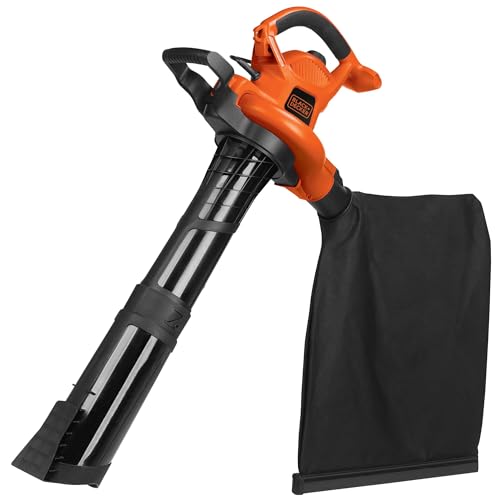
A high-displacement gas backpack model is the most capable snow removal leaf blower for clearing long walkways and light driveways, though it requires mixing two-stroke fuel and managing considerable weight. For smaller patios, steps, or dusting off vehicles, a lightweight dual-battery cordless tool offers instant push-button starts without engine fumes, but its runtime diminishes rapidly when forced to push wet, dense precipitation.
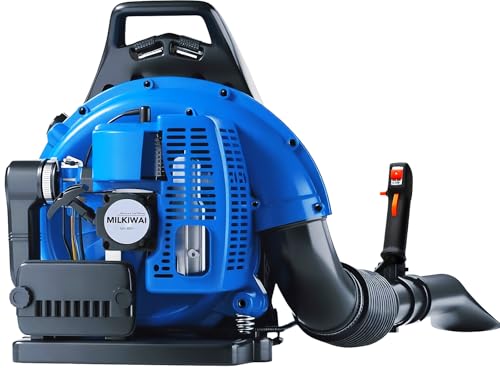
Pros
- Rated output reaches up to 665 CFM and 205 MPH wind speed
- Padded backpack harness with 3-point spring stabilization system
- Variable speed throttle includes cruise control for steady operation
- Manufacturer claims up to 50 minutes of runtime at full throttle
Cons
- Substantial 19-pound unit weight can tire users during prolonged work
- Requires manual 2-stroke gas and oil mixing for engine operation

Pros
- Lightweight design at only 4.4 pounds
- 7-Amp motor rated up to 180 MPH and 180 CFM
- Built-in cord retention prevents unplugging
- Zero emissions with instant push-button start
- Simple, low-maintenance corded design
Cons
- Extension cord is not included
- Operating range is limited by cord reach

Pros
- Includes two 3.0Ah batteries for swapped use
- Stated output reaches up to 680 CFM and 230 MPH
- Lightweight handheld design at roughly 3.96 lbs
- Comes with two interchangeable blower tubes
- Built-in battery level indicator lights
Cons
- Combined runtime is roughly 40 minutes across both batteries
- Two speed settings offer limited flow adjustments

Pros
- Ultra-lightweight design at just 2.4 pounds
- Includes two 4.0Ah batteries and a fast charger
- Six speed modes plus one-touch Turbo setting
- Claims airspeeds up to 60 m/s for clearing debris
- Compact size facilitates easy storage and tight-space use
Cons
- Turbo mode runtime is limited to roughly 6 minutes per battery
- Compact handheld design is less suited for expansive acreage
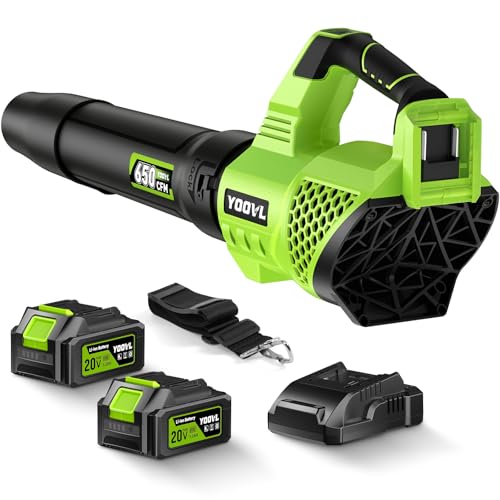
Pros
- Airflow rated up to 650 CFM using advanced turbo technology
- Comes with two high-capacity 20V 5.2Ah batteries and fast charger
- Three selectable speed modes for delicate to heavy-duty jobs
- Includes an adjustable shoulder strap to reduce arm fatigue
- Includes blower tube and extension nozzle attachments
Cons
- Maximum 150-minute runtime applies only to low-speed mode
- Heavier battery packs may add weight during prolonged handheld use

Pros
- Brushless motor delivers rated airflow up to 650 CFM and 180 MPH
- Includes two 20V 4.0Ah batteries and a fast charger
- Six adjustable speed settings ranging from 80 to 180 MPH
- Comes with an ergonomic shoulder strap and two detachable nozzles
- Includes a storage bag to keep components organized
Cons
- Stated 30-minute runtime is restricted to low-speed operation
- High-speed settings will deplete battery charge more rapidly

Pros
- 2.7kW 63cc two-stroke engine delivers up to 6,800 RPM
- Multi-directional air outlet adjusts vertically and horizontally
- 0.47-gallon fuel tank enables long runs between top-offs
- Constant speed switch holds chosen throttle effortlessly
- Backpack harness features heat-insulating back padding
Cons
- Substantial 22-pound dry weight adds strain on long sessions
- Requires manual two-stroke oil and gasoline mixing

Pros
- Rated up to 880 CFM and 275 MPH
- Powered by a 72cc 3.7-HP 2-cycle engine
- Includes both flat and round nozzles
- Cruise control and throttle lock maintain RPM
- Padded backpack harness helps isolate engine heat
Cons
- Weighs 21 pounds dry
- Requires 2-cycle gas and oil mixing
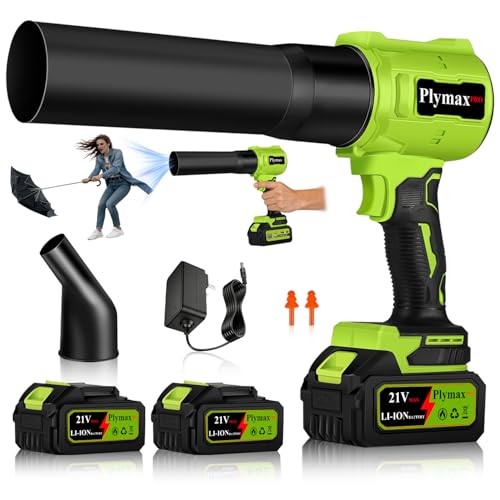
Pros
- Includes two 21V 4.0Ah lithium batteries and a charger
- Motor rated up to 800,000 RPM for focused air speeds
- Includes both a wide nozzle and a precision jet nozzle
- Suitable for outdoor patios, garage dusting, and car drying
- Compact, lightweight handheld design minimizes fatigue
Cons
- Compact frame less suited for expansive lawn leaf clearing
- Airflow volume specifications are not provided
Gas vs. Cordless Power for Winter Snow Clearing
Gas-powered backpack blowers deliver substantially higher continuous force than compact electric alternatives, making them better suited for clearing wider ground surfaces covered in powder. For instance, the PROYAMA 72CC Gas Backpack Leaf Blower delivers an advertised 880 CFM and 275 MPH from its 3.7-horsepower engine, whereas the Milkiwai 63CC Gas Backpack Leaf Blower produces 665 CFM at 205 MPH. These high velocities are critical when moving snow because cold air and surface friction rapidly dissipate weak air streams.
Conversely, compact battery units like the YOOVL Leaf Blower Cordless (weighing just 2.4 pounds) or the Plymax Cordless Leaf Blower trade massive blowing volume for unmatched convenience. When clearing powder from a car windshield, stairs, or a small deck, you do not need to pull-start a cold engine or store mixed gasoline. However, electric motors in this class rarely muster the sheer thrust needed to dislodge slush or plow piles at the end of a driveway.
CFM and Airspeed Requirements for Pushing Snow
Air volume (CFM) dictates how wide a swath you can sweep, while air velocity (MPH) determines whether the blower can lift frozen precipitation stuck to pavement. The PROYAMA 72CC unit leads the gas category with 880 CFM and 275 MPH, giving it enough concentrated speed to cut through settling flakes. In comparison, the corded BLACK+DECKER Electric Leaf Blower produces a modest 180 CFM and 180 MPH from its 7-amp motor, which restricts its winter utility to clearing light dustings from a smooth deck near an outdoor electrical outlet.
In the cordless tier, manufacturers report high volume numbers via turbo nozzle designs. The JAGROM Electric Leaf Blower advertises up to 680 CFM and 230 MPH, while the YOOVL 650CFM Electric Leaf Blower claims up to 650 CFM across 3 speed modes. While these high figures help sweep loose flakes off flat concrete, users should recognize these are peak manufacturer claims. When comparing options for regular winter use, pairing adequate velocity with an extension nozzle is essential to focus the stream directly beneath the snow crust.
Runtime Trade-Offs in Cold Temperatures
Gas models offer predictable endurance determined by fuel tank capacity, whereas battery runtime varies significantly based on throttle usage and ambient temperature. The HASANEN Backpack Gas Powered Leaf Blower features a 0.47-gallon (1.8-liter) fuel tank, allowing sustained operation at high engine revs without waiting on a charger. Similarly, the Milkiwai 63CC unit claims up to 50 minutes of continuous full-throttle clearing on a single tank.
Cordless alternatives address limited runtimes by shipping with multiple battery packs. The YOOVL handheld includes two 4.0Ah batteries, yet the manufacturer notes high-draw “Turbo mode” lasts roughly 6 minutes per pack (versus up to 5 hours on low speed). The laapee 650CFM Cordless Blower pairs two 20V 4.0Ah packs for up to 30 minutes on its lowest setting, while the YOOVL 650CFM model supplies two 5.2Ah batteries advertising up to 150 minutes across lower settings. Pushing winter snow invariably demands the highest power setting, meaning real-world cordless runtime will land on the shortest end of any advertised spectrum.
Weight Distribution and Operator Fatigue
Backpack blowers shift heavy motor mass onto the operator’s hips and shoulders, while handheld blowers concentrate all weight into the forearm and wrist. The HASANEN gas blower weighs approximately 19.7 pounds, but balances that load using a padded harness and an adjustable, flexible directional tube that swivels up to 120° vertically and 135° horizontally. This setup prevents arm exhaustion during 45-minute clearing sessions, though it requires carrying a running internal combustion engine against your back.
Handheld tools drastically cut overall poundage but require direct manual support. The YOOVL 2.4-pound blower and the JAGROM 3.96-pound unit are easy to maneuver one-handed, making them great for sweeping overhead or cleaning outdoor furniture. For slightly heavier battery units, brands like laapee and YOOVL include an adjustable shoulder strap to offset weight when running multi-cell battery packs over extended periods.
Frequently Asked Questions About Snow Removal Leaf Blowers
Can electric and cordless leaf blowers clear heavy, wet snow?
Most cordless models, such as the YOOVL units, are manufacturer-rated specifically for dry, light, and fluffy snow. Wet, slushy, or hard-packed snow generally requires manual shoveling or significantly higher engine displacement found in gas backpack units.
Does freezing weather affect cordless leaf blower battery life?
Extreme cold naturally reduces lithium-ion battery efficiency. While tools like the JAGROM or YOOVL include dual battery packs to double available operating time, advertised maximum runtimes are typically measured under moderate conditions and will drop during winter tasks.
Selecting the Right Blower for Your Winter Cleanup
Choosing an effective tool comes down to matching your property size and local winter conditions against weight and maintenance preferences. For homeowners who encounter frequent snowfall across broad driveways, the PROYAMA 72CC Gas Backpack Leaf Blower stands out as the most capable choice thanks to its 3.7-horsepower output, 880 CFM volume, and dual nozzle options. The unavoidable trade-off is the regular upkeep required by a 2-stroke engine, including mixing fuel and handling cold pull-starts.
If you prefer an easy, zero-emission tool strictly for dusting dry flakes off porches, walkways, and vehicles, the dual-pack YOOVL 650CFM Electric Leaf Blower is a well-balanced alternative with a dedicated shoulder strap and two 5.2Ah batteries. Just remember that it cannot replace a dedicated snow shovel or high-displacement gas unit once winter precipitation turns wet, frozen, or deep.