

For homeowners managing extensive properties with wet, stubborn debris, a rugged backpack option like the Husqvarna 150BT delivers commercial-grade clearing force, though it requires routine two-cycle fuel maintenance and a higher upfront investment. Budget-conscious buyers tackling smaller paved surfaces often find simpler electric alternatives provide plenty of sweeping velocity without the mechanical upkeep.

Pros
- Lightweight 4 lb build minimizes arm fatigue
- Delivers up to 390 CFM airflow and 210 MPH speed
- Continuous corded power eliminates recharging pauses
- Two-speed switch toggles between light and full force
- Nested two-piece tube design for full assembly
Cons
- Requires an extension cord and nearby wall outlet
- Tubes ship nested and must be pulled apart before use

Pros
- Lightweight 9.4-pound design offers easy handheld maneuvering
- Reduced-resistance recoil system eases engine pull starts
- Translucent fuel tank allows quick monitoring of gas levels
- Cushioned anti-vibration handle helps dampen arm strain
- Capable of up to 380 CFM and 180 MPH airflow
Cons
- Requires mixing 2-cycle gas and oil at a 50:1 ratio
- Modest 380 CFM output is best suited for lighter debris

Pros
- Delivers up to 550 CFM and 230 MPH for moving wet yard debris
- Lightweight 17-pound backpack design with cushioned straps
- Thumb throttle includes cruise control for steady blowing
- 33.8 fl oz fuel tank yields up to 45 minutes of run time
- Operating temperature range spans 14°F to 104°F
Cons
- Requires 2-cycle fuel mixing and engine maintenance
- 550 CFM is modest for a backpack-class gas blower

Pros
- Lightweight design at only 4.4 pounds
- 7-Amp motor rated up to 180 MPH and 180 CFM
- Built-in cord retention prevents unplugging
- Zero emissions with instant push-button start
- Simple, low-maintenance corded design
Cons
- Extension cord is not included
- Operating range is limited by cord reach

Pros
- Airflow rated up to 650 CFM using advanced turbo technology
- Comes with two high-capacity 20V 5.2Ah batteries and fast charger
- Three selectable speed modes for delicate to heavy-duty jobs
- Includes an adjustable shoulder strap to reduce arm fatigue
- Includes blower tube and extension nozzle attachments
Cons
- Maximum 150-minute runtime applies only to low-speed mode
- Heavier battery packs may add weight during prolonged handheld use

Pros
- Brushless motor delivers rated airflow up to 650 CFM and 180 MPH
- Includes two 20V 4.0Ah batteries and a fast charger
- Six adjustable speed settings ranging from 80 to 180 MPH
- Comes with an ergonomic shoulder strap and two detachable nozzles
- Includes a storage bag to keep components organized
Cons
- Stated 30-minute runtime is restricted to low-speed operation
- High-speed settings will deplete battery charge more rapidly

Pros
- Delivers up to a stated 930 CFM airflow and 197 MPH
- Includes two 4.0Ah batteries and a fast charger
- Six variable-speed settings with a constant-speed lock
- Tool-free assembly with included blower tubes
Cons
- Stated dual-battery runtime is limited to 30–60 minutes

Pros
- 51cc 2-cycle engine produces up to 765 CFM and 270 MPH
- Padded harness and hip belt provide balanced load distribution
- Air purge system removes fuel line air for easier starting
- Variable speed throttle includes cruise control functionality
- Proven X-Torq engine technology maintains high clearing force
Cons
- Heavier 22-pound build can cause fatigue on extended jobs
- Requires routine 2-cycle gas and oil fuel maintenance
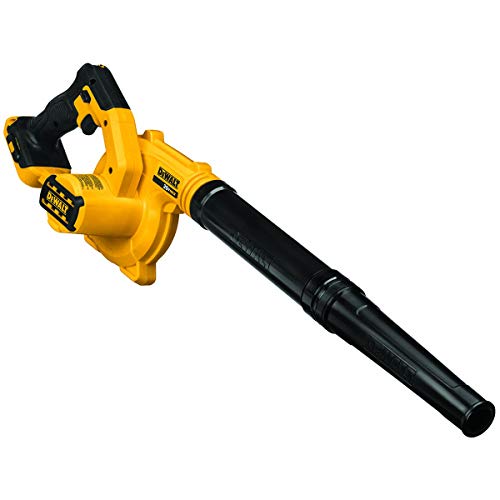
Pros
- Lightweight 2.5-pound design fits into tight spaces
- 3-speed variable switch plus variable speed trigger
- Trigger lock-on reduces hand fatigue during continuous use
- Includes 3 nozzle attachments for different clearing tasks
Cons
- Sold as a bare tool without battery or charger
- 100 CFM airflow is strictly intended for jobsite debris

Pros
- 65.6 cc, 3.81 HP 2-cycle X-Torq engine for high output
- Ventilated, load-reducing harness with wide shoulder straps
- LowVib technology helps minimize operating vibrations
- Air purge system allows for simpler, trouble-free starting
- Cruise control feature maintains steady throttle during use
Cons
- Weighs 23.2 pounds before adding gasoline
- Requires two-cycle fuel mixing and routine gas engine upkeep
What to Expect When Searching for Heavy-Duty Outdoor Blowers
Buyers searching for a steel blower are typically seeking commercial durability and rugged construction capable of handling tough seasonal cleanup. Modern outdoor power equipment rarely uses all-steel outer housings because solid metal blowers would be excessively heavy to carry across a large lawn. Instead, top manufacturers utilize reinforced, weather-resistant composite housings paired with durable metal internal engine components to keep tool weights manageable.
For example, the Thalorus 52cc Gas Backpack Leaf Blower, 550 CFM utilizes rugged housing rated by the manufacturer for operating temperatures between 14°F and 104°F while keeping total dry unit weight at 17 pounds. While you will not find heavy sheet-metal outer casings on portable consumer leaf blowers, you will find industrial-grade internal engineering designed to survive wet leaves, light snow, and gravel. When assessing durable options, prioritize motor durability, reinforced tube connections, and stable ergonomics over exterior metal plating.
Gas Backpack Power vs. Handheld Mobility for Wet Debris
Backpack blowers offer significantly greater air volume and physical comfort for large lots, whereas handheld units provide rapid grab-and-go convenience for smaller paths. When deciding what leaf blower is the best match for your yard, your choice between backpack and handheld form factors determines how much physical fatigue you experience.
The Husqvarna 360BT Gas Backpack Leaf Blower features a 65.6-cc, 3.81-HP X-Torq engine mounted to a ventilated, load-reducing backpack harness. This harness shifts the mechanical weight off your arms and onto your shoulders and hips, allowing you to sweep heavy wet debris for extended periods. In contrast, the Getell 26cc Gas Leaf Blower weighs less overall and operates as a handheld tool with a 26-cc 2-cycle engine delivering 380 CFM at 180 MPH. The trade-off is direct arm fatigue: carrying a handheld gas motor across an entire acre will quickly tire your forearm and wrist, making the heavier backpack design superior for larger tracts despite its larger storage footprint.
Understanding CFM and Airspeed Ratings Across Power Types
Airflow volume (measured in cubic feet per minute, or CFM) determines how wide an area of debris you can push, while airspeed (miles per hour, or MPH) dictates the force required to break loose stuck, wet leaves. A tool with high velocity but low volume acts like a narrow scraper, while high CFM sweeps broad swaths of grass and dry foliage efficiently.
Comparing advertised manufacturer specifications shows dramatic variance across tool categories:
- High-Velocity Commercial Gas: The Husqvarna 150BT Gas Backpack Leaf Blower advertises a formidable 765 CFM and 270 MPH, providing 22 Newtons of blowing force to dislodge compacted piles.
- High-Volume Cordless: The 930CFM Electric Leaf Blower Cordless with 2 X 4.0 advertises up to 930 CFM and 197 MPH, utilizing dual 4.0Ah batteries for sweeping broad sections of turf.
- Compact Jobsite Utility: The DEWALT 20V MAX Blower, 100 CFM Airflow delivers an advertised maximum of 100 CFM, engineered specifically for clearing workbenches, tuck pointing joints, and tight jobsite corners rather than broad lawn care.
Keep in mind that high CFM claims on budget cordless tools are often measured at the widest tube opening on maximum speed, which exhausts battery reserves quickly. Dedicated gas backpack engines sustain continuous high CFM and velocity without the power drops common as lithium cells deplete.
Corded Electric vs. Battery Platforms for Everyday Cleanups
Corded blowers provide continuous, maintenance-free blowing power at a fraction of the cost of gas or high-capacity battery units, but they restrict your range to the length of an extension cord. For clearing driveways, porches, and decks close to an exterior outlet, a corded model avoids both battery degradation and fuel mixing.
The Grasstigon Electric Leaf Blower Corded, 7-Amp weighs just 4 pounds while producing an advertised 390 CFM and 210 MPH across two speed settings for $30.99. Similarly, the BLACK+DECKER Electric Leaf Blower uses a 7-Amp motor to produce 180 CFM and 180 MPH at 4.4 pounds, incorporating built-in cord retention (though the extension cord itself is not included). In contrast, dual-battery models like the Leaf Blower Cordless, 650CFM Electric Leaf Blowers or the Leaf Blower Cordless 650CFM with 2×4.0Ah Battery eliminate cords entirely for open-yard mobility, but buyers must manage recharge cycles and monitor battery wear over time.
Steel Blower Selection Frequently Asked Questions
Are modern leaf blowers made with full steel housings?
No. Portable yard blowers use impact-resistant composite housings rather than heavy steel to keep operating weight manageable. Heavy-duty durability comes from reinforced plastic bodies and metal internal engine components rather than full sheet-metal exteriors.
What is the difference between CFM and MPH when clearing debris?
CFM measures the overall volume of air moving through the nozzle, which determines how wide of a debris path you can sweep at once. MPH measures the speed of that air, which dictates how easily the blower can lift heavy, damp leaves and stuck gravel.
Choosing the Right Yard Blower for Your Property and Workload
Selecting the right blower comes down to evaluating property size, physical stamina, and the type of material you clear each season. Paved walks and small patios need only moderate airspeed to remove loose clippings, while expansive lawns covered in damp autumn foliage require substantial air volume and continuous run times to avoid tedious multi-pass sweeping. If you are also deciding on outdoor equipment sourcing, research where to buy a leaf blower to compare retailer support and return policies.
For most homeowners seeking a durable, high-power clearing solution, the Husqvarna 150BT Gas Backpack Leaf Blower represents the most capable overall choice for sweeping deep lawns and heavy debris, supported by a proven 51-cc X-Torq engine and an ergonomic weight-distributing harness. Its primary trade-off is the $399.00 retail price and the requirement to mix two-cycle fuel. For suburban homeowners with smaller lots who want zero engine maintenance, the Grasstigon Electric Leaf Blower Corded, 7-Amp provides a capable, ultra-lightweight alternative at a fraction of the cost, provided you have a suitable extension cord.



