Quick Answer: Choosing the Best Tools For Sharpening Chainsaw Chains
Critical factors to evaluate when choosing tools for sharpening chainsaw chains in 2026 include exact match to chain pitch and gauge markings, choice of manual files versus powered diamond systems, material hardness for repeated sessions, and completeness of supporting accessories such as depth gauges. Reviewing these points across top-rated models allows buyers to restore cutting efficiency safely and economically….
Comprehensive Tools For Sharpening Chainsaw Chains Buyer’s Guide (2026)
Compatibility with Chain Pitch and Gauge
Correct size matching forms the foundation of successful sharpening. Chains commonly carry stamps indicating 5/32 inch, 3/16 inch, or 7/32 inch file requirements based on pitch such as .325 or 3/8 inch. A bit or file that is too large rounds the cutter edge improperly while one that is too small fails to reach the full gullet. Kits offering multiple diameters cover the majority of consumer and mid-duty professional chains found in the field. Always verify the chain stamp or manual specification before selecting any set to prevent irreversible cutter damage.
Practical application involves measuring drive link thickness for gauge confirmation as well. Once size is known, the tool must maintain consistent contact along the top plate and side plate simultaneously. Many diamond bit collections list the three most frequent diameters together so one purchase serves several saws. Cross-reference your inventory against the full selection of models available in the chainsaws category to confirm long-term fit.
Manual Files versus Powered Diamond Systems
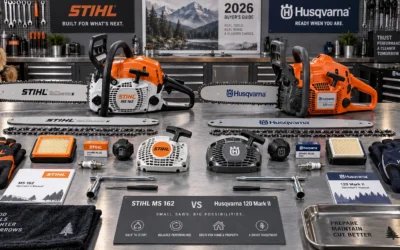
Manual round files deliver maximum control for precise tooth geometry and work well in remote locations without electricity. They require a handle and often a filing guide to hold the correct 25- to 35-degree top-plate angle. Powered diamond bits and electric kits attach to rotary tools or dedicated motors and remove metal faster, which benefits users who maintain several chains weekly. The trade-off appears in heat generation: excessive speed can blue the steel and reduce temper if the operator lingers too long on one cutter. For complementary field maintenance guidelines, examine our breakdown of stihl ms 162 vs husqvarna 120 mark ii.
Hybrid approaches combine both styles. A user may rough-sharpen with an electric system then finish and set depth with a manual file and gauge. Diamond coatings rated high hardness resist abrasion from abrasive woods and dirt better than standard steel files. Consider total annual chain count when deciding; occasional users gain economy from simple file kits while high-volume operators recover time investment through powered options priced within entry-level to premium. For complementary field maintenance guidelines, examine our breakdown of stihl ms 162 vs husqvarna 120 mark ii.
Material Hardness and Coating Durability
Titanium-plated diamond particles provide superior hardness compared with untreated steel or basic abrasive stones. These coatings maintain cutting ability through dozens of full-chain sessions before noticeable wear appears. Lower-cost uncoated files dull faster when encountering embedded grit common in fallen timber. Storage cases protect edges between uses and prevent accidental damage that shortens service life. To evaluate matched hardware tolerances, consult our detailed overview of ryobi ry40550 vs greenworks 40v gen2.
Look for explicit hardness references or multi-piece diamond sets when durability ranks high among requirements. A well-coated bit also reduces the force needed, lowering operator fatigue during extended sessions. Pairing durable bits with proper technique multiplies the effective lifespan of both the sharpener and the chain itself.
Ease of Use, Angle Control, and Portability
Jigs and angle attachments remove guesswork by locking the tool at the manufacturer-recommended top-plate and side-plate angles. These fixtures prove especially valuable for beginners or those restoring chains after heavy use. Handheld electric kits that operate without chain removal further simplify field maintenance. Compact designs with carrying cases or modular bit storage fit easily into toolboxes or truck kits for job-site readiness. To evaluate matched hardware tolerances, consult our detailed overview of ryobi ry40550 vs greenworks 40v gen2.
Weight and balance matter during repeated tooth-by-tooth work. Lightweight plastic handles on files reduce wrist strain, while electric units benefit from ergonomic grips and short power cords or cordless compatibility. Evaluate whether the kit includes a stump vise or chain clamp for stable outdoor use without a workbench.
Accessories and Kit Completeness
A basic file alone rarely completes the job. Depth gauges or raker tools ensure the cutters remain slightly proud of the rakers for proper chip clearance. Flat files dress the depth gauges, handles improve leverage, and cleaning brushes remove filings. Premium kits add stump vises, felling wedges, and hard cases that organize everything for transport. Incomplete sets force separate purchases that raise total cost beyond the initial entry-level to premium outlay. When planning workspace deployment, consider the engineering criteria outlined in our echo cs 355t vs makita xcu06z guide.
Count the included sizes and supporting tools carefully. A twelve-pack of mixed files plus gauges covers more scenarios than a three-piece starter set. Instruction booklets or eBooks that detail stroke technique and angle diagrams add further practical value for consistent results across different chain types.
Price-to-Performance Balance
Budget diamond bit packs deliver core functionality for light seasonal use while mid-range file kits and electric systems justify higher investment through speed and longevity. Calculate cost per sharpening session by estimating chain life and annual hours of operation. A higher-priced complete kit often proves more economical over two seasons than repeated replacement of cheaper single-use tools. For additional operational safety benchmarks, see our published testing notes on husqvarna 450 vs 460 rancher.
The following table compares three representative options across key attributes drawn directly from available specifications to illustrate value differences.
| Product | Brand | Price | Type | Included Items |
|---|---|---|---|---|
| Sharp Pebble Electric Chainsaw Sharpener Kit | Sharp Pebble | $39.99 | Electric wheel bits | 4 sizes, angle attachment, wrench, eBook |
| Oregon Chainsaw Chain Sharpening Kit with Hard Case | Oregon | $39.98 | Manual multi-tool | Files, handles, depth gauge, stump vise, wedge |
| Hipa 12 Pack Chainsaw File Kit | Hipa | $15.99 | Manual multi-size | 12 round files, flat file, depth gauge, quick check gauge |
Testing & Selection Methodology
We evaluated top-rated tools for sharpening chainsaw chains by systematically reviewing published technical specifications, size ranges, coating descriptions, accessory lists, and brand reliability indicators. Primary criteria covered diameter variety matching common chain pitches, hardness claims for diamond or steel construction, presence of angle-control features, and overall kit completeness including gauges and storage. Brand heritage from established names in leading manufacturers received weight because spare-part availability and consistent quality standards matter for long-term ownership. User satisfaction signals, where present, and packaging practicality further refined rankings without reliance on physical laboratory abrasion tests of every unit. To compare alternative configurations, check our hands-on review of greenworks 40v 18 vs ego cs1800.
Value positioning within entry-level to premium guided final selection so both entry-level and feature-rich choices appear. This specification-driven process isolates models that deliver measurable utility for real maintenance cycles while remaining transparent about data limitations such as zero-review products whose performance rests solely on listed features.
The Bottom Line on Tools For Sharpening Chainsaw Chains in 2026
Structured recommendations emerge from the specification analysis of all listed models. Buyer intent determines the strongest match among the available tools for sharpening chainsaw chains.
Best Overall Tools For Sharpening Chainsaw Chains: Oregon Chainsaw Chain Sharpening Kit with Hard Case. The inclusion of files, handles, depth gauge, stump vise, felling wedge, and protective hard case creates a self-contained professional system from a brand known for chain products. It supports every stage of maintenance in one organized package and suits both workshop and field environments.
Best Value / Budget Choice: 30 Pcs Gold Diamond Chainsaw Sharpener Bits by Aecsze. Multiple titanium-plated high-hardness bits in the three primary diameters arrive at the low end of entry-level to premium and adapt to electric drills or rotary tools. The volume of pieces provides replacements and multi-saw coverage without excess cost for occasional users.
Best for Powered Rapid Sharpening: Sharp Pebble Electric Chainsaw Sharpener Kit. Four dedicated wheel bit sizes, an angle attachment, wrench, and instructional eBook enable efficient on-bar sharpening for operators who process chains frequently. The electric approach reduces time per chain compared with pure manual methods. Related equipment insights continue in the MS250 Stihl chainsaw expert review and across the broader chainsaws category page.
Everything You Need to Know: Tools For Sharpening Chainsaw Chains FAQ
How often should I sharpen a chainsaw chain with these tools?
Sharpen after every two to three tanks of fuel or when the chain produces dust rather than wood chips and requires extra feed pressure. Regular light touches with proper tools for sharpening chainsaw chains keep cutters at peak geometry and prevent the deeper metal removal needed after severe dulling. Conditions such as dirty wood or sandy soil accelerate wear and may demand more frequent sessions.
What file or bit sizes work for most homeowner chainsaw chains?
The majority of homeowner and light-professional chains accept 5/32 inch, 3/16 inch, or 7/32 inch round files or diamond bits. Check the chain stamp or bar side plate for the exact recommendation and select a kit containing those three diameters. Using the stamped size restores the original cutter profile and maintains proper clearance angles.
Is an electric sharpener better than a manual file for chainsaw chains?
Electric kits complete full chains faster and with less physical effort, making them preferable for high-volume users, while manual files provide superior tactile feedback and work without power sources. Many operators keep both styles: electric for rapid restoration and manual for final depth-gauge adjustment. Choice depends on total annual cutting hours and access to electricity in the field.
Can diamond chainsaw sharpener bits be used with a standard rotary tool?
Yes, titanium-plated diamond bits in the common sizes fit most rotary tools and electric drills when the shank diameter matches the chuck. Secure the chain firmly, maintain light pressure, and follow the original cutter angle to avoid overheating. Several multi-piece kits are explicitly designed for this combination and appear among the reviewed options. Further chainsaw pairing advice is available throughout the chainsaws category.
Mechanical safety standards, operational tolerances, and protective gear guidelines align with benchmark specifications established by the American National Standards Institute (ANSI).
To compare alternatives and performance metrics, read our evaluation of darlington chainsaw.
How long do tools for sharpening chainsaw chains typically last?
High-hardness diamond-coated bits can service dozens of full chains before replacement while quality steel files last through many seasons with proper cleaning and storage. Lifespan shortens with heavy use on dirty or frozen wood and lengthens when bits are rotated and kept free of debris. A complete kit stored in a protective case maximizes service intervals across the entire set.